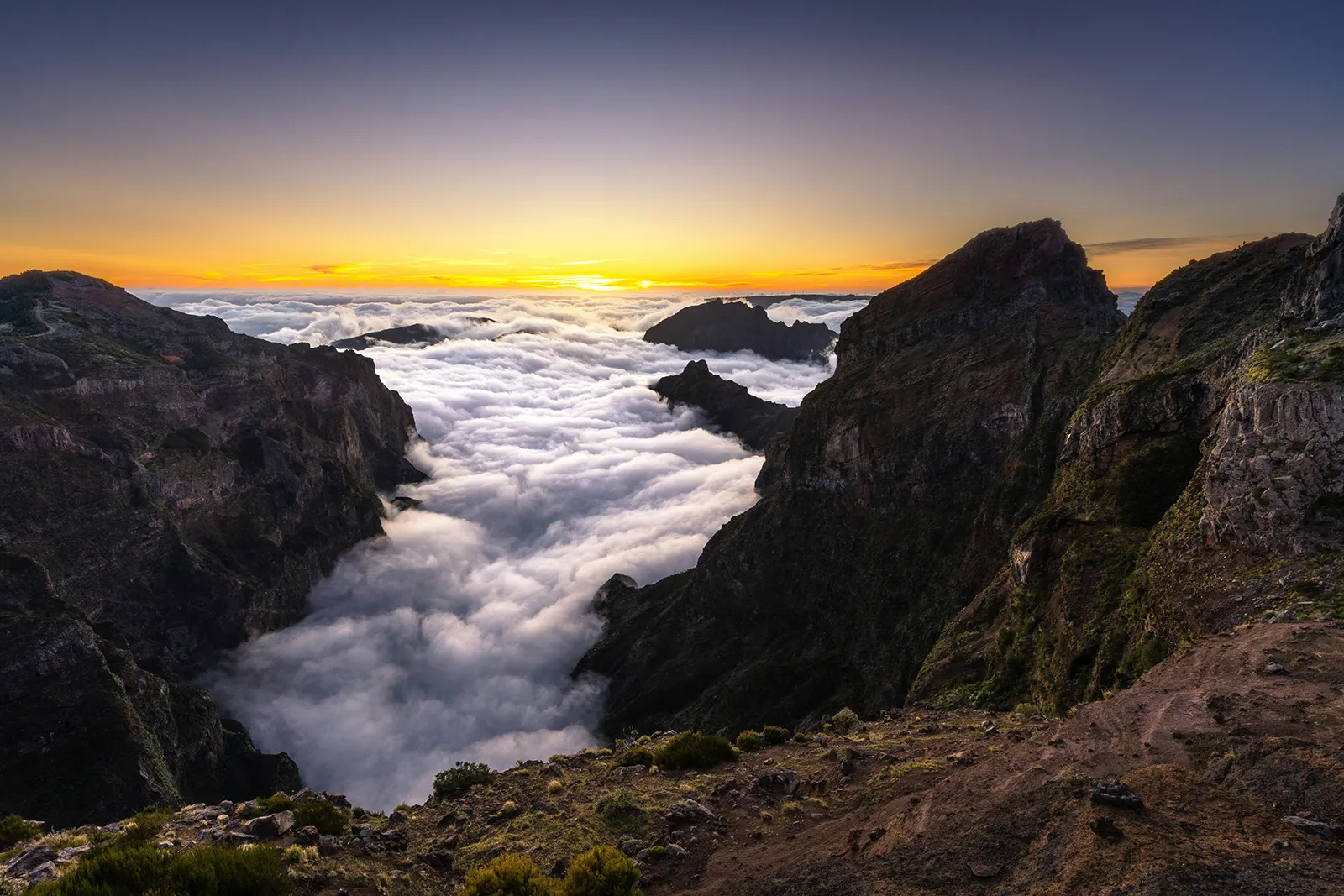
When is the best time to visit Madeira
Seventeen degrees, ocean breeze, and hills that vanish into the clouds. It could be January, it could be July. On Madeira, each season has its own face, its own glow, and its own reasons to lure you in.
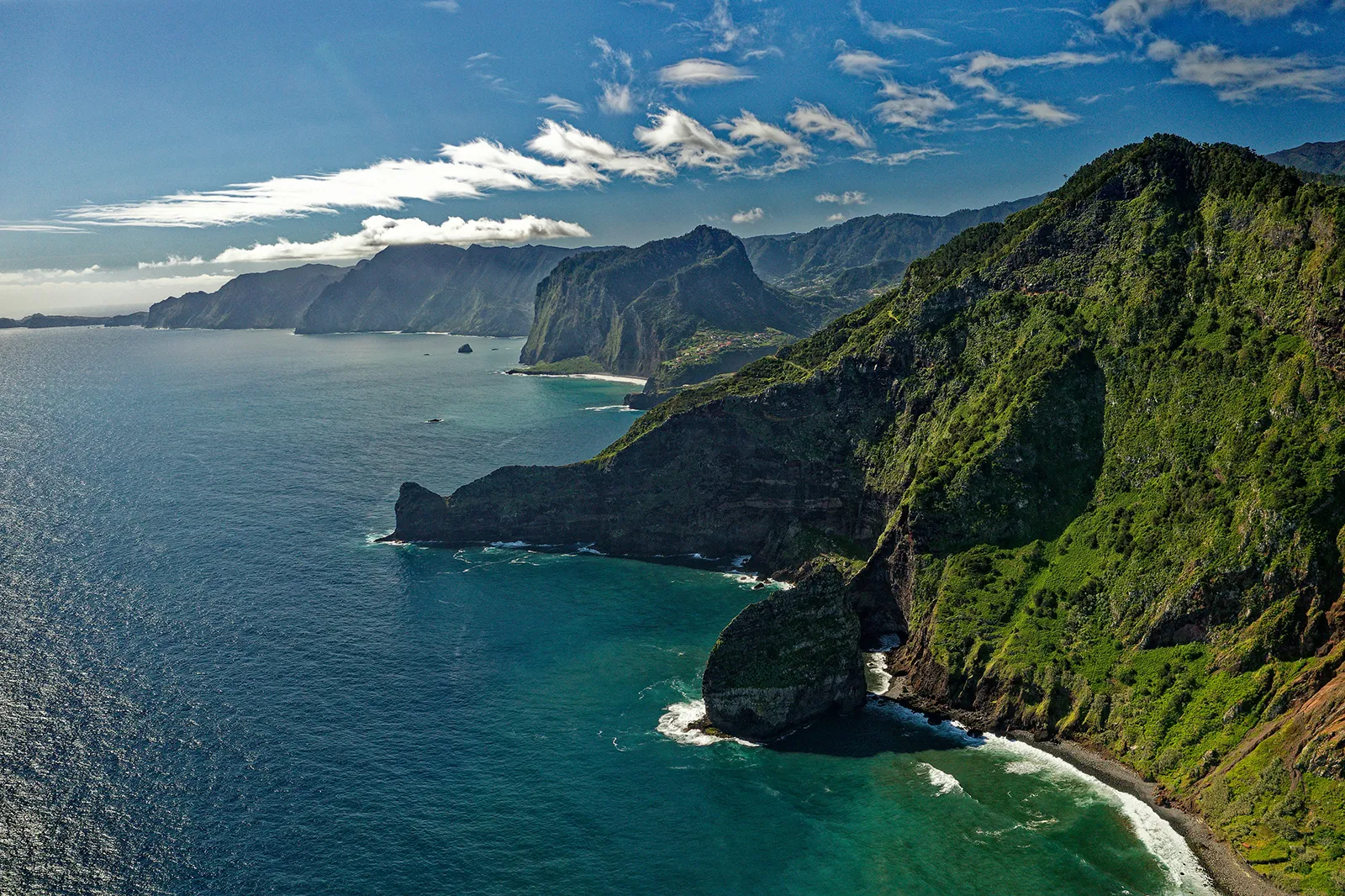
Seventeen degrees, a gentle breeze from the ocean, green hills disappearing into the clouds. It's January. Or June. Or October. In Madeira, the difference lies in the shades, as the island doesn't recognize winter in the traditional sense. The temperature rarely dips below 16°C and seldom surpasses 27°C, moderated by the Atlantic all around. The island sits at 32° north latitude (akin to Marrakech), yet it feels fresher, greener, more alive.
April - June: when the island blossoms
Spring in Madeira is green, moist, and brimming with life. Temperatures range between 18 and 22°C, the ocean is about 18-20°C, and rainy days decrease to 6-8 per month. The levadas are full of water, ferns cloak the stones on the northern slopes, and the air smells of bay leaves and damp earth.
This is the best time for trekking. The trails are firm but not dried out. Laurisilva is at its greenest, and wildflowers carpet the hills from the coast up to 1000 metres. At the end of April, the Flower Festival begins (2026: 30 April - 24 May), turning the streets of Funchal into vibrant parades and living installations. Also in April is the MIUT ultramarathon (115 km, 7200 m elevation, from Porto Moniz to Machico), for those who wish to run across the island in a day.
July - September: long evenings over the ocean
Summer is dry and warm, but not stifling. Daytime temperatures reach 25-26°C, the ocean warms to 22-24°C, and rainy days can be counted on one hand: 1-2 per month in July and August. The sun sets after 9:00 PM from late May to mid-July, allowing for long, leisurely evenings along the coast at Câmara de Lobos.
This is the season of the ocean. Diving visibility reaches 30-40 metres. Whale-watching boats go out daily, and between July and September, you have the best chance of seeing blue whales, the largest animal on the planet. Dolphins (spotted and bottlenose) are frequent residents. At the end of August, the Wine Festival begins (2026: 27 August - 13 September), with grape picking in Estreito de Câmara de Lobos and concerts among the vineyards.
October - November: the quiet months
Tourists decrease, but the climate remains mild: 22-25°C, ocean at 21-23°C. The rains return (9-10 days per month), but they come in bursts, brief and intense, followed by breakthrough sunshine. The autumn light is different, softer, warmer, with a golden hue that turns every picture into something more than a photo.
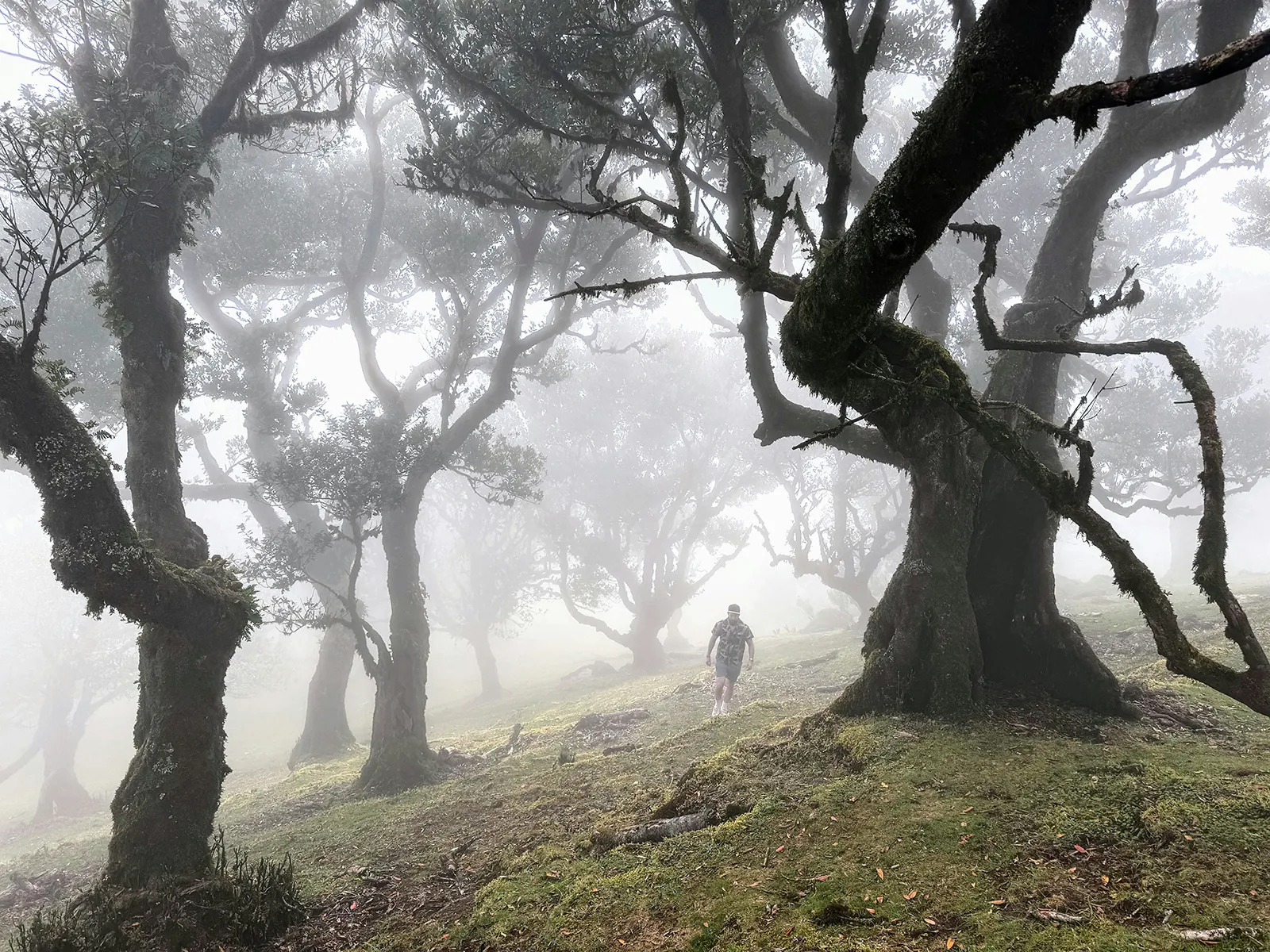
Autumn is for those who want the island to themselves. The levadas are quiet, Laurisilva is shrouded in mist on the northern slopes, and on the southern trails, you gaze at the ocean without seeing another figure on the horizon. Humpback whales pass by the island between October and December, on their way south.
December - March: the winter that isn't winter
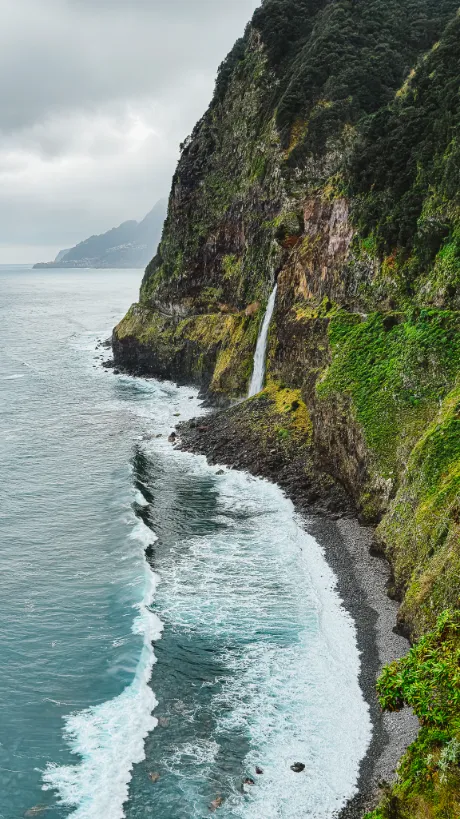
Temperatures rarely fall below 16°C in Funchal. The rains are most frequent (10-13 days per month), but they are the reason waterfalls roar with full force, and the forests look like a scene from another era. The ocean is 18-19°C, suitable for a short dip but not for a long swim.
Winter attracts two types of people: those who want to see the island in its rawest beauty, and those who come for the holidays. Funchal's New Year's Eve fireworks are legendary: 58 launch spots around the bay, 8 minutes, which held the Guinness World Record for the largest fireworks display (2006-2012). Carnival in February is the second reason: parades, costumes, and music fill the streets. And if you're searching for surf, the winter waves of Jardim do Mar offer the most powerful right point break, only for the experienced.
Microclimates: two islands in one
Madeira isn't one island. Climatically, it's two. The south coast (Funchal, Câmara de Lobos) is warm and sunny, with 600-1000 mm of rain annually. The north (São Vicente, Porto Moniz) gets 2-3 times more rain and is cooler by 3-6°C. The reason: moist Atlantic air rises over the northern slopes, cools, condenses into rain and mist, crosses the ridge, and descends as dry, warm air to the south.
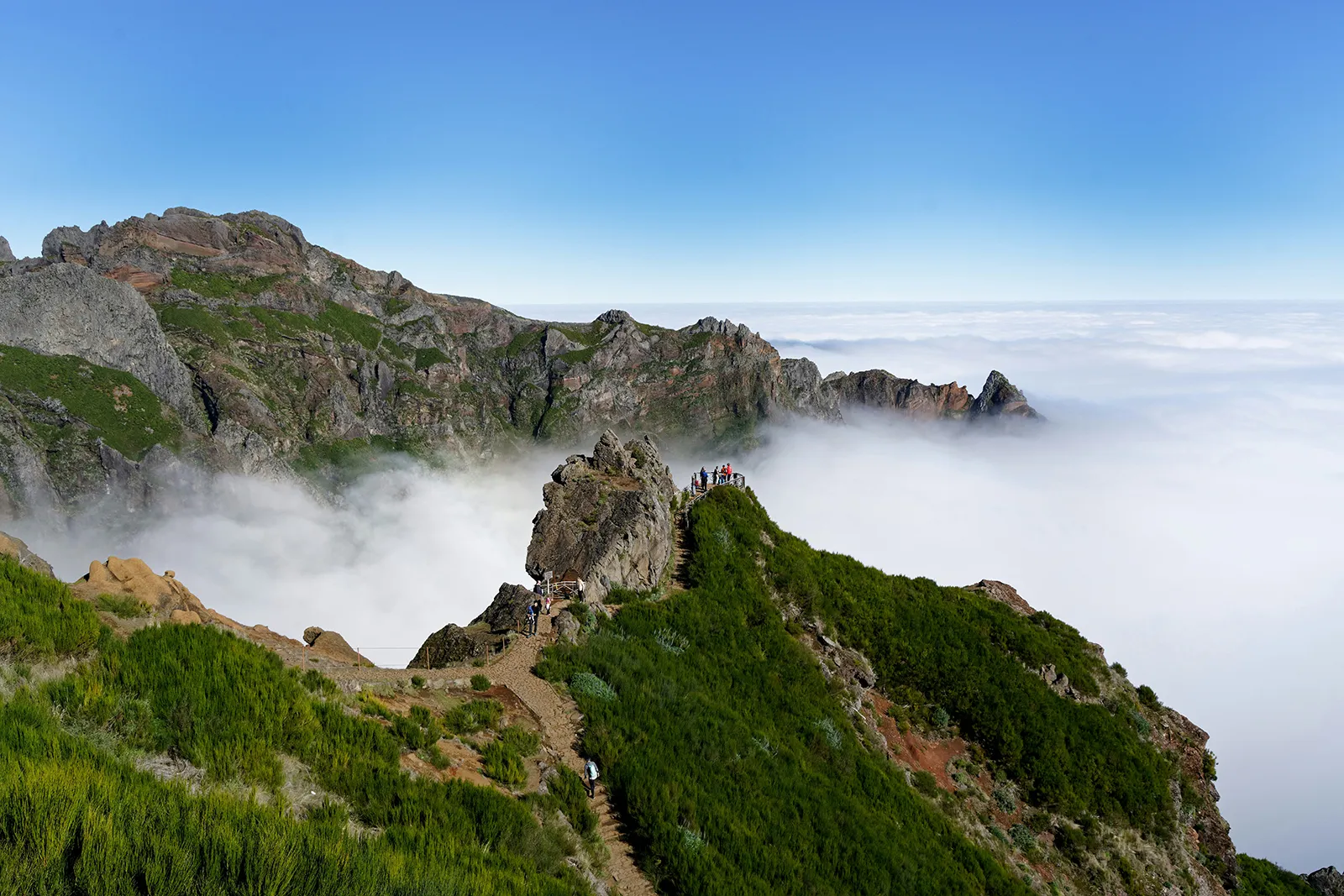
Practically: you can drive 30 minutes from rain and mist in the north to sunshine in the south. On the peaks (Pico do Arieiro, 1818 m) the temperature drops by about 6°C for every 1000 metres. Winter brings snow above 1500 m and fog that swallows the trail within minutes. Always carry an extra layer, even in July.
Festivals and events 2026
Carnival (11-22 February) - allegorical parade on the 14th, Trapalhão parade on the 17th
Rum Festival (14-18 April) - tastings on Avenida Arriaga
MIUT ultramarathon (25-26 April) - 115/85/60/42/16 km
Flower Festival (30 April - 24 May) - allegorical parade on 3rd May, 16:30
Atlantic Festival (5-28 June) - pyro techniques competition, music
Wine Festival (27 August - 13 September) - grape harvest, concerts among the vineyards
Christmas lights (December) - Funchal lights up, markets, nativity scenes
New Year's Eve fireworks (31 December) - 8 minutes, 58 launch spots over the bay
Seventeen degrees, a gentle wind, greenery everywhere. It could be February, it could be September. In Madeira, it matters little. The more important question is why you come and whether you'll return. You will return.
More about Madeira
Laurisilva - ancient laurel forests | Pico do Arieiro to Pico Ruivo | Vereda da Ponta de São Lourenço | Madeira Sunset
Explore
Author: Martin Bonov