Ganvie and Voodoo: Africa behind the brochure
The boat glides silently across the water, and ahead, stilt houses rise up from the lake. An entire village, built on the water to escape slavery.
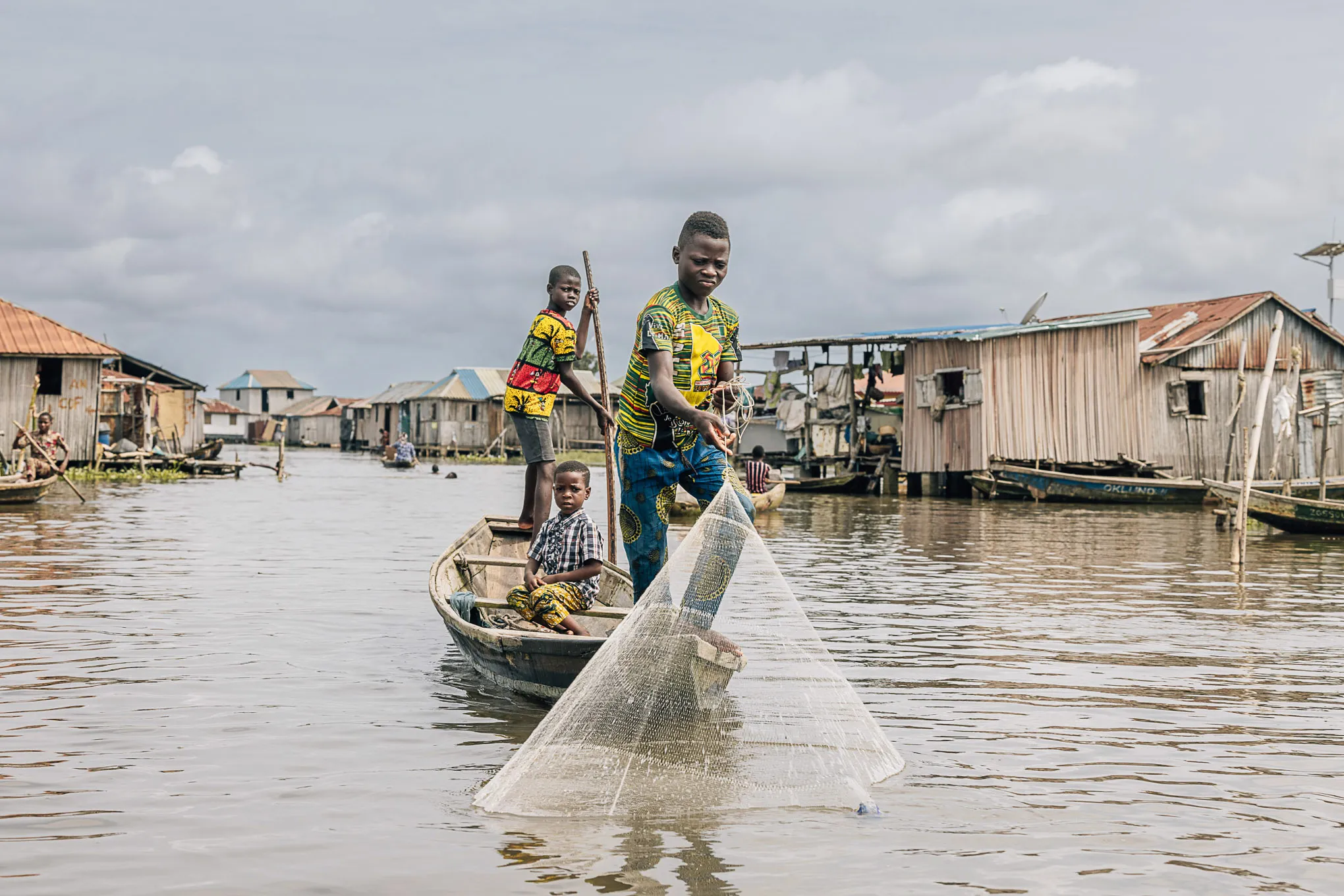
The boat glides silently, the rower pressing a long pole into the bed of the shallow lake. Right before your eyes, a village rises from the water. Not along the shore, but on the lake itself: houses on wooden stilts, a market, a church, a school, all suspended above the surface. People move around in narrow boats instead of on foot. This is Ganvie, the "Venice of Africa", and the story behind it is anything but touristy.
Three hundred years ago, the Tofinu people fled the slave hunters of the Dahomey Kingdom. The Dahomey warriors were forbidden by religious law to enter the water, so the Tofinu did the unthinkable: they built an entire city in the middle of Lake Nokoué, where their pursuers dared not tread. Today, over twenty thousand people live in Ganvie, still on the water, still living off fishing. An eight-year-old boy navigates a boat with more confidence than you drive a car.
Life on the Water
There are no streets, meaning no car noise. Just the splash of oars and voices drifting over the water. Women trade from boat to boat, balancing tomatoes and dried fish on narrow canoes. Children paddle to the floating school. Laundry dries on the stilts. Everything you take for granted on land is solved differently here, patiently, across generations.
You drift through this place slowly and realise you aren't looking at a museum. You are looking at a living, breathing city that wakes up every morning over its own reflection. Ancient and modern in a single frame: a satellite dish on a thatched roof, a phone ringing in a boat with three hundred years of tradition.
The Homeland of Voodoo
A few hours' drive away, in the coastal town of Ouidah, another story begins. Here, and not in New Orleans or Hollywood, is the true birthplace of Voodoo. For millions of people in Benin and Togo, Voodoo is not a superstition, but an official religion, a way of speaking with ancestors and the forces of the world. It bears no resemblance to the caricature cinema has sold you. There are drums, trances, offerings, and a deep sense of order between the living and the dead.
You walk down the Route des Esclaves in Ouidah, four kilometres of sand along which hundreds of thousands of people were marched to the ships, to the Americas, to nothingness. At the end stands the Gate of No Return, an arch facing the ocean. You stand there, the wind coming off the Atlantic, and the silence is heavy. Beauty and pain in the very same place, the African contrast in its rawest form.
The Ritual
If you are lucky enough to stumble upon a ceremony, you forget everything you have read. Dancers spin in colourful costumes, the drums accelerate, and the figures of Egungun, the spirits of the ancestors, appear in rustling robes that conceal everything human. The air thickens. The people around you are not putting on a show. They believe, and you can feel that belief on your skin.
The Fetish Market
In Lomé, the capital of Togo, lies the strangest market you will ever see. Akodessewa is a Voodoo market: tables piled with dried monkey heads, crocodile skulls, feathers, bones, and herbs, arranged under the open sky. This is no tourist attraction; it is the pharmacy for half a continent. People travel here from all over West Africa to find a cure, protection, or an answer that modern medicine cannot provide. The priest grinds the ingredients, whispers over them, and turns them into a talisman. You stand amidst the smell of dust and dried meat, watching an exchange as old as faith itself. It might repel you, or it might enchant you. But you cannot remain indifferent, and that is exactly what West Africa is: raw and alive, with no filter between you and the truth.
When to Go
The best time to visit Togo and Benin is the dry season, from November to February, when the roads are passable and the heat is manageable. The tenth of January is Voodoo Day, a national holiday in Benin, when Ouidah fills with pilgrims, drumming, and ceremonies from all over the country. If you are looking for the heart of this place, this is the moment.
West Africa is not a destination to be photographed from the outside. It wants you to step in, sit down, and listen. And if you do, you leave with something beaches can never give you: the feeling of having been somewhere real.
Author: Martin Bonov