Why The Caribbean?
Where the sea dictates the rules
First, you taste the salt. On your skin, in your hair, in the heavy, warm air at six in the morning. The sails catch the wind, the catamaran heels ever so slightly, and Martinique fades behind the stern like a green shadow. Ahead, nothing but blue.
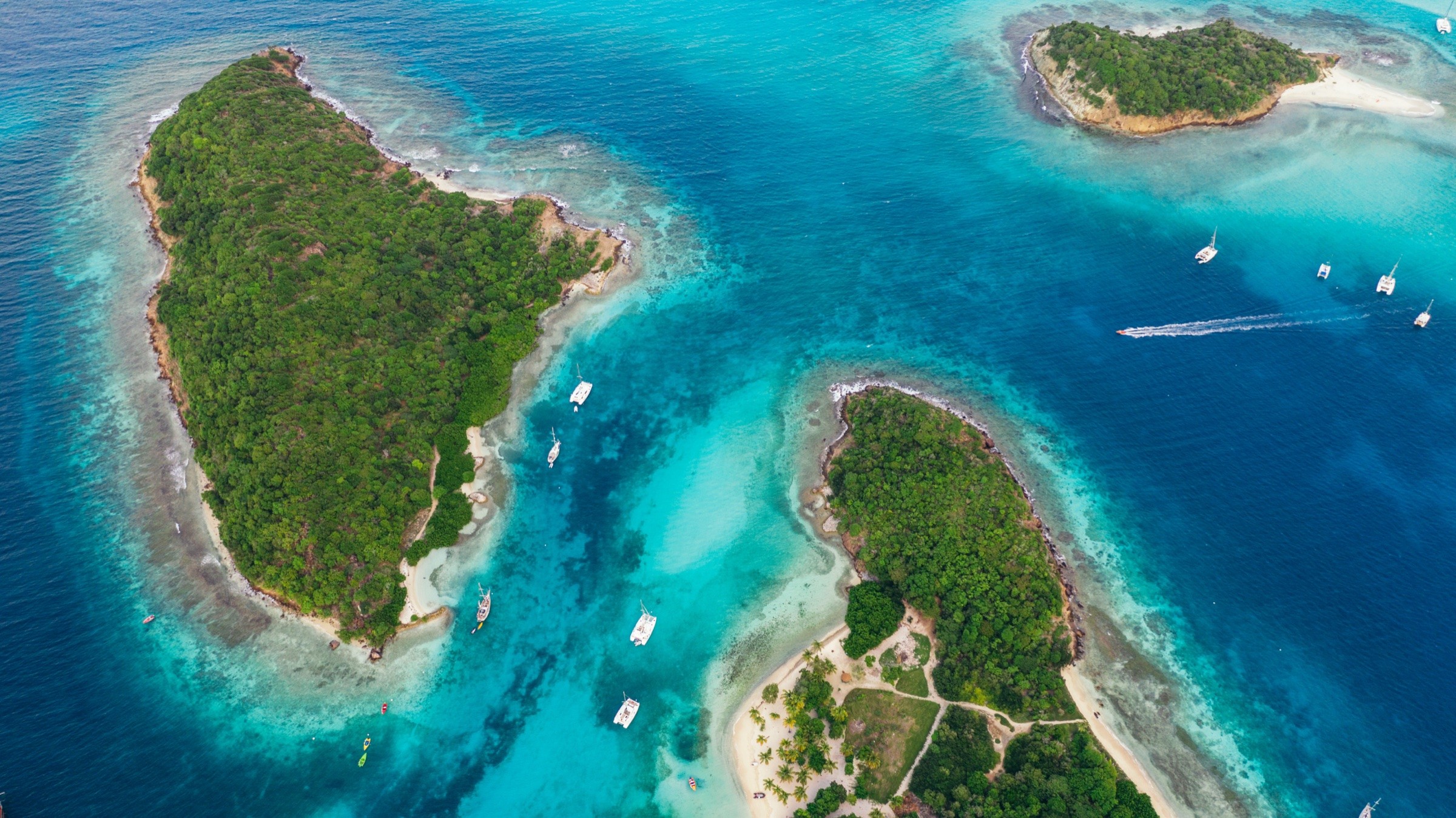
Between Martinique, St. Lucia, and the Grenadines, there are no roads. Only wind, currents, and bays reachable only by water. The Pitons rise straight out of the ocean like twin volcanic teeth, sea turtles glide beneath the hull at Tobago Cays, and Mustique hides its villas behind palm trees, keeping the world beyond the bay at bay. Every day, a new island. Every night, a new anchorage.
This is a voyage for those who want to grab the lines, not just watch from the sidelines. Long passages in open water—six, sometimes eight hours under sail. Then pirate coves, a reggae bar on the sand, grilled lobster, and a local fisherman pulling up to the hull with his morning catch. And at night, at anchor, the only sound is the water lapping against the hull.
We lead a small flotilla with internationally certified skippers and an admiral with over 15 years on the open sea. This is no poolside holiday. This is a journey that gets under your skin and stays there.
Is this journey meant for you?
Challenge
Comfort
Nature
Culture
The Caribbean is for you, if...
If you want to feel what it's actually like to hoist a sail, rather than just watching it from a sun lounger.
If the sea is a highway for you, not just a backdrop, and you're ready for six hours in the open ocean before hitting the first bay.
If you can crash in a double cabin, share a galley with eight people, and find that's exactly where the magic lies.
If you're into photography, know this: the light here hits water of an nameless colour, and the reefs start just a metre from the stern.
If, after sunset, you'd choose a beach shack with reggae and rum over a club with a dress code.
If you're not sure how you'll fare on board, don't worry—the skipper runs through everything, and everyone pitches in.
If you dream of the Caribbean beyond the pool resorts, right down to those beaches you can only reach by water.

Upcoming Journeys
-
Under Sail
Six hours of open ocean before we find the first bay.
We set sail with the sunrise, around 6:30. The wind fills the sails, the catamaran picks up speed, and within an hour the coast is gone. You haul a line on the captain's cue, then sit on the bow, watching the Pitons rise on the horizon. The silence of the open sea is different. Bigger.


Reefs and Turtles
You dive off the stern and there's a sea turtle gliding right beneath you.
Tobago Cays is a marine park with no hotels and no asphalt. Snorkel at the Baradal Turtle Sanctuary, explore the corals of Horseshoe Reef, and dive into water so clear you can see the seabed ten metres down. By nightfall, the locals light up beach barbecues to grill the catch of the day: fresh lobster.
Pirate Coves
A beachside reggae bar, a fisherman with his catch alongside.
Bequia, Mustique, Mayreau, Union Island. Coves where pirate ships once hid, now home to bars with names like Last Bar Before the Jungle. Basil's Bar on Mustique plays live music, and Petit Tabac is the actual island from 'Pirates of the Caribbean'. Literally.


Life on board
One crew, one kitchen, one sky.
Provisions are sorted, cooking is a team effort, and Stefan Stefanov is the first to step up in the galley. One chops, another cooks, a third washes up, and tomorrow the roles swap. In the evening, gathered around the deck table, the world shrinks to just eight people and the stars above the mast. In the morning, it's coffee on the bow and a new course ahead.




































FAQ
Frequently Asked Questions
Is something unclear?
+359 887 293 757
Do I need a visa?
Martinique is France, meaning the European Union: you can enter with just an ID card or passport. Saint Lucia and Saint Vincent and the Grenadines do not require a visa for EU citizens on tourist visits (Saint Lucia up to 90 days, Saint Vincent up to six months), but your passport must be valid for at least six months beyond your return date. Clearance when arriving by water is handled by the skippers at every port.
Do I need sailing experience?
No. Every catamaran is helmed by a professional skipper who takes care of the navigation and safety. What we need from you is just the passion to get involved: after a quick briefing, you will be helping with the sails, the lines, and prepping for arrival, always guided by your skipper.
Will I get seasick?
It's bound to happen during the longer crossings, some of which last six to eight hours. Catamarans are more stable than monohulls, but the swell is still real. Pack some motion sickness tablets and take them before setting sail, not after you start feeling queasy. Keep your eyes on the horizon, stay out on deck, and keep your meals light.
Where do we lay our heads?
Nine nights aboard the catamarans, sharing double cabins with a small en-suite. Couples sleep together, while solo travellers share a cabin with someone of the same gender. We spend our nights at anchor, on a mooring buoy, or tucked into a marina, depending on the bay. The final night is spent in a hotel on Martinique.
What's on the menu?
Basic provisions are included in the price and we'll stock up on them in Martinique on the very first day. Stefan Stefanov might be steering the ship in the kitchen, but cooking is a team effort on rotation: everyone takes a turn cutting, cooking, serving and washing up. Lobster dinners on the beach, shorefront restaurants and fresh catches from local fishermen are extra.
How much extra pocket money should I bring?
Expect to spend around 200 to 500 USD per person for the entire voyage, depending on your appetite for local food and drinks ashore. This covers lobster dinners, drinks, port fees, and beach bar hops. Martinique uses Euros, while St. Lucia and the Grenadines run on East Caribbean Dollars (XCD), but US Dollars are widely welcomed everywhere.
Is the route fixed?
No. The route and key stops are planned, but the specific bays and timings depend entirely on the wind, the waves, and the captain's call. The restaurants and beach BBQs in the itinerary are possibilities, to be confirmed on the spot depending on the date and availability.
How do we get to Martinique?
With a flight from Sofia to Paris and a separate flight from Paris to Martinique. Tickets are included in the price, but are issued as two separate bookings rather than a single connected flight. Airport details, layovers, and luggage allowance will be confirmed in your final flight itinerary.
What is the weather like in January?
Dry season. Daytime temperatures hover between 28 and 30 degrees, the water is a balmy 27, and trade winds blow at 15 to 25 knots—exactly what we need. Brief tropical showers pass in minutes. Nights at anchor are pleasantly cool, never cold.
Do I need to be a strong swimmer?
Yes. The sailing trip includes diving off the stern, snorkelling over reefs, and heading ashore in a dinghy. Life jackets are on board, but being confident in the water is a must.
Can I fly a drone?
In the Tobago Cays Marine Park, drones are banned without a permit from the park. Mustique is a private island with its own set of rules, and Martinique follows French aviation laws. Always ask the skipper before taking off—they know where you can fly.
Is there Wi-Fi on board?
Limited. Martinique is in the EU, so Bulgarian roaming works under European rules. On Saint Lucia and in the Grenadines, roaming is expensive, so grab a Caribbean eSIM or embrace the fact that for nine days, you'll be looking at the horizon far more than a screen.
Can we go fishing?
Only outside marine protected areas, provided the gear is on board and the skipper gives the green light during a permitted stretch of the sail. Fishing is strictly forbidden within the Tobago Cays Marine Park. We can't guarantee a catch, but the thrill of the chase is all part of the voyage.