Kyrgyz culture: rituals, food, and daily life
The host places the plate on the floor, pours tea into a small piyala, and hands it to you with both hands. She doesn't ask if you want it. She doesn't ask where you are from. She simply serves it because you are a guest, and in Kyrgyzstan, a guest is sacred. You take a sip. The tea is salty. You smile. She pours another cup.
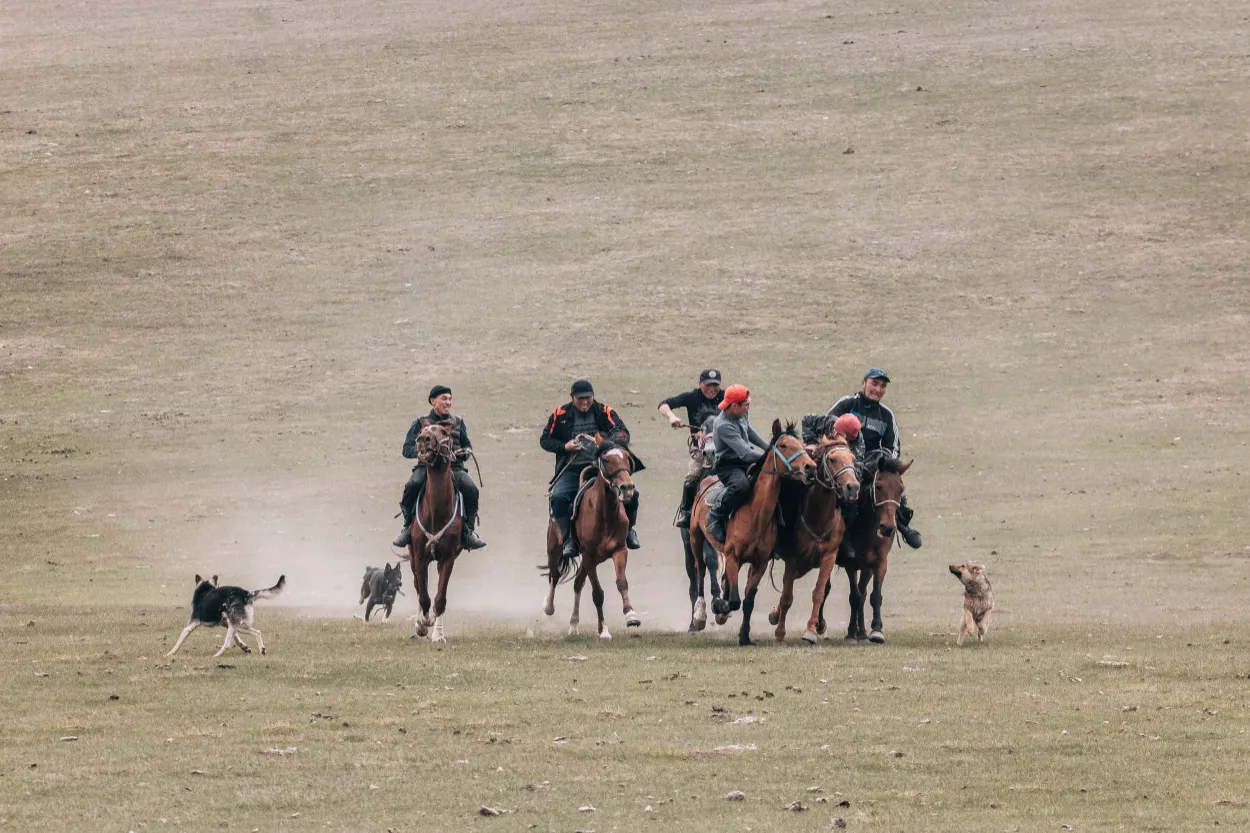
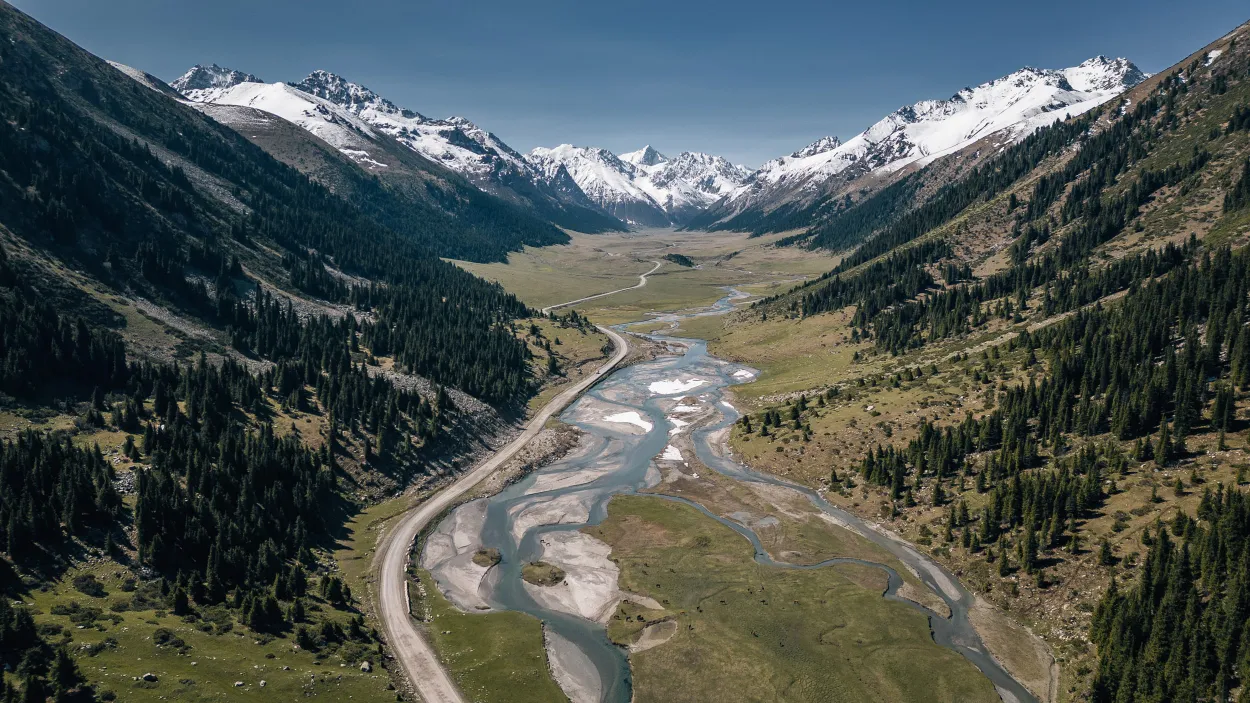
Kyrgyzstan is a place where culture is still very much alive, not just preserved in museum cases. Here, the nomadic lifestyle—something that has faded into folklore in most of the world—is still actively lived out on a daily basis. People sleep in yurts through the summer, herd livestock at 3,000 metres above sea level, hunt with golden eagles, and weave rugs with intricate designs passed down through generations.
Our 8-day itinerary takes you through the vibrant daily life of Bishkek, the nomadic encampments near Bokonbayevo and Song-Kul, the craft-making hubs of Kyzyl-Tuu and Kochkor, and the diverse culinary scene in Karakol. Every single day brings a fresh encounter with a different facet of this culture—not through a glass pane, but gathered around a table, inside a yurt, and beneath the open sky.
The Yurt: A home built from scratch in an hour
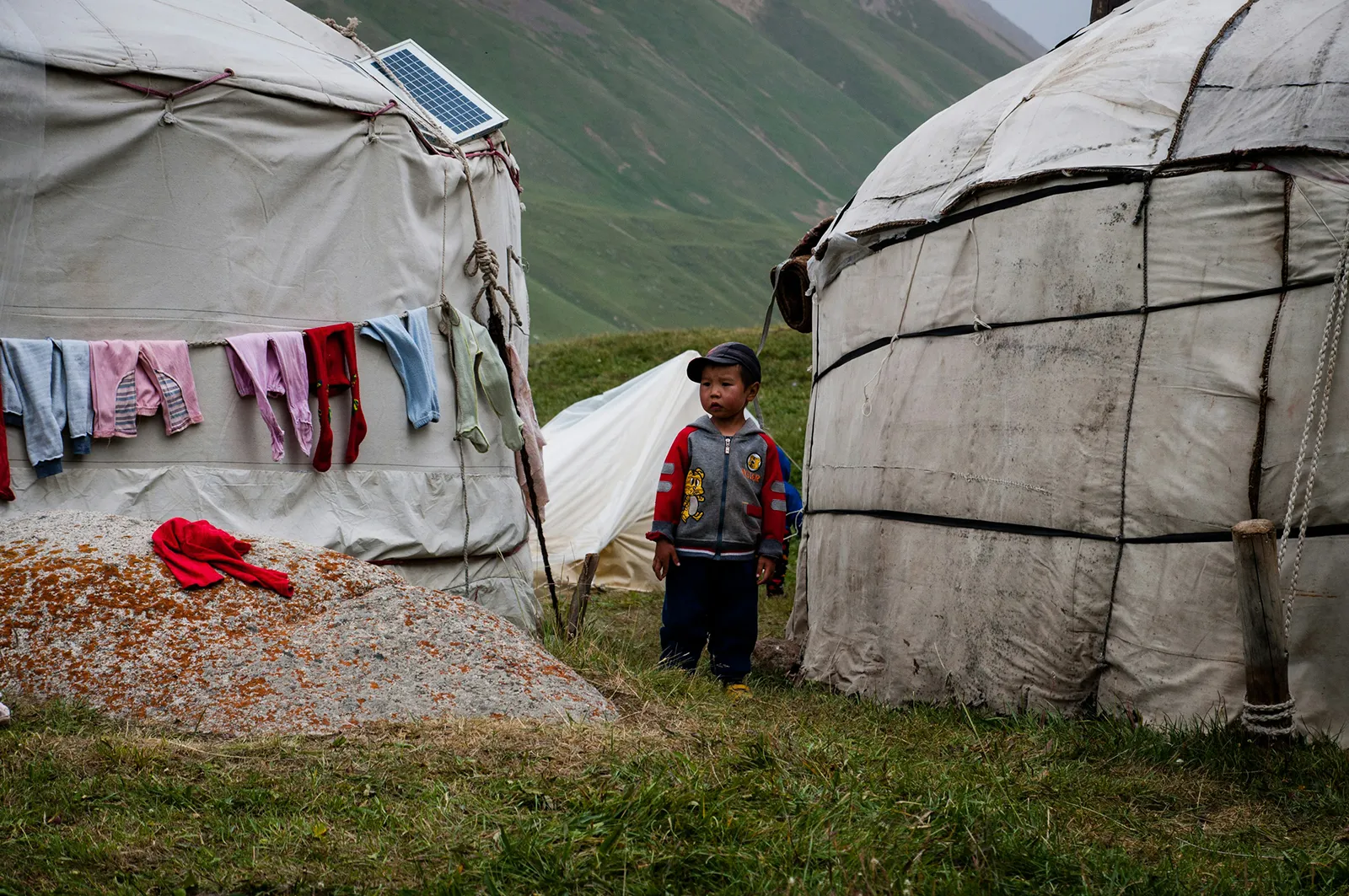
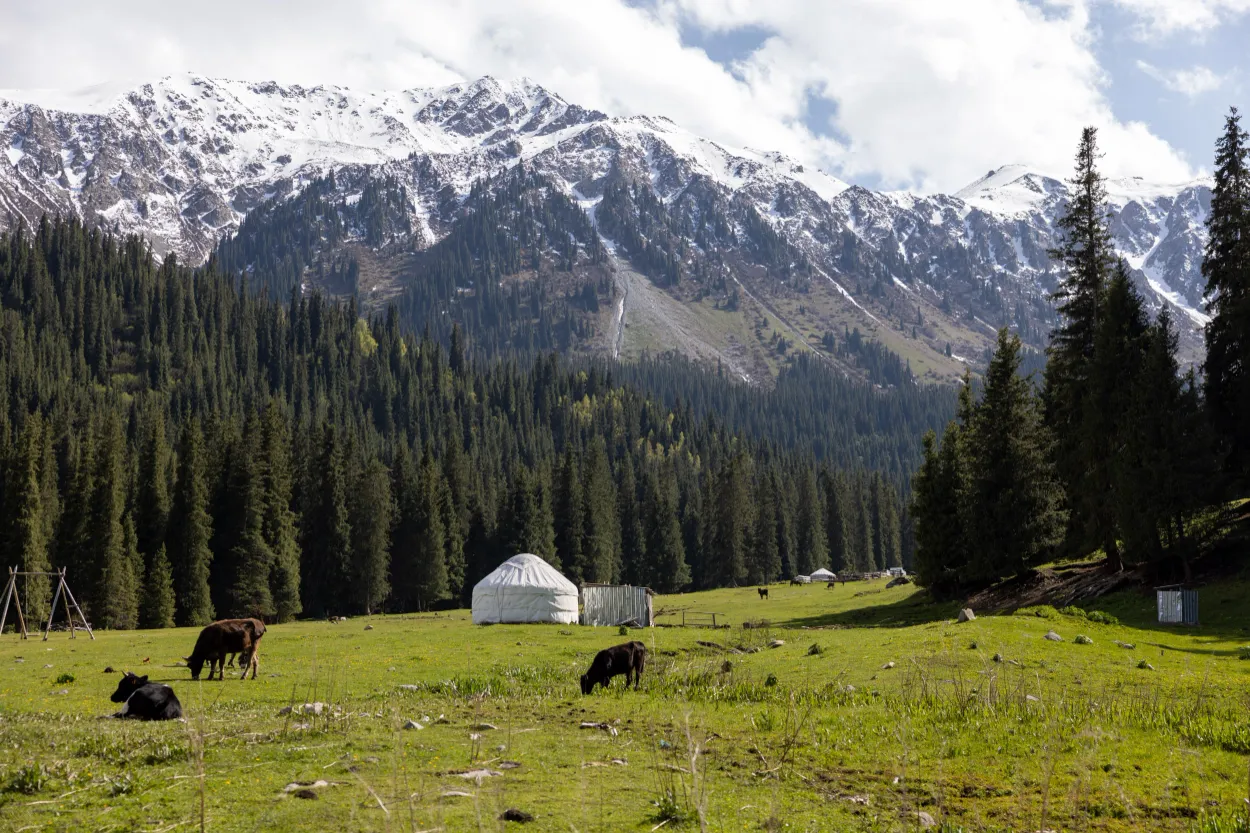
A yurt is far more than just a tent. It is a masterpiece of nomadic engineering, perfected over thousands of years. Think of a wooden framework, thick felt layers, and an unexpected, cozy warmth waiting inside. In the lakeside village of Kyzyl-Tuu on Issyk-Kul’s southern shore, a local craftsman shows us how to pitch a yurt entirely from scratch, with the whole group lending a hand.
The process is tactile and physical, yet beautifully intuitive. The wooden lattice wall (kerege) stretches out like an accordion. Wooden roof poles (uuk) are slotted into the central crown (tunduk). Then come the felt coverings, layered one by one, gradually casting the interior into a warm, dim half-light. Within an hour, a bare clearing becomes a home.
At night, the silence inside a yurt is unlike anything you will experience in a hotel room. You can hear the wind gently pressing against the felt outer walls, while the floor beneath is the solid earth, cushioned by hand-spun rugs. The air smells of wool and firewood smoke. It is cold out, but the thick, woolen blankets are incredibly generous.
Eagle Hunting: Ancient power on your wrist
Eagle hunting in Central Asia is a practice stretching back millennia. Nomads tamed golden eagles, relying on their keen eyes to hunt foxes and hares during the harsh winters when food was scarce. Today, only a handful of families keep this tradition alive, making Kyrgyzstan one of the very last bastions of this ancient art.
Ruslan is a professional eagle hunter based near Bokonbayevo. His golden eagle is massive, heavy, and boasts feathers that catch the light with a metallic sheen. When the bird lands on your arm, you can feel its raw power even through the thick leather gauntlet. Ruslan demonstrates how the eagle hunts in the wild, and for a fleeting moment, you are witnessing an art far older than any city, older than any building.
This is no staged tourist stunt. There is no background music, no stage. Just a man, an eagle, the open steppe, and thousands of years of heritage distilled into a single, breathtaking flight.
The Food: Beshbarmak, manti and bread straight from the tandyr
Kyrgyz cuisine is the hearty fuel of people who spend their lives moving outdoors. It is rich, filling, and unashamedly meat-heavy. It is not for the calorie-counters—but it is honest, soul-warming food.
Beshbarmak translates literally to "five fingers", because it is traditionally eaten with your hands. It consists of tender boiled meat (usually lamb or horsemeat) served over broad, hand-cut noodles and drenched in rich broth. The flavours are simple yet incredibly deep, and you will always be served far more than you can finish.
Then there are manti—plump, steamed dumplings packed with minced meat and onions. Lagman is a rich noodle soup loaded with vegetables, while plov is a fragrant mountain of rice, meat, spices, and carrots slow-cooked in a massive cast-iron cauldron. Bread is the cornerstone of every meal, served piping hot and crusty, fresh out of the clay tandyr oven.
In Karakol, the food scene is even more diverse than the rest of the country. Here, the local Dungan (Chinese-Muslim) community has introduced ashlan-fu (a cold, spicy noodle soup with a tangy vinegar broth) and other unique dishes that add spice to the local palate.
Kymyz, fermented mare's milk, is a sour, slightly fizzy staple on every yurt dining table. It is an acquired taste, but accepting a bowl is the ultimate sign of respect and hospitality.
Osh Bazaar: Bishkek in miniature
Bishkek’s Osh Bazaar is no tourist trap; it is the chaotic heart of the city, where locals do their daily shopping. Spices, clothes, musical instruments, household gear—everything is piled high in a sprawling labyrinth of alleyways.
Head to the Kyal ("dream") section, which is dedicated entirely to traditional Kyrgyz crafts. Here you will find ceremonial dress, carved wooden chests, beshik (traditional cradles), teshek (colourful floor mats), and shyrdaks—striking felt rugs decorated with bold geometric patterns. Everything is handmade, and striking up a chat with the seller (who is often the artisan themselves) is half the fun.
Prices are very reasonable by Western standards. A small shyrdak goes for 300-500 som, an ornate carved chest for 1000-2000 som, and traditional costume pieces for 3000-8000 som. Haggling is expected, but keep it friendly. Here, a negotiation is a conversation, not a battle of wills.
Bishkek: Soviet footprints, nomadic hearts
Bishkek is a classic city of contrasts. Wide boulevards, grand marble-clad public buildings, an impressive opera house, and massive historical museums. The architecture is grand, brutalist, and monumentally Soviet. Yet, running parallel to the wide roads are narrow irrigation canals shaded by towering poplars, where the aroma of hot bread mixes with city traffic.
On one corner stands the stolid, Stalinist-style city hall. On the next, a cozy teahouse where elders sit in social circles sipping green tea from small bowls, talking about horses. Inside the State Historical Museum, the story of Kyrgyzstan’s nomadic roots is stored, while just outside on the main square, a young entrepreneur sells cold kymyz from a plastic bottle.
Bishkek might not be conventionally pretty, but it is real. Here, the past and the present do not pretend they do not know each other; they live together under the same roof, sharing the same floor.
Your final evening in Kyrgyzstan is spent in a restaurant set up with a traditional yurt interior. On the table: steaming dishes of beshbarmak, manti, fresh bread, and endless green tea. Outside, the avenues of Bishkek slowly fade into the twilight. Tucked inside your pack are a shyrdak from Kochkor and a wooden chest from Osh Bazaar. But the best souvenirs cannot be packed away. They live on in the scent of felt and woodsmoke, the weight of an eagle resting on your arm, and the memory of a warm cup of tea offered to you with two hands.
Author: Martin Bonov