Kyrgyzstan for beginners: what will you do
Your first day in Kyrgyzstan ends with dinner among strangers, in a town whose name means 'the mountain of happiness'. The second day ends in a yurt, with an eagle perched just an arm’s length away. The third, standing before cliffs as blood-red as the legends that tell their story far better than any guidebook. And every day that follows makes the last feel like nothing but a dress rehearsal.
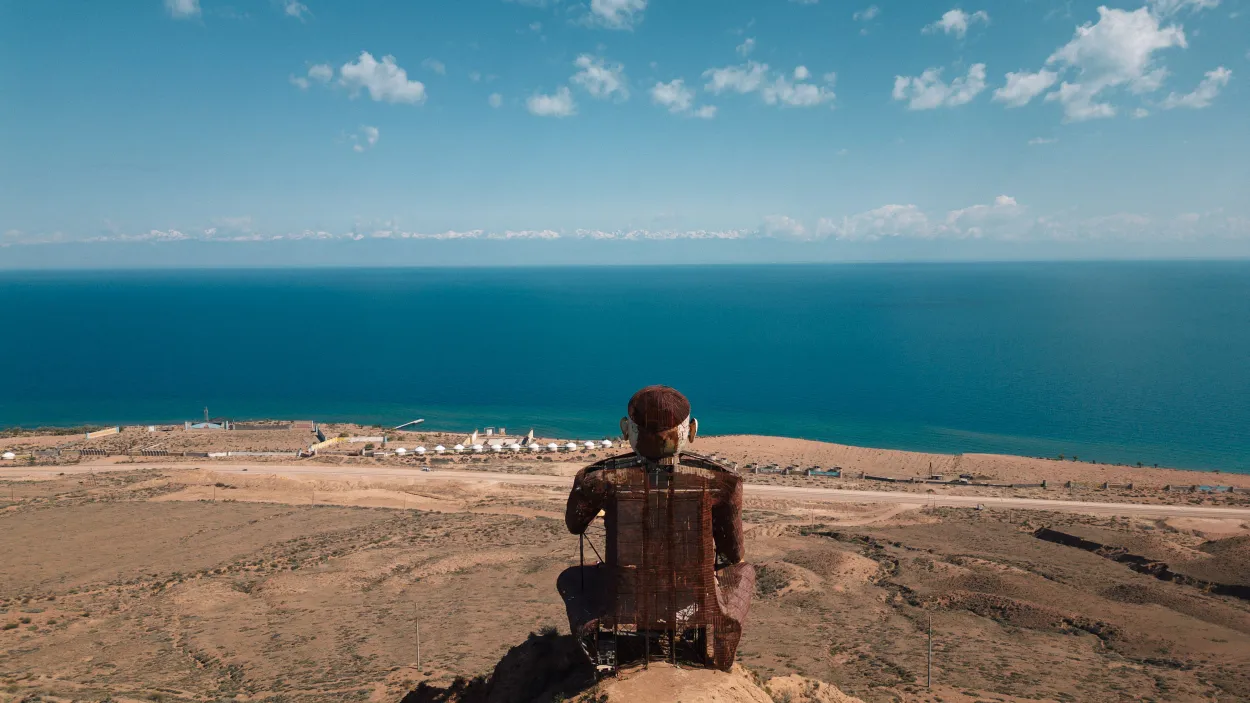
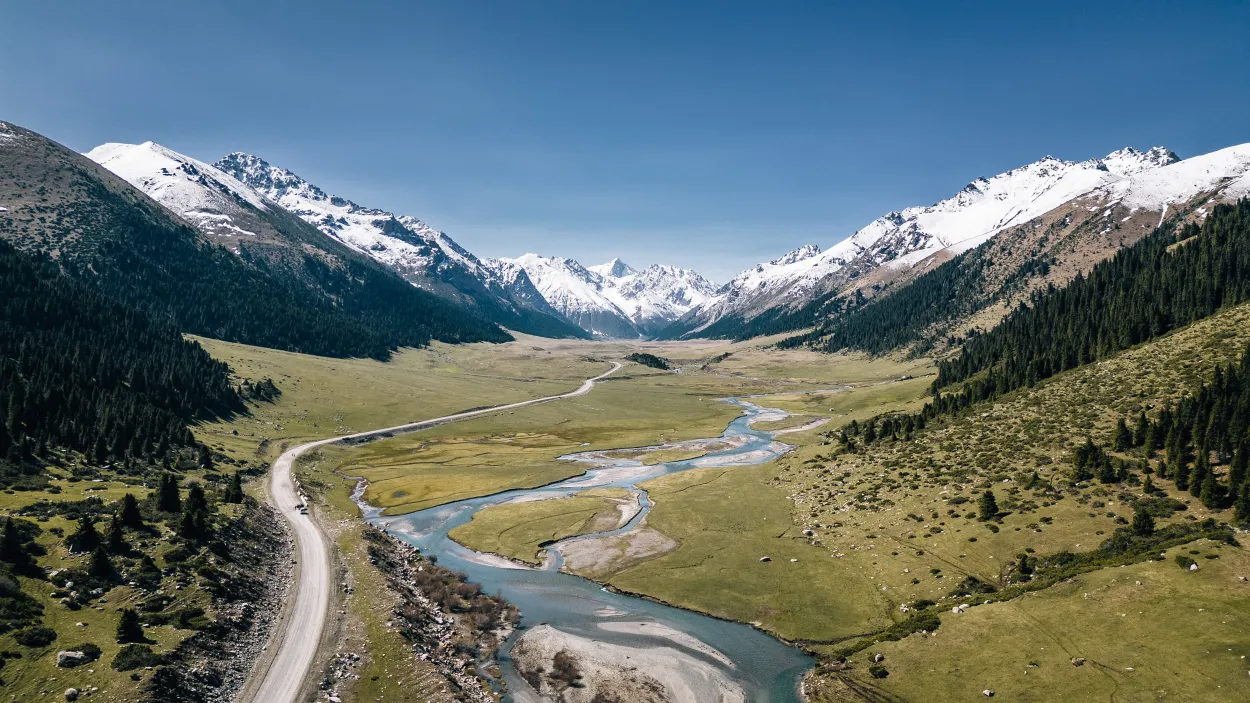
Kyrgyzstan is not a country where you "go sightseeing". Here, you do things for which you have no words, because you have never done them before. You build a yurt with your own hands. You watch an eagle take flight from the hand of a hunter whose family has practised this for 12 generations. You cross a pass at 3,822 metres, where the only tracks belong to the previous 4x4. You ride a horse to a lake most maps do not show. Over 8 days, the route winds through Bishkek, Issyk-Kul, Karakol, Engilchek, and Song-Kul — around 1,400 km, and every single one of them holds something you have never tried before.
This is not a checklist of sights. This is a sequence of firsts.
You will build a yurt from scratch
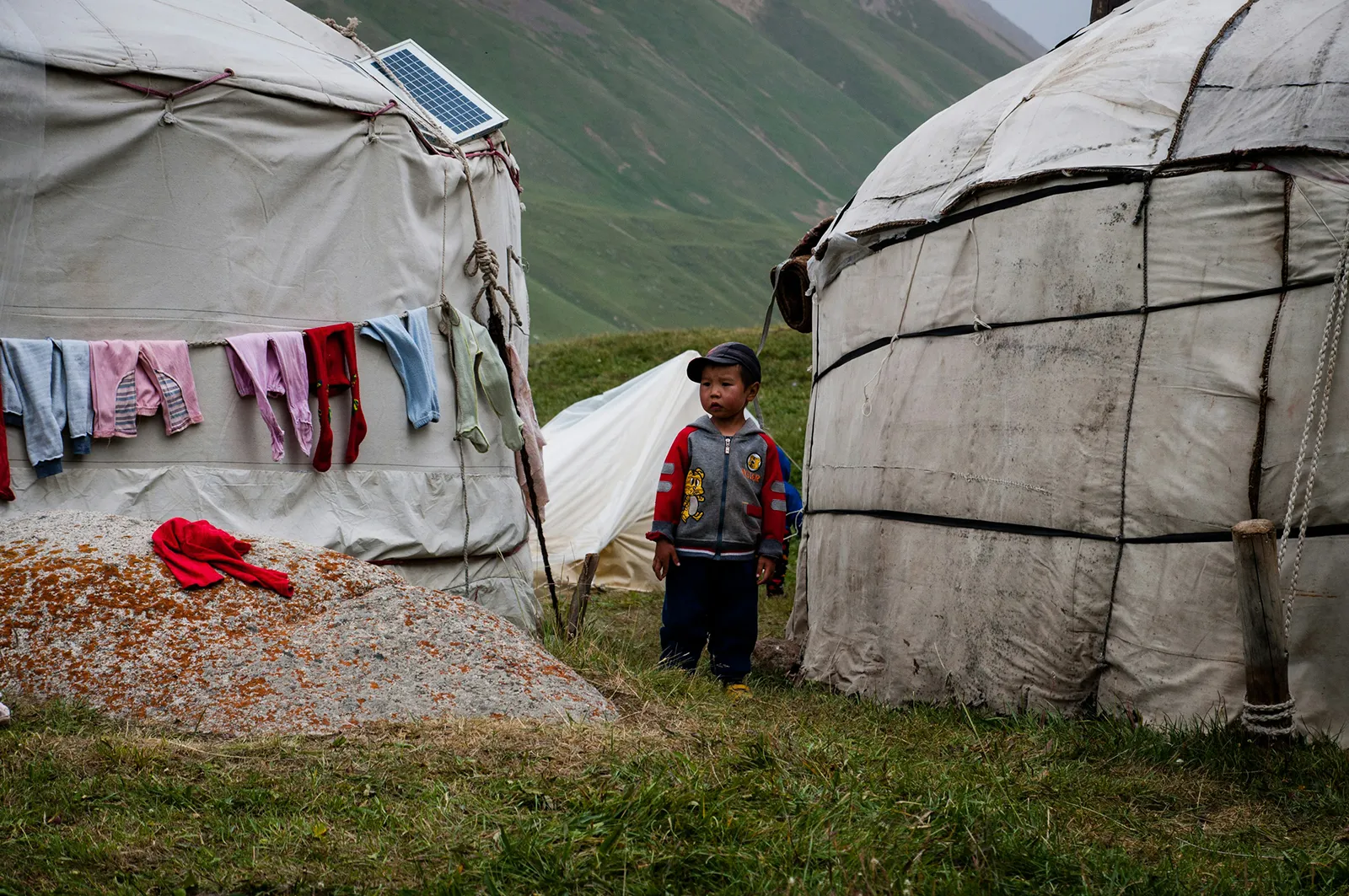
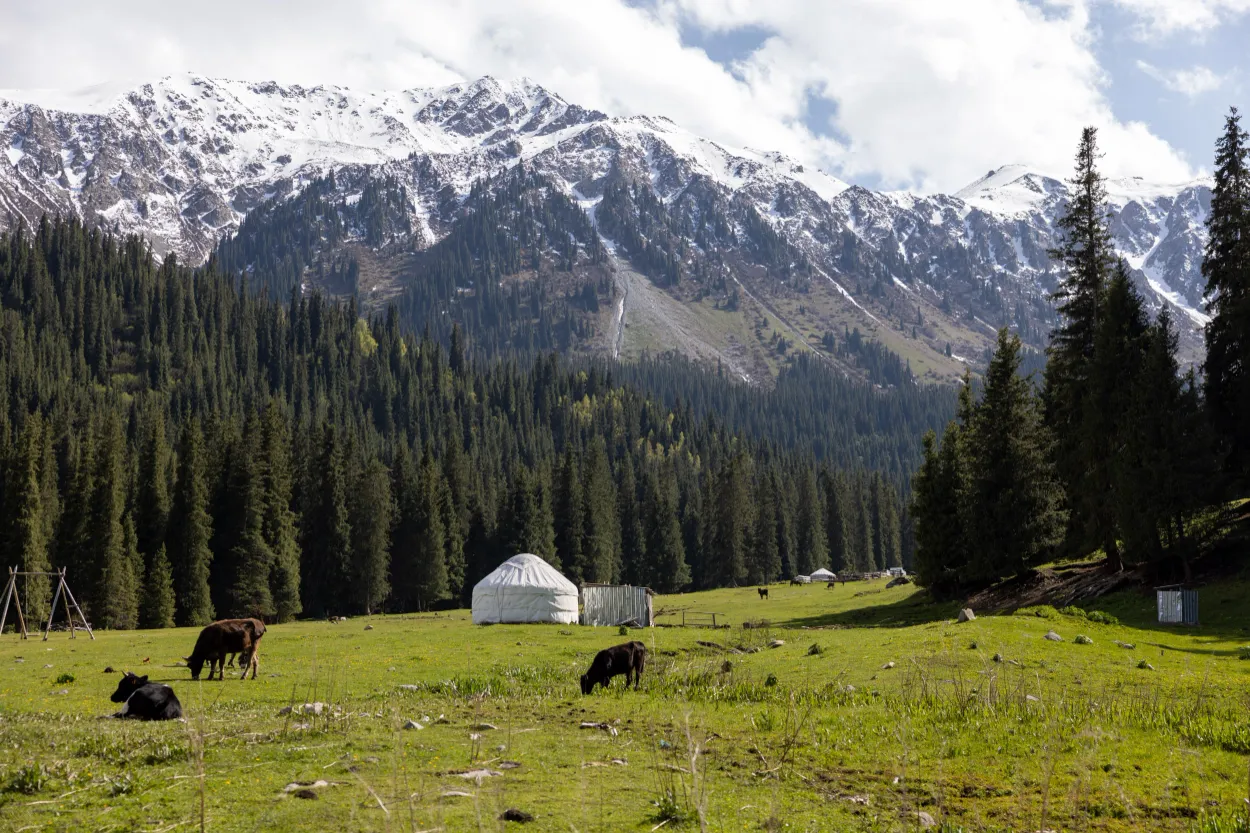
The village of Kyzyl-Tuu, on the southern shore of Issyk-Kul, is one of the last places where yurts are crafted the old way. A local master guides you through the entire process. The wooden lattice structure, the central crown, the felt covering, the tensioning, the securing. You work with your hands, with your body, and when the structure stands, you feel something hard to explain — a sense of pride in something that is not yours, but in which you played a part.
A yurt is not a tent. It is a home that can be dismantled in an hour and assembled in a new location in two. Nomads have been doing this for millennia, and you are doing it for the first time. The difference is they have a lifetime of practice, and you have an afternoon. But the result is the same: shelter, walls, warmth.
You will watch eagle hunting just metres away
Ruslan is a professional eagle hunter. The tradition is Central Asian, thousands of years old, and has vanished in most other countries. In Kyrgyzstan, a few families keep it alive. The demonstration is not theatrical. The eagle is not a prop. It is a predator, heavy, with a wingspan stretching over two metres. When it takes flight from Ruslan’s hand and sweeps low towards the earth, the very air around you shifts.
There is no glass between you and the bird. No fence. You stand in the open, on the shore of a lake that never freezes, watching something older than any nation-state on the map. Afterwards, Ruslan talks about the winter hunts, the furs, and the bond between hunter and eagle built over years. You listen and realise this isn't a show. This is life.
You will journey through a canyon that looks like Mars
The Fairy Tale Canyon lies 160 km from the camp, on the way to Karakol. Red and orange rock formations, carved by wind and water into shapes resembling dragons, snakes, and castle walls. The landscape is so wildly different from everything around it that it feels like a mapping error, a fragment of another planet left behind.
From the canyon rim, Issyk-Kul appears, vast and blue in the distance. The contrast between the deep red of the clay and the blue of the water is so sharp it looks unreal. Afterwards, you head towards the Jeti-Oguz rocks, the Seven Bulls — seven massive red rock pillars steeped in legends of khans and betrayal. Standing before them, you don't think about the legends. You think about the scale. About how small you are.
You will reach a ghost town at 3,822 metres
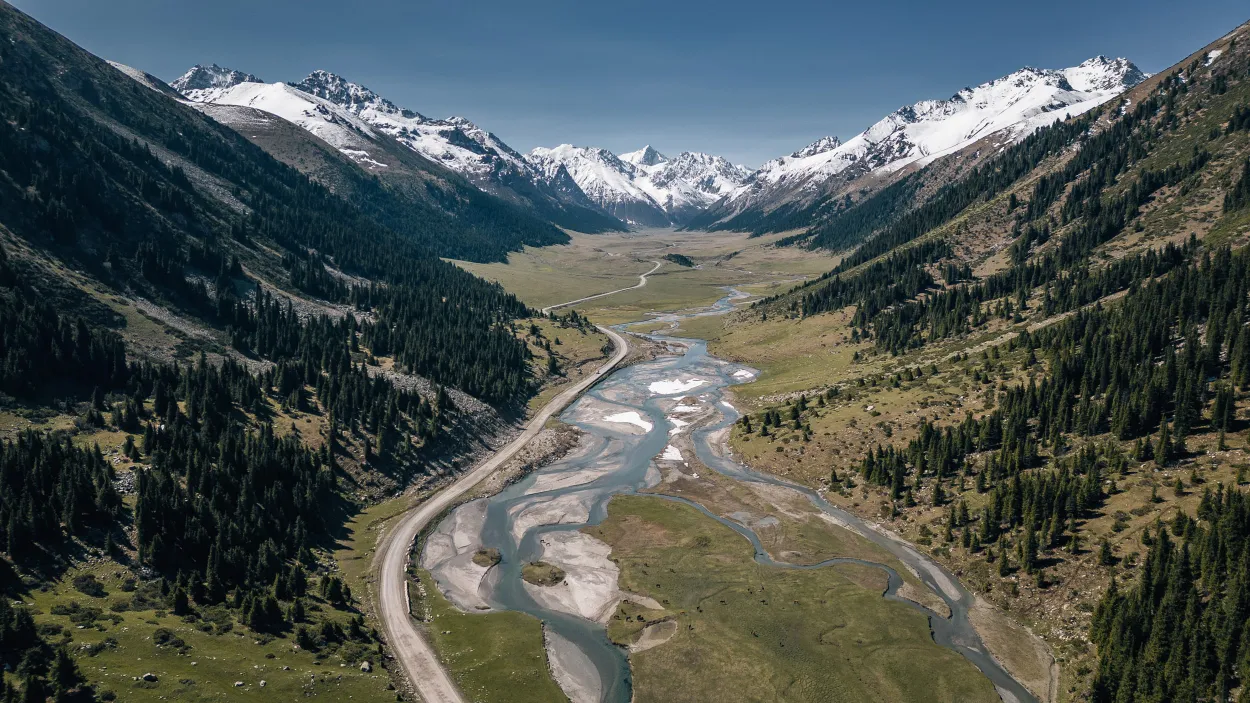
The Chon-Ashu pass stands at 3,822 m. The road is off-road, dusty, with hairpin turns hidden until the very last second. The Sary-Jaz ridge is the most isolated region in Kyrgyzstan, and at the end of the road lies Engilchek — a town abandoned by its people after the Soviet collapse.
The ruins of houses, playgrounds, and an airfield look like a movie set for a film that was never shot. Yet, about 20 families remain. There is a small school. There are children. And 50 km to the east lies the Engilchek Glacier, the largest in the country — a white behemoth moving so slowly it seems frozen in time.
This is a day that reshapes your concept of distance. Not in kilometres, but in feeling. Between you and the last town with more than 100 residents, there is nothing but mountains.
You will sleep in a yurt at 3,010 metres
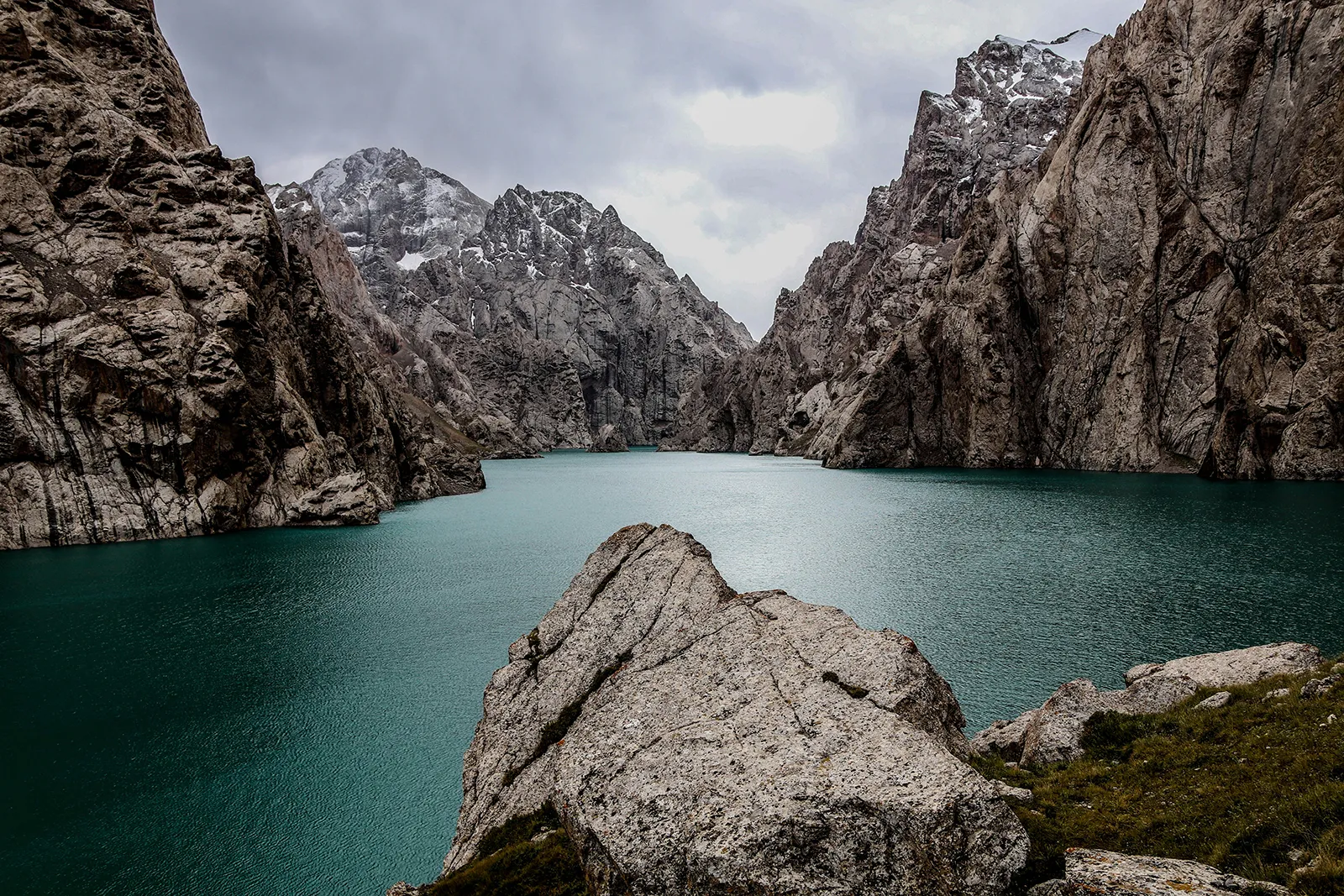
Lake Song-Kul lies at 3,010 m, in the heart of the Tian Shan. The road cross the Kalmak-Ashu pass (3,433 m), and the yurt camp sits right on the shoreline. There is no electricity here, no signal, no sound but the wind and the water.
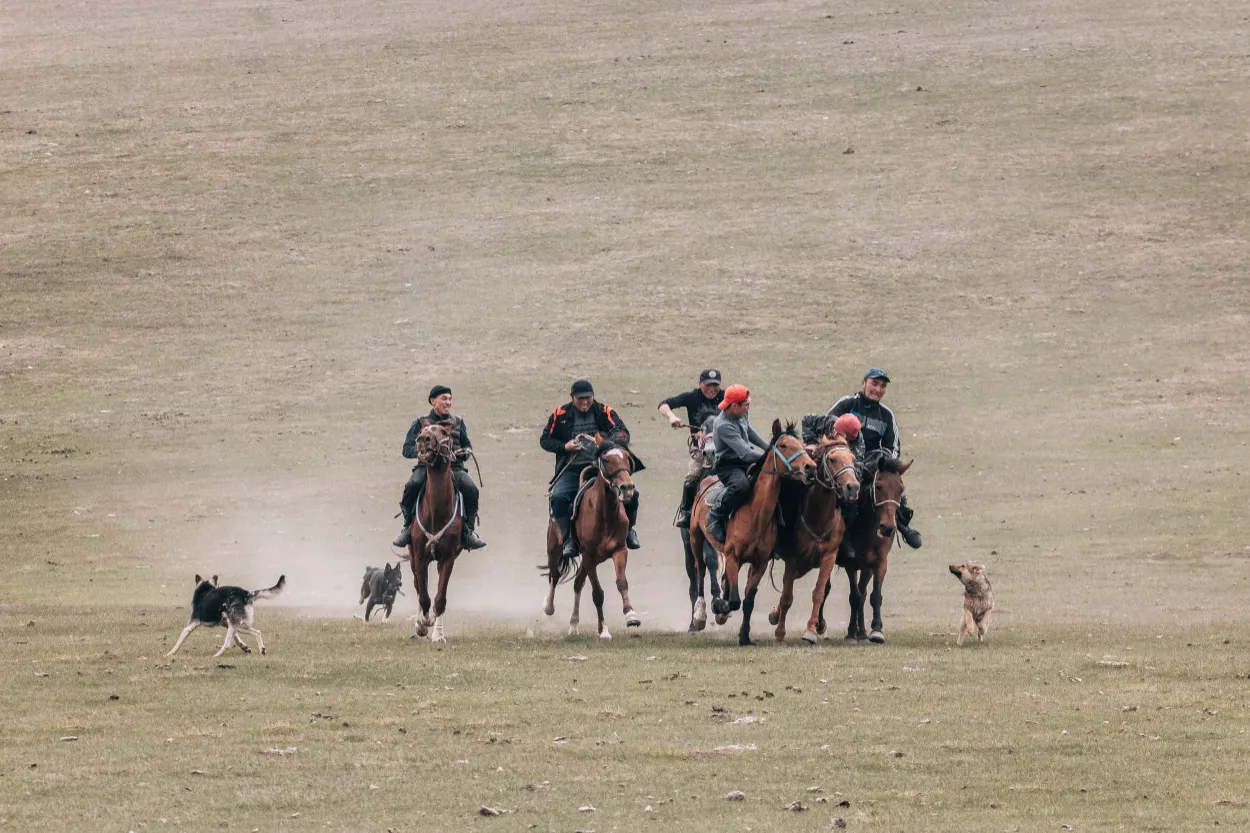
By day, you ride a horse to the Tuz pass, where the panoramic view of the lake, the southern ridge, and the Kilemche pasture looks like an unfinished painting — so pure and simple. At night, the stars are so bright they cast a shadow. Not metaphorically. Literally.
You sleep in a yurt, wrapped in blankets, with the scent of wild grass outside and the cold mountain air slipping through the seams. You wake up early, not to an alarm, but to the light changing the lake from black to grey to blue in a span of 20 minutes.
You will say goodbye at the Osh Bazaar
The final full day is spent in Bishkek. The Osh Bazaar is loud, vibrant, thick with the aroma of spices and fresh meat. The Kyal section ("imagination, dream" in Kyrgyz) sells traditional costumes, hand-carved wooden boxes, teshik mats, and beshik cradles. You buy something small, and later, you won't be able to explain why it matters so much to you.
The farewell dinner is held in a traditional-style restaurant. The table is long, the food familiar (you have been eating it for 7 days now), and the people around you are no longer strangers. They are the ones with whom you built a yurt, rode horses at 3,000 metres, and shared a quiet moment before a ghost town.
The airport transfer is after midnight. Kyrgyzstan ends quietly, just as it began. But the collection of firsts you carry with you is longer than the route itself.
You head home with fingers smelling of horse mane and yurt felt. With the memory of a silence louder than any noise. With the feeling that in 8 days, you have experienced more firsts than in the last 8 years. Kyrgyzstan is not a destination you repeat. Kyrgyzstan is a destination that never repeats, because every night, every mountain pass, and every gaze of an eagle happens only once.
Author: Martin Bonov