Kyrgyzstan’s Landscapes: Earth, Light, and Scale
The light in Kyrgyzstan is different. At 3,000 metres up, the sun feels closer, shadows stretch longer, and the colours have a depth that feels almost fake on a screen. The canyons are a deep, dusty red. The alpine lakes are a piercing turquoise. The highlands are so violently green you'd swear someone had dialled the saturation all the way up. But they haven't. It just actually looks like this out here.
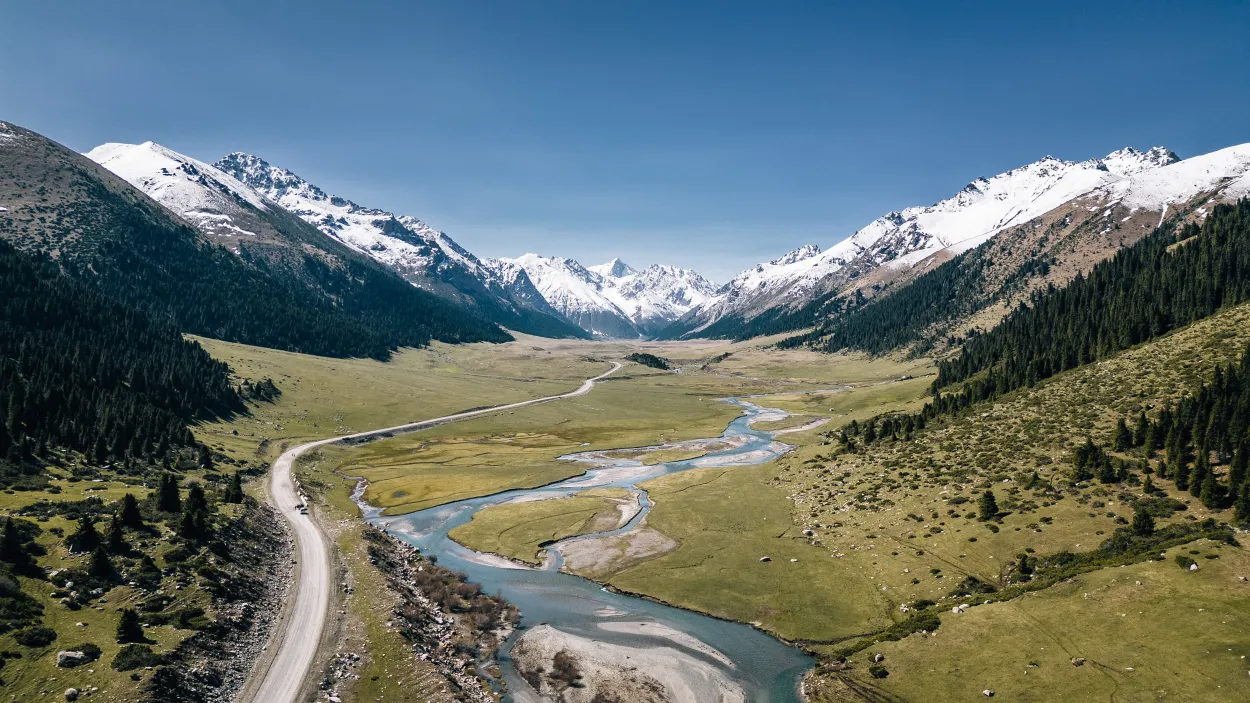
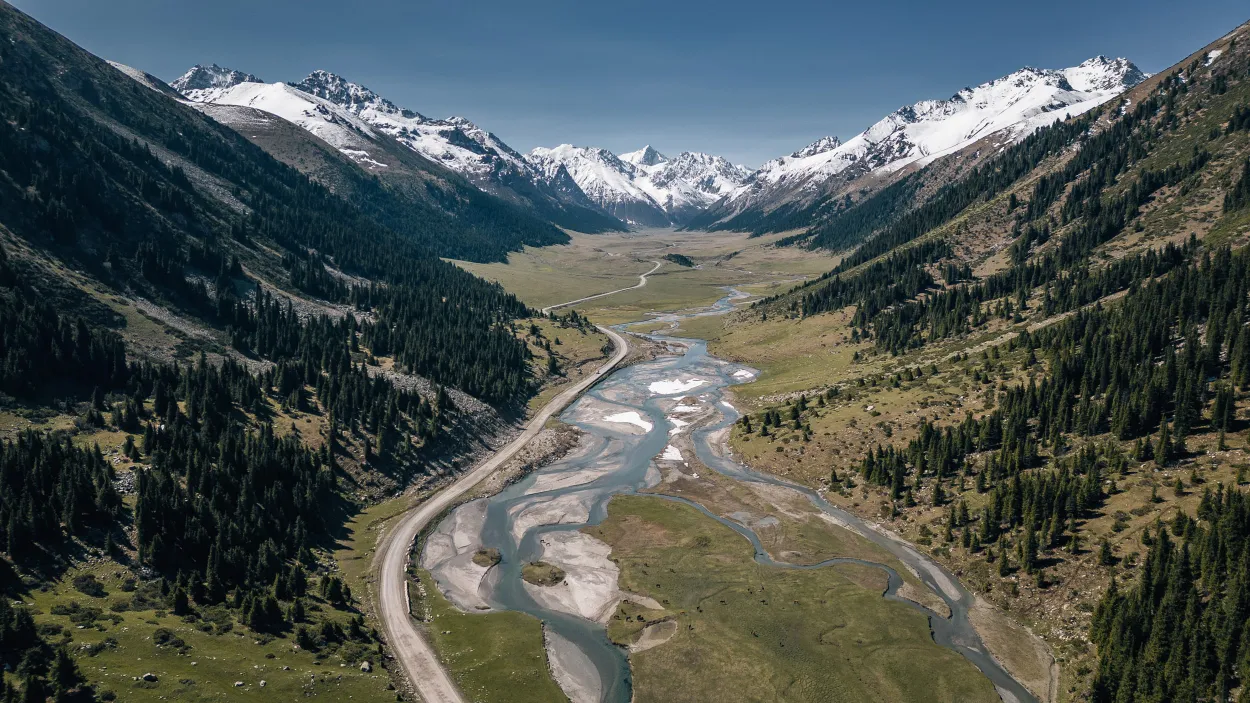
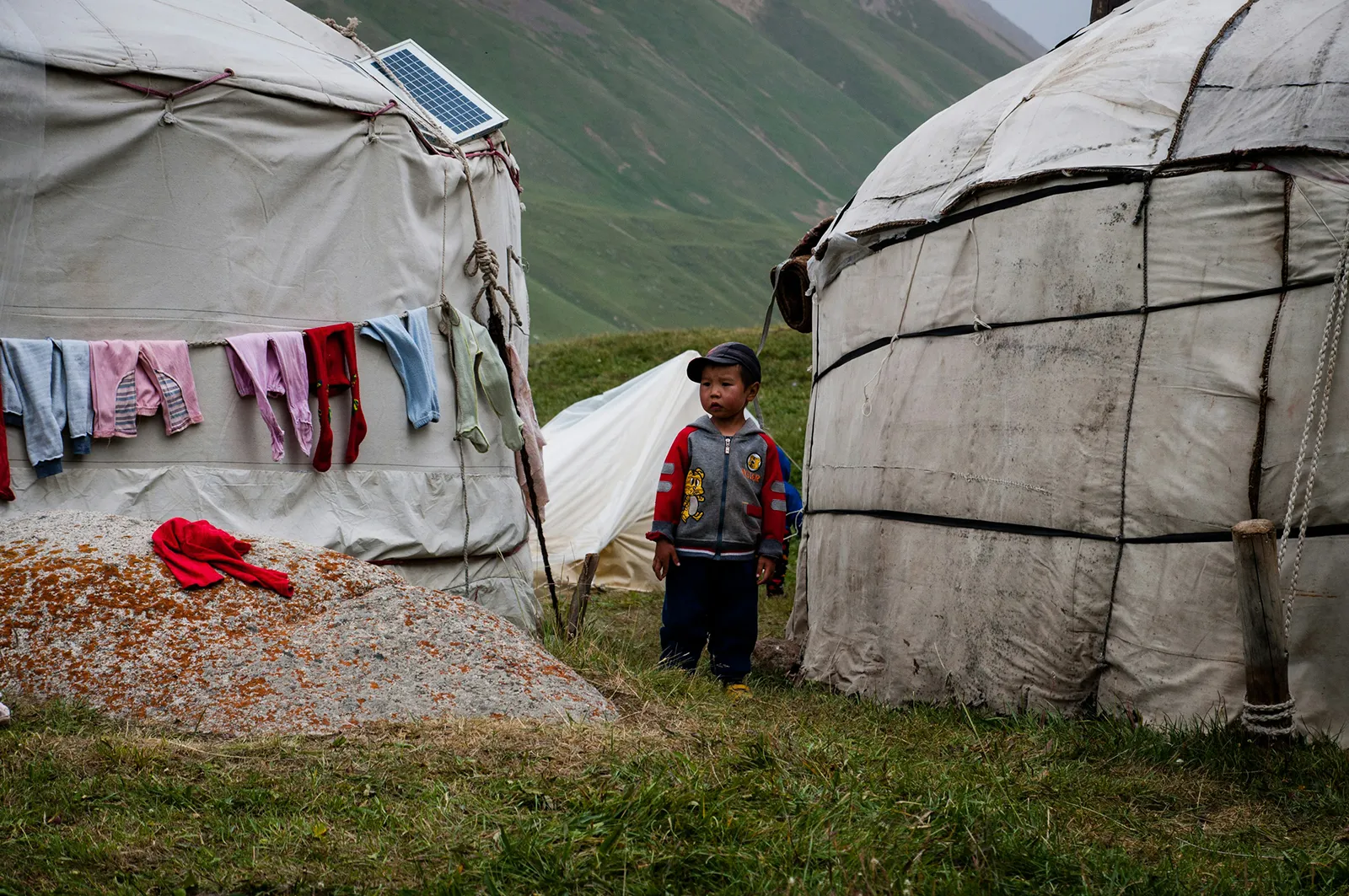
Kyrgyzstan is a country custom-built for a wide-angle lens. Over 90% of the territory is mountainous, with the Tian Shan range dominating the landscape, and the scenery shifting from steppe to glacier in just a three-hour drive. Over 8 days, the route winds through canyons with Martian-like terrain, along the shores of the salty Lake Issyk-Kul (the seventh deepest in the world), past abandoned Soviet towns at 3,822 metres, and up to the high-altitude Song-Kul, where yurts are the only vertical line in an otherwise endless horizontal vista.
This is not a destination for a single snapshot. Here, every hour brings a different light, a different contour, a different sky. A photographer in Kyrgyzstan doesn't wait for the "golden hour". Here, the entire day is golden, just in varying shades.
Skazka Canyon: Mars on Earth
On the road from Issyk-Kul to Karakol, Skazka Canyon (Fairytale Canyon) is a place that looks more like another planet. Red, orange, and yellow rock formations, carved by wind and water, rise from the earth like natural sculptures. Some resemble snakes, others fortresses, and some look like dragons.
Light is everything here. In the early morning, the rocks are pale pink, quiet, as if still asleep. By 10 or 11 am, the red intensifies, and the contrast with the bright blue sky is so sharp it looks pre-filtered. Late in the afternoon, as the sun dips low, shadows stretch the formations, giving the canyon a depth that is completely missing in the morning.
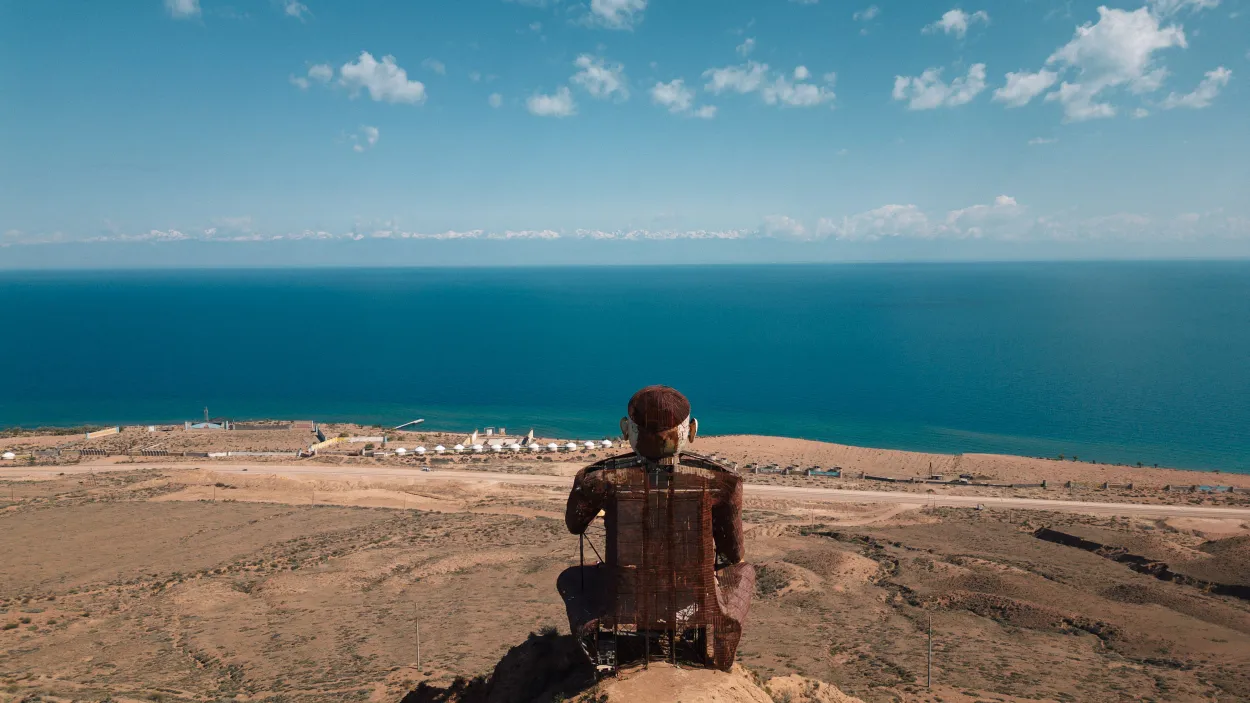
From the edge of the canyon, the panorama of Issyk-Kul reveals itself: water so blue it looks like liquid metal, framed by snow-capped peaks. Two worlds, one frame. Desert below, glaciers above.
Issyk-Kul: The Lake That Never Freezes
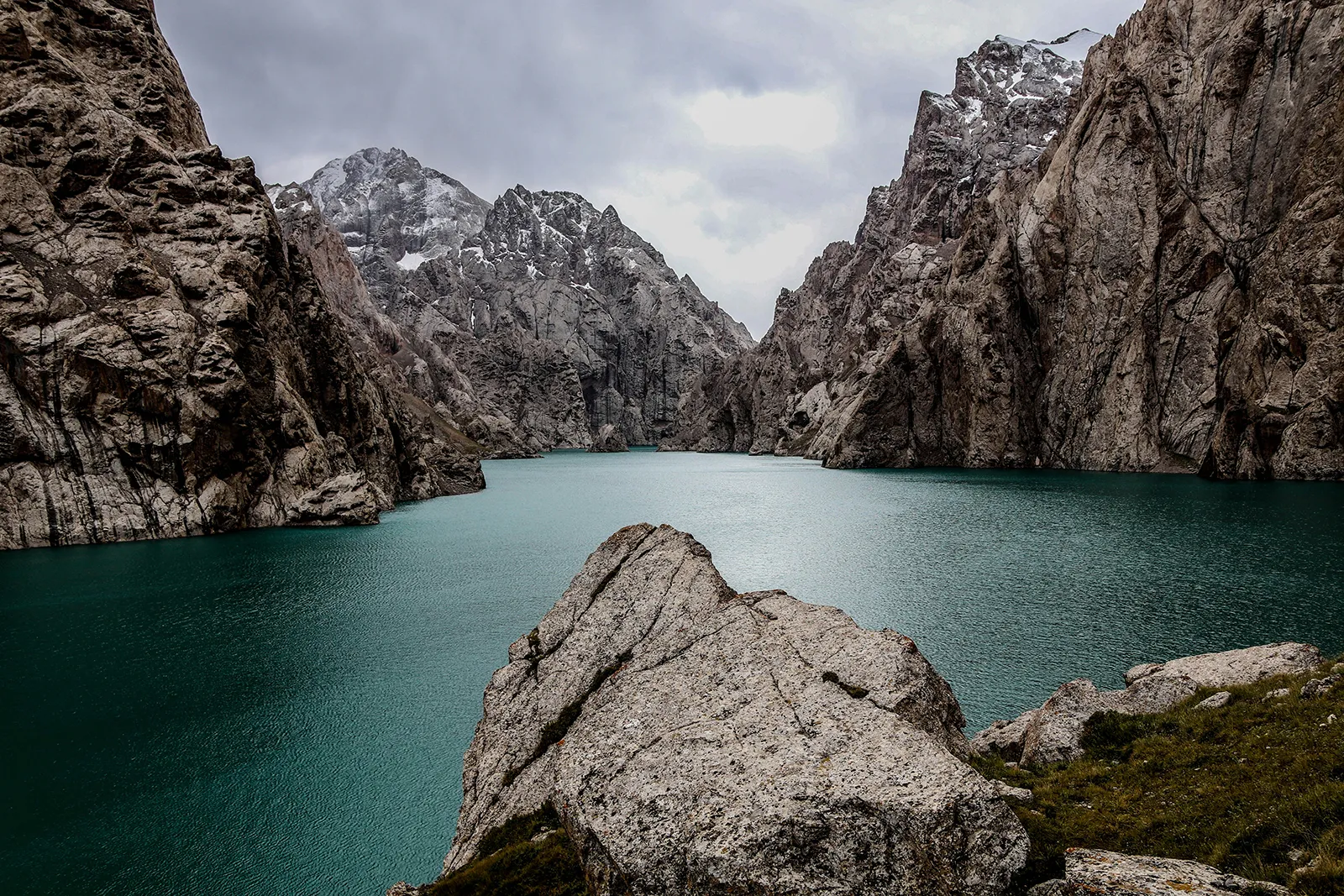
Issyk-Kul is 182 km long, 60 km wide, and 702 metres deep. Salty, but not like the sea. Surrounded by snowy peaks, yet it never freezes. Sitting at 1,607 metres above sea level, it is one of the largest high-altitude lakes on the planet.
For the photographer, Issyk-Kul is an endless palette of blue shades. In the morning, the water is dark blue, almost black, with mist rising from the surface. In the midday heat, it lightens to turquoise. At dusk, the reflection of the mountains turns the lake into a mirror with a pinkish-orange glow.
The southern shore, near Bokonbaevo, is wilder and more photogenic than the northern side. Here, the steppe runs right to the water's edge, and yurt camps stand just metres from the shore. The contrast between the nomadic lifestyle and the vast expanse of water is pure cinema.
Jeti-Oguz Rocks: The Seven Bulls
Red rock walls, towering tens of metres high, lined up like the spine of an ancient beast. Jeti-Oguz (Seven Bulls) near the village of Svetlaya Polyana is a place unlike anything else in Kyrgyzstan. The cliffs are made of red sandstone, smooth and massive, with the surrounding greenery making them pop even more.
The best time for photos is late afternoon when the sun directly hits the western wall and the red ignites. The "Maiden's Braids" waterfall is nearby, adding a vertical element to the composition if you are looking for more than just a wide shot.
Scale is hard to capture in a photo here. You need a person in the frame to truly show the massive height of these walls. Without a human reference, the rocks can look like a miniature model.
Chon-Ashu Pass: 3,822 Metres Without Guardrails
The off-road track to Engilchek crosses Chon-Ashu, one of the highest passes in Kyrgyzstan. Here, the landscape is lunar: grey and brown rocks, no trees, no grass, just stone and sky. The air is so crisp and clear you can see for 50-60 km, with colors saturated in a way you never experience at lower altitudes.
From the ridge of the pass, the view is 360 degrees. To the south, the Saryjaz range and glaciers. To the north, the valley you just crawled out of. Between them, the road snakes down like a thread. For a drone or a wide-angle lens, this is pure paradise.
Fair warning: at this altitude, the light is harsh. Midday is flat and unforgiving. However, morning and dusk shadows carve out the landscape's features with a precision that simply doesn't exist at sea level.
Song-Kul: The Sky Reflected in the Earth
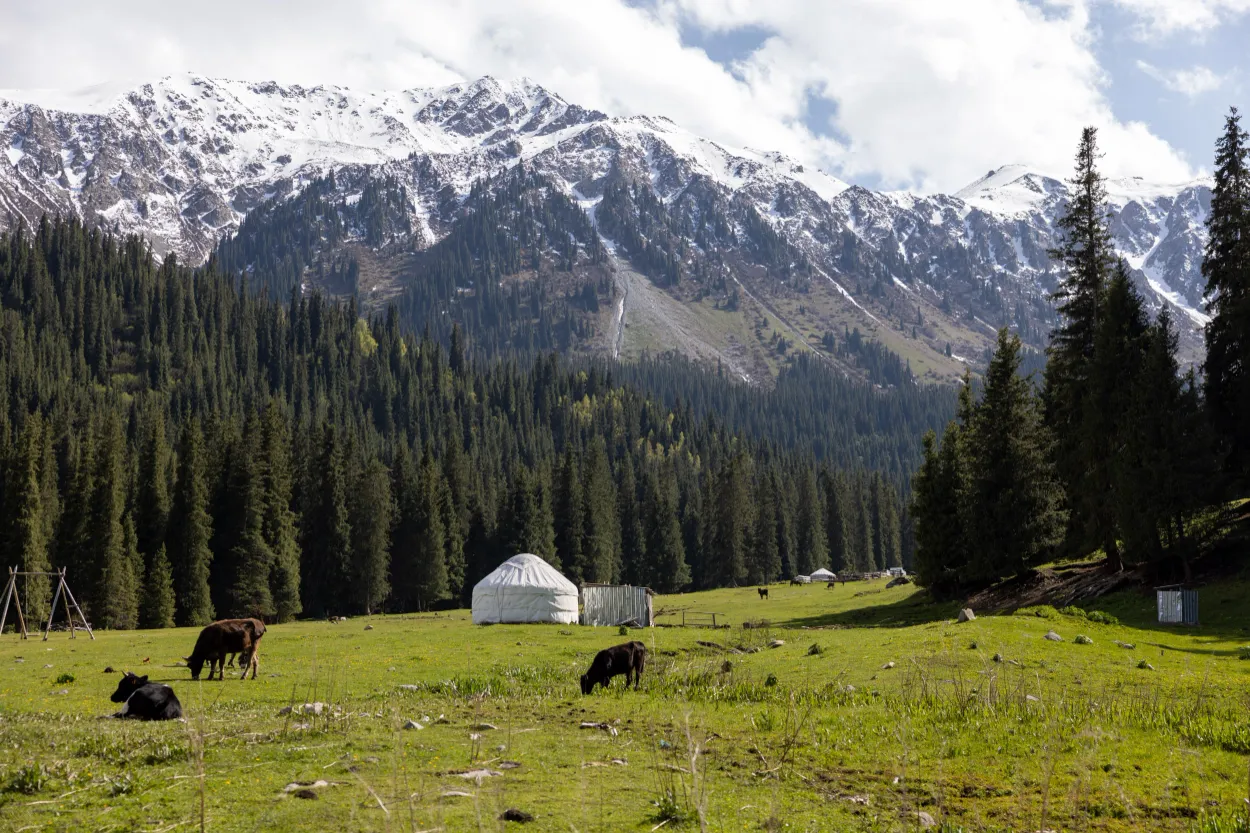
At 3,010 metres, Lake Song-Kul is perhaps the most photogenic spot on the entire route, but not because of high drama. There are no canyons here, no sheer cliffs, no red rock. Instead, there are only horizontal lines: water, grass, sky. And the yurts, tiny white dots, the only vertical features in the landscape.
In the morning, mist blankets the lake and yurts emerge like mirages. Around midday, the water is so still that the reflection of the clouds is perfect, glass-like, making it hard to tell where reality ends. At dusk, the light turns warm, soft, and the nomads' horses graze backlit against the sunset.
There is no electricity and no artificial light here, meaning night sky photos of the Milky Way benefit from virtually zero light pollution. But night photography deserves its own story.
A horse ride up to the Tuz Pass offers a panoramic view over the entire lake, the southern ridge, and the Kilemche pastures. This high perspective adds a dimension you would never guess at from the shoreline.
Kyrgyzstan is not a destination with just one postcard view. There is no "defining shot" that everyone copies. Instead, there are hundreds of frames, each unique, each depending on the hour, the light, and the direction you look. Your camera's memory card will fill up fast. The memories in your head, a little slower. But both will stay loaded long after your flight climbs back into the sky.
Author: Martin Bonov