Kyrgyzstan with Panic Frame: what to expect from the first to the very last day
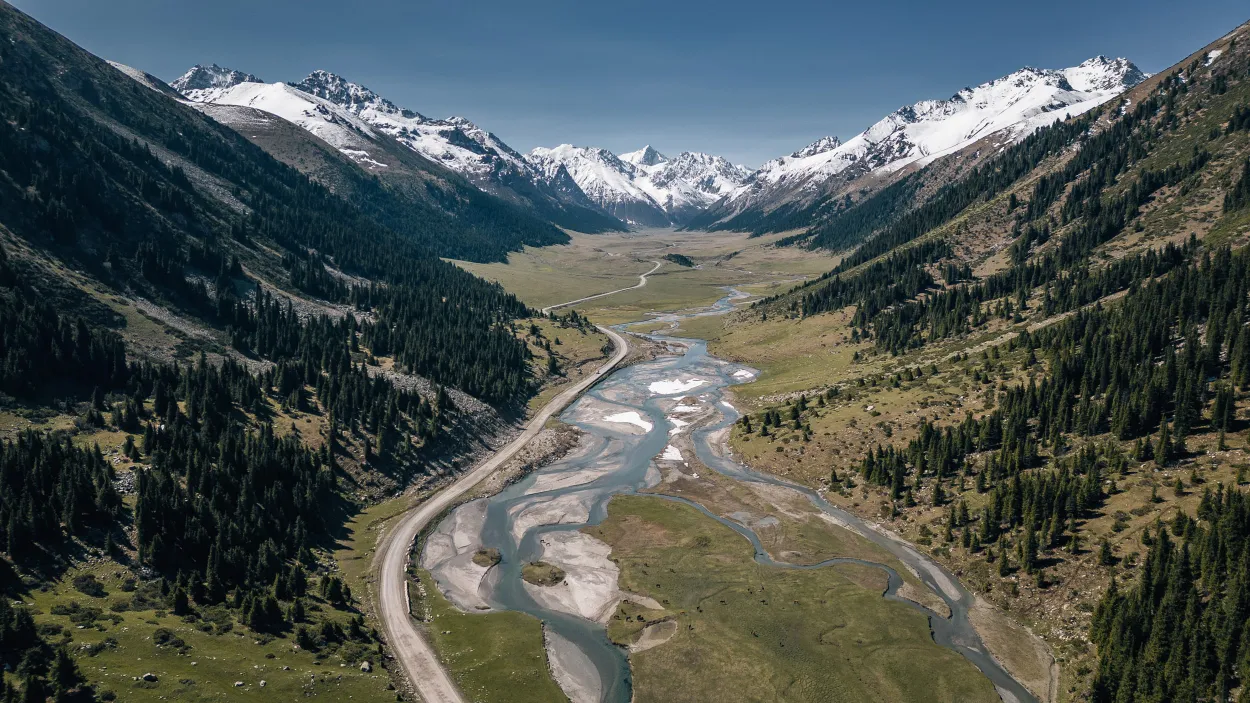
Bishkek welcomes you with wide boulevards, irrigation canals cutting between the trees, and mountains towering behind the rooftops like a stage backdrop everyone has long stopped noticing. The air is dry and light, carrying the scent of dust and warm bread. The city is quiet in a way you wouldn't expect from a capital. And then, you head south, and everything shifts. The road narrows, the tarmac disappears, the horizon cracks wide open, and you realise Kyrgyzstan isn't a place you prepare for with a guidebook. You prepare for it with your body, your eyes, and a willingness to feel small.
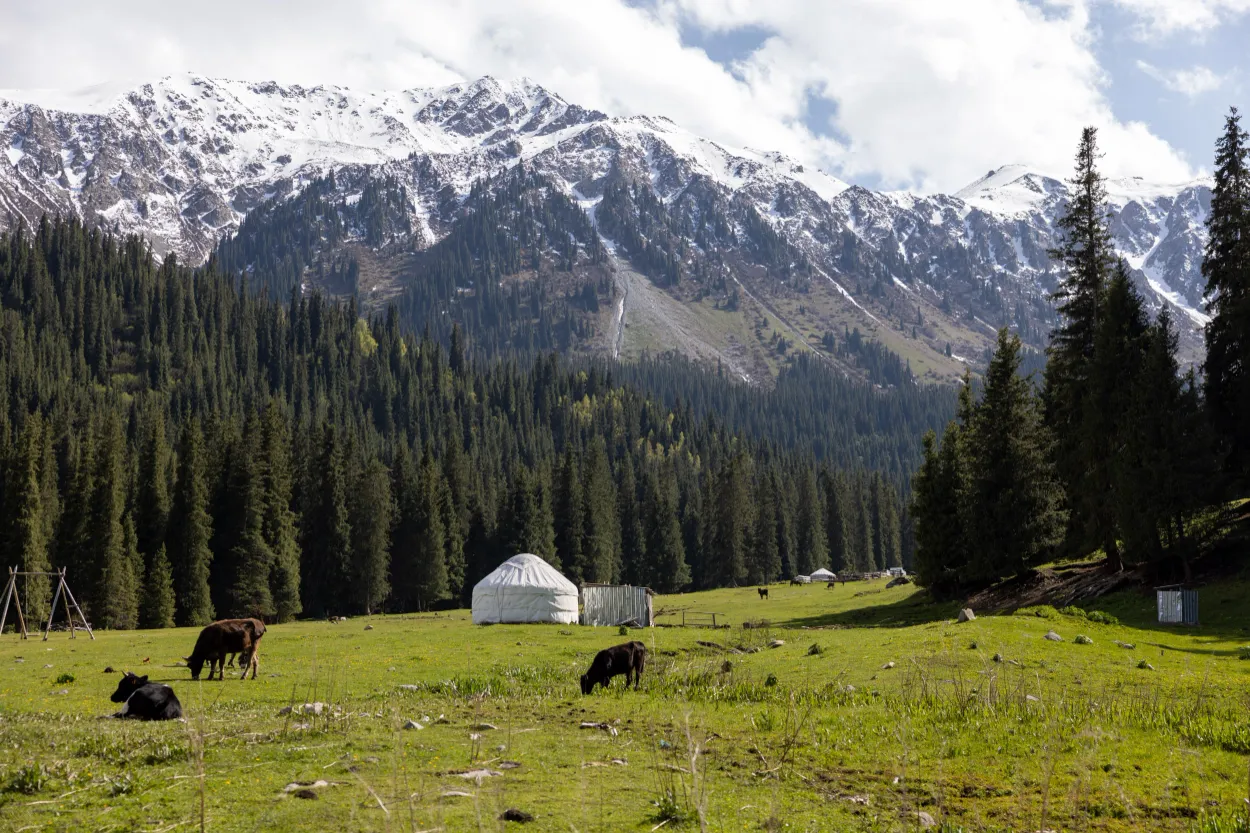
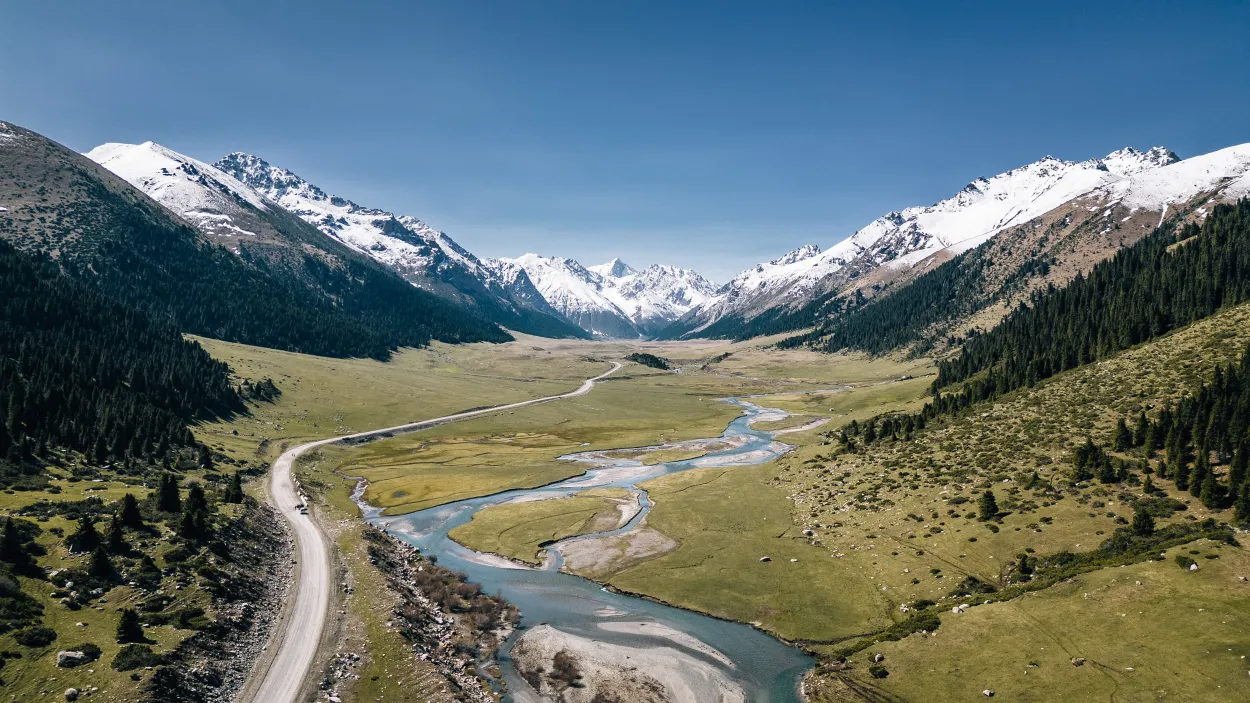
Kyrgyzstan is a country where 94% of the territory lies above 1000 metres. The Tian Shan mountain system (Chinese for "Heavenly Mountains") covers almost everything, and between the peaks, passes, and glaciers live people who still raise yurts, hunt with eagles, and graze herds on pastures accessible only a few months a year. Traveling with Panic Frame takes 8 days, roughly 1400 km, and passes through Bishkek, Lake Issyk-Kul, Karakol, the ghost town of Engilchek, Lake Son-Kul, and back. The landscape changes every few hours, and with it, the altitude, temperature, and light.
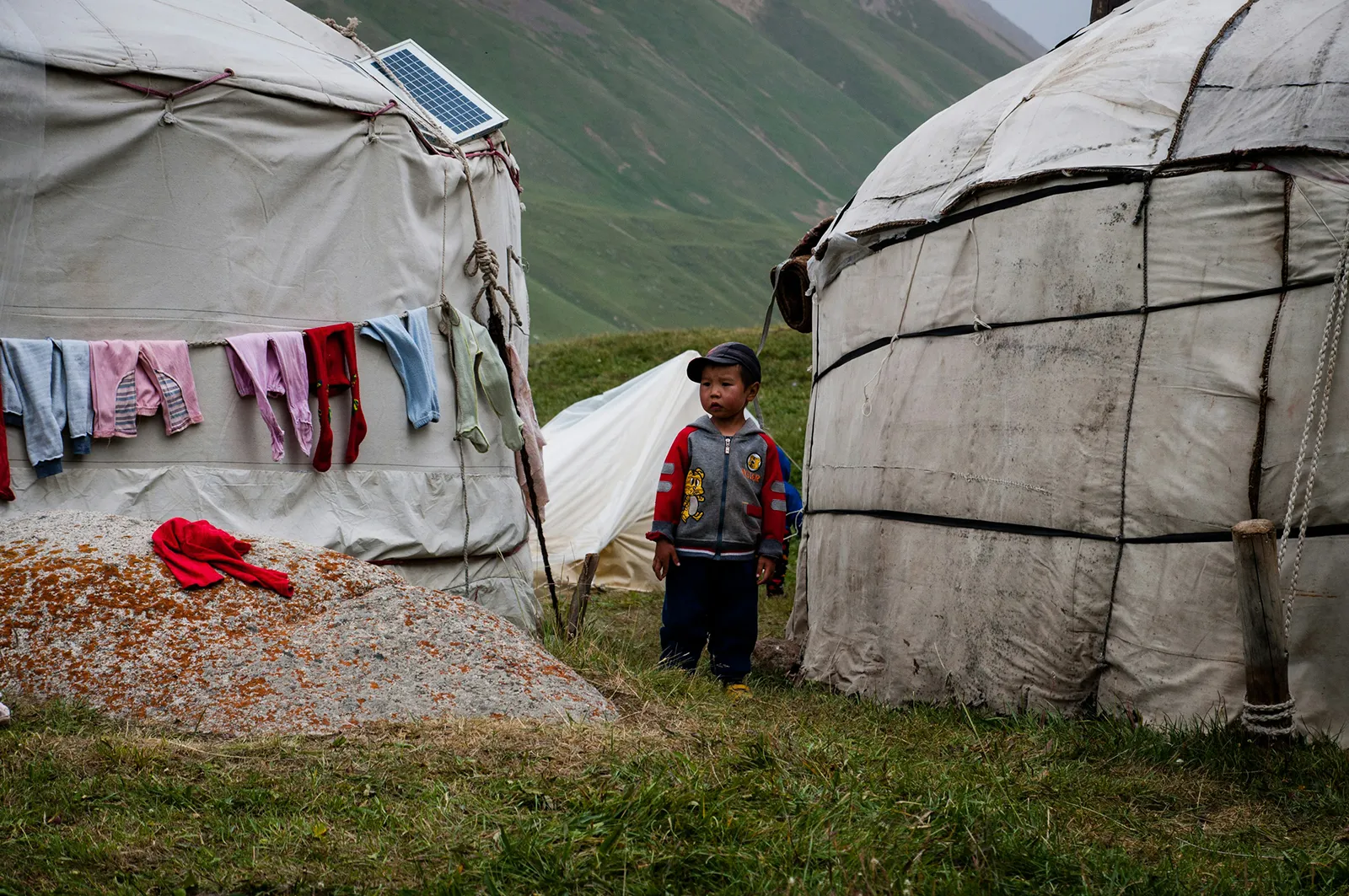
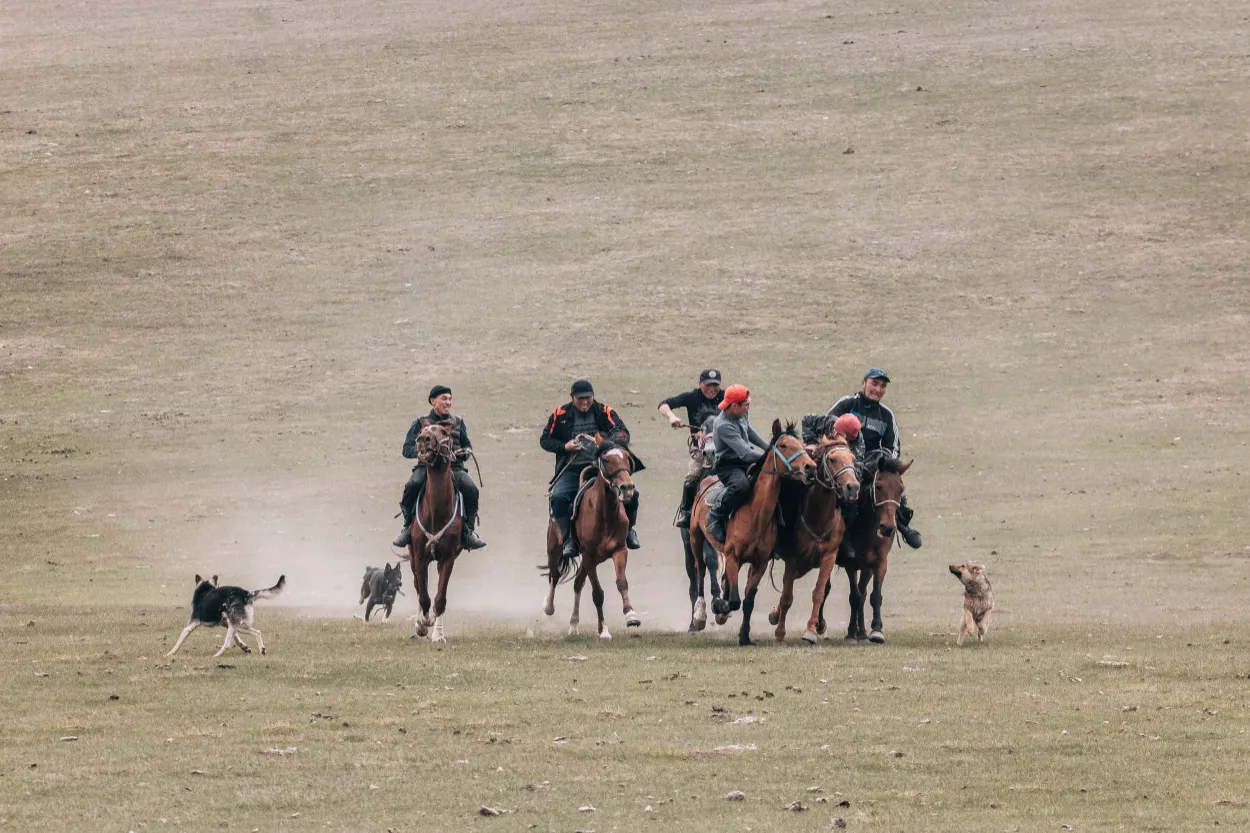
This is not a trip for comfort. You sleep in yurts at 3,000 metres, eat with local families, and ride horses over passes where the wind blows so hard you can't hear your own voice. But it is in exactly these moments that you understand why you are here. Between the scale of the mountains and the silence of the evenings around the campfire, Kyrgyzstan meets you with something that is hard to name but impossible to forget.
Day 1: Bishkek, the city of the happy mountain
Most flights land early. The airport is small, functional, without pretensions. A shuttle takes you to the hotel, and the rest of the day is yours. Bishkek is a city whose name means "Mountain that brings happiness", located at the foot of the Kyrgyz Range. The wide boulevards, marble-clad public buildings, and irrigation canals along the streets create a sense of another time, of a place that is in no hurry.
The Opera House, the Historical Museum, the City Hall building. These are not checklist sights, but parts of the city that tell its story between Soviet heritage and nomadic identity. The evening is the first communal dinner. The group gets to know each other, and the next day the real journey begins.
Yurts, eagles, and the lake that never freezes
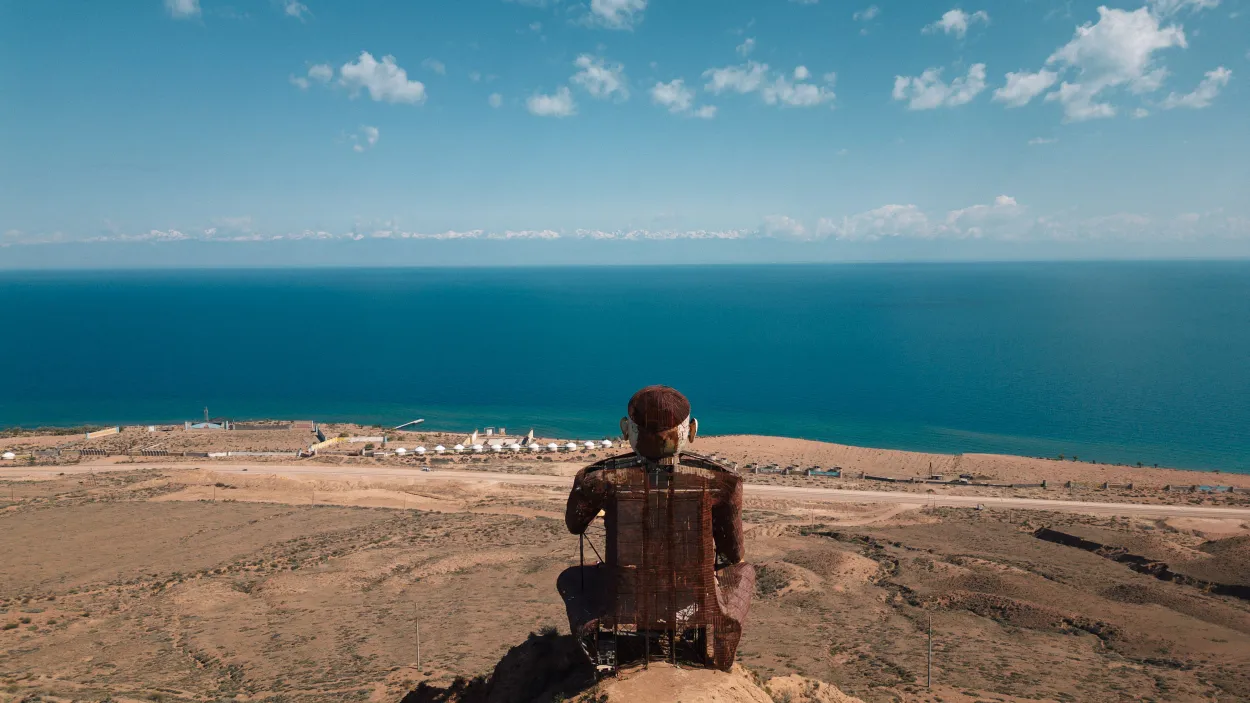
The second day is 290 km south, to the southern shore of Issyk-Kul. This is the largest lake in Kyrgyzstan and the seventh-deepest in the world. In Kyrgyz, its name means "warm lake", which sounds impossible when you look at the snow-capped peaks around it. But the water truly never freezes, even in the coldest winter.
The camp consists of real yurts, and here you don't just sleep in them. A master craftsman from the village of Kyzyl-Tuu teaches you how to build a yurt from scratch. You get your hands dirty, raising the frame and stretching the felt. Then comes Ruslan, a professional eagle hunter, demonstrating a craft that few people on earth can still perform. The eagle lands on his hand, heavy, silent, with a gaze that pins you in place. The tradition is thousands of years old, and Kyrgyzstan is one of the last places keeping it alive.
The evening is spent in the yurts. The cold air from the lake, the warmth from the inner wall, the stars through the tunduk opening. The contrast between the vast horizon outside and the intimacy of the space inside is something not easily described.
The Fairytale Canyon and the Seven Bulls rocks
The third day is a 160 km journey to Karakol, with two stops that will redefine your idea of a landscape. The Fairytale Canyon is a formation of red and orange rocks eroded into shapes resembling dragons, snakes, and castle walls. The light changes by the hour, and from the edge of the canyon, Issyk-Kul gleams like a piece of metal in the distance.
The village of Svetlaya Polyana is the gateway to the Jeti-Oguz rocks, the Seven Bulls. Seven massive red rock pillars lined up like the spine of the earth. Legend tells of a Kyrgyz khan and his unfaithful wife, but when you stand before them, the legend is secondary. The scale is so massive that you physically feel how little space you occupy. Next to the rocks is the Maiden's Braids waterfall, a thin veil of water spilling over a rocky edge, quiet and beautiful in a way that contrasts with the raw power of the cliffs.
The ghost town at 3822 metres
The fourth day is off-road. 300 km to the Chon-Ashu Pass at 3822m, in the Saryjaz Range, the most isolated region of the entire country. The road is dusty, narrow, with hairpins you only see when you are already in them. And then you reach Engilchek.
Engilchek is a ghost town. After the collapse of the Soviet Union, people left because the work dried up. Today, the ruins of houses, playgrounds, and an airfield stand as a reminder of another life. Yet, about 20 families have remained. There is a small school for the children, and we carry gifts along the way. 50 km to the east lies the Engilchek Glacier, the largest in Kyrgyzstan, a mass of ice moving slowly and silently.
This is the day you understand what "isolation" really means. Not in a negative sense. In the sense that between you and the rest of the world stand only mountains, ice, and silence.
Son-Kul: the lake at 3010 metres and the yurts of the nomads
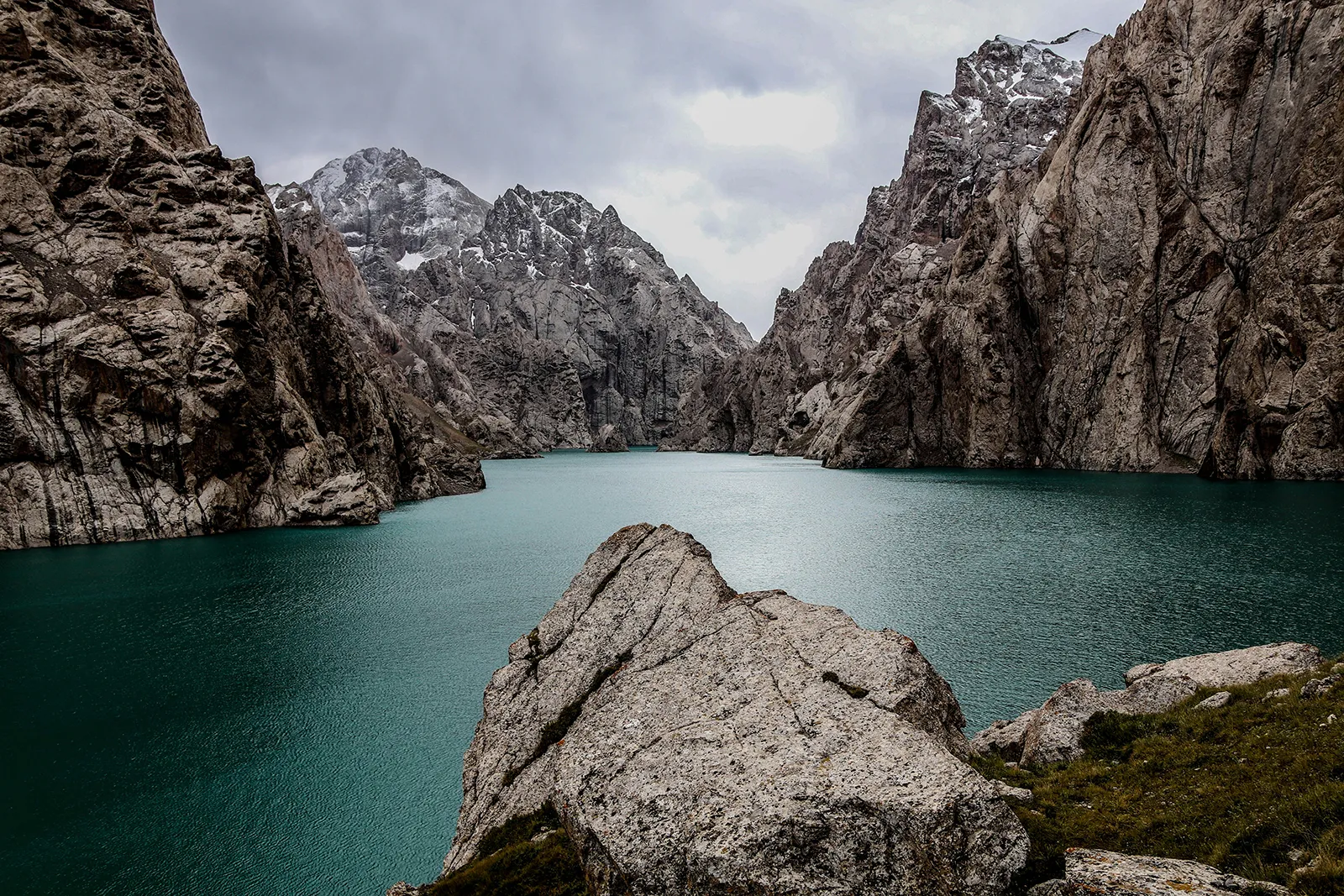
The fifth and sixth days are dedicated to Son-Kul, the largest freshwater lake in Kyrgyzstan, at 3010m in the heart of the Tian Shan. The route goes over the Kalmak-Ashu Pass at 3433m, with lunch at a local family's home in Kochkor and an overnight stay in a yurt camp right on the shore.
Son-Kul is so inaccessible that the experience starts with the journey itself. Horse riding to the Tuz Pass, panoramic views of the lake and the southern ridge, the Kilemche pasture, and the colourful mountains on the other side. The water is deep blue, cold, surrounded by green pastures where horses and yaks graze without paying you any mind.
The evening in the yurt on the shore is unlike any other evening on the trip. The altitude makes the stars brighter. The silence is so thick you can hear the blood pumping in your ears. The only sound is the wind sweeping across the water's surface, then disappearing into the grass.
The final day: Osh Bazaar and the farewell
The seventh day is 200 km back to Bishkek. But before saying goodbye, there is Osh Bazaar—colourful, noisy, smelling of spices and freshly baked bread. The Kiyal section (Kyrgyz for "fantasy, dream") is a place where the nomadic past is sold by the metre: folk costumes, wood-carved chests, traditional teshik mats, and the distinctive beshik cradles. You buy something small, but it carries the weight of the entire week.
The final dinner is in a restaurant in traditional Kyrgyz style. The group is no longer a group of strangers, but people who have spent a night together at 3,000 metres, ridden horses over passes, and stood before an eagle looking at them with eyes older than anything they know.
The eighth day is short. Transfer to the airport after midnight. Kyrgyzstan does not send you off with fireworks. It just lets you go, quietly, as it received you.
The plane climbs above Bishkek. Below you, the mountains stand as they always have, indifferent to your departure. In your hands is a phone with 400 photos, mostly of mountains and lakes that look identical, yet each is from a different day and a different altitude. Kyrgyzstan is not a destination you visit. Kyrgyzstan is a destination you feel. With your feet, with your lungs, with the silence that lingers in your ears days after you've returned.
Author: Martin Bonov