Socotra's Culture: Rituals, Food, and Everyday Life
The guide pulls the jeep up beside a stone wall, behind which lies nothing but empty space. He gets out, raises a hand in greeting, and calls out in a language you don't understand. A man in a long white robe appears over the wall, smiling and gesturing for you to come in. Five minutes later, you are sitting on the ground, a hot metal cup of tea in your hands, listening to a conversation where you understand zero words, yet somehow understand everything. The tone, the laughter, the silences. Socotra is an island where culture doesn't live in museums. It lives in the way people invite you inside, without ever asking where you are from.
Socotra is home to roughly 60,000 people. Most of them live in Hadiboh, the island's only town, with a population of around 8,000. The rest are scattered across tiny fishing villages along the coastlines and nomadic Bedouin communities deep in the mountains. They speak Soqotri, a Semitic language related to Arabic but distinct from it. It has no written form. It lives on purely through word of mouth, passed from father to son, mother to daughter, shifting slightly with every generation.
Though officially part of Yemen, the island's geographical isolation — 350 km from the mainland, barricaded by monsoons for months every year — has forged a culture that feels neither Yemeni nor Arabic in the traditional sense. Here, Islam is gentle, hospitality is absolute, and life is measured by just two things: the sea and the goats.
A language without letters
The Soqotri language is one of the most endangered living links to the ancient Semitic world. Linguists group it under the Modern South Arabian languages alongside Mehri and Shehri, spoken by small communities in Oman and Yemen. But Soqotri is the most isolated of them all, having evolved on its own trajectory for centuries.
There is no alphabet. No dictionaries written by locals. No literature. Everything is oral: songs, folklore, place names, recipes, and navigation cues. When an elder dies, a fragment of the language dies with them. The younger generation increasingly turns to Arabic, brought in by school and TV, while Soqotri is kept for the home, for family, and for the things that simply cannot be translated.
Yet, you don't need to understand the words to feel the weight of this language. At night, guides sing Soqotri songs around the campfire — slow, melodic rounds that sound like a prayer or the pull of the tide. You won't know what they are singing about. But something in the melody demands you listen.
The fishermen of Qalansiyah: living by the tide
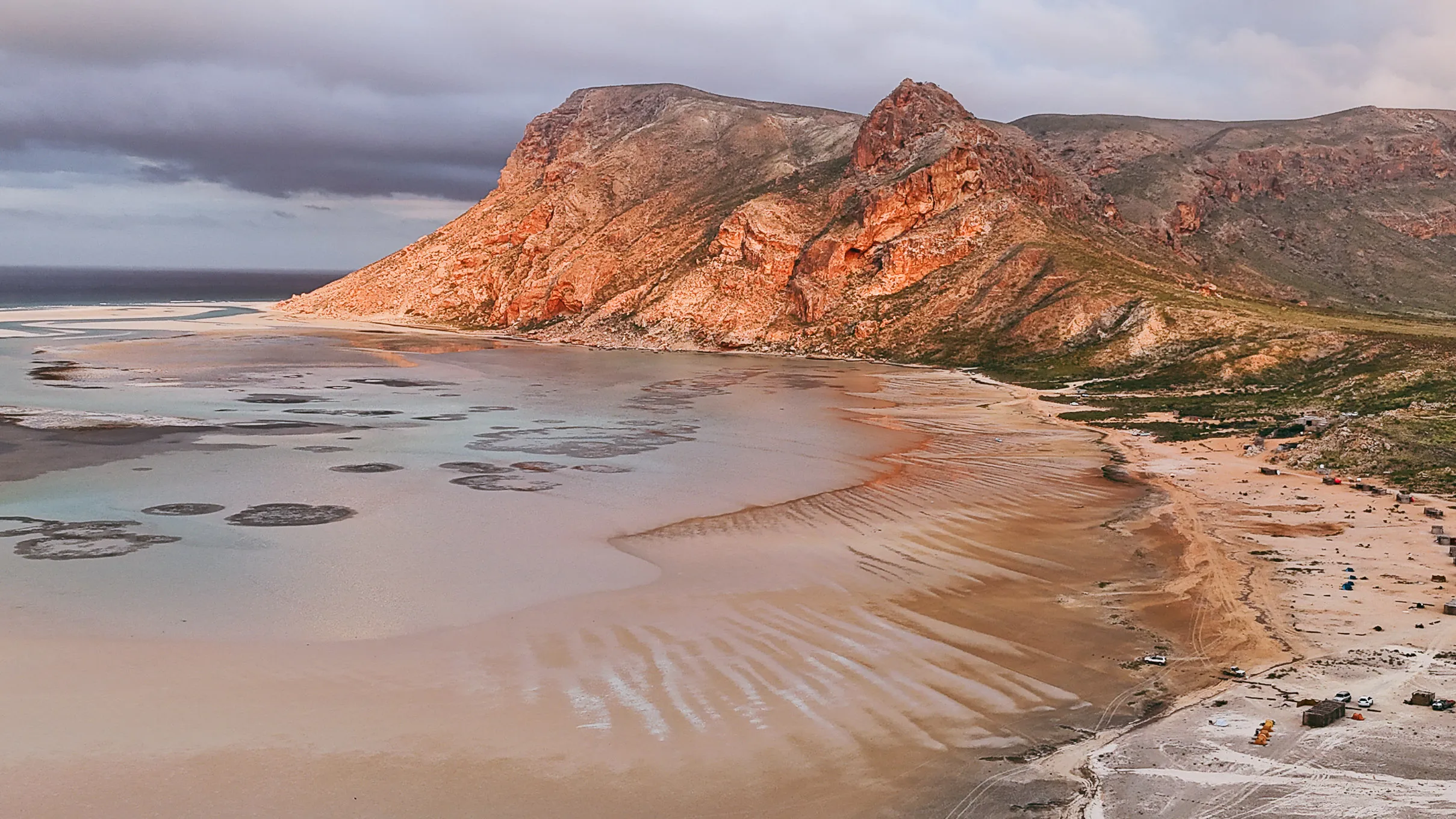
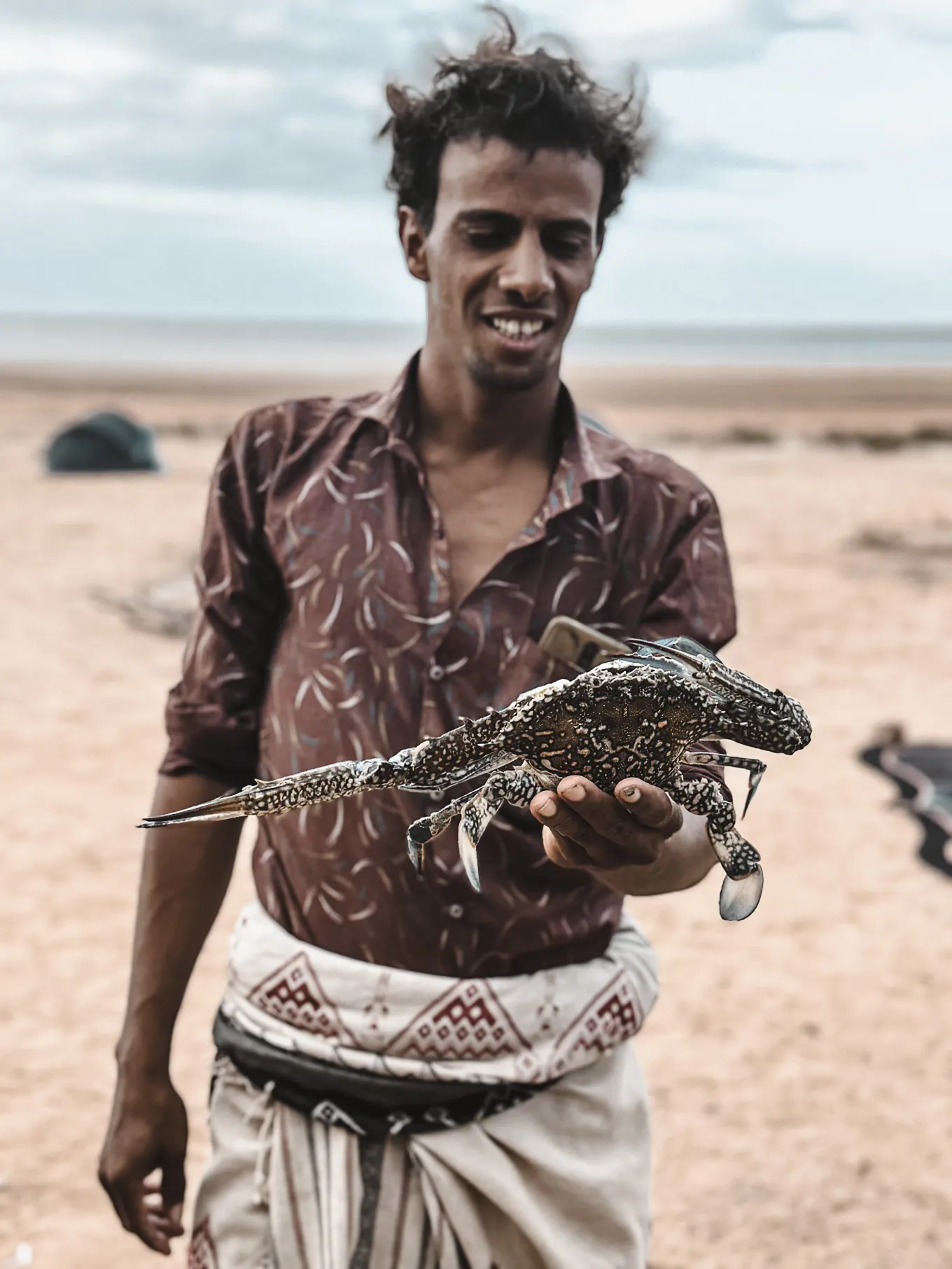
Qalansiyah is the island's second-largest settlement, a coastal fishing village of about 3,000 residents on the western edge. Here, the sea has the final say. Fishermen push off before sunrise in brightly painted wooden skiffs, returning around noon with their catch.
Down on the beach, fish are sold straight from the boats. Sea bream, mackerel, tuna, sometimes lobster. The prices are incredibly low, the quality outrageously high. By evening, half that catch is on your plate, grilled over open coals by your camp chefs, served with rice and fresh tomato salad.
These fishermen don't speak English (scarcely anyone on the island does, outside your crew and a few people in Hadiboh). But body language goes a long way. They show off the fish, point to their boats, and smile. If you ask, they’ll take you out towards Shuab. You'll fish with a simple handline, slowly and patiently, just as generations have done before you.
By nightfall, Qalansiyah goes quiet. The local generator hums for a few hours, then cuts out. The stars take over. Children run along the beach. No bars, no restaurants, nothing that requires a plug. Just people, the ocean, and the night.
The highland Bedouins: tea, goats, and silence
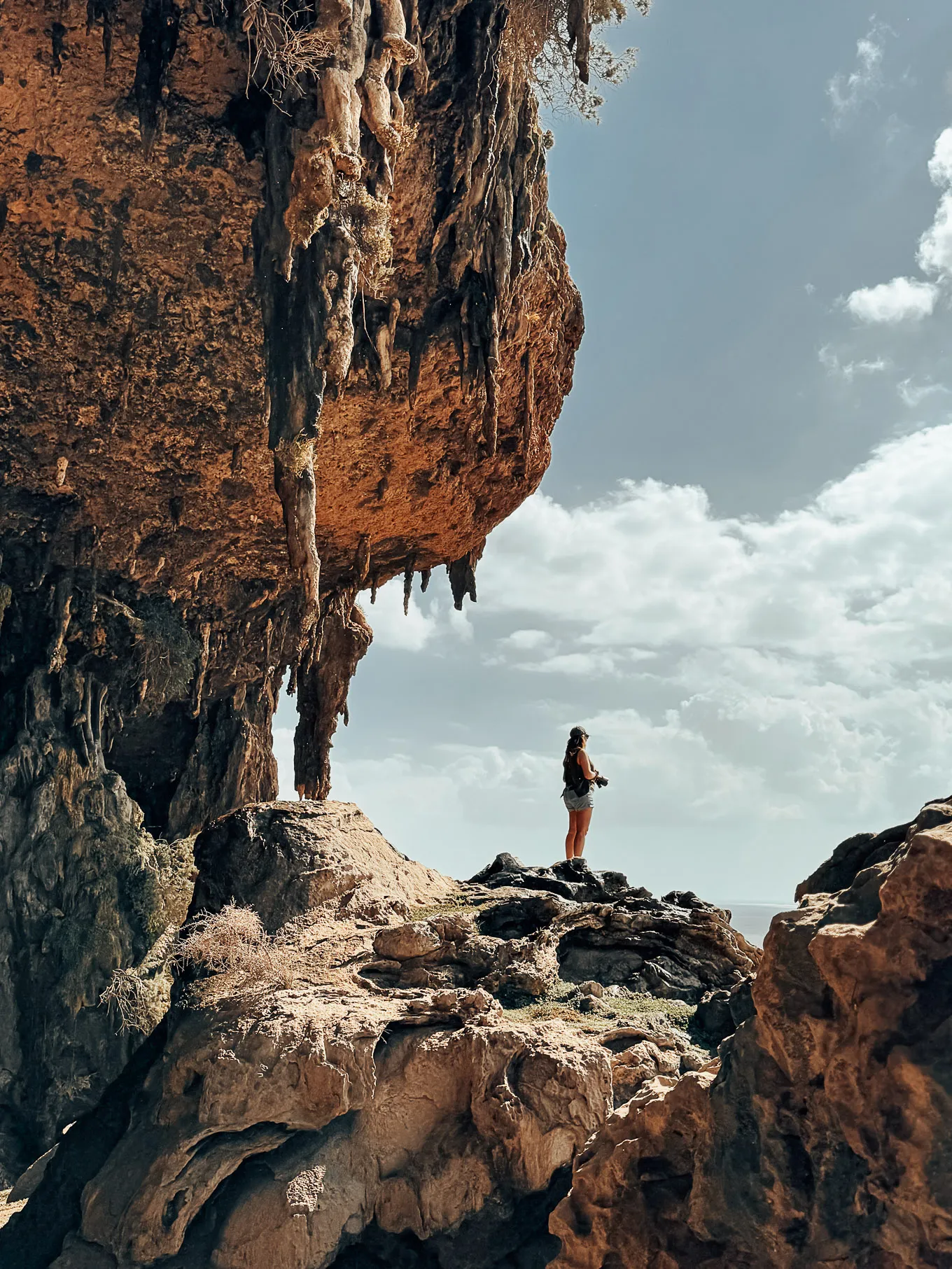
Up in Socotra’s rugged highlands live nomadic Bedouin herders who follow their goats from pasture to pasture. Their stone and palm-leaf dwellings cling to Rocky ledges where the Dixam plateau drops into deep canyons, blending so seamlessly into the landscape that you only notice them when someone steps outside.
Their hospitality is unconditional. Pull over by the road, and before you can even introduce yourself, a pot of tea is already on the fire. It is black, sweet, poured from a thermos or a small wood-fired stove. You sit on the ground, sip your tea, and embrace the silence. Here, silence isn't awkward. It's the norm. Words are entirely optional.
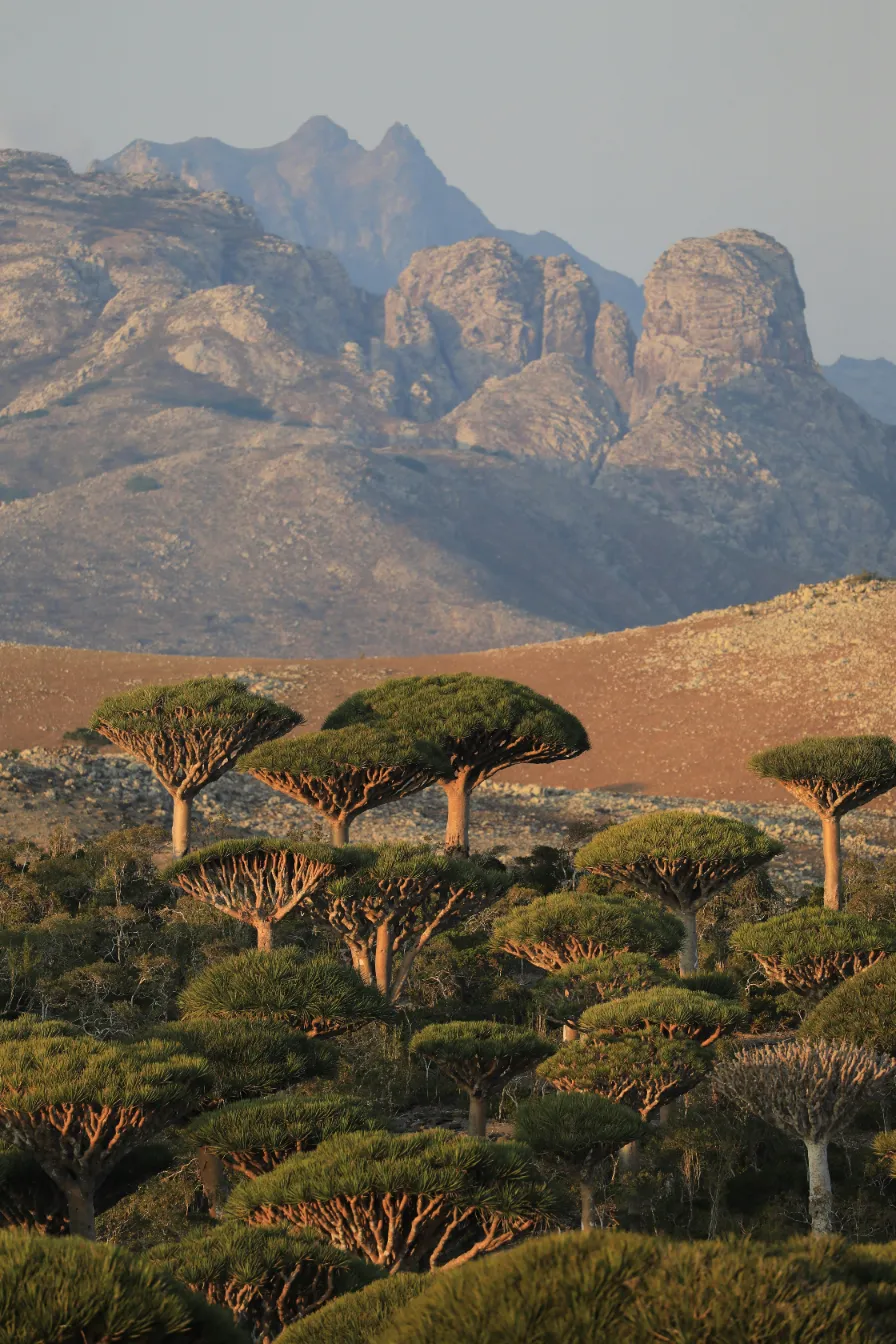
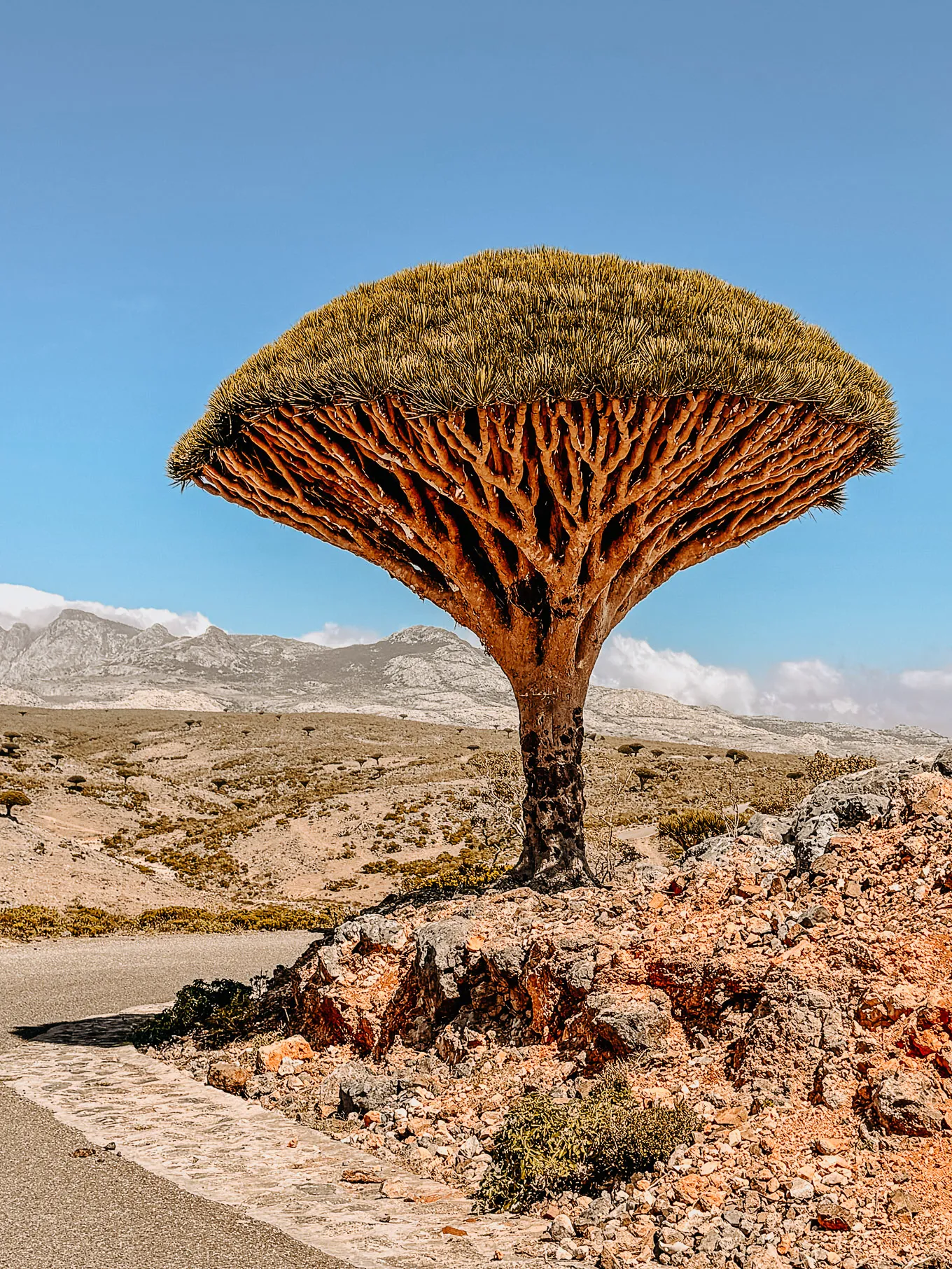
These herders harvest resin from the dragon's blood trees, making small incisions in the bark and waiting for the crimson sap to bleed out and harden. It dries into shiny, ruby-like crystals with an earthy scent of sandalwood. They sell it at the Hadiboh market for small sums. Frankincense is another treasure: resin from the local Boswellia trees, which they burn in the evenings for aroma and ritual.
If you travel in a small group, these spontaneous encounters are the ones that stick with you. Not because they are exotic, but because they are genuine. No one is putting on a show. They simply offer you tea because that is what you do.
The food: taste in its purest form
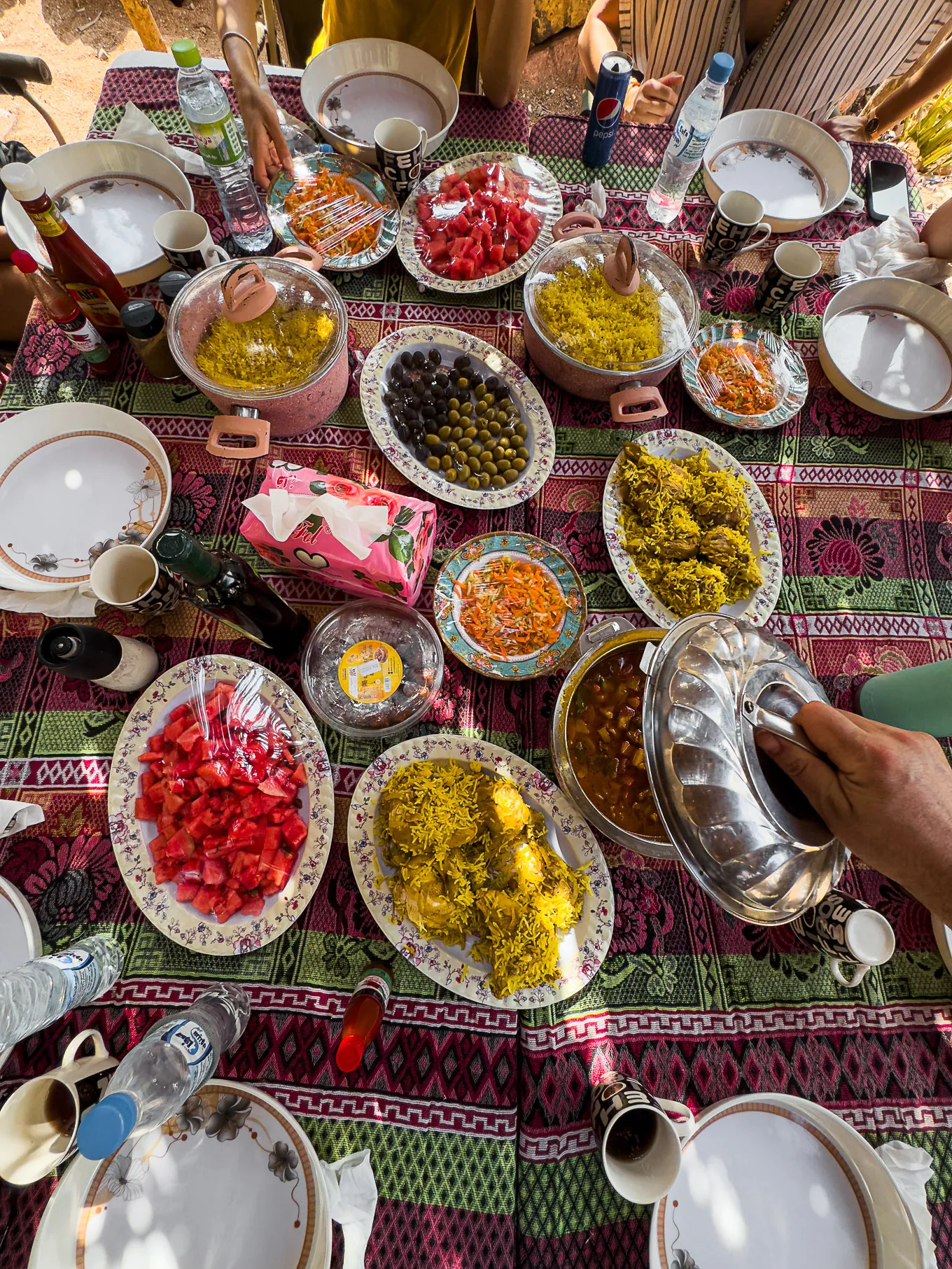
On Socotra, you don't dine in restaurants. You eat on the ground, on a blanket spread over the sand or rocks, sharing dishes piled high with rice, fresh fish, flatbread, and vegetables. Your camp chefs travel with you, prepping everything on-site with minimal gear and maximum flavour.
Fish is the staple. Caught hours earlier, grilled over hot coals with a squeeze of lime and local spices. Some days it’s lobster, others it's mackerel. Add in some rice with yoghurt, freshly baked flatbread, tomatoes, cucumbers, and onions. Socotran honey is famous across Yemen — dark, thick, with a wild, herbal taste unlike any honey you’ve ever had.
Breakfast is simple: bread, honey, tea, and maybe some eggs. Lunch is light, eaten on the go under the shade of a tree. Dinner is the main event, gathered around the fire with fresh fish and stories that stretch late into the night.
There is no menu. No choosing between three mains. You eat what the sea yielded and what the cook created. And this raw simplicity — free from packaging, pretense, or Instagram-ready presentation — is exactly why the food on Socotra is unforgettable. It isn't fancy. It is real.
Hadiboh: the town that barely is
Hadiboh is Socotra’s lone town and the only place with anything resembling modern infrastructure. Here, you'll find a basic hospital, a market, a few shops, buzzing generators, and cell service. About 8,000 people call it home.
The market is small, chaotic, and warm. Stalls display frankincense, wild honey, traditional shawls, handmade knives, and dragon's blood resin. Prices are low, and the shopkeepers are incredibly laid-back. If you pause, they’ll proudly show you their goods. If you walk on, they let you be.
Tiny kiosks stock the essentials: water, biscuits, batteries. There are no supermarkets, and no functioning ATMs (as of 2024, there is one, but don't count on it working). Cards are useless. Cash dollars are the only currency that matters here.
Hadiboh is not pretty in a conventional way. It is dusty, hot, and hectic. But it's the only place on the island where you feel the pulse of the modern world: the hum of generators, Arabic music drifting from televisions, children cycling down dirt streets. Beyond Hadiboh, the modern world vanishes. And Hadiboh itself is a reminder that this isolation is a choice, not an accident.
The Caveman of Detwah
By the shores of the Detwah Lagoon lives Eliya, known to everyone simply as the Caveman. He lives in a natural cave just steps from the shoreline, overlooking a vast expanse of turquoise water. He isn't an outcast or a hermit by force; he simply chose this life.
His cave is modest, furnished with some blankets, a gas burner, and tea glasses. Outside, fishing nets dry in the sun, and the air smells of salt and burning frankincense. The Caveman welcomes travelers, communicates with a mix of basic Arabic, gestures, and wide smiles, and always puts the tea on.
His story is straightforward, or at least as much of it as can be shared without a common language. Born on the island, he has always lived here, and eventually decided that this cave by the lagoon was better than any house. It’s hard to argue with him when you look at his front yard.
The Caveman isn't a tourist gimmick, even if he has become a legend among Socotra travelers. He is simply a man living in a way most of the modern world has forgotten. Sitting outside his cave with a warm glass of tea, watching the tides shift in the lagoon, you start to understand something profound: sometimes, having less isn't a compromise. Sometimes, it’s everything.
Your final morning arrives. You stop in Hadiboh to grab some frankincense and honey. The woman behind the counter wraps the jar in paper and smiles. No words needed. You step back out into the heat, the wind, and the smell of fried fish from the shop next door. The 4x4 heads toward the airstrip. Staring out the window, you realize Socotra isn't an island you visit. It's an island that stays with you. It lingers in the sweet tea, the quiet of the Bedouins, the songs by the fire, and the pride of a fisherman showing his catch without expecting anything in return. These moments don't live in photos. They live in you.
Author: Martin Bonov