Why Socotra is unlike anything you've ever seen
There are places that feel familiar from the very first glance. Socotra is not one of them. You land on an island just 130 km long and 40 km wide, 350 km off the coast of Yemen, and from the very first second, you realise that here, even the trees have decided to grow by their own rules. The trunks rise like bottles, the branches spread out like upturned umbrellas, and the sand is so white it hurts your eyes. Nothing here looks like anything you have ever known. And that is exactly why you cannot look away.
Socotra broke away from the African continent around 6 million years ago. This geological isolation, reinforced by monsoon winds that shut the island off for months every year, created an evolutionary laboratory like no other. Over 300 plant species here exist nowhere else on Earth. UNESCO declared the archipelago a World Heritage site in 2008, but that label misses the point. Socotra is not a "site". It is a living experiment of what happens when nature runs wild, completely untouched by human hands.
The island is home to about 60,000 people, mostly fishermen and herders speaking Socotri—a language with no written form. Infrastructure is bare-bones. No railways, no public transport, no traffic lights. You navigate dirt tracks in a 4x4, sleep under the stars, and eat fresh fish caught just hours before lunch. The rhythm is different, not because it is slower, but because it follows a logic entirely of its own.
Trees that don't look like trees
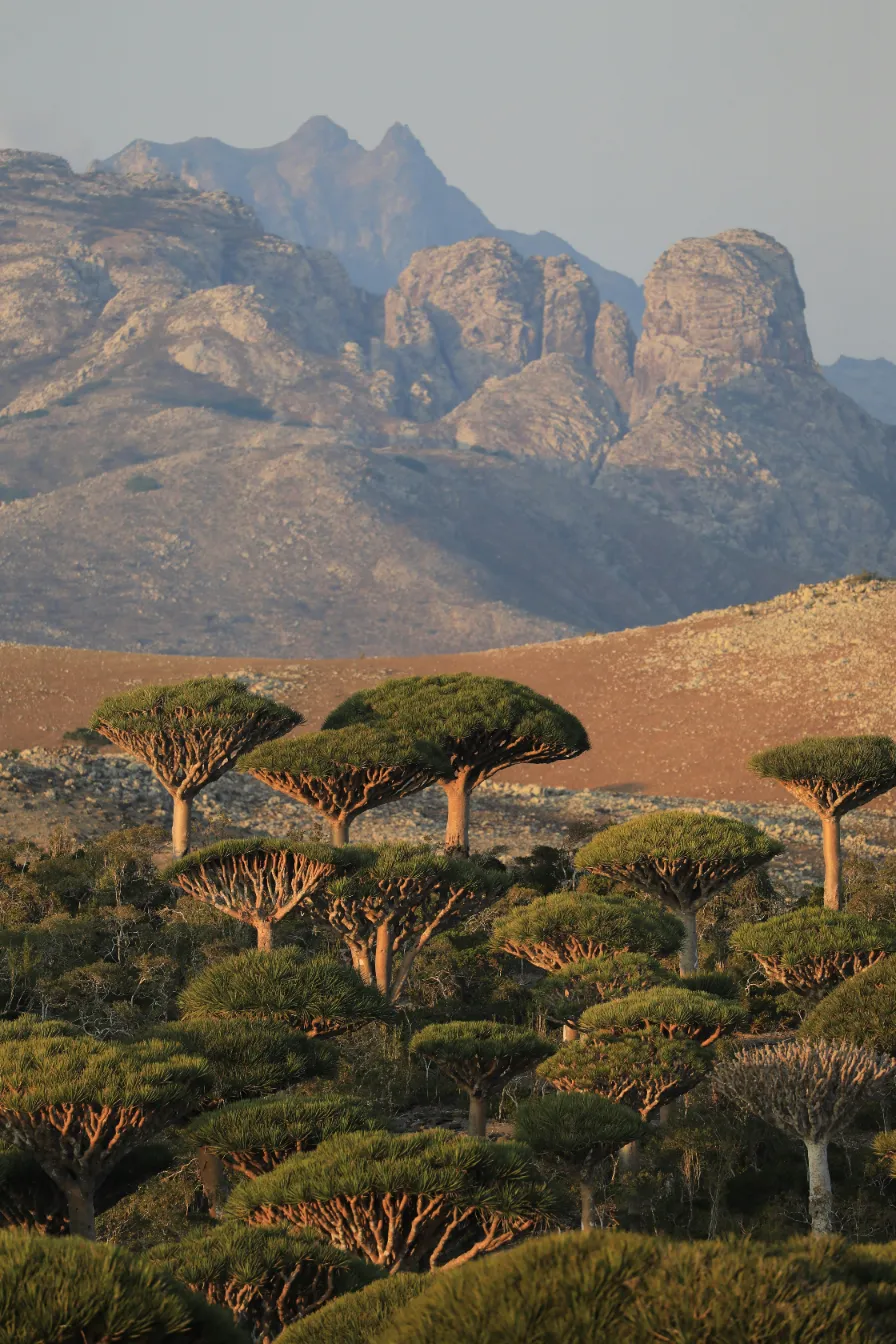
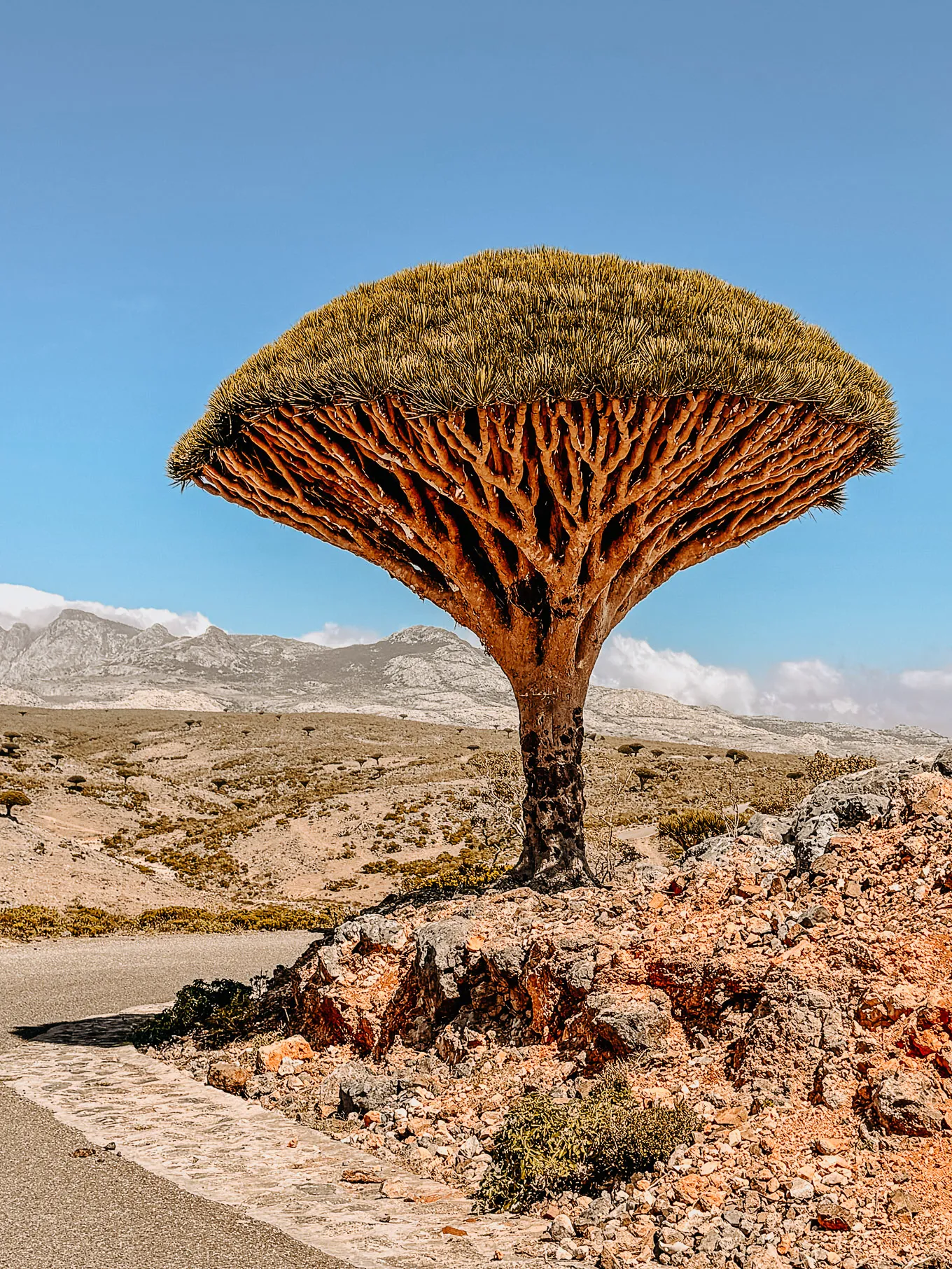
The Dragon’s Blood tree (Dracaena cinnabari) is the iconic symbol of Socotra, and for good reason. Straight trunks shoot skywards, bursting into a network of branches that form a massive umbrella. From a distance, the forest of the Dixam Plateau looks like an army of silhouettes frozen in mid-motion.
Their sap is a deep crimson. The locals call it "dragon's blood" and have used it for millennia for medicine, dye, and rituals. The ancient Romans traded it like gold. Today, Bedouin herders on the plateau still harvest it, but in much smaller quantities.
The Bottle trees (Adenium obesum socotranum) are another trademark of the island. Their trunks are swollen, smooth, and pinkish-grey, topped with thin branches that erupt in pink blossoms. They look like something a child would draw if asked to design a "tree from another planet". Growing directly out of rocky cliffs and cracks, they seem utterly unaffected by gravity.
But this uniqueness is more than skin-deep. Socotra is home to over 800 plant species, 37% of which are found nowhere else. This level of endemism is rivalled only by the Galapagos and Hawaii. Except here, we aren’t just talking about finches. We are talking about entire alien forests.
A landscape defying logic
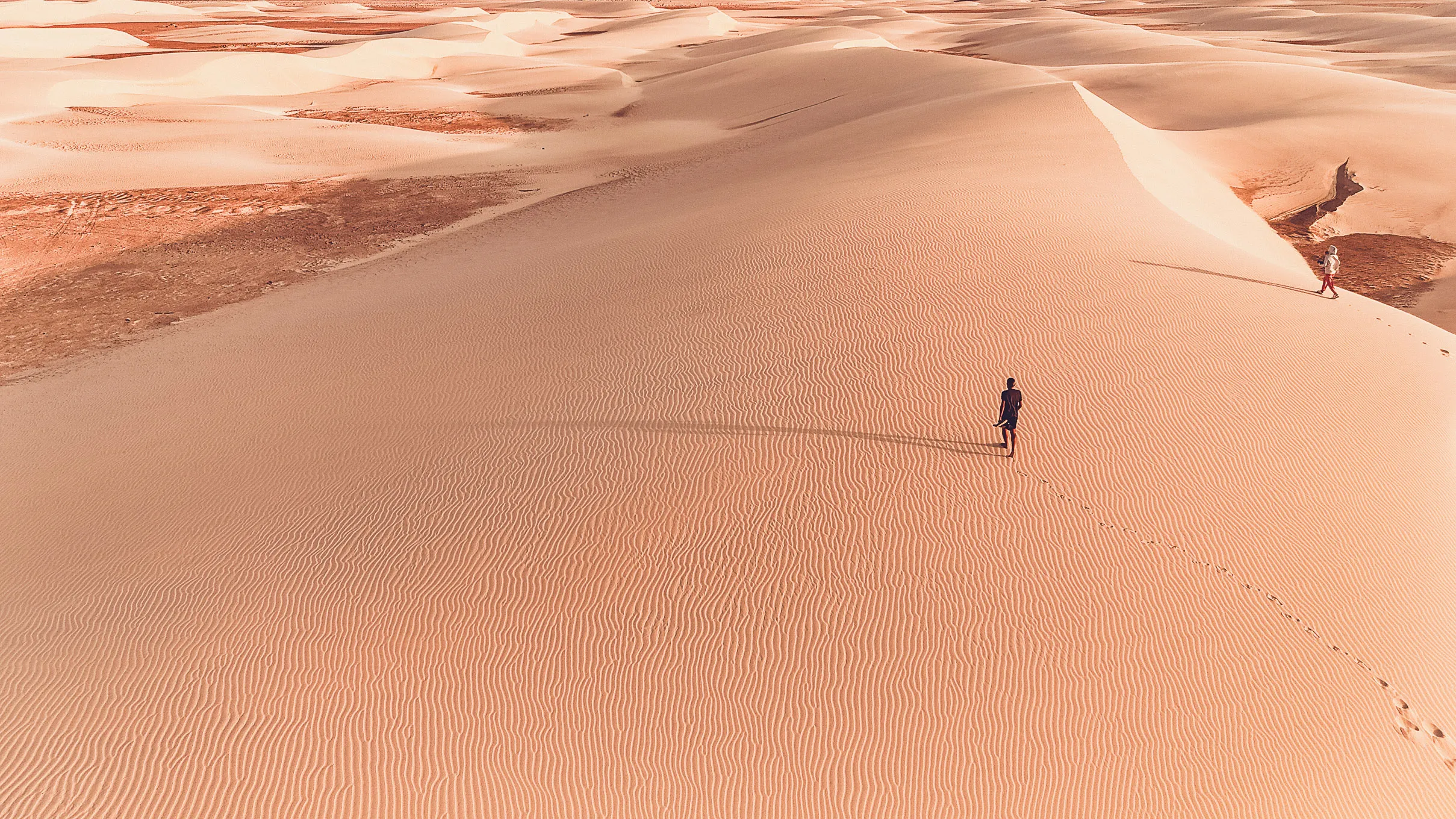
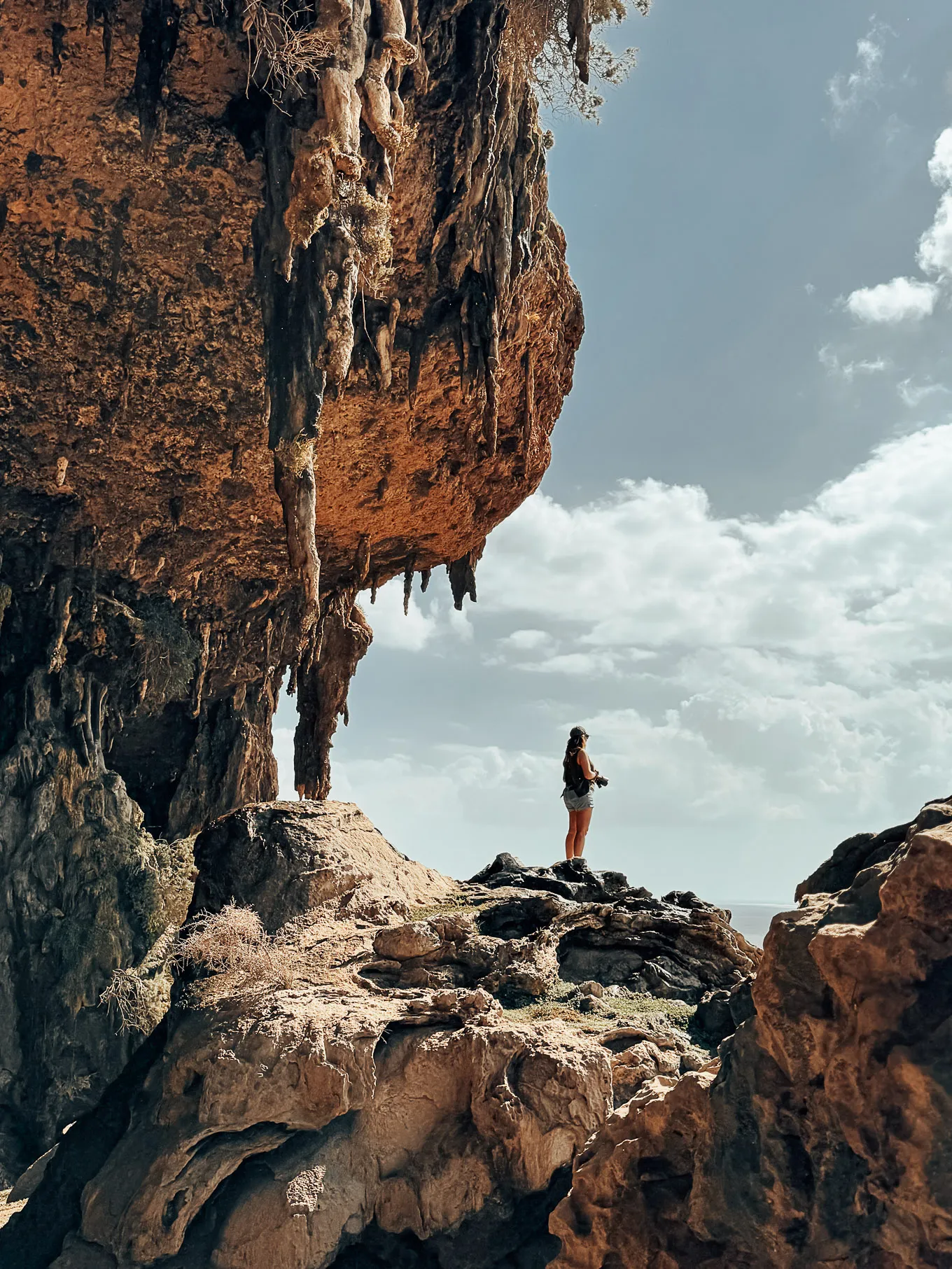
There are no transition zones on Socotra. Drive for 30 minutes from a limestone plateau carved by karsts (narrow gullies bordered by sharp ridges) and you’ll descend into a palm-fringed canyon with natural freshwater pools. Another 20 minutes, and you are standing on a beach beneath 150-metre-high sand dunes that rise directly against sheer cliffs.
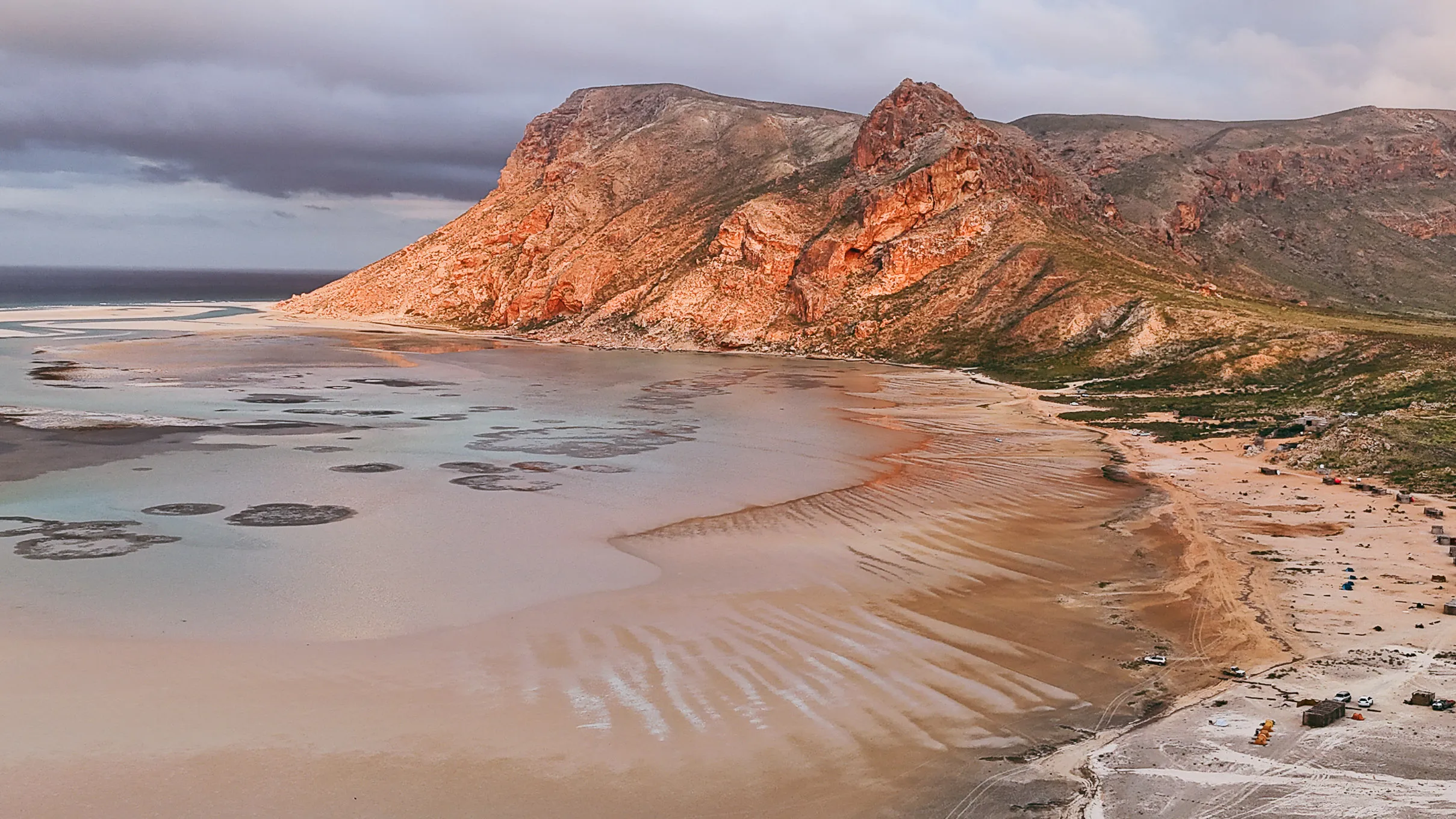
Detwah Lagoon is a shallow expanse of brilliant turquoise, framed by white sand and wild cliffs. A few kilometres away, Shuab Bay is raw and wind-swept, where dolphins jump through the waves. The Dixam Plateau sits 700 metres above sea level—cool, misty in the mornings, with canyon walls dropping vertically into a floor choked with palms and wild pigeons.
This single island packs in desert, tropical valleys, limestone plateaus, coral reefs, and cave systems stretching for tens of kilometres. All of this is squeezed into 3,600 square kilometres—smaller than Majorca. The true scale here isn't measured in miles. It's the sheer diversity packed into such a compact space.
Silence as a physical sensation
By day three, you stop checking your phone. By day five, you forget what day of the week it is. By day seven, as you lie on Arher Beach and the only sound is the crashing of waves onto the sand 20 metres away, you realise something impossible to feel in modern life: silence has weight.
Socotra is one of the last inhabited islands where mobile signal is a luxury, not a given. Once you leave Hadibo, you are offline. Not by choice, not as a curated "digital detox" with a backup Wi-Fi connection. There simply is no signal. No news feeds, no notifications, nothing standing between you and the place you are in.
Evenings spent around the campfire stretch out. Conversations slow down. With no light pollution for hundreds of kilometres, the stars are so dense the sky feels solid. This isn't just relaxation. It's a recalibration, returning your senses to a baseline that was normal 200 years ago.
The island that closes itself off every year
From June to September, the raw Habagat monsoon brings winds of up to 100 km/h, shutting down sea routes and stopping all flights. The island remains isolated for months. Even local fishermen refuse to brave the sea.
This seasonal shutdown is no inconvenience. It is the very reason Socotra has remained unchanged. Every year, the island gets a breather from the outside world, a period where only the wind, rain, and ocean shape the land. No construction, no new roads, no expansion.
Tourism is compressed into a narrow window (October to April), and even then, visitors are few and far between. There is no mass tourism here—not because of bans, but because of geography. Inaccessibility is a natural filter. Only the people who truly want to be here make the journey.
The people at the edge of the world
Socotra’s population is around 60,000. Most live in Hadibo and coastal villages, but a significant number are nomadic herders moving with their goats across the plateaus and valleys. They speak Socotri, a Semitic language with no written tradition, passed down purely through storytelling from generation to generation.
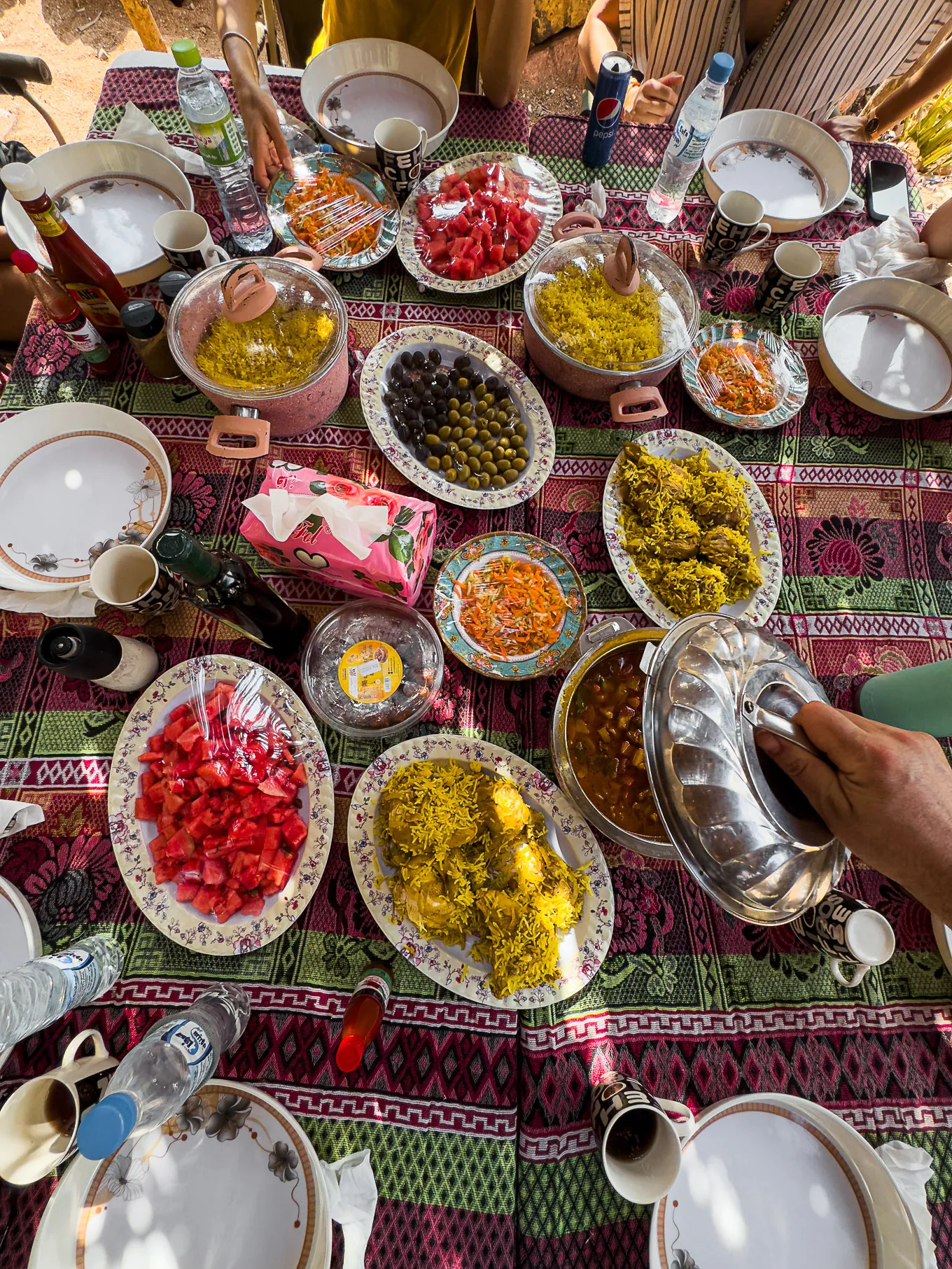
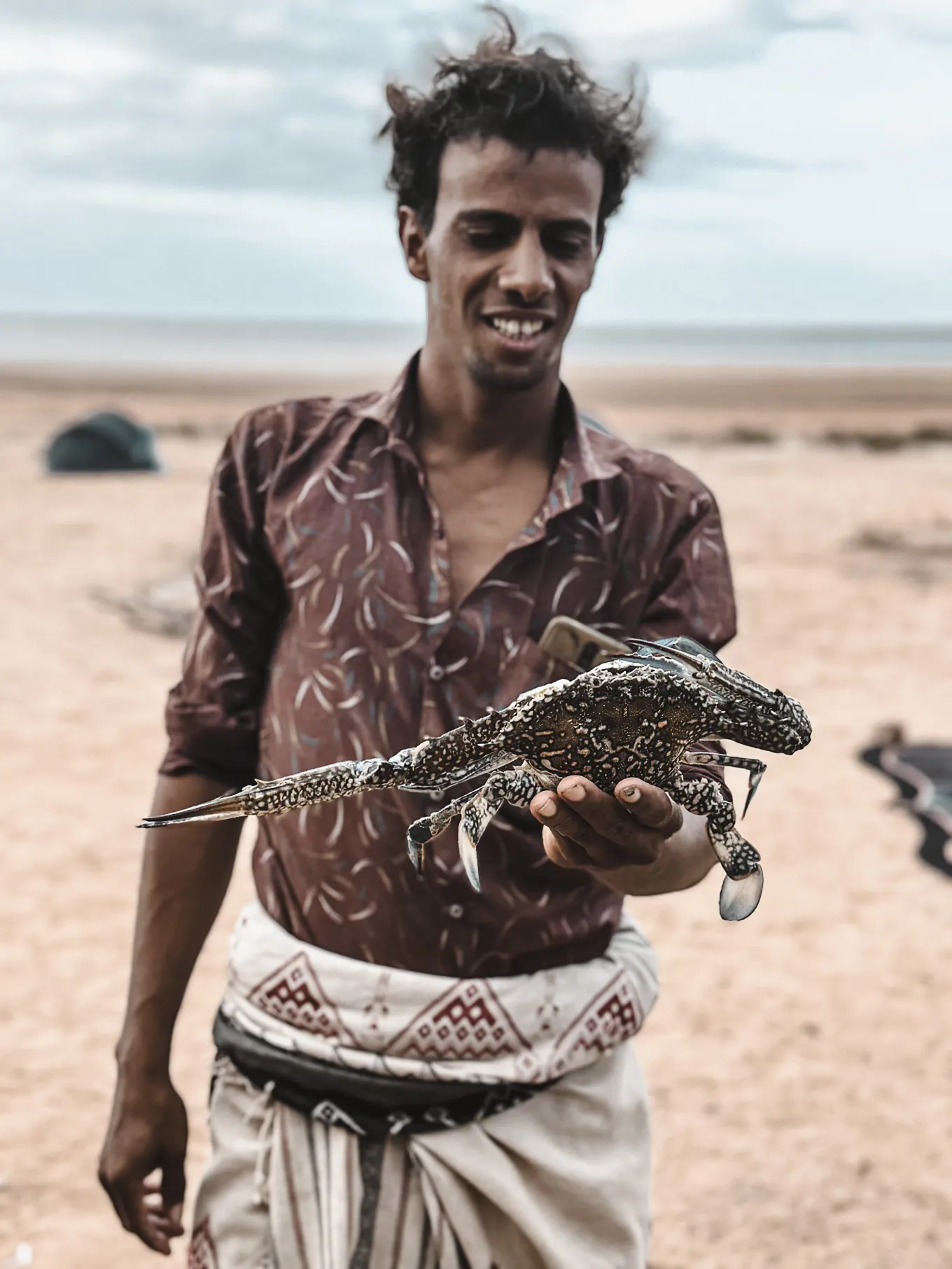
The Bedouins of the Dixam Plateau will invite you for tea without asking who you are. You’ll sit on the ground, drink from a tin cup, and listen to stories where the words are foreign but the warmth is unmistakable. The fishermen in Qalansiyah sell their catch directly from the boats—fresh sea bream and mackerel—and by evening, half the catch is sizzling on your plate.
This isn't some "authentic experience" staged for tourists. The locals don't put on a show. They live this way because the island demands it. Here, luxury means fresh water, fresh fish, and shelter from the wind. Sitting by the fire with a guide who has known every path since childhood, you realise "different" isn't a marketing buzzword. It’s the way these people live—measuring their days not by clocks, but by the tide.
Why photos fail Socotra
You will take hundreds of photos. The dragon's blood trees on the plateau, the towering dunes of Arher, the turquoise shallows of Detwah, the sunset from Homhil, the stellar skies above camp. And when you show them to people back home, you'll find yourself saying: "It doesn't do it justice." Because it can't.
A photo can’t capture the wind that never stops blowing. It can’t capture the taste of salt on your lips as you stand on Arher Beach with sea spray drifting into camp. It can’t capture the heavy silence inside Hoq Cave, where the echo of your steps follows you 10 km into the earth. It can't capture the fragrance of frankincense burned in the evenings, blending with camp smoke and grilled fish.
Socotra is an island that demands full presence. Not snapshots, not checklists, not geotags. Just presence. To stand on the edge of the Dixam Plateau, looking 700 metres down the vertical canyon walls, feeling the wind gently pushing you back. That is Socotra. Everything else is just trying to find the words.
There are places you visit and forget within a month. There are places you remember because the photos look great. And then there are places that change you so quietly that you only notice it when you return home, and find that your daily routine no longer fits. Socotra is the third kind. Not because it’s remote, not because it’s raw, but because for 9 days, it shows you a world where humans haven't tried to make everything convenient.
Author: Martin Bonov