Socotra's Landscapes: Land, Light and Scale
The light of Socotra is unlike any other. In the morning, it is a soft, bluish-pink, free of harsh shadows. By noon, it turns white and merciless, erasing contours and flattening the landscape. And then, in the final two hours before sunset, something shifts. The air thickens, colours explode, and the sand, the rocks, the trees, the sea—everything takes on a weight and volume they lacked just minutes before. If you're a photographer, these two hours will break you, because you'll want to capture absolutely everything at once. If you aren't, you'll still stop and stare. Socotra doesn't care if you have a camera. It simply stands there and commands you to look.
Socotra is a 3,600-square-kilometre island — smaller than Majorca, yet holding more geological diversity than entire countries. Here, you'll find a limestone plateau rising to 700 metres, granite canyons, sand dunes that tower up to 150 metres high, coral reefs, multi-kilometre cave systems, and beaches with sand so white it looks fake. All of this is packed into an area just 130 by 40 km.
The island broke away from Africa 6 million years ago. This geological isolation, combined with punishing monsoon winds, completed a landscape that looks like nothing else in the Arab world, Africa, or anywhere else on Earth. For a photographer, this is a rare frontier: every shot is entirely new, because nothing here is a visual cliché.
The Dixam Plateau: The edge of the world
Dixam Plateau sits 700 metres above sea level, reached by a dirt track winding through dry valleys and massive granite formations. When you finally hit the edge, the landscape falls away with a suddenness that forces you to a standstill.
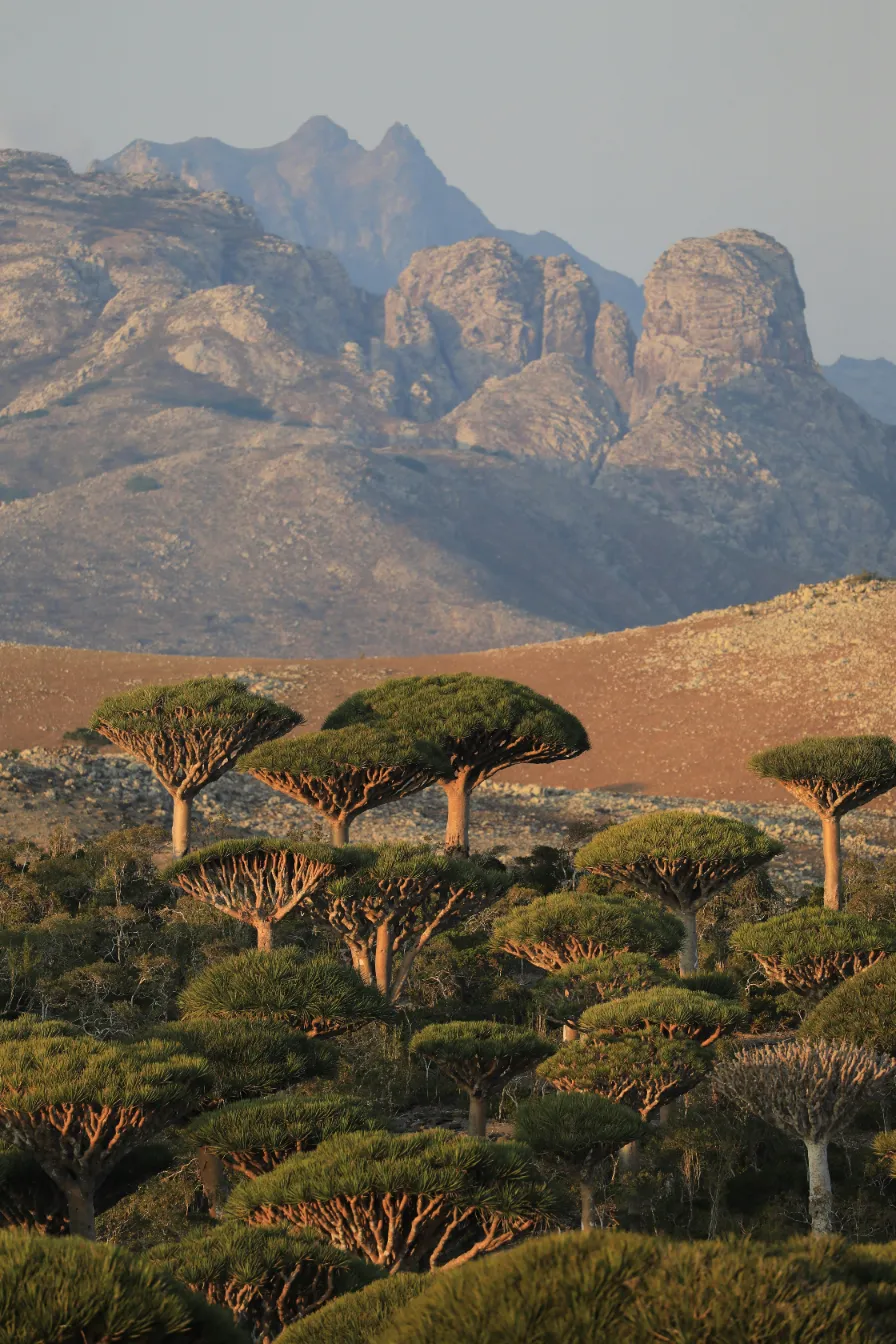
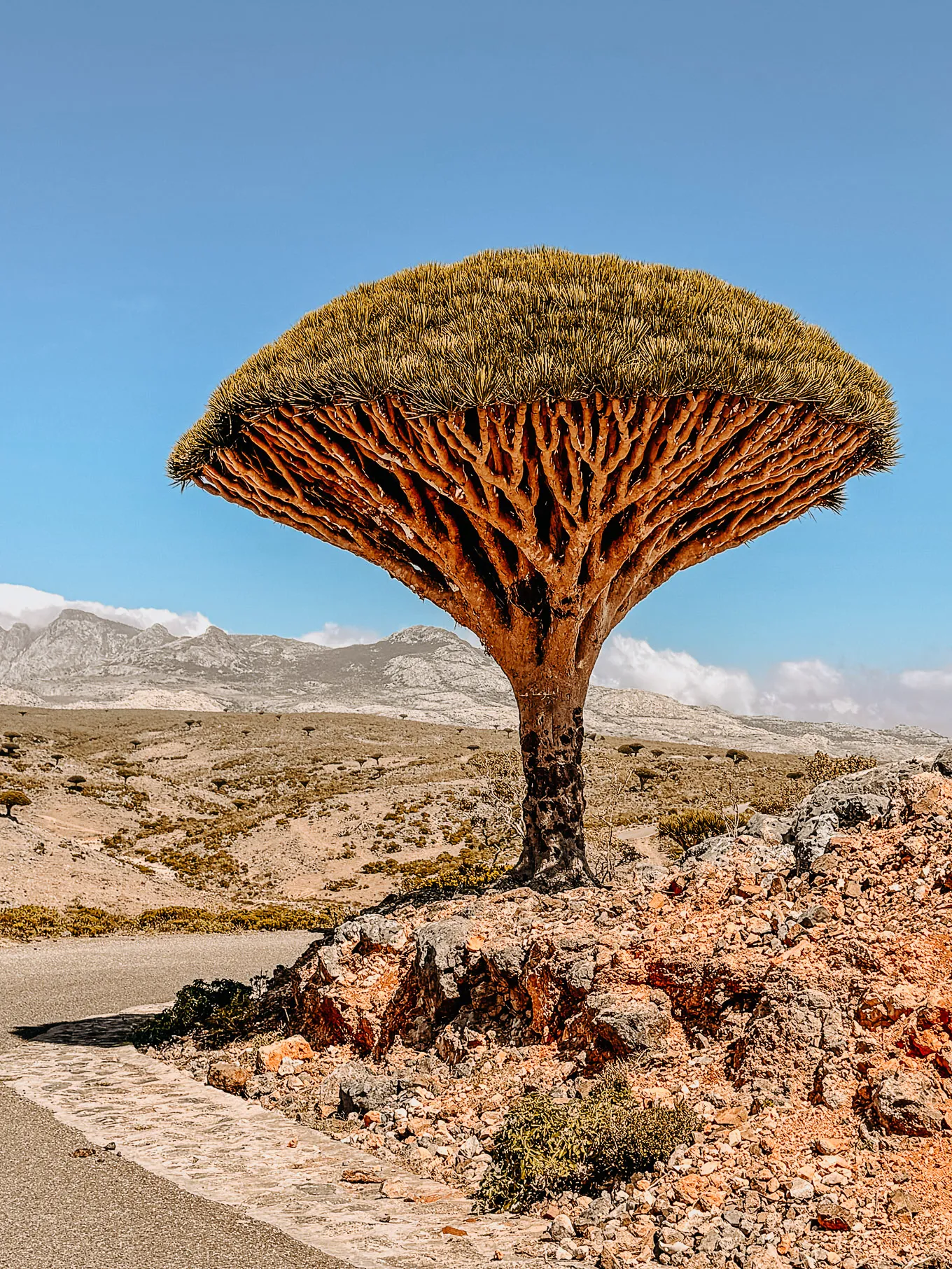
The canyon walls drop vertically. The floor below is a lush green, choked with palms, while yellow-vented pigeons slice through the air. Up on the rim stand the dragon's blood trees, silhouetted like upturned umbrellas against raw limestone. Between them lie karren fields — long, narrow gouges in the rock, bordered by ridges sharp as knives.
Morning light is soft, with a low mist rolling up from the valley, wrapping the trees at waist height. Photographically, this is the moment for atmospheric frames — silhouettes, fog, and deep perspective. By afternoon, the mist burns off, contrast spikes, and the textures of the bark, the red sap, and the wild branching shapes pop. Sunset from the plateau's edge is silent, orange, and infinite. You stand on a spot where you can see the canyon, the ocean on the horizon, and a sky that shifts colours every 30 seconds.
The Dunes of Arher: Where the desert meets the ocean
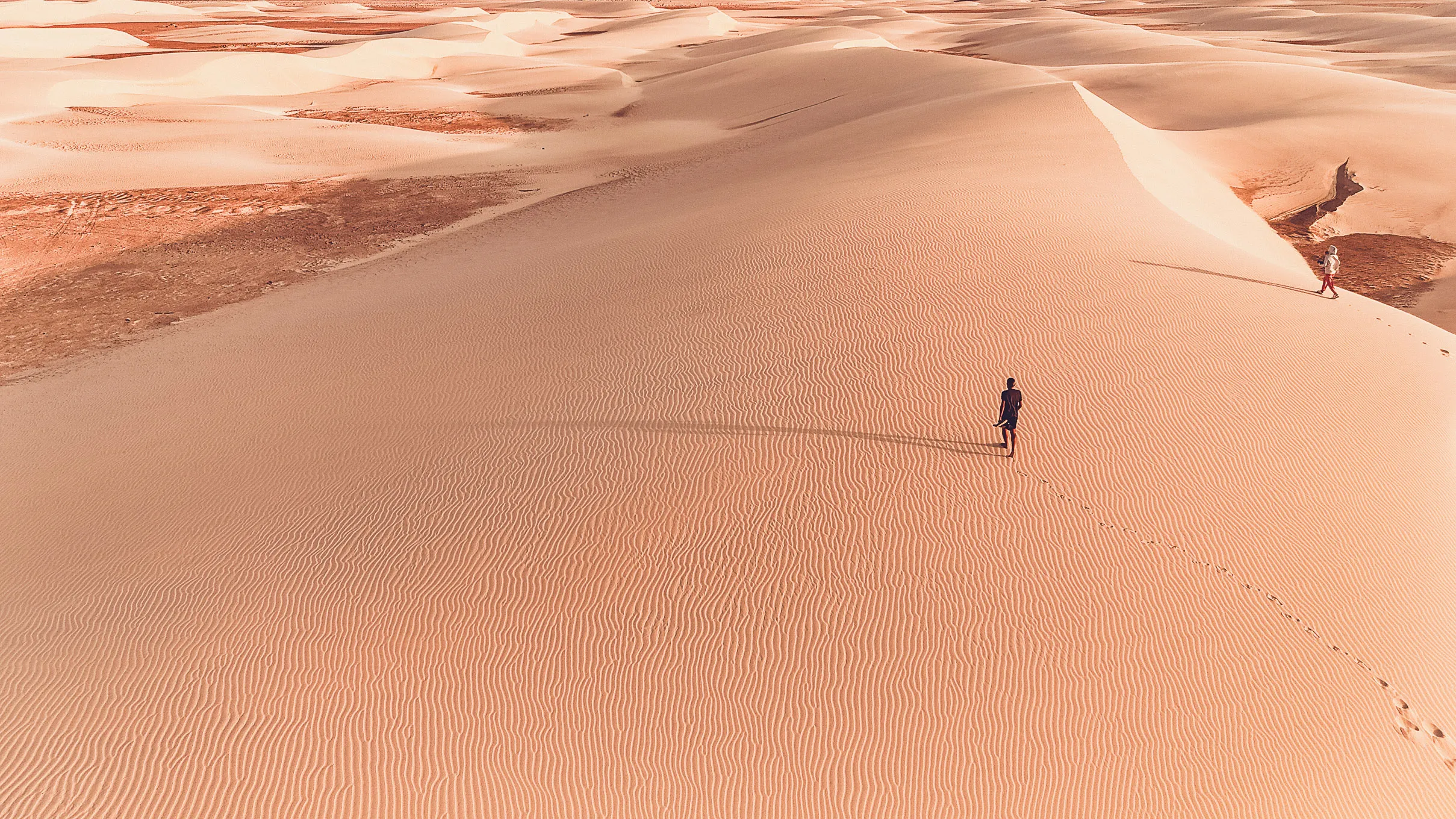
The dunes at Arher Beach rise up to 150 metres, piled high against sheer cliff walls by the monsoon winds. The sand is fine, pale, and constantly on the move, meaning the contours of the dunes are never the same from one day to the next.
The climb is a physical battle — 30 to 40 minutes pulling yourself up slipping sand that swallows your feet at every step. But from the ridge, you gaze at something that barely exists anywhere else on the planet: a desert ending directly in the ocean. No transition zone, no classic shoreline. Just sand and water, separated by nothing.
The best light is early morning, when the shadows of the crests draw sharp lines across the sand, or late afternoon, when the grains take on a warm, almost honeyed hue. Noon is white and merciless, but if you want minimalism and abstraction, the midday sun actually works: sand and sky, nothing else, everything washing out into pure white.
On the other side of the dunes, a freshwater stream gushes straight from the granite cliff and runs into the sea. Green grass, then sand, then waves. Three completely different textures in a single frame.
Detwah Lagoon: Turquoise framed by stone
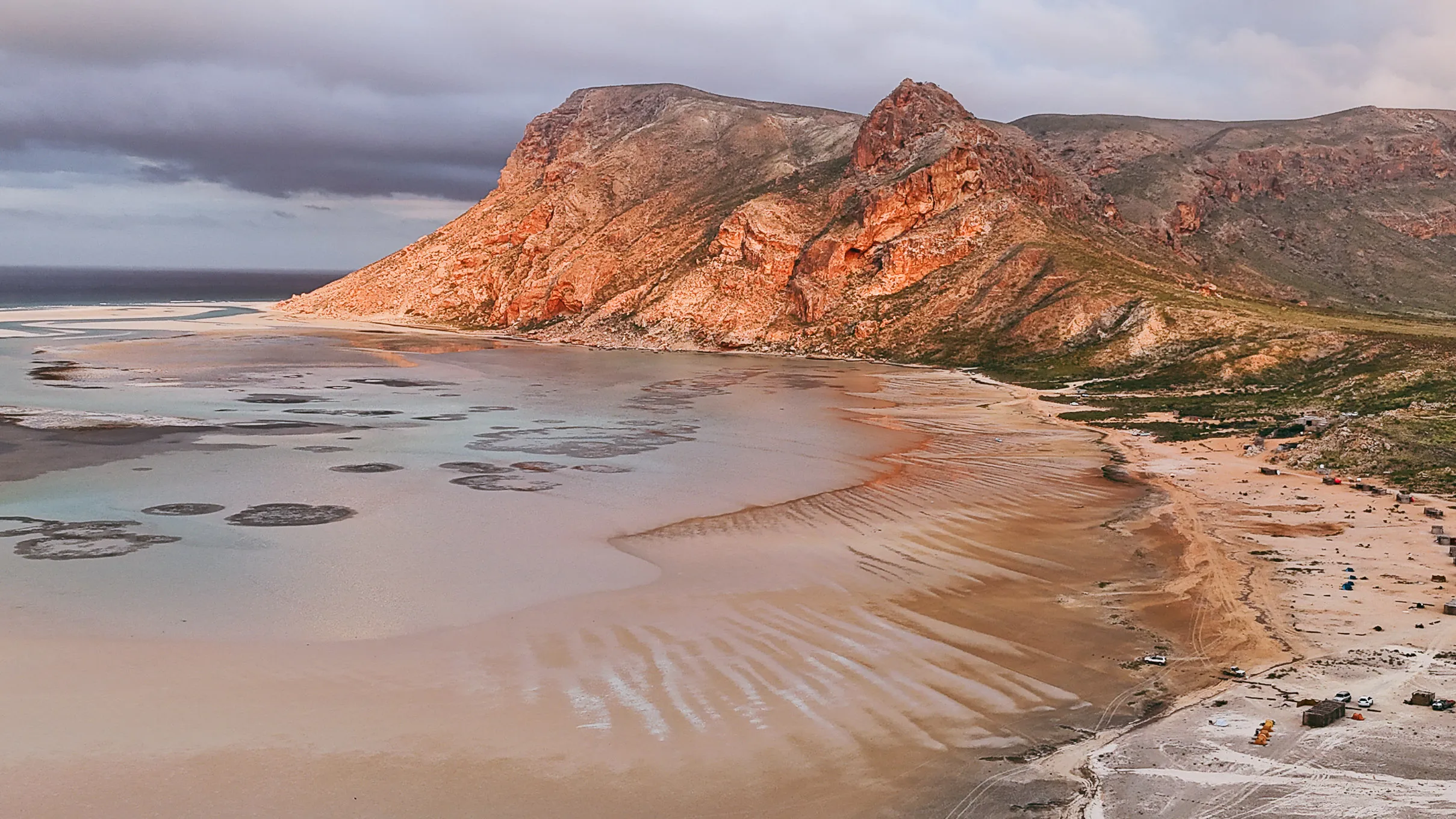
Detwah Lagoon is a protected marine sanctuary, and when you first see it from the viewpoint above, you'll catch your breath. A long, thin tongue of white sand cuts through the shallow turquoise water, separating it from the open bay. The surrounding cliffs are rust and brown, and far on the horizon lie the jagged mountains of the island's west.
The colours are so intense they look photoshopped. They aren't. The water really is that turquoise, the sand really is that white, and on a clear day, the sky is a blue so deep it feels unreal. For a photographer, the challenge here is the reverse: how to capture something that looks like an over-edited postcard in a way that feels raw and honest.
From the lagoon, a boat sets off for Shuab Bay, charting a route past white, pink, and red cliffs. Dolphins break the surface alongside the bow. Shuab is wild and expansive, with a beach stretching for hundreds of metres and mangroves pushing in from the back. The contrast between the stillness of the lagoon and the wild energy of the bay is classic adventure: peace and intensity, just a 20-minute boat ride apart.
Derhur Canyon and Firmihin Forest
Leaving the Dixam Plateau, the road plunges 400 metres down into a canyon carved deep into the granite. The atmosphere shifts instantly: from the dry, wind-blasted plateau rim, you descend into a lush, humid valley floor overgrown with palms. The air is heavier, the sounds softer. African collared doves and emerald-spotted wood doves guide you through the canopy.
Light inside the canyon is filtered. The sun doesn't reach the floor until late morning, while shadows play across the towering rock faces. For long exposures or low ISO photography, this is a dream environment: minimal direct glare, rich texture, and the strong vertical lines of palms matching the cliffs.
The Firmihin Forest is the continuation of this trip. Here, the dragon's blood trees grow denser, shorter, and twisted by the wind. Camping overnight in the forest is unforgettable. You sleep beneath a tree that has stood for hundreds of years, with nothing but the rush of the wind through the crown. Sunrise between the trunks is quiet, pink, and slow — one of those moments where you put the camera down because you know no photo will ever do it justice.
The Caves: Light beneath the earth
Socotra is built on limestone and granite, a geological recipe that has carved out vast cave networks stretching for tens of kilometres. Hoq Cave is the most famous, with 10 km of galleries, about 2 km of which are open to explore.
The trek to the entrance is a steep 2.5-hour hike. Inside, it's cool, damp, and completely silent. Stalagmites and stalactites, formed over millennia, stand like temple pillars in the dark. There is a natural pool of water so clear it looks empty until you dip your hand in.
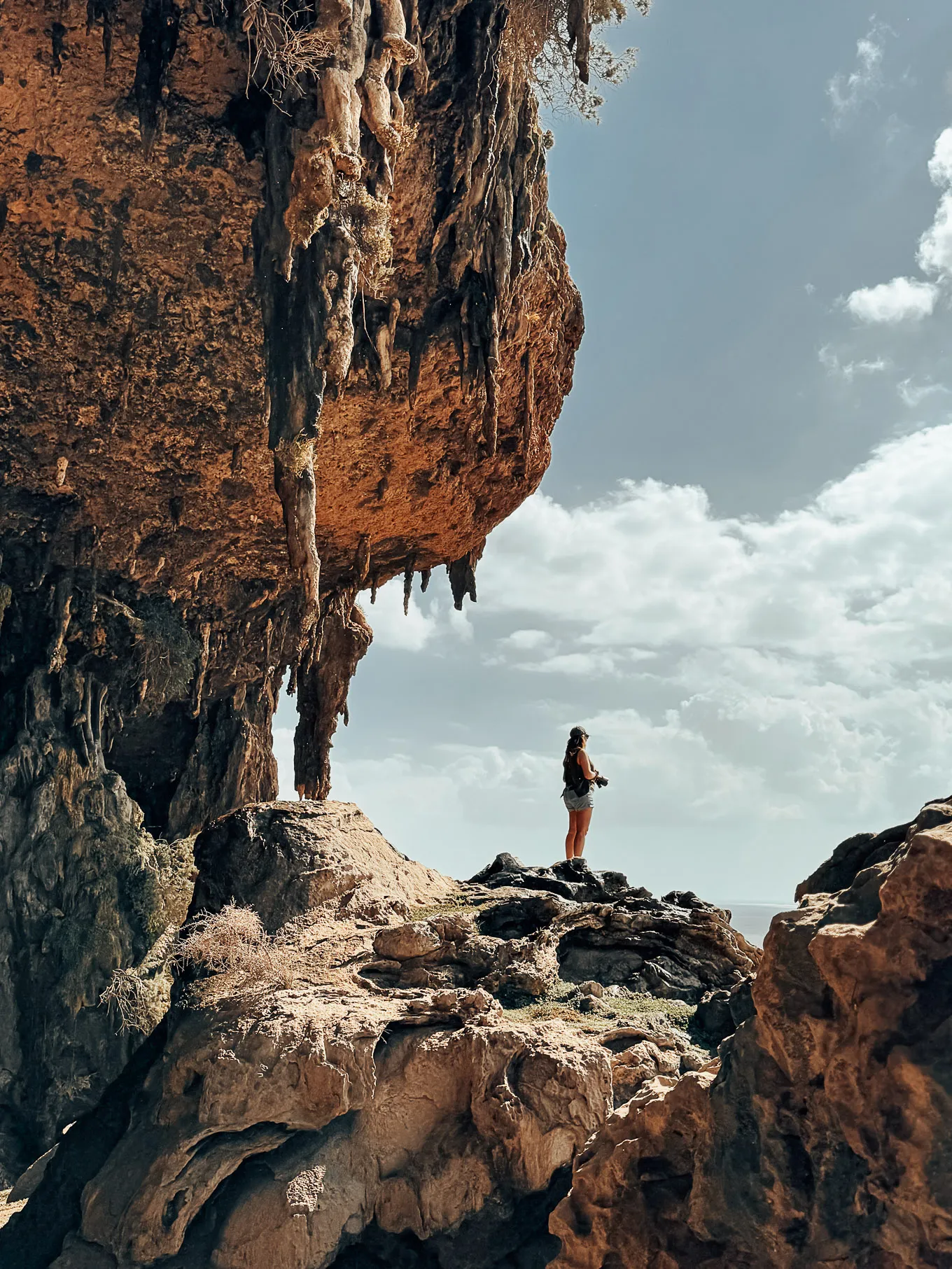
Dagub Cave is far easier to access and offers a different perspective: its mouth frames a wide view of the valley and the nomadic settlements below. Inside, massive stalactites hang down, and water drips slowly from the ceiling, pooling on the floor. Light from the entrance penetrates 20 to 30 metres, creating a perfect transition from deep shadow to silhouette, to raw detail. For a photographer, Socotra's caves are an exercise in high contrast: the darkness is absolute, and the light — from a torch or the cave mouth — is the single point around which your frame is built.
The Light of Socotra: What you'll capture
On Socotra, light plays by its own rules. Located just 12 degrees north of the equator, the sun rises and sets with incredible speed. The "golden hour" is no hour at all. It is a fleeting 30 to 40 minutes of intense, burning light, and then it is gone.
Sunrise is best caught from the high plateaus (Dixam, Homhil) or the dunes of Arher. For sunset, head to the Detwah Lagoon, the edge of Homhil's natural infinity pool overlooking the Arabian Sea, or Delisha Beach. At night, with zero light pollution for hundreds of miles, the Milky Way is visible to the naked eye — thick, bright, and impossibly close.
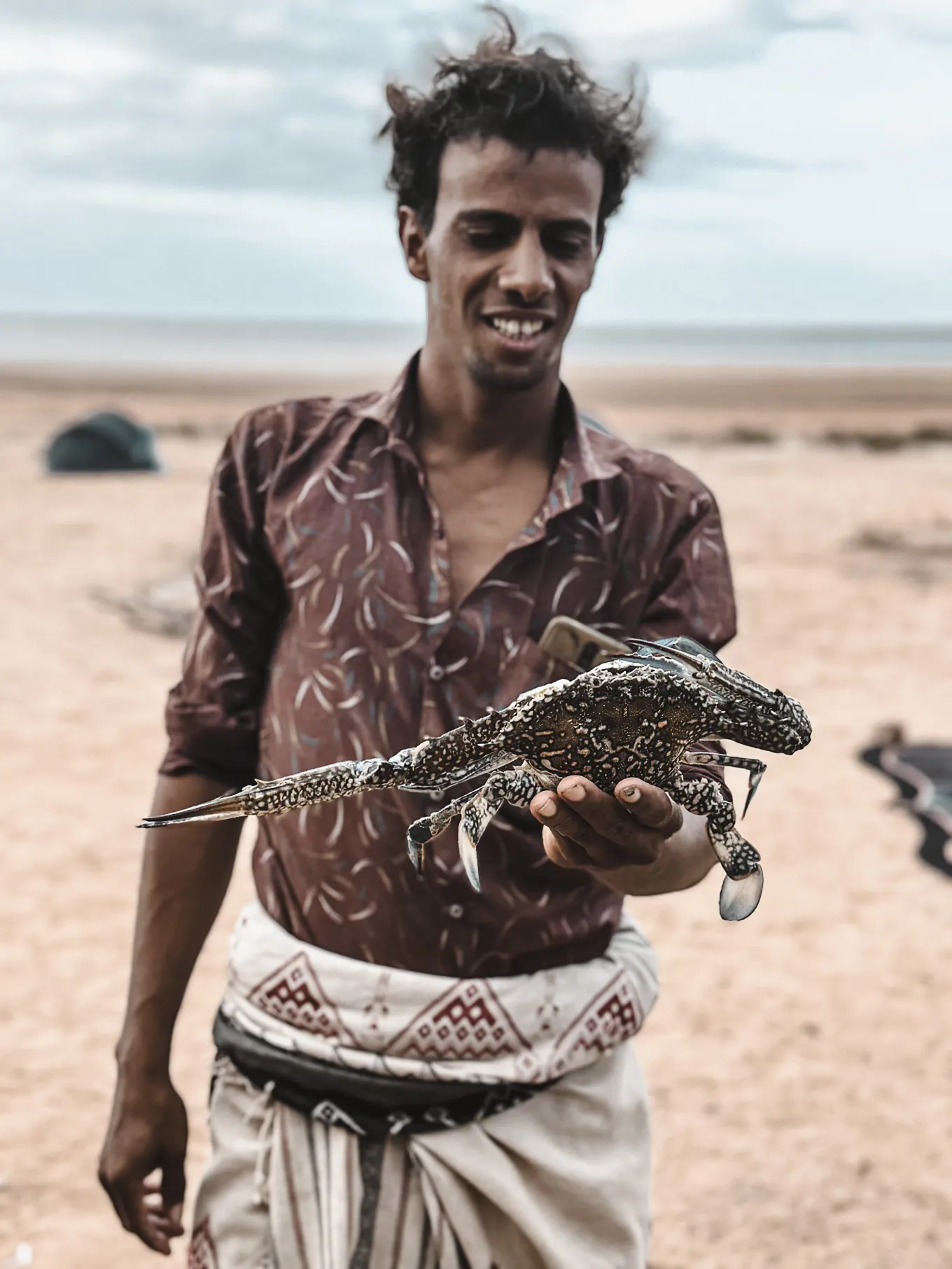
For landscape photography, pack a wide-angle lens for the plateaus and dunes, and a telephoto to capture the intricate details of the bottle trees and rock formations. For portraits of the local Bedouin, a 35mm or 50mm lens and natural light work best. For the caves, a sturdy tripod and a solid headtorch are essential.
But the gear is secondary. What matters is that on Socotra, the landscape changes with every mile you drive, and the light shifts every 20 minutes. No two frames are ever the same because nothing stays still. The wind moves the sand, clouds race overhead, and the mist lifts and drops. The island is alive, and your camera is just trying to keep up.
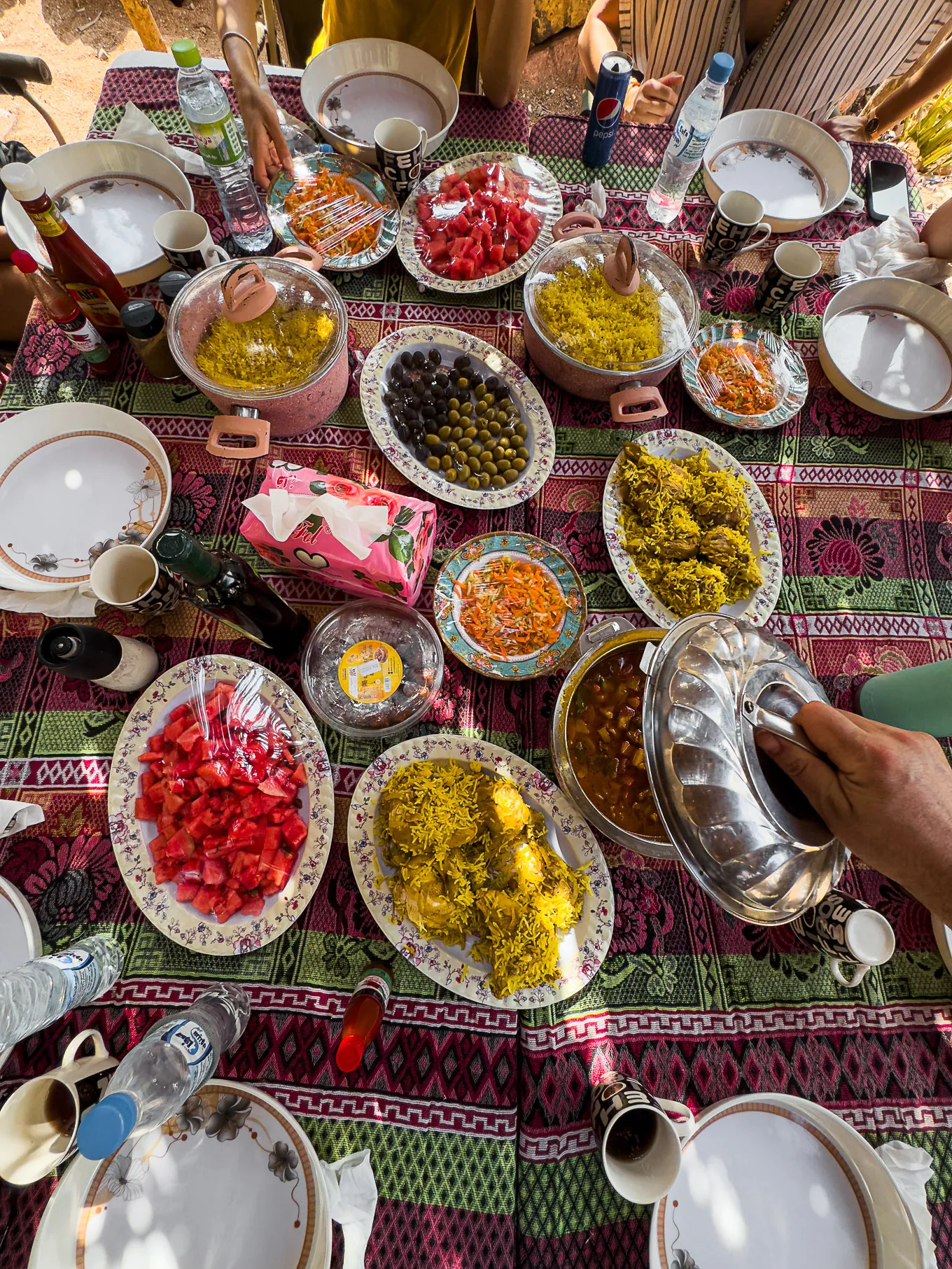
The seventh day. The bottle trees on the hillside are bathed in golden light, the sky behind them is turning a deep violet, and down in the valley, the first stars are already blinking. You take the shot, and then you stop. You lower the camera and just stand there. The wind whistles softly through the branches. The final dinner is served under a canopy of stars, with no city noise, nothing standing between you and the wild. Socotra is not a backdrop for your photos. It's a place that commands you to put the lens down and remember it with your own eyes.
Author: Martin Bonov