Socotra: Everything You Need to Know Before You Go
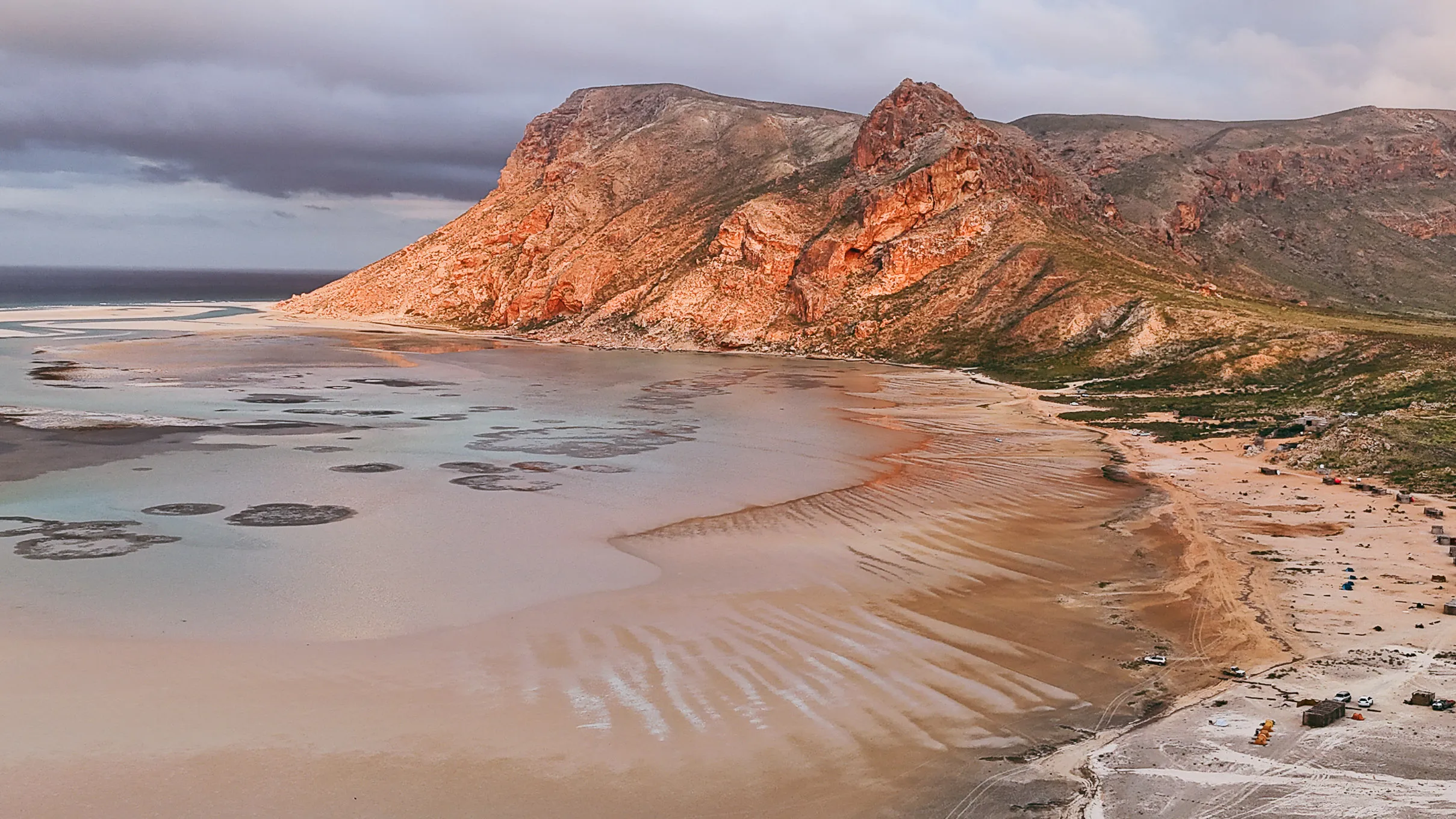
You fly for three hours from Abu Dhabi over the water. Below you, there is nothing but the Arabian Sea, deep blue and endless. Then, land appears. Not a coast, not a city, not a port. Just land that looks as if it has remained untouched for the last 20 million years. You step onto the runway in Hadibu, the wind hits your face, hot and salty, and you realise that here, the rules are different. Socotra is not a destination you read about in a guidebook. Here, you prepare with patience, curiosity, and a readiness for conditions that are unlike anything you have ever known.
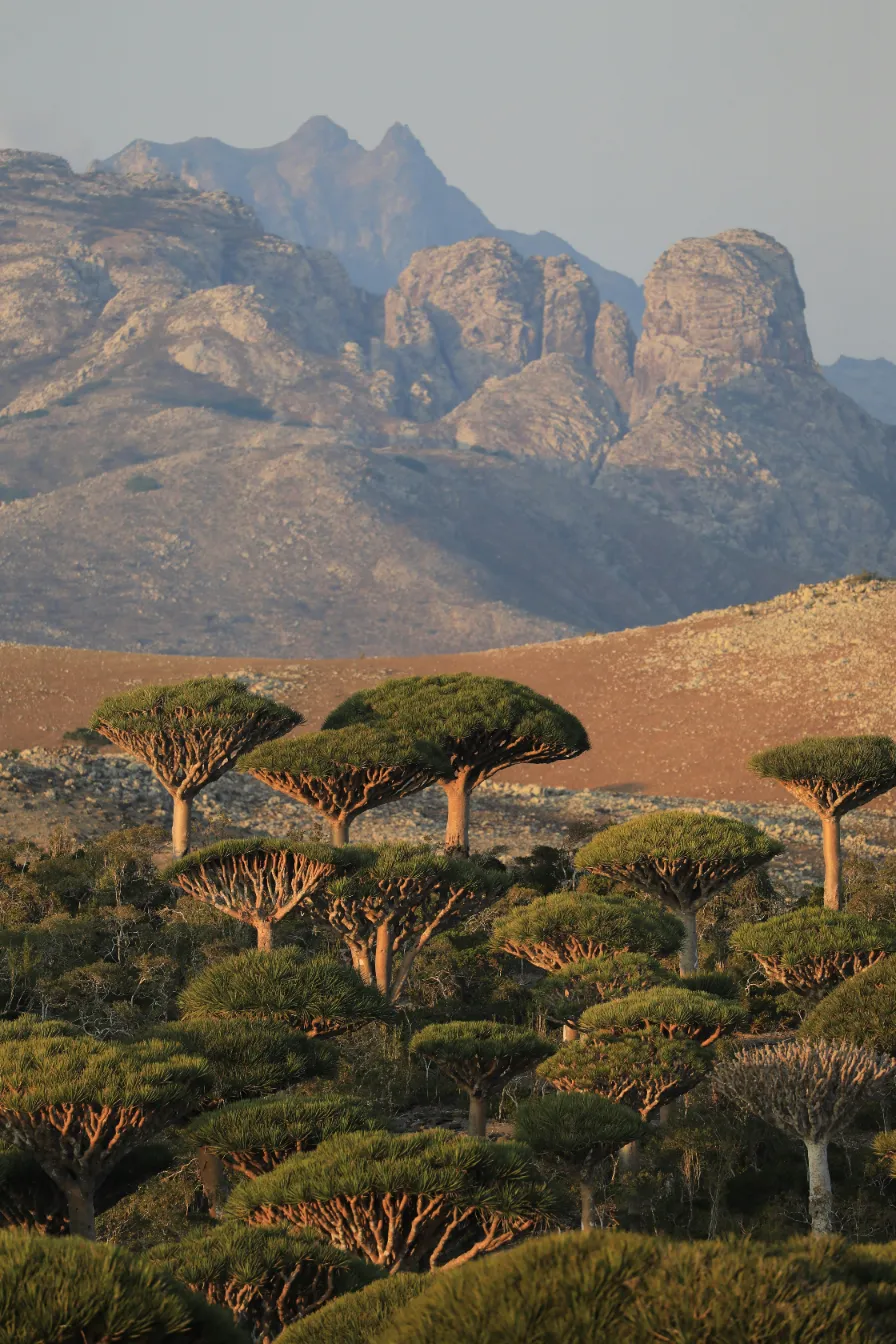
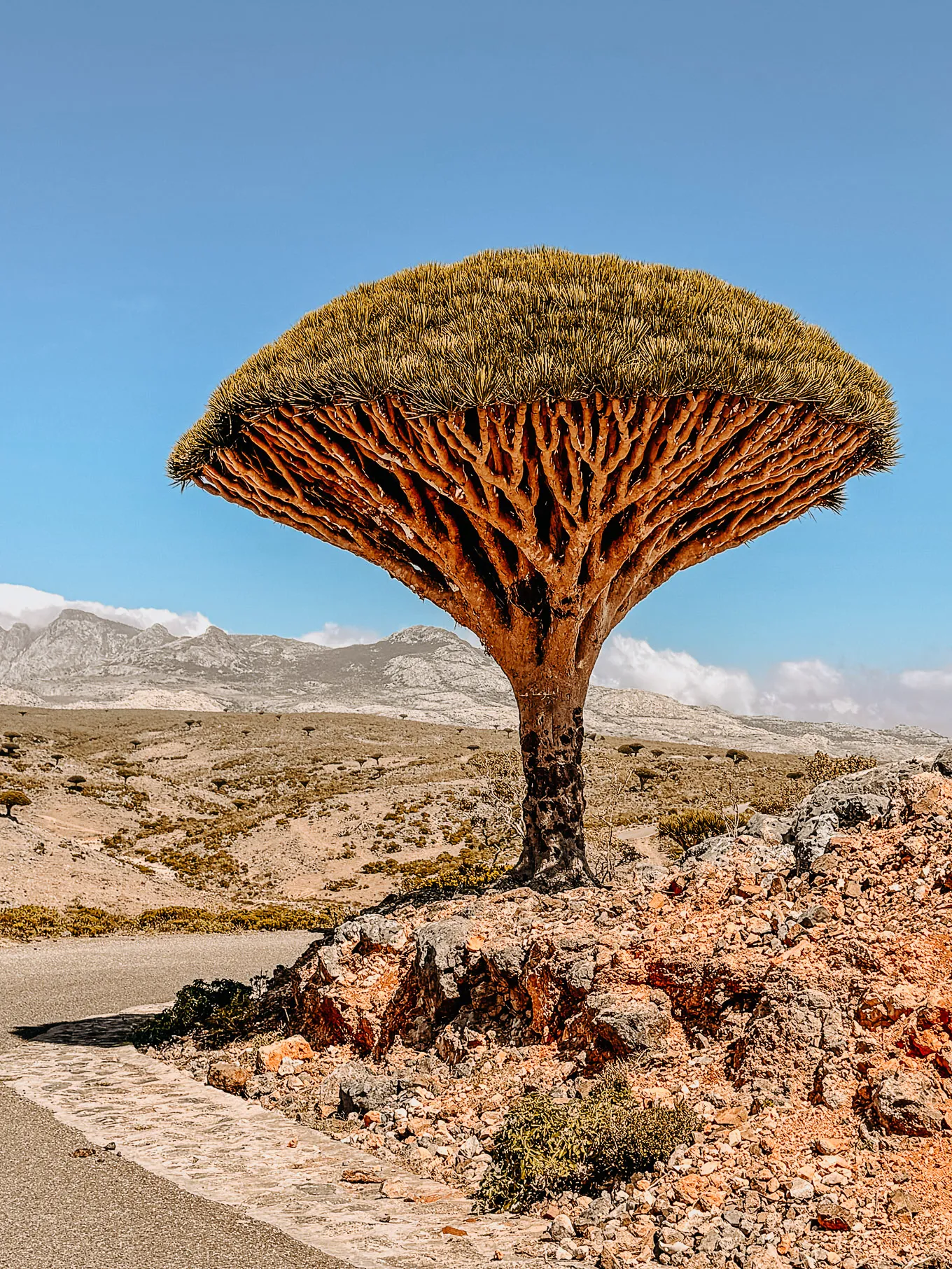
Socotra is an archipelago of four islands in the Arabian Sea, about 350 km off the coast of Yemen and 240 km from Somalia. The main island is 130 km long and 40 km wide. It broke away from Africa some 6 million years ago, and this isolation has forged an ecosystem that exists nowhere else on earth. Over 300 plant species here are endemic, including the dragon's blood and bottle trees, which look more like props from a sci-fi flick.
The journey with Panic Frame spans 9-10 days, flying via Abu Dhabi or Jeddah. On the island itself, you travel by 4x4, sleep in tents on the beach or under dragon's blood trees, and feast on fish caught fresh that very day. Infrastructure is minimal, signal is rare, and days are measured by the sun, not the clock. Which is precisely the point.
Getting to Socotra
There are no direct flights from Europe. The route goes through Abu Dhabi or Jeddah, with a charter flight to the island. The flight from Abu Dhabi takes about 3 hours. Hadiboh airport is tiny (one runway, one building), and the moment you touch down, the logistics are handed over to local guides with 4x4s.
Visas are arranged in advance, as Socotra is formally Yemeni territory. Panic Frame handles the entire process, but you will need a passport valid for at least 6 months and a copy of your personal details. The procedure takes several weeks, so booking early is essential.
It rarely takes more than an hour to get from the airport to the first stop on the itinerary. But "road" is a relative term here. Most transfers are along dirt tracks, dry riverbeds and rocky paths. The pace is slow, and the landscape outside is so otherworldly you won't have enough eyes to take it all in.
When to go: seasons and climate
Socotra has two main seasons. From October to April, the weather is dry and sunny, with temperatures ranging between 25 and 33 degrees. Nights are cool, especially up in the mountains (around 15-18 degrees). The wind is constant but manageable. This is the window when the island is accessible.
From June to September, the monsoon (khareef) shuts the island down. Winds scream at up to 100 km/h, the sea is impassable, and flights are cancelled. Tourism ceases entirely. Locals say that during the monsoon, the island "breathes inward" and closes itself off to the world.
The prime months to visit are October, November, February, and March. The light is soft, the wind is gentle, and the temperature is just right for comfort. April works too, but the days start getting hotter.
Where you sleep and what you eat
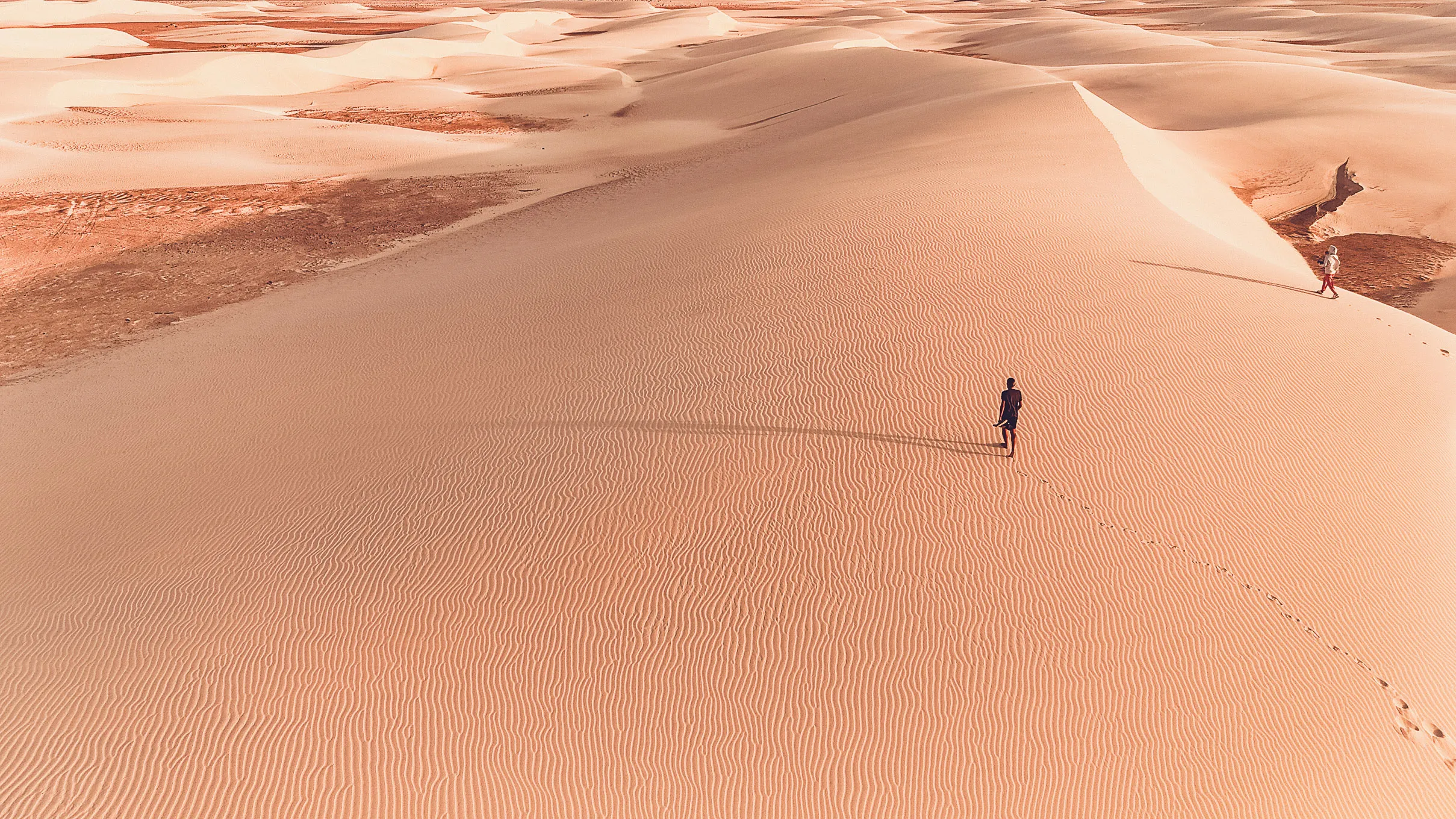
There are no hotels on Socotra in the classic sense. No resorts, no air-conditioned rooms, no buffets. You sleep in tents pitched on the sand or on rocky clearings under the trees. Some nights are spent on Arher beach, with 150-metre dunes towering over you. Others are in the Firmihin forest, among dragon's blood trees, where the only sound is the wind in the branches.
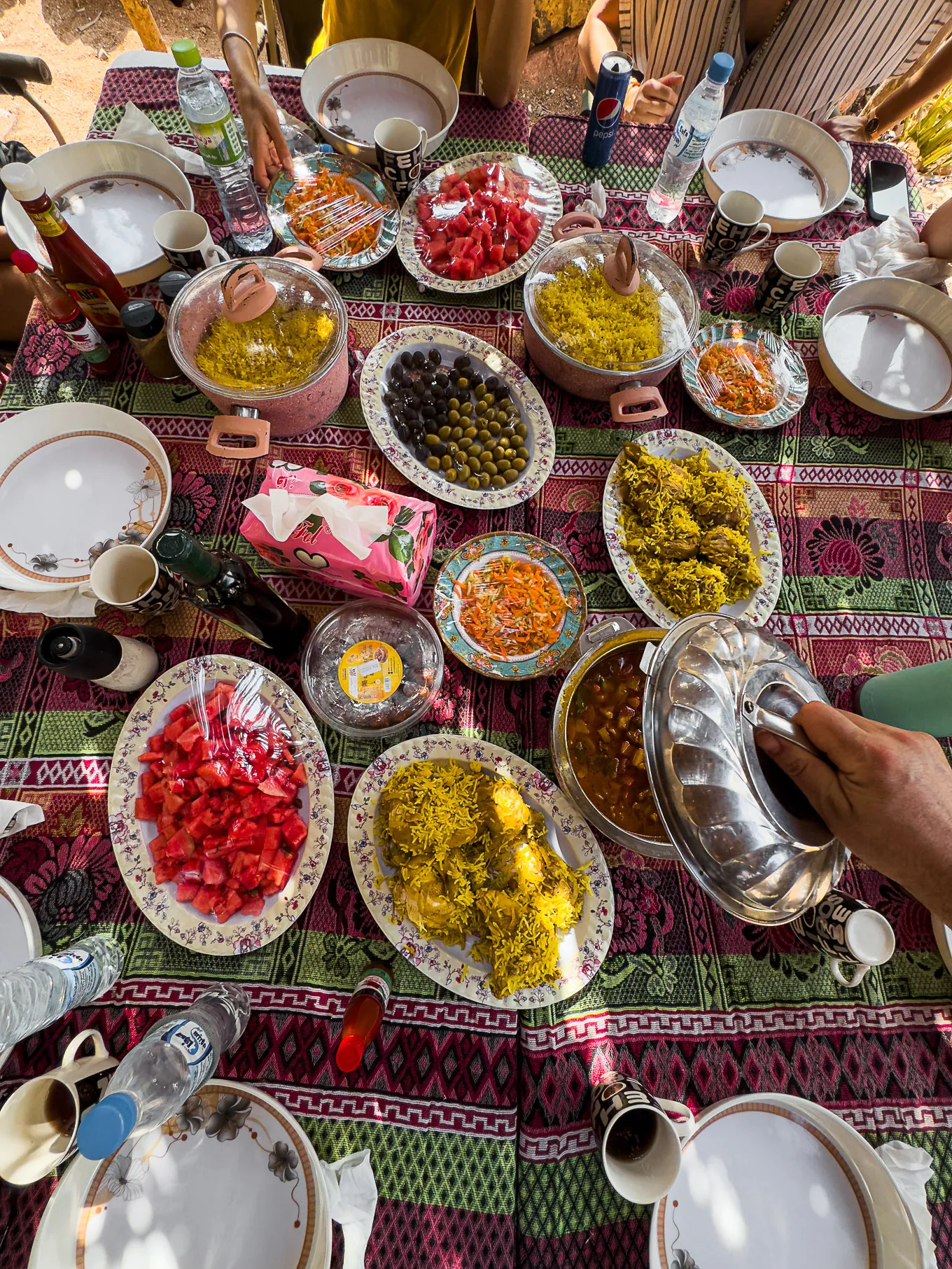
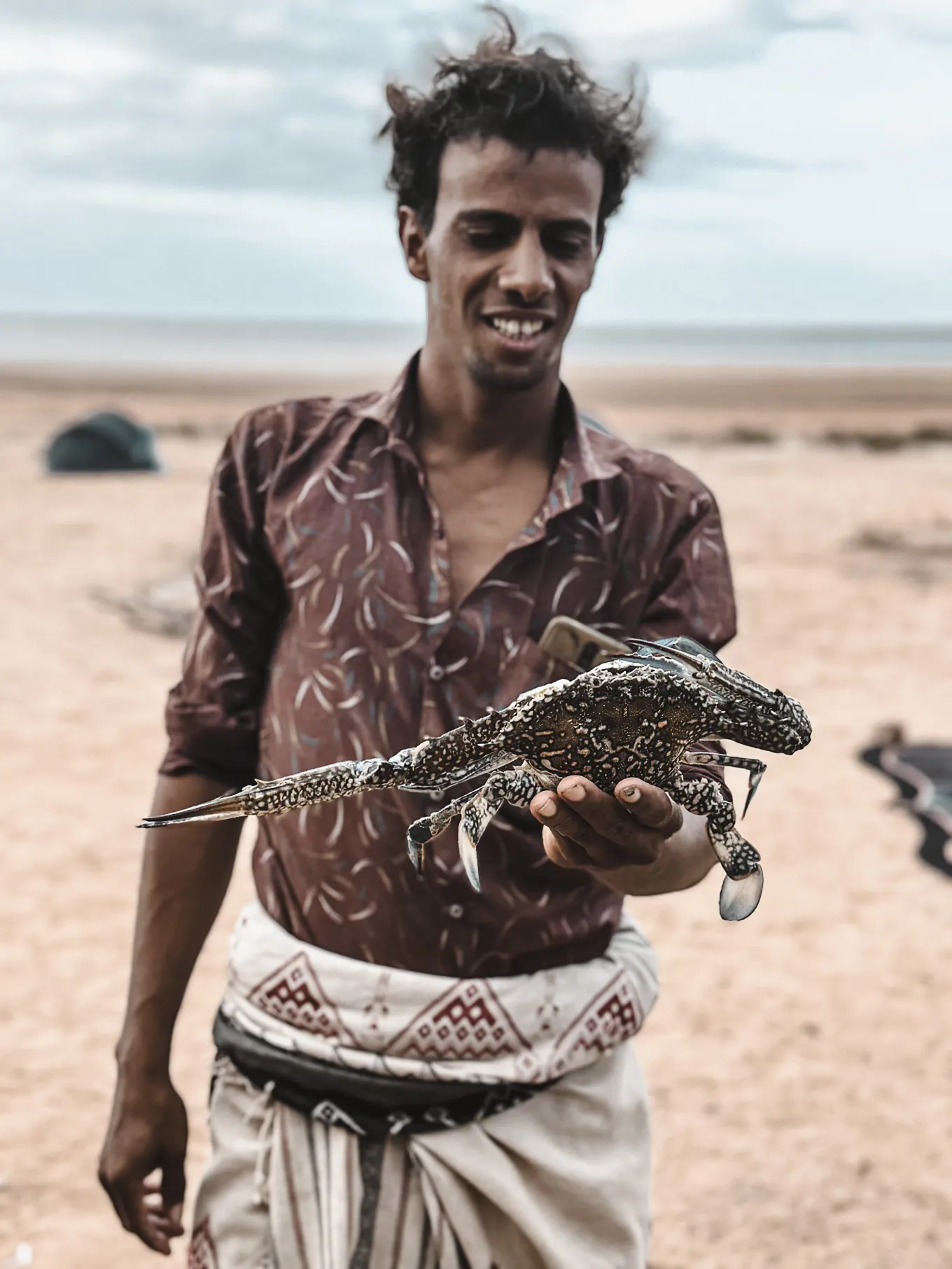
The food is simple and incredibly fresh. Fish comes straight from the sea that day. Rice, flatbread, vegetables, honey. Local cooks travel with the group and whip up everything on-site. Breakfast, lunch, and dinner are included. Do not expect endless variety, but do expect superb flavour. There is something about food cooked over an open fire, between the cliffs and the sea, that you just can't recreate in a restaurant.
Water: bottled, supplied by the crew. Toilets: camp-dependent, sometimes improvised. If you are looking for luxury, Socotra will surprise you, but not in the way you expect. Comfort here comes from the silence, the vast open space, and the fact that you won't check your phone for 9 days.
What to pack: gear for an island without infrastructure
Layers are absolute key. Daytime temperatures are high, but nights, especially in the highlands, drop to 15 degrees. A lightweight sleeping bag or liner is a smart move, even if the team provides mats.
Footwear needs to handle rocks and sand—not heavy mountaineering boots, but something sturdy and quick-drying. Sandals are great for the beach and camp. Pack long trousers for the evenings (moisture brings out the mosquitoes near water sources). Bring a wide-brimmed hat, high-factor sunscreen, and sunglasses.
First aid kit: keep it basic with anti-diarrhoeal medication, pain relievers, and insect repellent. There is a hospital in Hadiboh, but it is very basic. Anything serious requires evacuation to the mainland. Insurance with coverage for remote regions is mandatory, not optional.
Camera: a must, with plenty of spare batteries and memory cards. Charging is only possible in Hadiboh and at a few points along the route (via generators). Bring a power bank. And pack fewer clothes than you think you need. No one dresses up for dinner here.
Physical fitness and daily pace
Socotra is not an extreme trekking expedition. There are no 8-hour marches, no 5,000-metre climbs. But it is no beach holiday either. A typical day involves 2-4 hours of walking on uneven terrain (rocks, sand, canyons), plus 4x4 transfers on roads that will rattle every bone in your body.
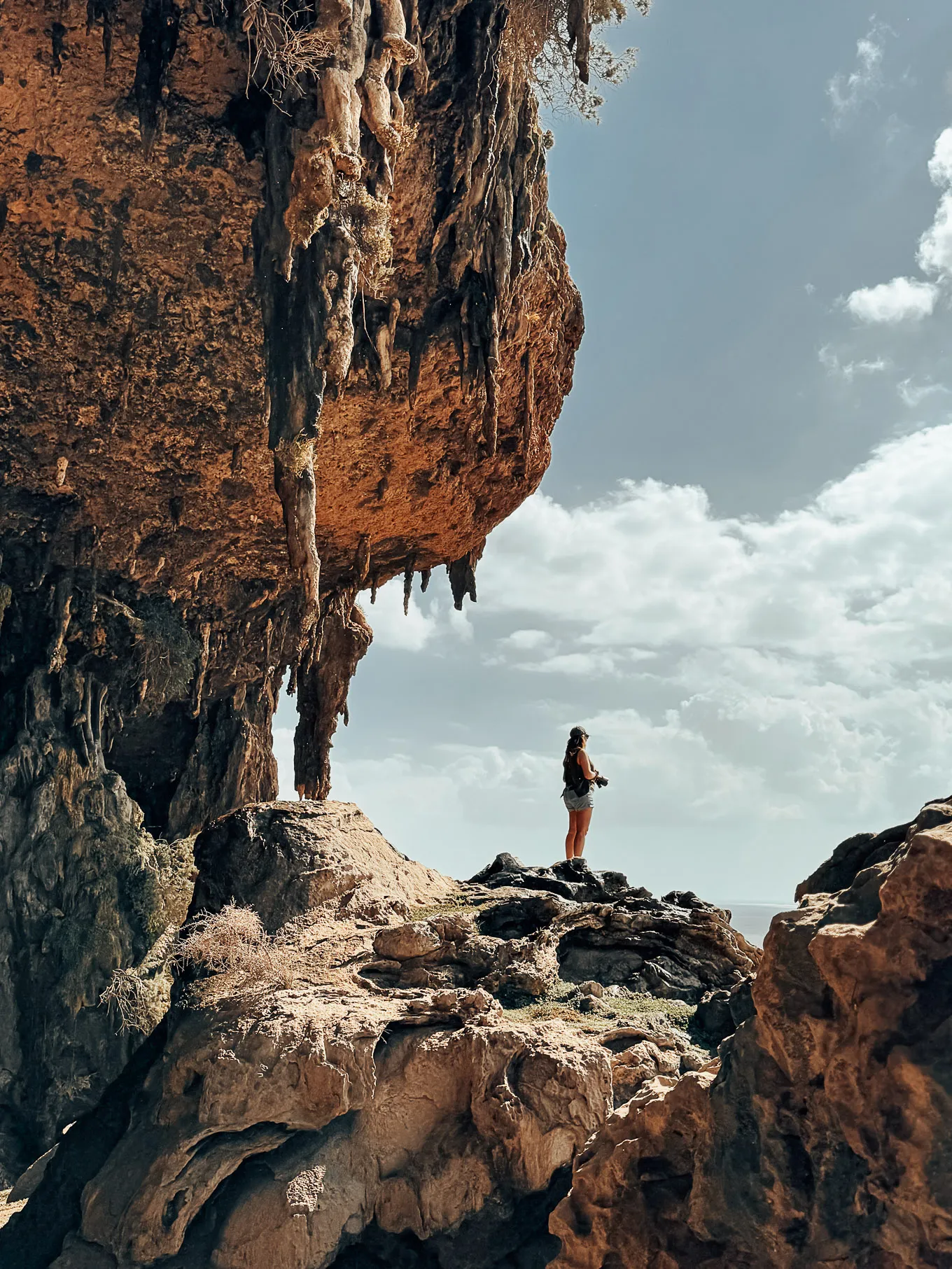
The climb to Hoq cave takes about 2.5 hours up a steep path. Scrambling down into the Wadi Kalisan canyon is 45 minutes down and the same back up. The dunes at Arher and Zahek are sheer sand, and climbing a 150-metre dune in the heat is harder than it looks.
A decent level of general fitness is all you need. If you regularly walk 5-6 km on rough ground, you will be fine. More important than physical fitness is your mindset: days here have no rigid schedule, the plan changes with the wind (literally), and sometimes "doing nothing" is the entire itinerary, and that is just perfect.
Money, connectivity and keeping expectations in check
The currency is the Yemeni rial, but US dollars are universally accepted. Cards do not work anywhere on the island. Bring cash in USD (clean bills, small denominations like 1s, 5s, 10s, 20s), enough for souvenirs, extra activities, and tips. 100-150 USD is plenty for 9-10 days if your main expenses are covered by the trip.
Internet: in theory, you can get local SIM cards. In practice, the signal only covers Hadiboh and a few spots along the coast. Outside of that, you are offline. Completely. For many, this is both the hardest and most beautiful part of the journey.
Do not expect shops, ATMs, pharmacies, or any real infrastructure outside the capital. Do not expect explicit step-by-step schedules of what is next (the itinerary is fluid and depends on local conditions). Do not expect luxury. Expect silence, immense scale, and nights under skies with more stars than you have ever seen. That is the exchange, and it is entirely worth it.
The plane climbs over Hadiboh. You look down and see the white sand, the turquoise water, the brown slopes of the plateau. Everything looks tiny and vast at the same time. There is sand in your pack that you do not remember getting in. On your phone, photos that look like nothing you have ever seen before. In your head, silence. That deep silence that lingers when, for 9 days, the only sounds have been the wind, the waves, and laughter around a campfire. Socotra is not easy. But the easy things are rarely remembered.
Author: Martin Bonov