Visas and Access: The Complex Road to the Most Remote Island
Socotra is part of Yemen. That is the first thing that terrifies people, and the first thing that needs clearing up. The island is far removed from the conflict zones of the mainland and is safe for travellers. However, the visa process reflects a complex political reality.
**The Visa Process:** Visas for Socotra are issued by the Yemeni authorities. The process requires a passport copy, photos, a completed form, and an invitation from a registered operator on the island. With Panic Frame, the entire procedure is sorted — we submit the documents on your behalf. But you must hand over the necessary documents at least 4-6 weeks before departure.
**Flights:** The only way to reach Socotra is via a flight from Abu Dhabi (UAE). Flights are operated by Air Arabia or seasonal charters, flying directly to Hadibo Airport on Socotra. The flight takes about 2.5 hours. Schedules are irregular and depend heavily on the season, so early booking is vital.
**Transit via Abu Dhabi:** UK citizens do not require a visa for the UAE for stays of up to 90 days. If your flight to Socotra is on the following day, you will overnight in Abu Dhabi. A day in the city is not wasted time; it serves as a stark contrast — from skyscrapers and air-conditioned malls to an island without electricity.
**Season:** Flights to Socotra run roughly from October to April. During summer (May to September), the monsoon season makes the island inaccessible due to strong winds, high humidity, and cancelled flights. Do not plan a trip out of season.
**Important:** Flights can be delayed or cancelled due to weather conditions. Stay flexible with your dates. Panic Frame plans buffer days for this exact reason.
When to Go: October to April and Nothing Else
Socotra has two seasons: accessible and inaccessible. There is no middle ground.
**October-November:** The monsoon has just ended. The island is at its greenest, waterfalls are flowing, and the vegetation is lush. Temperatures range between 25-32°C with moderate humidity. The water is warm and perfect for snorkelling. This is one of the best times to go, though you might catch the tail end of the rains.
**December-February:** The dry season. Clear skies and comfortable temperatures (22-28°C). Nights are cool (15-18°C), making it perfect for camping under the clearest night skies. Winds can pick up along the coast, but the island's interior remains sheltered. Absolute perfection for photography.
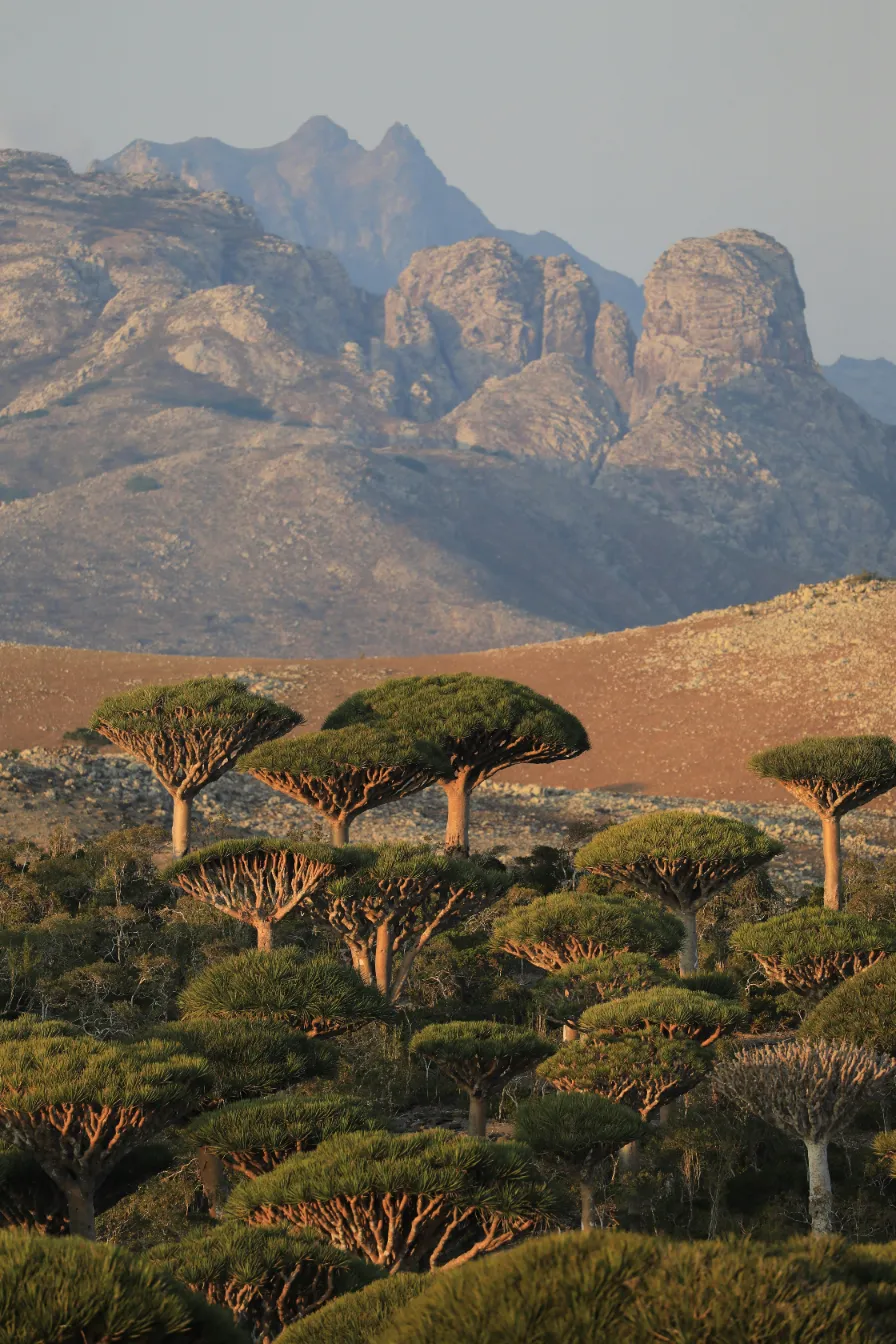
**March-April:** Hot and dry. Temperatures climb to 28-35°C. The landscape begins to dry out, but the dragon's blood trees remain evergreen. Your last chance before the monsoons close the island. The water is doskonałe for diving.
**May-September:** The Monsoon. Howling southwestern winds (up to 100 km/h), heavy rains, and soaring humidity. Flights stop running. The sea is treacherous. Do not attempt it.
**Which month is best?** If you have a choice, go in December or January. The air is crisp, the nights are cool (ensuring a comfortable sleep in your tent), the sky is crystal clear, and the monsoon is a distant memory. While coastal winds can be fierce, our camps are set up on sheltered beaches. The light is soft and warm — a photographer's dream. Most of all, the island is wrapped in absolute silence. Not partial. Total. The sea is calm, snorkelling is ideal, and beach camping is comfortable without oppressive heat.
With Panic Frame, we travel during the optimal window. You can find specific dates on our website.
What to Pack: For an Island with No Shops
There are no supermarkets on Socotra. No pharmacy worthy of the name. No outdoor gear shops. Whatever you do not bring from home, you will not find on the island. Pack as if you are going on an expedition, not a holiday.
**Cash:** Bring cash in USD. Around $200-400 for personal expenses (souvenirs, extra drinks, tips for local guides). ATMs do not exist. Cards are not accepted. Anywhere. Bring small notes like $1, $5, and $10 for minor purchases.
**First Aid Kit:** A basic personal medical kit is mandatory. Pack antibiotics (broad-spectrum, prescribed by your doctor), anti-diarrheal medication, antihistamines, painkillers, plasters and bandages, antiseptic, electrolytes, and sunburn cream. Panic Frame carries a group first aid kit, but your personal health is your responsibility.
**Sun Protection:** SPF 50+ water-resistant sunscreen (at least two tubes). A wide-brimmed hat. Sunglasses. A light, long-sleeved shirt. The sun on Socotra is uncompromising.
**Clothing:**
- 4-5 quick-drying t-shirts
- 2 long-sleeved shirts/flannels (sun protection + evening warmth)
- 2 pairs of hiking shorts
- 1 pair of long trousers (for rocky terrain and evenings)
- A light windbreaker or jumper for the nights
- Swimwear (you will swim a lot)
- 5-6 pairs of socks + extra underwear
**Footwear:** Sturdy sandals with a heel strap (like Teva or Chaco) for the beach and light trekking. Hiking boots for the rocky stretches and the Dixam Plateau. Light slip-ons for the campsite.
**For Camping:**
- A lightweight sleeping bag (rated for 10-15°C nights) or a sleeping bag liner
- A small or inflatable pillow
- A torch/headlamp with extra batteries
- Wet wipes (lots of them, for showerless days)
- Toilet paper
- A quick-dry travel towel
**Gear:**
- A power bank of 20,000+ mAh (electricity for charging is a rarity)
- Camera + extra batteries and memory cards
- A tripod (if you want to shoot the night sky)
- A waterproof phone case (for swimming and boat trips)
Camping on Socotra: Sleeping on the Sand, Waking in Paradise
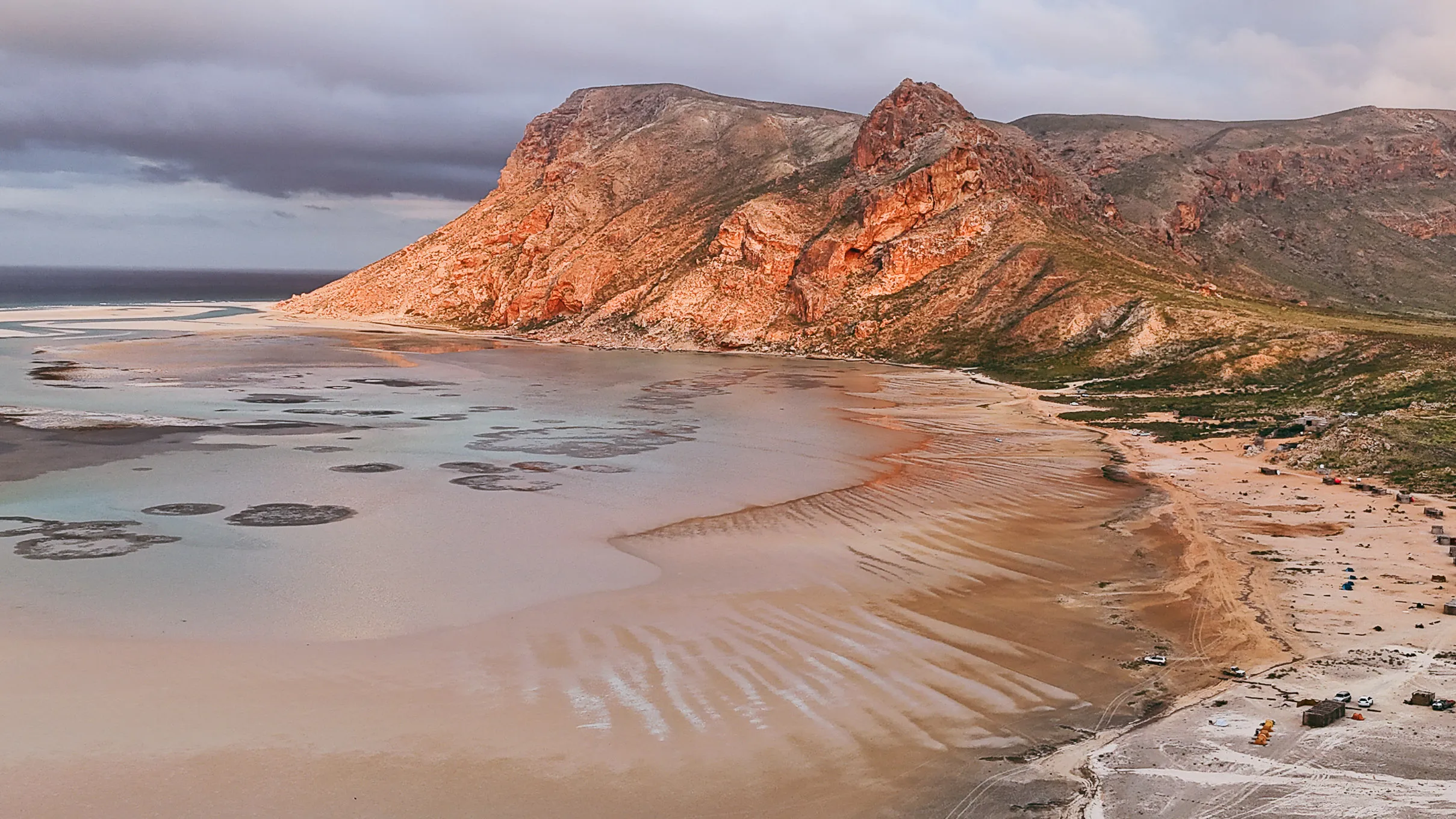
There are no hotels in the traditional sense on Socotra. Hadibo has a few basic guesthouses, but the true experience lies out in the wild. You will sleep on beaches, under dragon's blood trees, and on high rocky plateaus overlooking the ocean.
**What Panic Frame Provides:** Tents (two-person), sleeping mats, a cook (yes, a personal chef who travels with the group), food, and water. All logistics are handled with local 4x4 vehicles and drivers who know every single rock on the island.
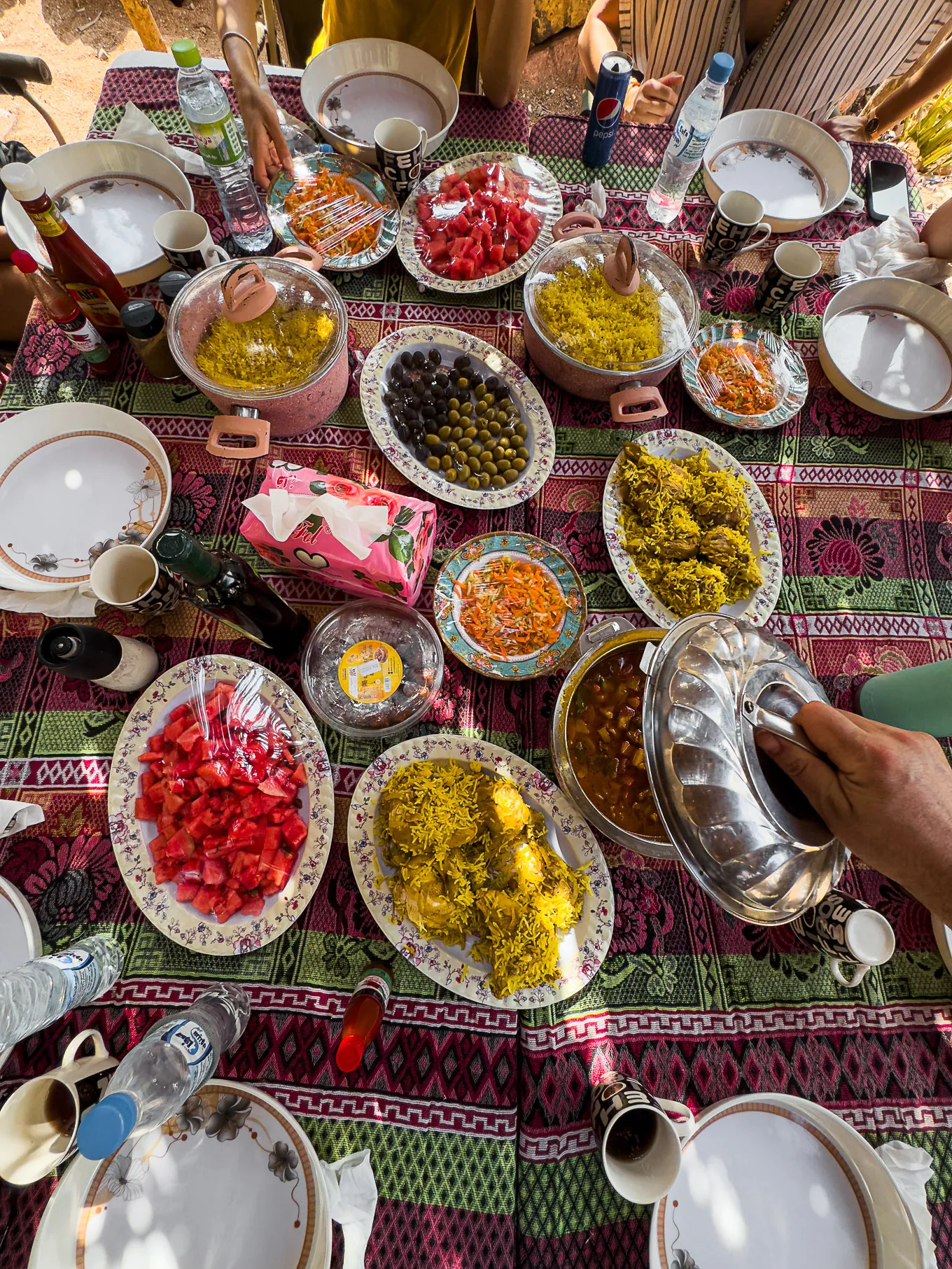
**What to Expect:** A tent will be your home for 8-10 nights. There are no showers (except in Hadibo and from the occasional water tanker). The toilet is the great outdoors (with a spade and a strict "leave no trace" policy). The food is surprisingly good: fresh fish, flatbread, rice, vegetables, and fruit. Our cook works absolute magic with limited resources.
**The Nights:** This is where something happens that you cannot prepare/read up on. With zero light pollution, the Milky Way is so brilliant it actually casts a shadow. You lie in your sleeping bag on sand that still holds the day's heat, staring straight up. The silence is absolute. It is not just the absence of sound, but the presence of something ancient, older than anything you have ever known.
**Comfort:** If you are looking for luxury glamping, Socotra is not for you. But if you can accept that comfort means hot food, clean water, great company, and a canopy of stars, then Socotra is paradoxically luxurious. Here, ruggedness and comfort are not opposites. They merge into one.
Physical Prep: Not Extreme, But Real
Socotra is not Everest. You do not need to be an elite athlete. However, you do need to be in good general shape because the terrain is uneven, the heat is real, and no vehicle is coming to rescue you when you get tired.
**What to Expect Physically:**
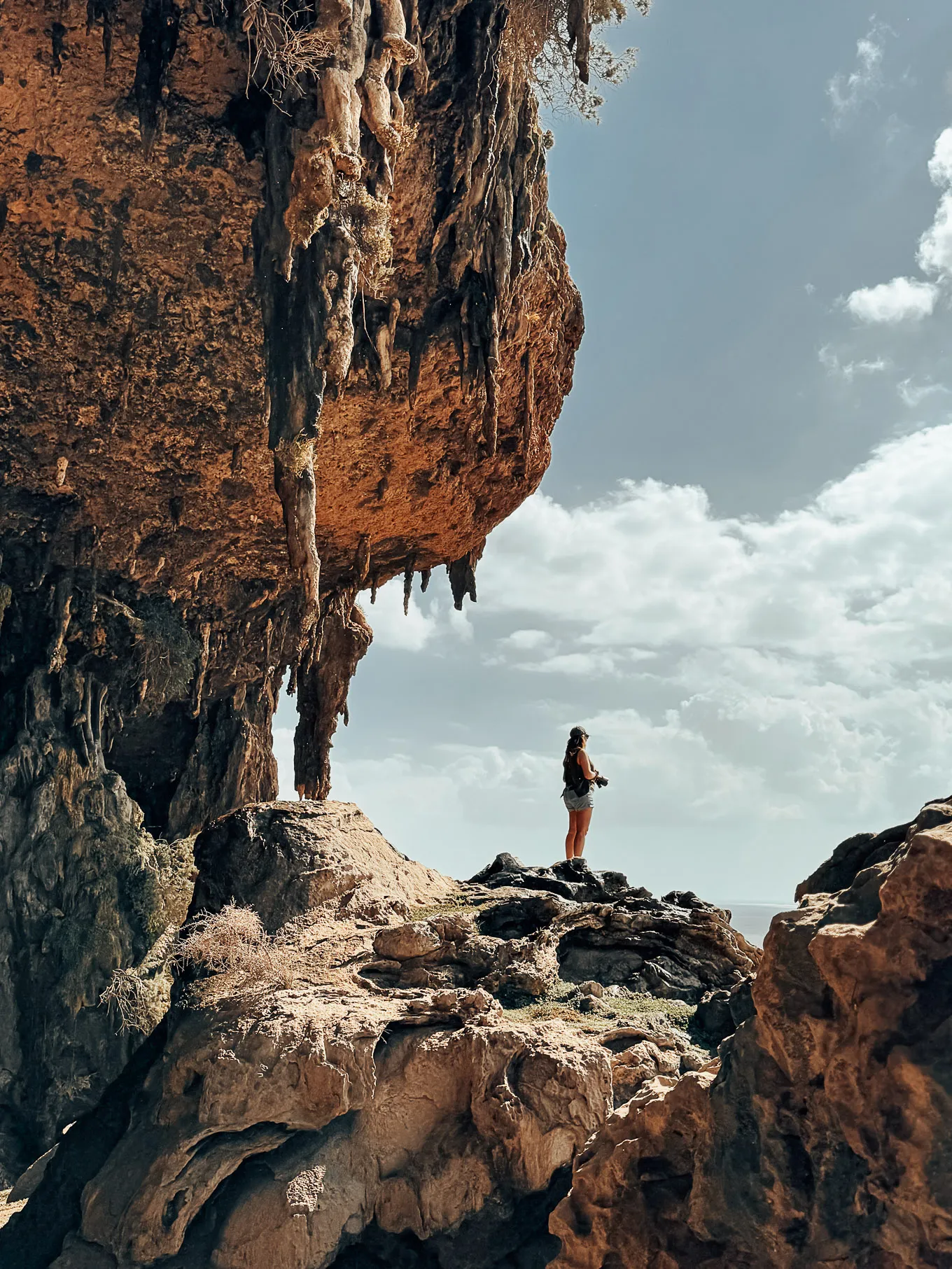
- 2-4 hour hikes over uneven terrain (rocks, sand, roots)
- Scrambling up rocky paths to the Dixam Plateau (400-500 meters of elevation gain)
- Walking on soft sandy beaches (surprisingly tiring)
- Emabarking and disembarking from boats in shallow water
- Snorkelling in open water (currents can be strong)
**Preparation:** At least 6 weeks before your trip, start walking 6-8 km three times a week, including some uphill bits. If you can climb 400 metres with only two short breaks, you are ready. Swimming is also great prep, as you will be spending hours in the water.
**Heat and Humidity:** Temperatures hover between 25-35°C, but it feels hotter due to the humidity and a total lack of shade along the coastline. Hydrate constantly. Sun protection is not a recommendation; it is a necessity.
**Important:** There are no rescue helicopters (or rather, getting one takes hours and is phenomenally expensive). The nearest proper hospital is in Abu Dhabi or Aden. Look after yourself: do not risk unprotected sun exposure, do not leap across wet rocks, and do not swim out further than you are absolutely confident you can handle.
Health and Safety: Far from Everything, Including the Hospital
Socotra is safe by human standards (crime is virtually non-existent), but it is very far from medical aid. This means prevention is everything.
**Vaccinations:** Consult your GP at least 6 weeks in advance. Recommended: Hepatitis A and B, Tetanus, Typhoid. Malaria is not common on Socotra, but antimalarials do no harm when travelling to such regions.
**Stomach Troubles:** Drink only bottled water (which we secure and provide). Do not drink from local springs without filtering. Bring anti-diarrheal medication and probiotics. The food prepared by our cook is safe.
**Cuts and Infections:** In a tropical climate, minor scrapes can infect quickly. Disinfect every single cut immediately. Pack waterproof plasters and an antiseptic cream.
**Sunburn and Heatstroke:** This is your most realistic health risk. Keep covered, apply sunscreen, and drink water. If you feel dizzy, nauseous, or stop sweating, find shade immediately, drink water with electrolytes, and alert your group leader.
**Marine Life:** Watch out for sea urchins in shallow waters (stepping on one is painful, though not deadly). Jellyfish are rare but possible. Wear water shoes in the shallows.
**Mental Well-being:** This is no joke. 10 days with no internet, no news, no social media, and no contact with home (save for a rare satellite signal) can be incredibly liberating—or deeply unsettling. Prepare your family that they will not hear from you. Secure your own mindset too.
Mental Preparation: Isolation as a Gift, Not a Punishment
You are stepping onto a patch of earth where your mobile phone is useless. It is not just a weak signal. It is zero signal. This is not a metaphor, and it is not for a few hours. This is for 10 straight days.
For most people, the first 24-48 hours without a screen feel strange. Your hand automatically reaches for your pocket to check a phone that has nothing to tell you. And then, something shifts. Quietly. Slowly. You just stop looking.
**What you get instead of the internet:** Conversations. Real, long, beautifully raw conversations with people who were strangers three days ago and now share a tent with you. Silence. Not a symbolic silence, but a quiet so deep you can hear your own heartbeat. Skies so packed with stars that the constellations get lost in the glow.
Get ready to embrace being bored for a while. Get ready for hours where nothing happens, and then suddenly, you spot something that changes your entire day. Get ready to eat fish caught an hour ago with your bare hands, sitting on the sand. Get ready to fall asleep at 21:00 because there is absolutely nothing else to do, and wake up at 05:30 because the morning light is too beautiful to miss.
Socotra is a test of something most modern humans forget they have: the ability to be perfectly fine with less. And once you find that key, you realize that "less" is actually everything.
Respecting Endemic Nature: The Rules of the Island
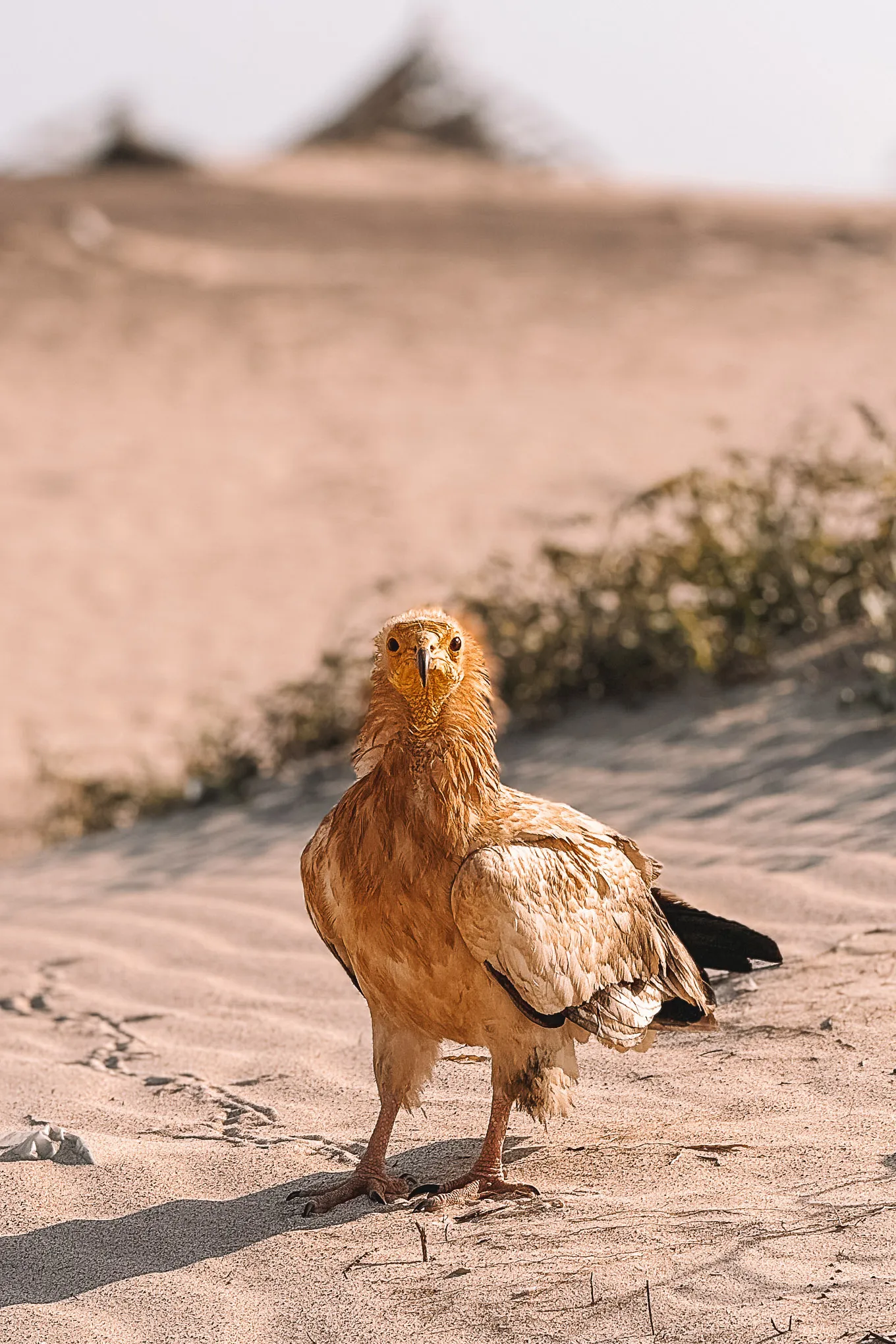
Socotra is a UNESCO World Heritage site and one of the most biodiverse places on the planet. 37% of its plant species, 90% of its reptiles, and 95% of its land snails exist nowhere else. This comes with deep responsibility.
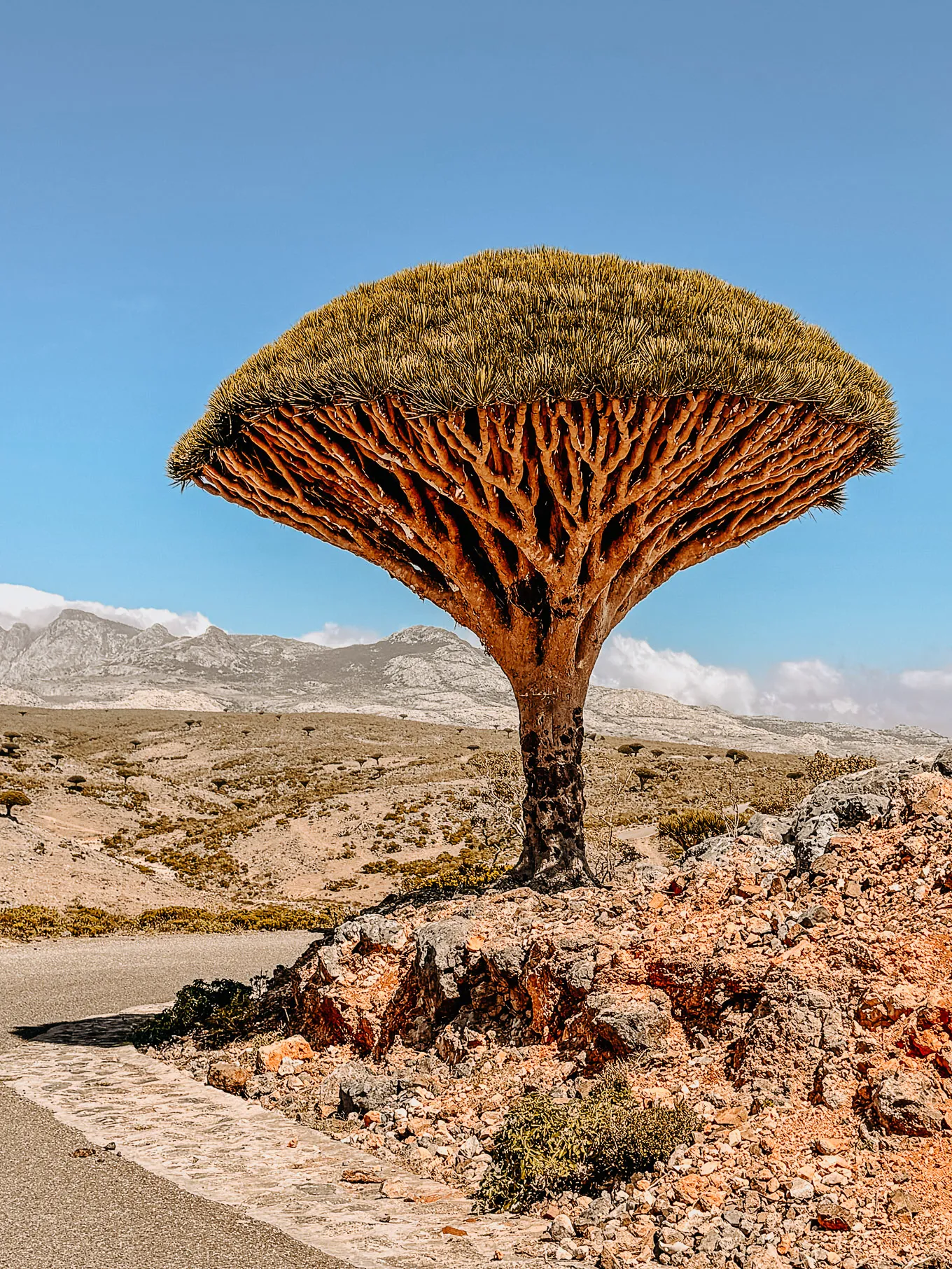
**Do not touch the Dragon's Blood Trees:** Their bark is fragile, and their crimson sap (dragon's blood) is sacred to locals and commercially valuable. Do not carve into them, do not cut them, and do not break branches for souvenirs.
**Do not collect shells or coral:** Corals are living organisms, and shells are homes for marine creatures. Take photos, leave everything else behind.
**Leave No Trace:** Everything you bring onto the island must leave with you. Plastic bottles, wrappers, wet wipes—all of it. The cook and drivers will collect the group's rubbish, but mind your own pocket trash.
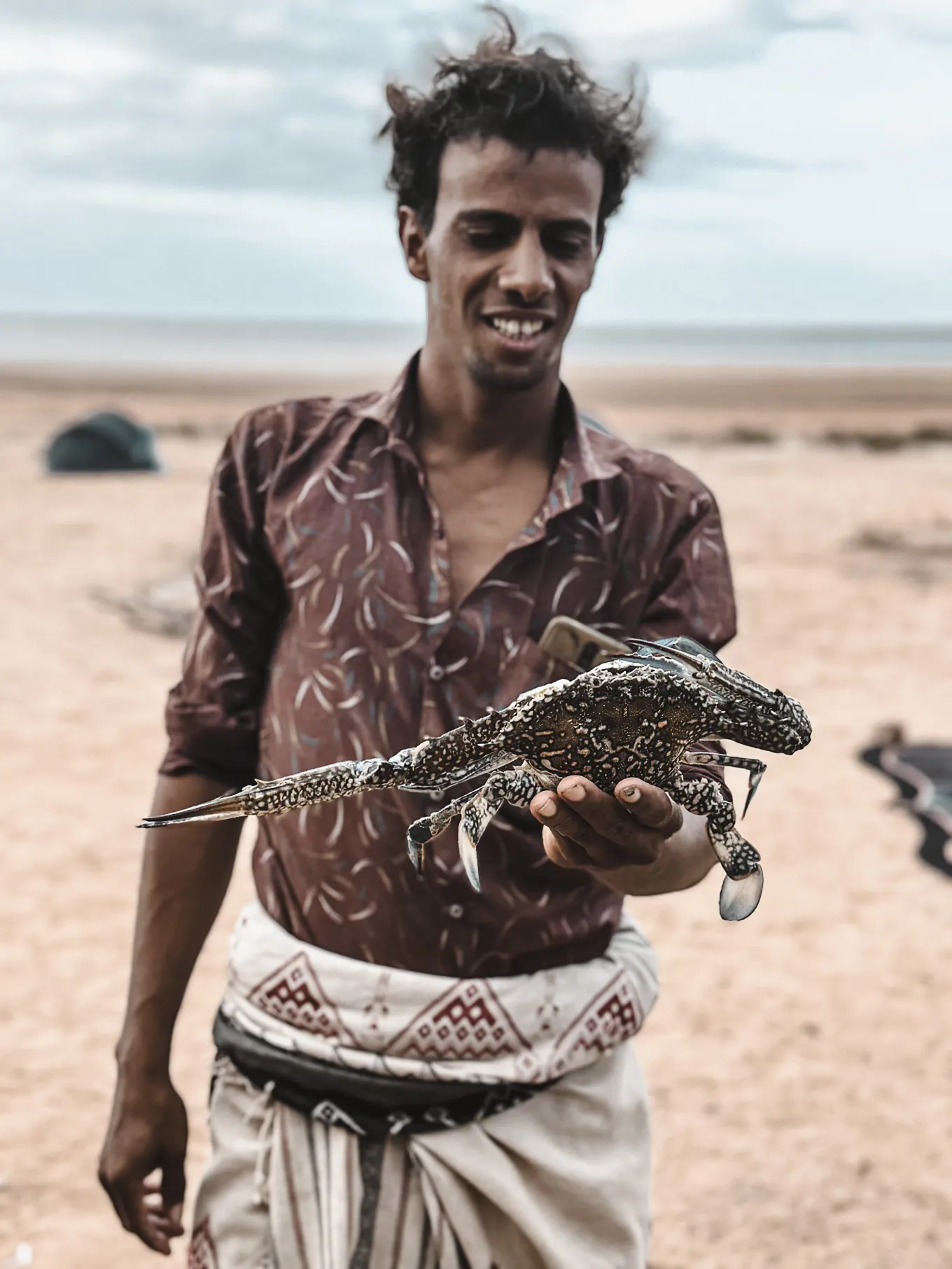
**The Locals:** The Socotri people are warm, curious, and incredibly hospitable. Always ask before taking pictures of people. Respect their religious customs (Socotra is a conservative Muslim island). Women should not be photographed without permission. Small gifts (such as tea, sugar, or notebooks for children) are appreciated far more than money.
**Water:** Socotra has limited fresh water. Do not waste a drop. Washing with minimal water is a sign of respect for the land and the groups that will follow you.
**Fire:** Do not light campfires except in designated areas. Our cook will handle the fire for the group. The island's flora grows incredibly slowly; a single burnt branch can take decades to recover.
This is not a list of bans. It is a pact: you are coming to witness something that has survived 6 million years in pure isolation. Your only job is to leave it exactly as you found it.
The plane tilts once more, but this time you are moving away. Looking down, you see the coastline, the dragon's blood trees, and the beaches that were your home. In your pocket, your phone vibrates for the first time in 10 days. You have 47 unread messages. But you are in no rush to open them. No rush at all. Socotra has taught you that sometimes, doing "nothing" is the absolute most important thing you can do. See the Socotra program with Panic Frame.
Author: Martin Bonov