The Wild Soul of Socotra: What You'll Encounter
The first thing you notice isn't an animal. It's not a bird, not a fish, not a lizard. It's a tree. Standing on the edge of the plateau, with a trunk like a pillar and a canopy like an upturned umbrella, it looks as though it was here thousands of years before you, and will still be here thousands of years after. And actually, it will. Socotra is an island where nature has had 6 million years to work without interruption, resulting in an ecosystem where over a third of the plants grow nowhere else on Earth. You don't just look at nature here. You step right under its skin.
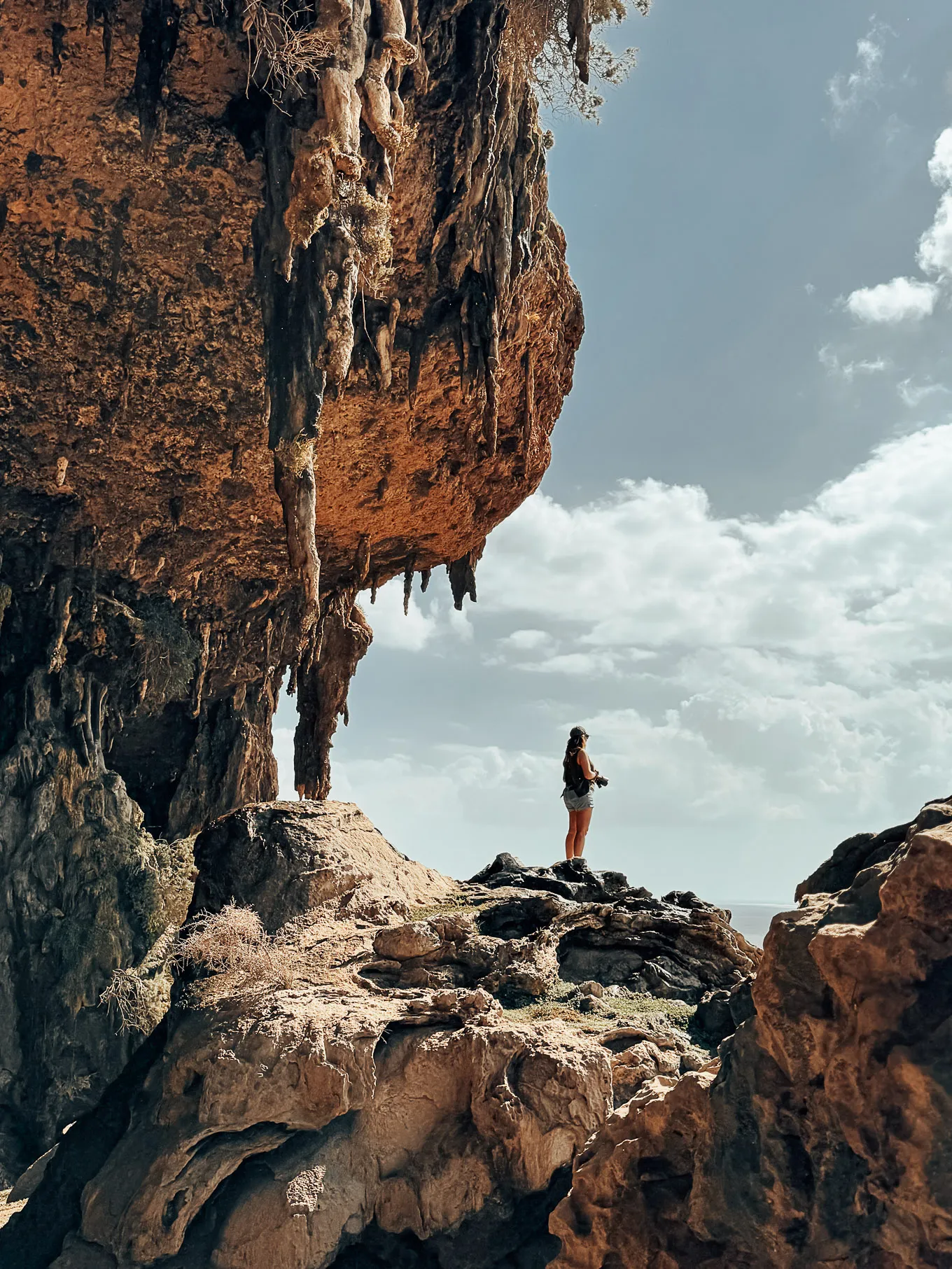
Socotra is a four-island archipelago in the Arabian Sea, torn away from Africa some six million years ago. This isolation, combined with a fierce climate (bone-dry from October to April, and locked down by monsoons from June to September), turned the island into an evolutionary crucible. Recognising its bizarre, irreplaceable biodiversity, UNESCO declared it a World Heritage Site in 2008.
The numbers are dizzying: over 800 plant species, 37% of which exist nowhere else on Earth. A staggering 90% of its reptiles are entirely unique to these shores. From birds and insects to marine life, everything here has spent millions of years adapting to conditions that simply do not exist anywhere else. Socotra isn’t just a "nature destination". It is a living, breathing archives of our planet's wild history.
The Dragon's Blood Tree: The island's heartbeat
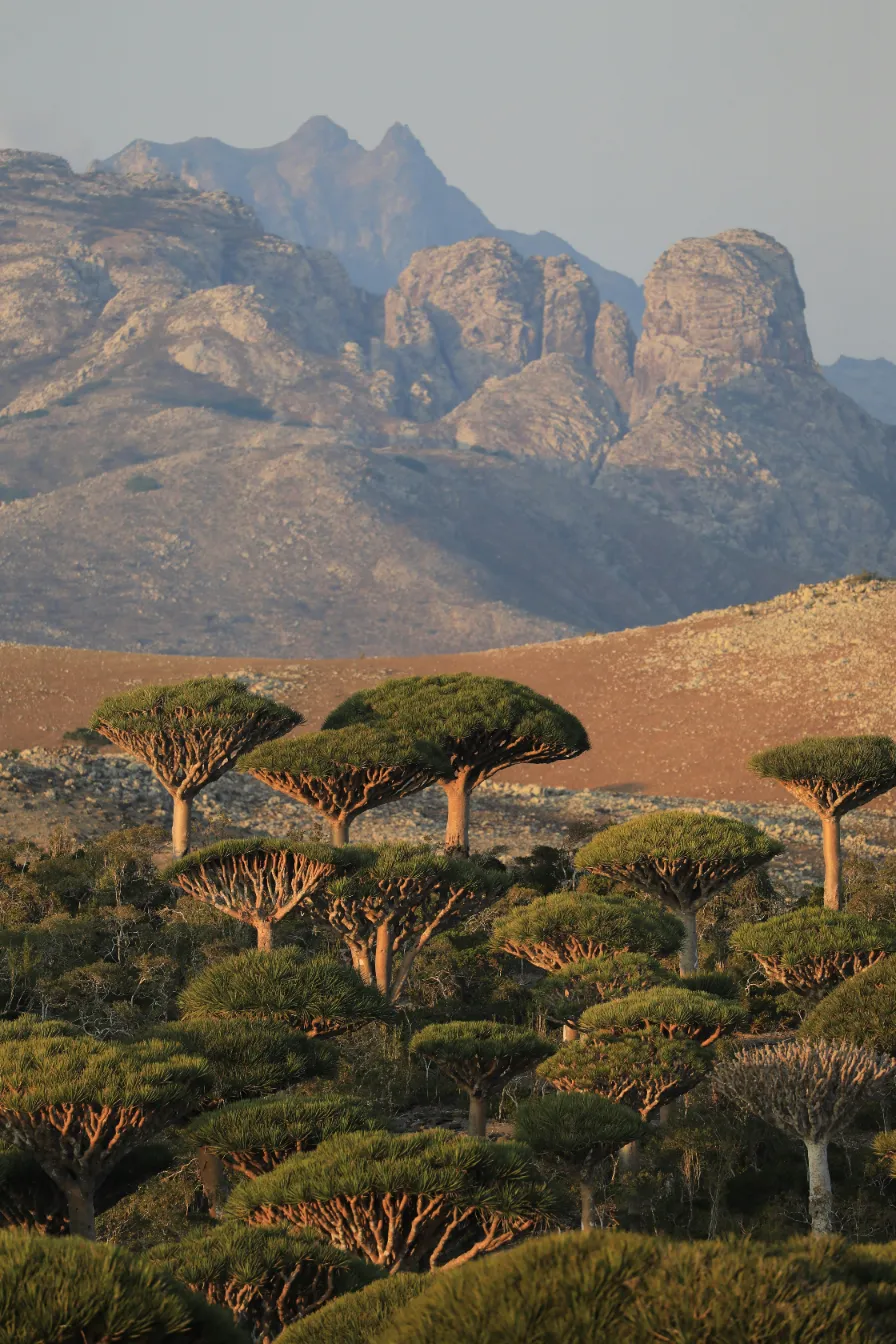
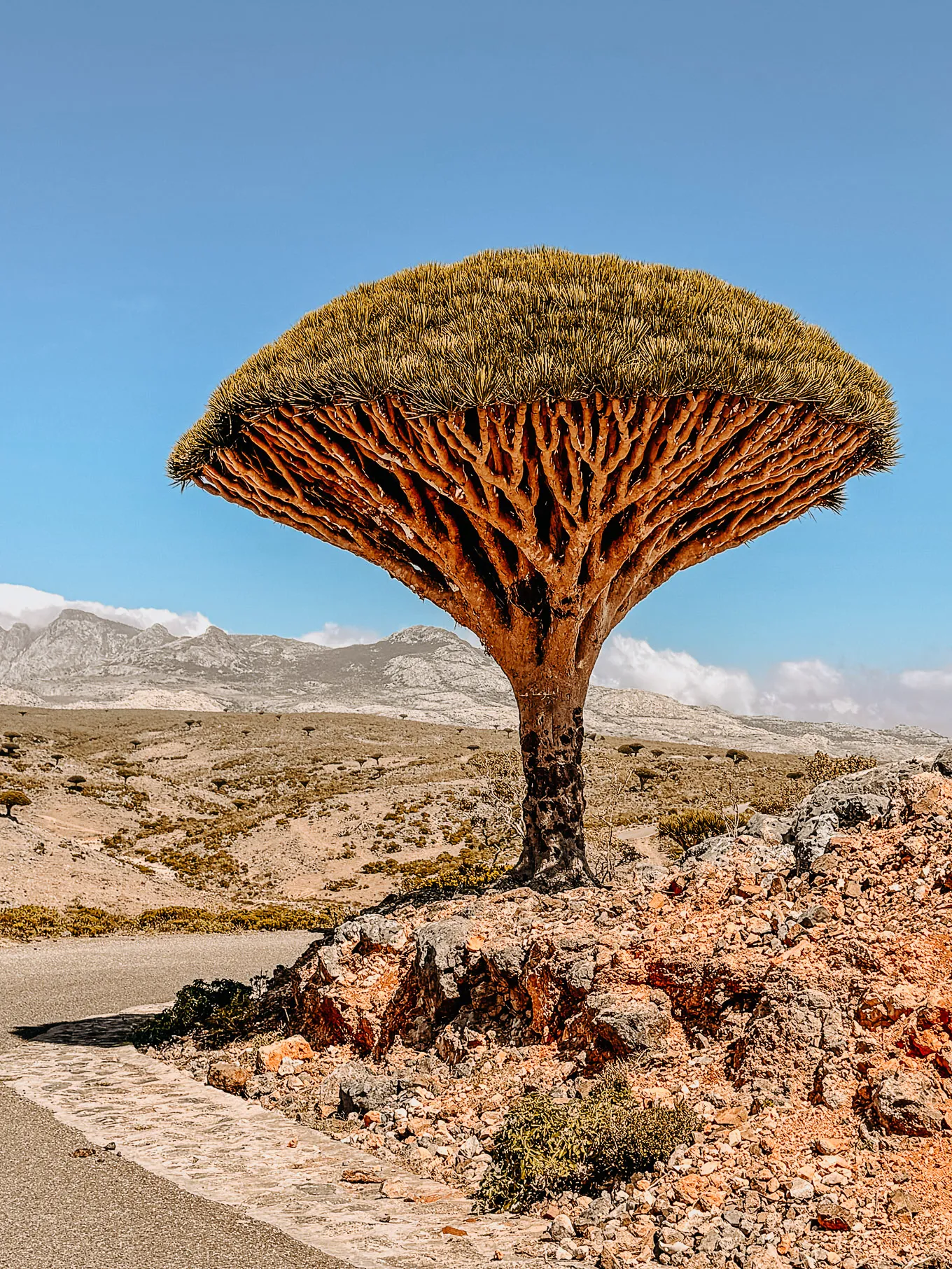
Dracaena cinnabari is the undisputed icon of Socotra and one of the most surreal trees on Earth. Its smooth, grey trunk rises up to 12 metres before its branches burst outwards and upwards, locking together to form a dense, umbrella-like canopy. From a distance, the ancient forests of the Dixam and Firmihin plateaus look like an army of shadows frozen against the high winds.
Its resin is blood-red and has been coveted for millennia. Ancient civilisations traded it as a dye, a medicine, and a sacred ritual element; Roman merchants valued it like gold. Today, Bedouin herders on the high plateaus still harvest it with quiet patience, making shallow cuts in the bark and waiting for the red tears to seep out. They use it to dye leather, heal wounds, and sell in the bustling market of Hadibo.
These dragon’s blood trees are slow-motion giants; some have stood for well over 300 years. The forest at Dixam is the last place on Earth with a dense, thriving population of the species. Yet, climate change and dwindling mists—their primary source of moisture—threaten their future. To stand among them is to linger in a forest balanced on the knife-edge between eternity and fragility.
The Bottle Tree: Desert sculpture
Adenium obesum socotranum, the Socotran desert rose, is another wonder of the island. Its swollen, smooth, pinkish-grey trunk mimics the shape of a massive bottle or hand-carved vase. From the very top, a few spindly branches sprout delicate, vibrant pink blossoms. It sits somewhere on the boundary between a wild plant and an abstract sculpture.
These bottle trees cling to sheer rocky cliffs, wedging themselves between boulders where nothing else could possibly survive. Their bloated trunks act as massive water reservoirs, allowing them to endure months of relentless drought. When they bloom—usually in March and April—their soft pink petals strike a breathtaking contrast against the brutal grey stone.
At Wadi Kalisan, bottle trees stand guard along the canyon rims, looking down into the pools below. On the Homhil plateau, they grow side-by-side with the dragon’s blood trees—smaller, rounder, and wonderfully bizarre. No two are alike. Each one looks as though it decided its own shape, completely indifferent to the rules of botany.
Frankincense, aloe, and hidden endemics
While the dragon’s blood and bottle trees capture the imagination, Socotra holds hundreds of other botanical secrets. Frankincense trees (Boswellia) grow in abundance, and their sweet, resinous aroma hangs heavy in the air, especially at dusk when locals burn the resin. It’s an ancient, earthy scent—the kind of aroma that tethers you to a physical place, not a commercial product.
The endemic aloe (Aloe perryi) is another local treasure, harvested by the islanders for healing and skincare. It clings to the dry slopes, its fleshy, blue-green leaves spiralling outwards. When it flowers, it shoots up a brilliant red stalk, a sudden dash of bright colour against the monochrome stone.
Then there is the cucumber tree (Dendrosicyos socotranus)—the only tree member of the cucumber family in the world. Its trunk is white, bloated, and soft to the touch, topped with crinkled, rough leaves. It grows rarely and slowly on limestone cliffs. Spotting one is a reminder that you are in a place so wonderfully strange that even cucumbers grow into trees here.
Squeezed between them are dozens of succulent, shrub, and grass species, each claiming its own micro-niche. Socotra is not just a "green" island. It is a living catalogue of evolutionary ingenuity, where every plant seems more impossible than the last.
Beneath the waves: Reefs and wild ocean
Socotra’s marine world is just as rich as its terrestrial counterpart, only hidden from view. The Dihamri Marine Protected Area houses some of the most vibrant coral reefs in the archipelago. Even with just a mask and snorkel, you are instantly surrounded by parrotfish, moray eels, rays, and sea urchins. If the ocean is on your side, you might spot green turtles gliding through the blue.
On the boat journey from Qalansiyah to Shoab beach, the cliffs plunge vertically into the deep sea. Pods of spinner dolphins are a common sight, sometimes 10 to 15 strong, leaping and riding the bow wave. The local fishermen talk of passing whale sharks, though catching a glimpse of these gentle giants is a matter of seasonal luck.
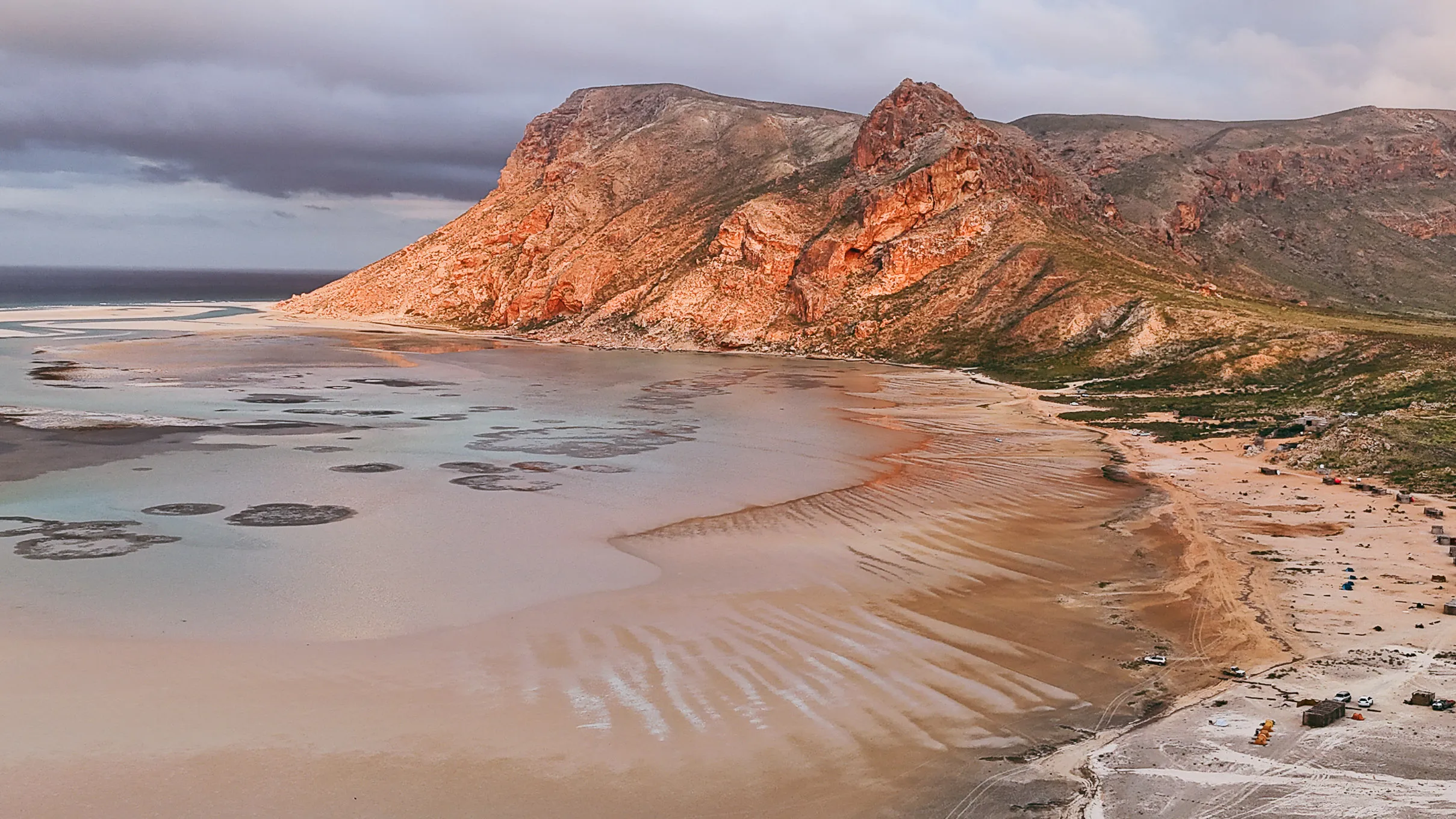
Spinner dolphins call the western coast home, while cormorants line the jagged sea cliffs. In the shallow, turquoise waters of the Detwah Lagoon, stingrays glide smoothly over the sandbar, so close to the surface you can track their shadows with the naked eye from the shore.
The waters of Socotra are not geared for mass tourism. You won't find dive shops on every corner or instructors waiting on every beach. But that is exactly why the sea is so pure and the reefs remain untouched. What you witness here is an underwater wilderness that has not yet learned to fear humans.
Reptiles and insects: The hidden world
An incredible 90% of Socotra’s reptiles are endemic. It is a statistic that sounds abstract until you find yourself watching a chameleon tread slowly along a branch of a dragon's blood tree—bright green against green, invisible to everyone but you.
The Socotran chameleon (Chamaeleo monachus) is the island's most charismatic reptile. Found deep in the wooded wadis, it moves with deliberate, rocking steps, its eyes rotating independently. Meanwhile, geckos of all shapes and sizes haunt the rocks and campsites, appearing by torchlight to hunt insects with comical, lightning-fast precision.
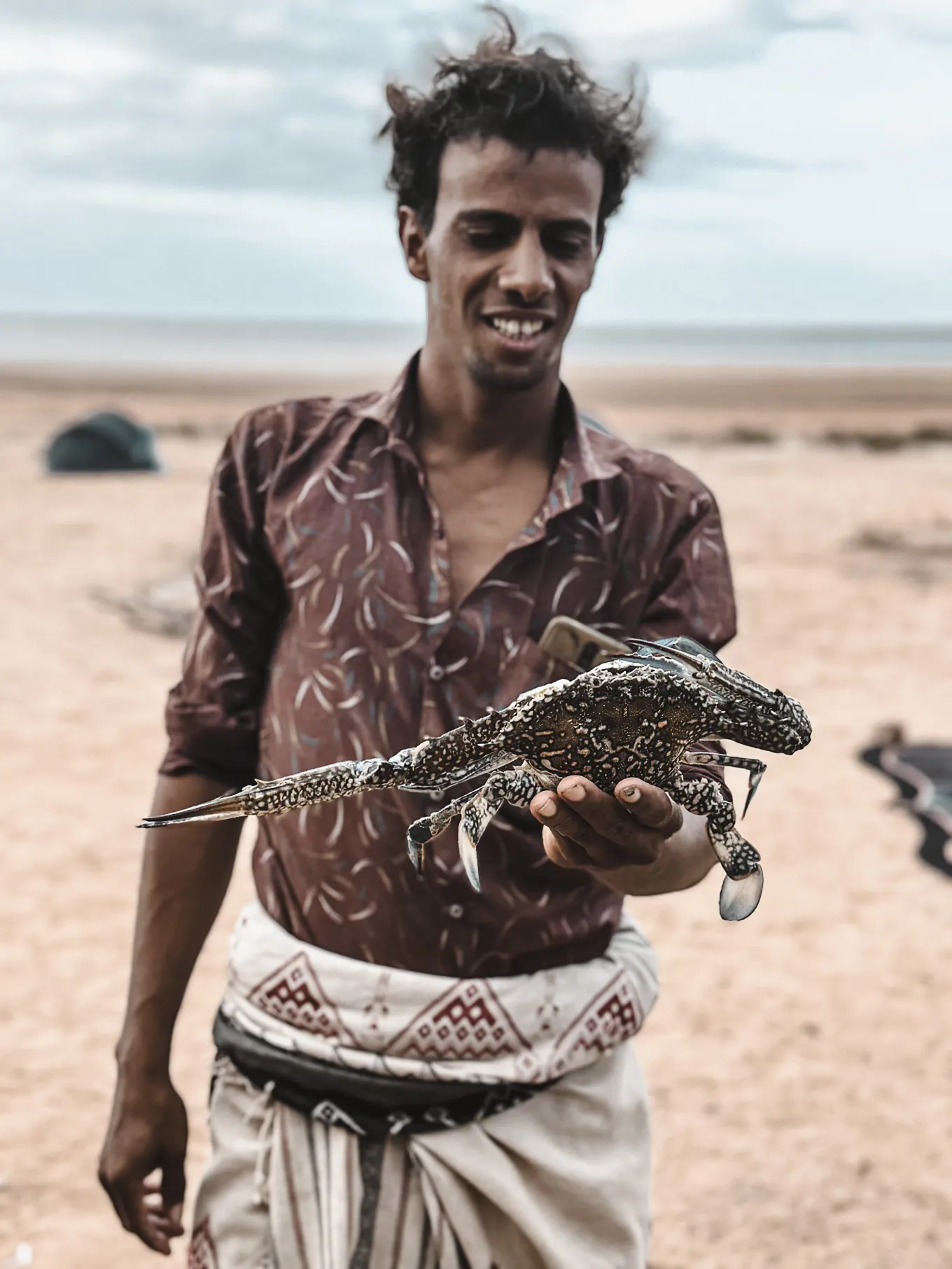
In the deep freshwater pools of the canyon wadis, unique freshwater crabs scuttle amongst the rocks. Deep in the limestone caverns, blind spiders and cave-dwelling invertebrates have adapted to absolute darkness. Down on the beaches, ghost crabs emerge by the thousands, leaving intricate patterns of tiny sand spheres across the shore.
There are no venomous snakes on Socotra, nor any dangerous land predators. The island is remarkably safe to explore. The only real hazard is stepping on a stingray in the shallows, but even they will slip away if they feel your footsteps approaching. Nature here isn't hostile; it is curious, quiet, and wonderfully ever-present.
The birds: From flamingos to Egyptian vultures
Socotra is a sanctuary for over 180 bird species, with at least six endemic species found nowhere else on earth, including the Socotra sparrow, the Socotra warbler, and the Socotra sunbird. Small, fast, and colourful, they flit through the arid scrub, rewarding those with the patience to sit still and watch.
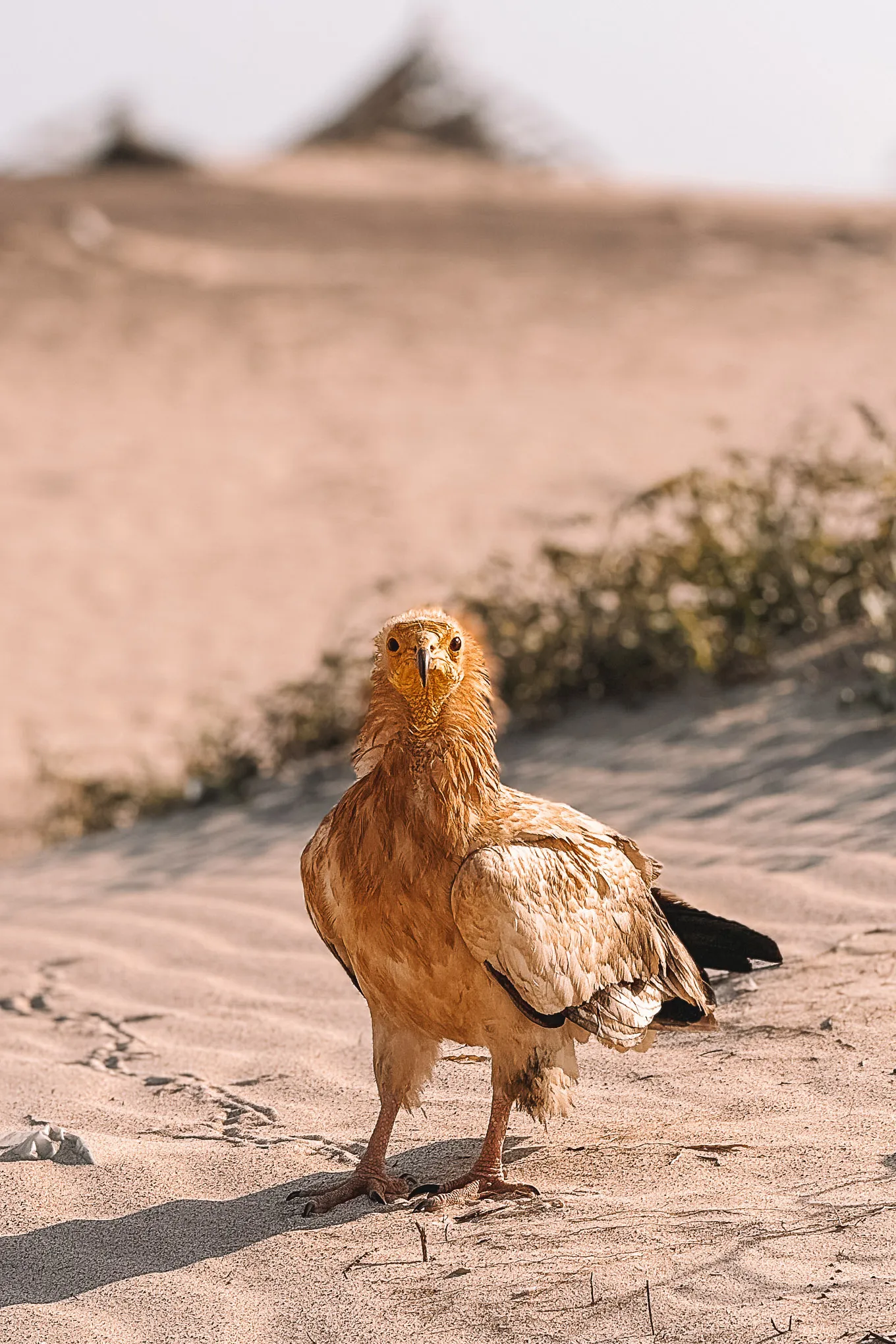
At the freshwater lagoon of Qaria on the way to Homhil, flocks of flamingos, herons, and waders feed in the shallows. The lagoon is still and quiet—the perfect spot to watch the avian life go by. High above the plateaus, Egyptian vultures ride the thermals, effortlessly circling the skies before landing curiously close to your camp.
For birdwatchers, Socotra is a dreamscape. For everyone else, the birds provide a constant soundtrack that reminds you how alive this island is. They wake you at dawn, circle the camp in the afternoon, and fall silent as the wind takes over at night. Their presence is so woven into the landscape that you only truly notice it when you return home to the silence of the modern world.
Your final night on Socotra. The campfire burns low, the freshly caught fish is eaten, and the stars are out in force. A gecko climbs the rock face beside your tent, silent and precise. Somewhere in the darkness, waves collide with the empty beach. Tomorrow, you fly back to a world of supermarkets, cash machines, and endless notifications. But tonight, you are on an island where nature has spent six million years working undisturbed. And the only thing left to do is listen.
Author: Martin Bonov