Face to Face: The Wildlife of Iceland
The beak is construction-paper orange, so bright it looks painted on. Facing the wind, the bird stands on the edge of the cliff, absolutely still. It watches you. You watch it. There are barely five meters between you, and neither of you moves an inch. In Iceland, meeting the wild doesn't require a six-hour trek or a 700 USD permit. It just asks you to stop and look.
Iceland isn't Africa. There is no Big Five, no safari jeeps, and no rangers tracking herds with GPS. Yet, the wildlife here is so close, and so indifferent to human presence, that encounters just find you. A puffin sitting a metre away. A seal watching you with dark eyes from the lagoon. A humpback surfacing 20 metres from your boat. An Arctic fox crossing your path, turning back for a split second before vanishing.
These moments can't be planned. They happen between stops, on the road between waterfalls, in the quiet pauses of a trek. And every single one of them leaves a mark, simply because it isn't staged. It's real.
Dyrhólaey and the Cliffs: Puffins up close
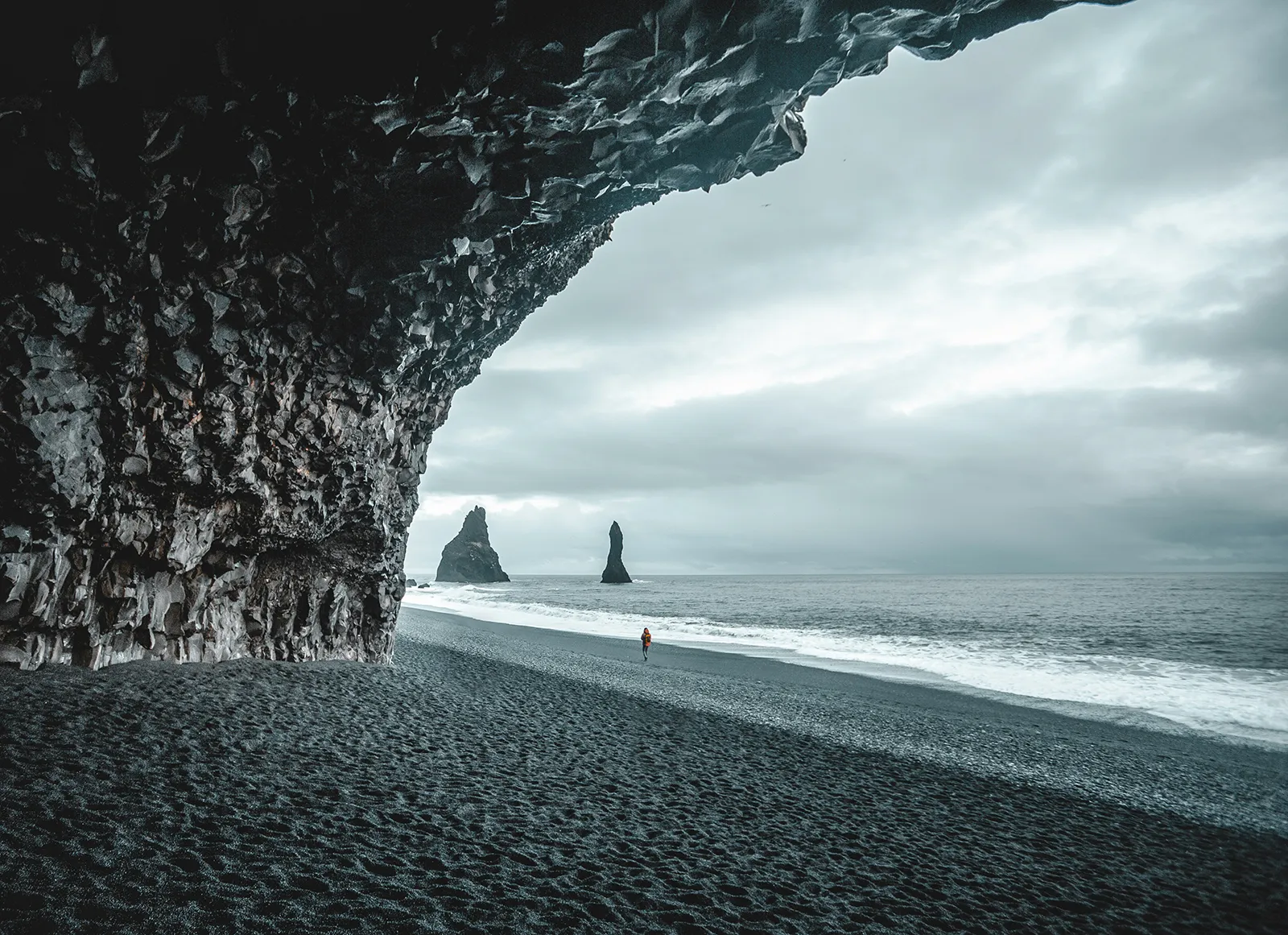
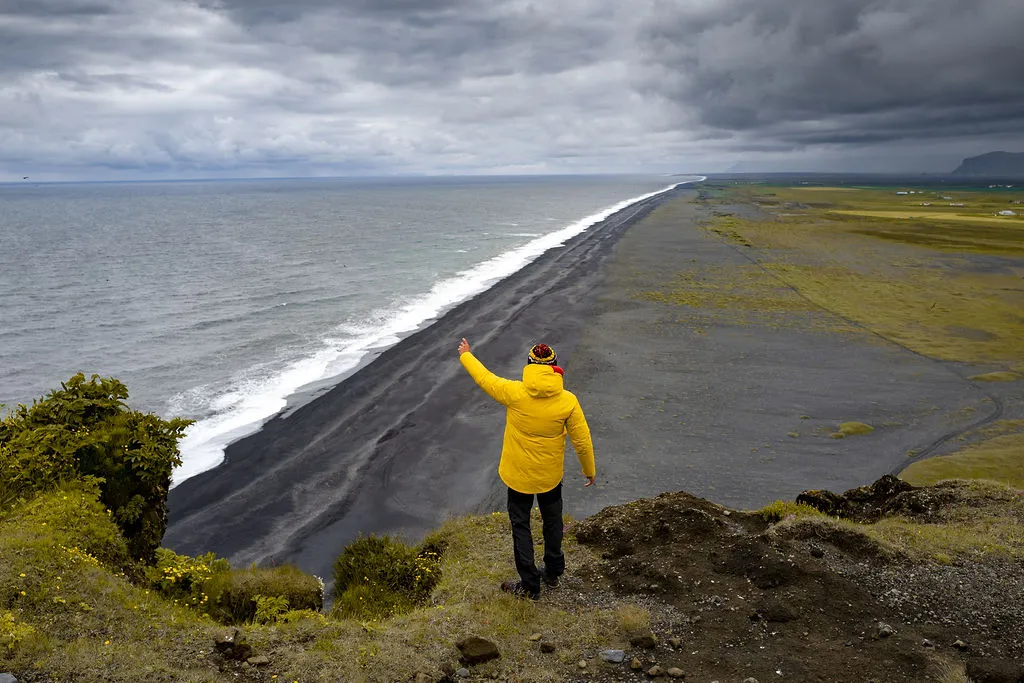
The rock arch of Dyrhólaey sits on the south coast, a 20-minute drive from the village of Vík. The lighthouse at the top is your landmark, but the real reason you come here is the birds.
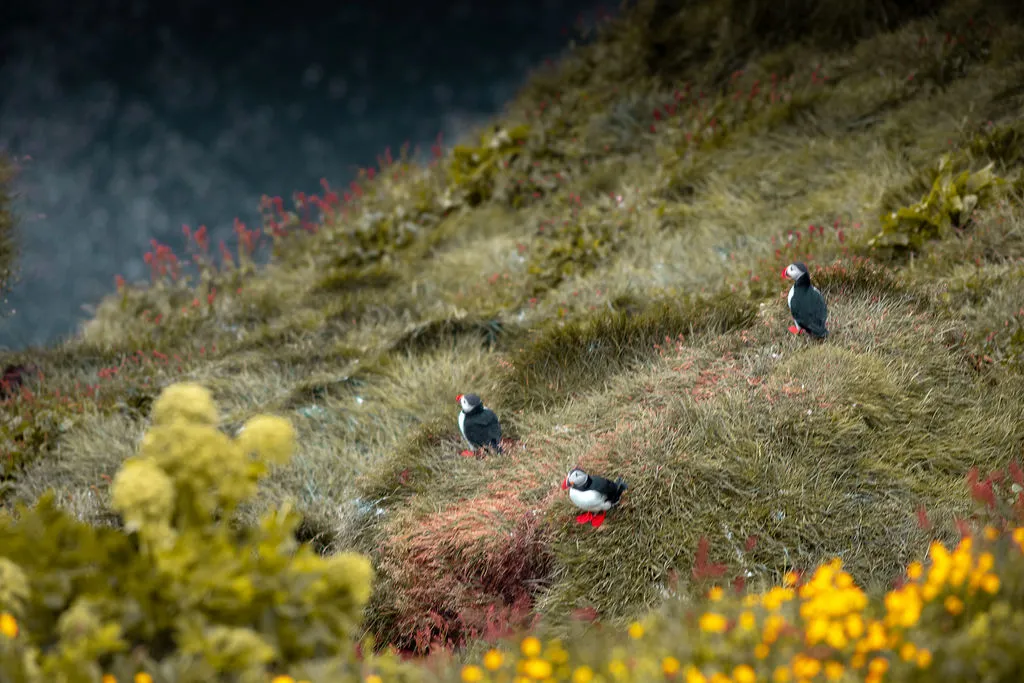
Between May and August, the grassy cliffs of Dyrhólaey become home to thousands of Atlantic puffins. They nest in burrows dug into the soil, diving into the ocean to hunt for small fish. They land on the cliff edge with 10–12 sand eels lined up in their beaks, waddling towards their burrows where the chicks wait. Their walk is clumsy, rocking, almost comical. Their flight is another story: fast, low, with wings beating so rapidly they look like hummingbirds.
They aren't shy. If you sit quietly 5 to 10 metres from the colony, they just ignore you. They keep landing, waddling, feeding, and taking off. Life carries on around you as if you aren't even there. And that’s the best part: you are not an intruder. You are just a still object while they go on living.
Photographers arrive here with 400mm telephoto lenses, but you can snap a National Geographic-worthy portrait with just your phone. They really are that close.
Jökulsárlón: Seals among the icebergs
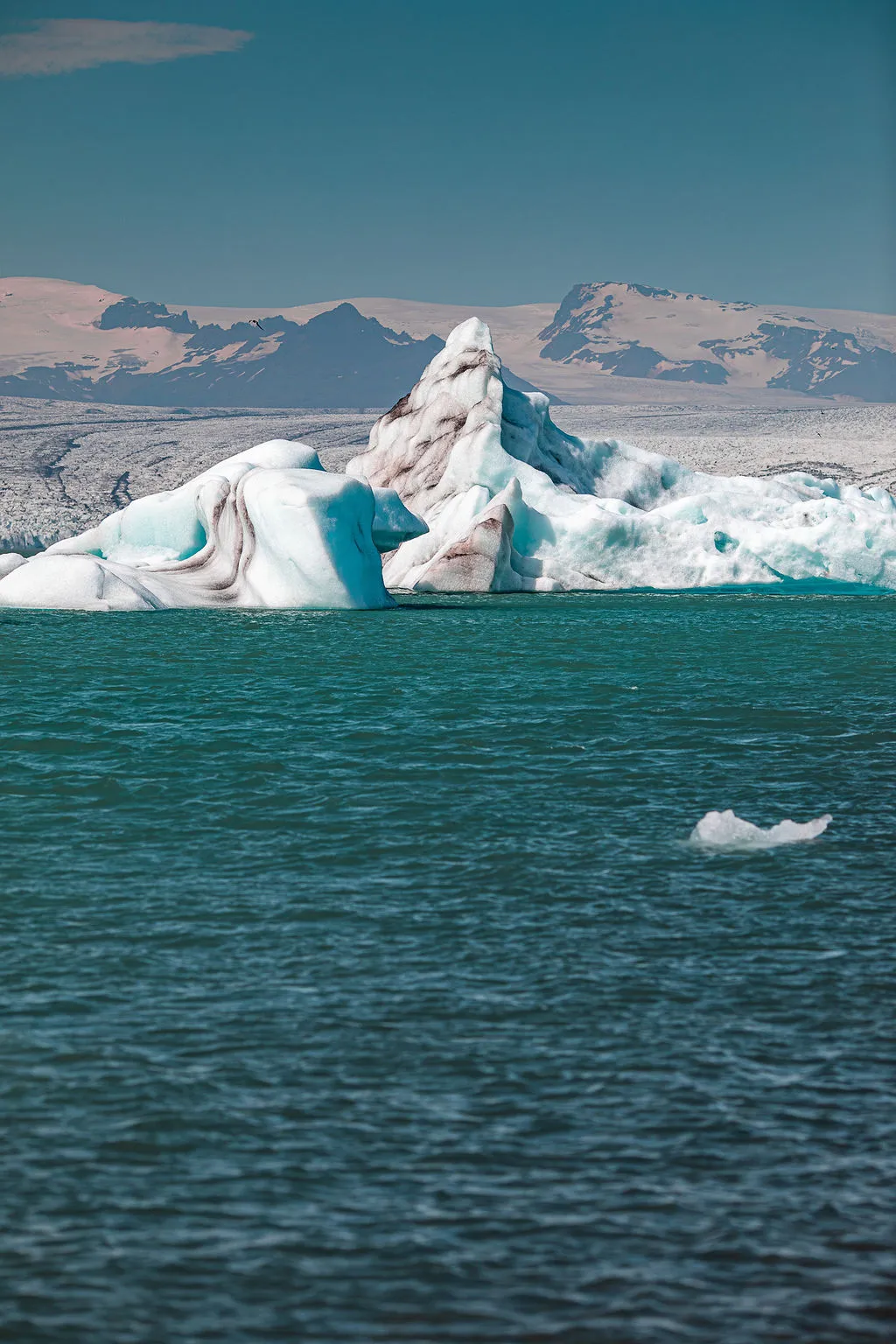
Jökulsárlón glacier lagoon is Iceland's most famous, and with good reason. Icebergs—white, electric blue, sometimes striped with black volcanic ash—drift through dark water, making their slow journey to the ocean. But the real surprise isn't the ice. It’s the curious head popping up from the water.
Harbour seals call the lagoon home year-round. They swim between the ice floes, haul themselves up onto the flatter icebergs, and lie there, wet and content, as if they’ve rented a private island. Sometimes there are two. Sometimes ten. Sometimes just one, floating slowly on the surface, staring back at you with round, dark eyes.
This encounter is a quiet one. No roaring engines, no guides shouting. You stand on the shore, watching the ice and the seals, listening to the silence. The crackle of melting ice. The splash of water. Nothing else. The scale is massive, with the glacier on the horizon and the ocean at your back, yet the moment feels incredibly intimate because the seal is only 30 metres away, holding your gaze.
Akureyri and Húsavík: Whales of the North
Akureyri is Iceland's second-largest town (19,000 residents, which makes it a metropolis by Icelandic standards). This is a starting point for whale watching boats in Eyjafjörður. Húsavík, an hour to the east, is smaller and more specialised: the entire town's heartbeat is built around whales.
You head out on a boat. The engine idles. You wait. The sea is flat, dark green, reflecting the heavy clouds. Minutes pass. Sometimes twenty. Sometimes five.
Then you see the blow. A column of water and steam shooting 3 to 4 metres into the air. A dark, wet back curves slowly out of the depths. The humpback whale (Megaptera novaeangliae) can grow up to 16 metres long, but its movements are slow, almost ceremonial. It raises its tail, holds it above the water for a second—as wide as your boat—and slips back under. The silence that follows is striking. No one speaks. Everyone just stares at the spot where it disappeared.
Minke whales are smaller (up to 10 metres) and faster, appearing and vanishing in seconds. Orcas are rare, but when they show up, they are unforgettable: black and white, fast, with dorsal fins slicing the water like a knife. If you spot them, you'll remember it forever. If not, the humpbacks are more than enough.
On the Road: Icelandic horses and Ring Road surprises
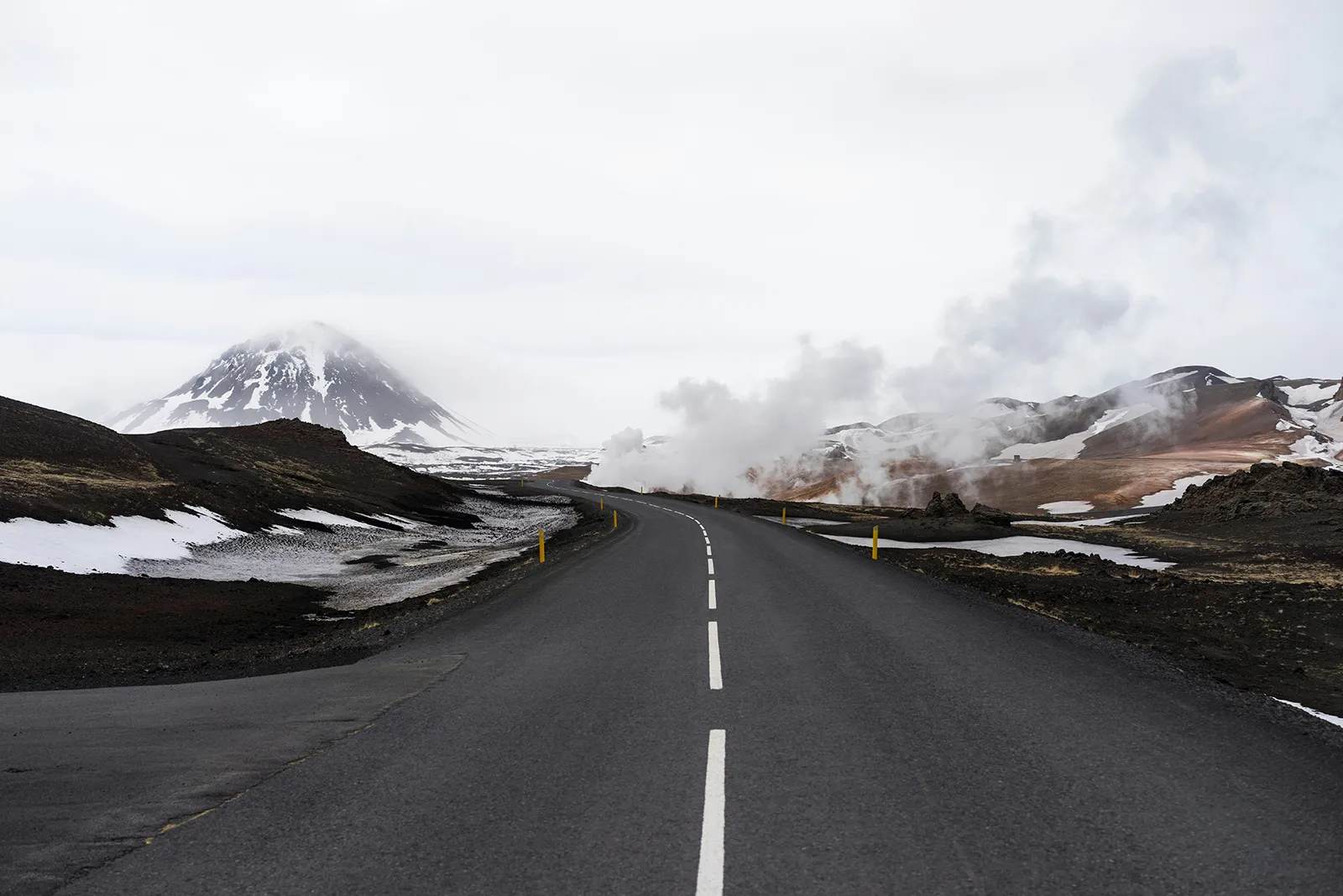
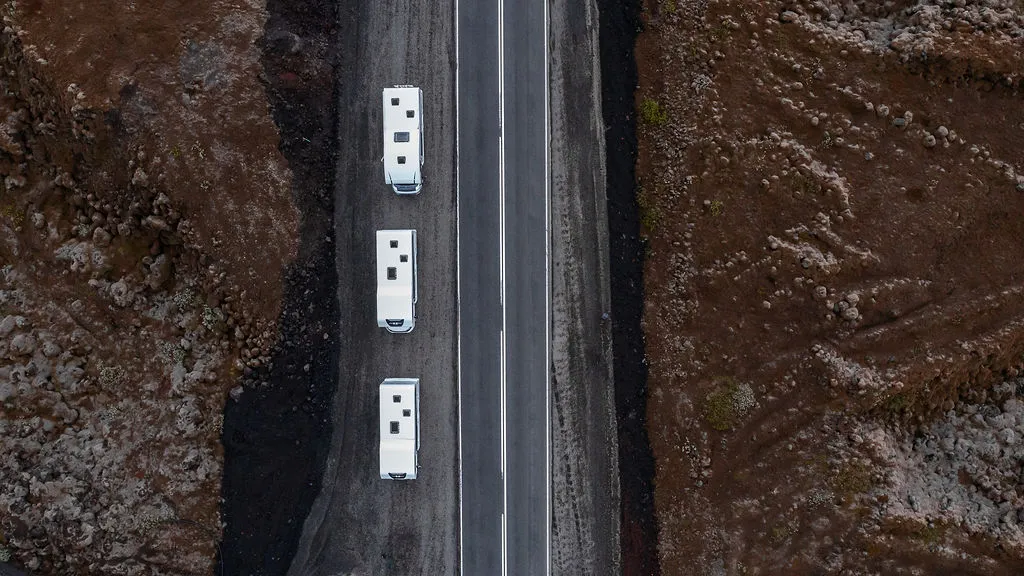
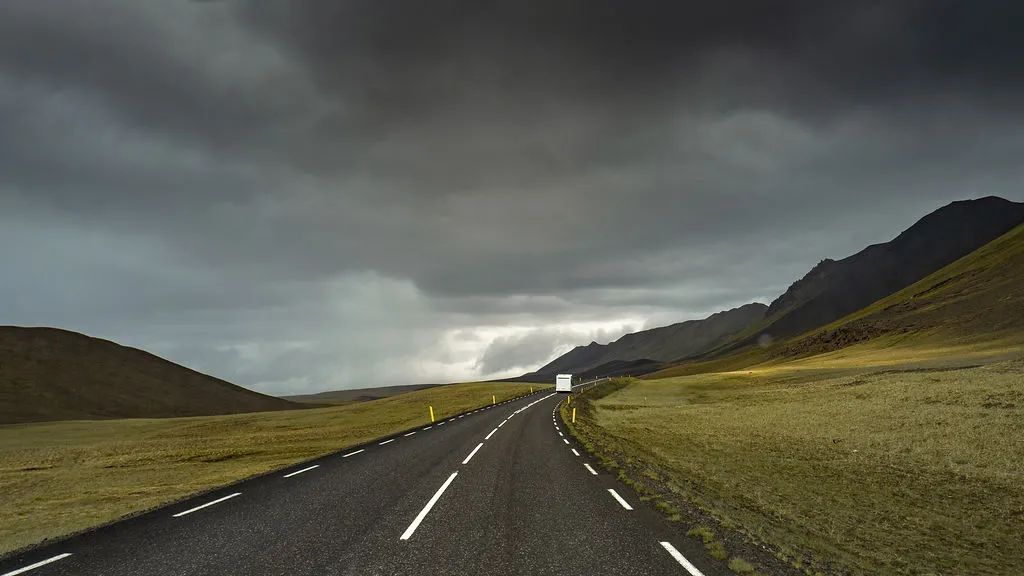
Between the main stops on the Ring Road, wildlife appears without warning. Icelandic horses graze on the hillsides by the road, their coats so thick they look like plush toys. Pull over your camper, step outside, and they will walk right up to you. Curious, calm, with soft noses nudging your hand for an apple or just out of habit.
Sheep are absolutely everywhere. On the road, on the shoulder, perched on cliffs that look impossible to climb. They roam free all summer, completely ignoring cars, campervans, and you. Around 800,000 of them live on the island—four times the human population.
Birds are perhaps your most constant companions. The Arctic tern nests on the ground and will dive-bomb anyone who gets too close with an aggression that’s both fierce and comical. The Great skua is the heavy artillery: large, fearless, and territorial. They'll even chase off eagles.
And sometimes, in the early morning near your campsite, an Arctic fox appears. Small, quick, with a coat that melts perfectly into the landscape. It holds your gaze for three seconds, then vanishes. You don’t get a photo. You won't have time. But you'll remember it.
Rules of the Wild: How to watch without leaving a trace
Iceland has no fenced-in wildlife reserves. The wild is everywhere, which means the responsibility is entirely yours. Here are a few house rules that matter more than you think.
Puffins nest in the turf. If you step on a burrow, you could collapse it. Stick to the designated paths. Dyrhólaey closes access to certain areas during nesting season (May–June) to protect the birds. Respect the signs.
Seals might look relaxed, but if you get closer than 20–30 metres, they can panic—especially mothers with pups. Keep your distance. A pair of binoculars is always better than moving closer.
Whales are watched from licensed boats that keep a respectful distance. It is always the whale’s choice to approach, not the boat’s. If they come close, you enjoy the moment. If they swim away, you let them go.
Icelandic horses are friendly, but don't feed them unless you have treats meant for them. They have sensitive stomachs, and their curiosity doesn't mean everything is safe for them to eat.
The golden rule: watch, don’t interfere. Iceland's wildlife is this close because people here respect its space. Keep it that way.
You’ll head home with 400 photos of puffins, 12 clips of whale tails, and one blurry video of a fox vanishing into the moss. But the truest picture is the one you won't find on your phone: the seal lock-eyed with you in the quiet lagoon, while icebergs drift behind it. Three seconds. Dead silence. Just two pairs of eyes and the cold water between them. Iceland isn't a safari. It's something quieter, and much closer to the soul.
Author: Martin Bonov
Other articles about Iceland