5 Faroe Islands Adventures You'll Never Forget
You don't remember everything from a journey. You remember moments. Sharp, physical, sensory moments. The bite of cold on your cheeks. The smell of wet grass. The sound of a thousand beating wings. The Faroe Islands are full of these moments, but five of them cut deeper than the rest.
The Faroe Islands don’t care for checklists. There are no "top 10 sights" in the traditional sense. Instead, you find places that connect you to something far greater than just scenery: the sheer scale of the Atlantic, the silence of an uninhabited isle, the simple warmth of water on a freezing day. Each of these five experiences is different in its intensity, but they all leave a trace that isn't visual. It’s felt in the bones.
1. The Puffins of Mykines: Meeting the Wildest Neighbours
The ferry to Mykines leaves early. The sea is restless, the boat pitches and rolls, and the island slowly emerges from the fog—green, steep, speckled with tiny white dots on its cliffs. Those white dots are puffins.
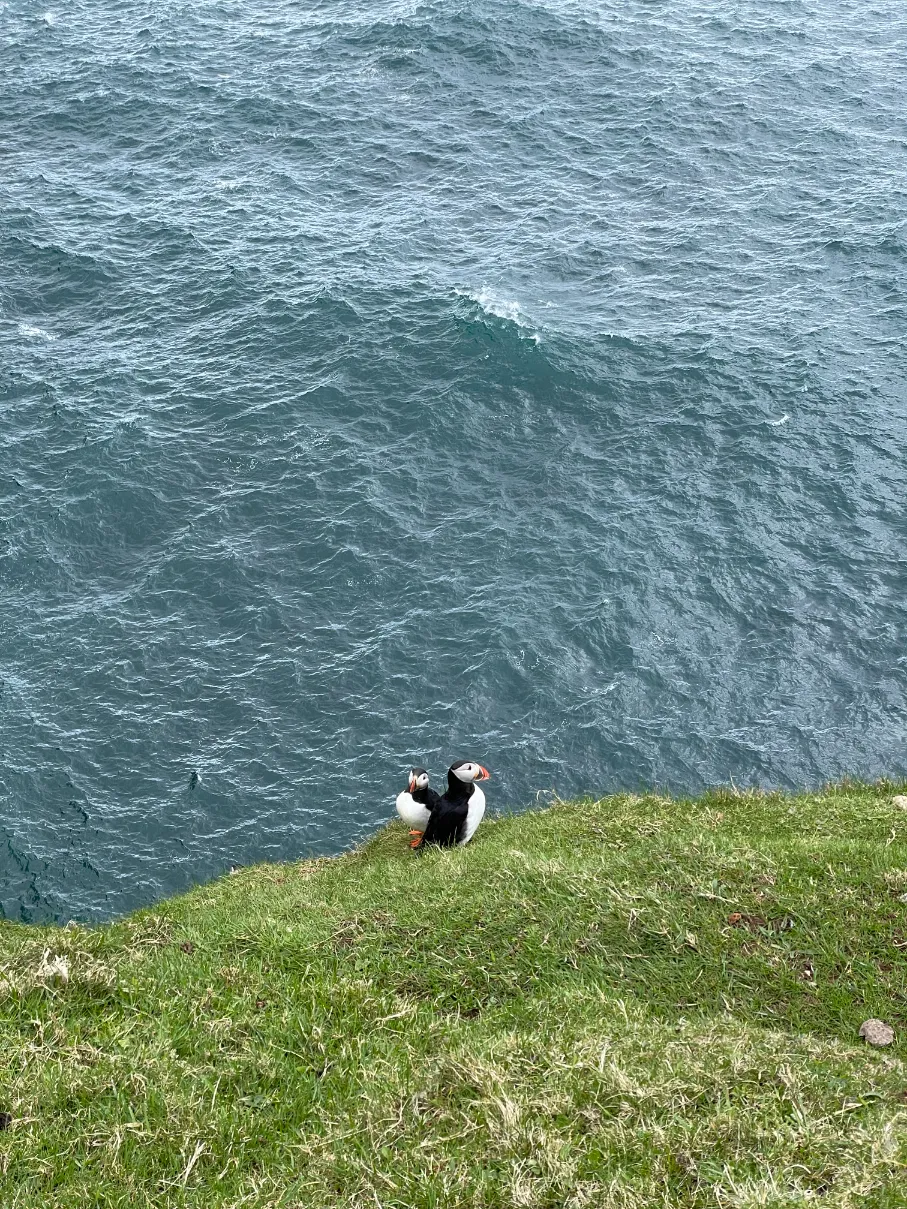
From May to August, Mykines becomes home to thousands of them. Small, colorful, with bright orange beaks and an anxious look as if they never expected you to show up. They stand right at the cliff edges, just inches from the trail. They don’t run. They just watch you. Then they turn, spread their wings, and launch themselves off the cliff with a grace that looks more like falling than flying.
There is something in this encounter that words can't capture. You stand on the edge of a cliff, the wind howling so hard you can barely keep your footing, and a tiny bird looks you right in the eye just a metre away. No fear on either side. Just two living heartbeats on the edge of the Atlantic, and for a moment, that is more than enough.
Essential tip: the ferry is at the mercy of the weather and can be cancelled at the last second. It’s all part of the game. The islands decide when they want to be seen.
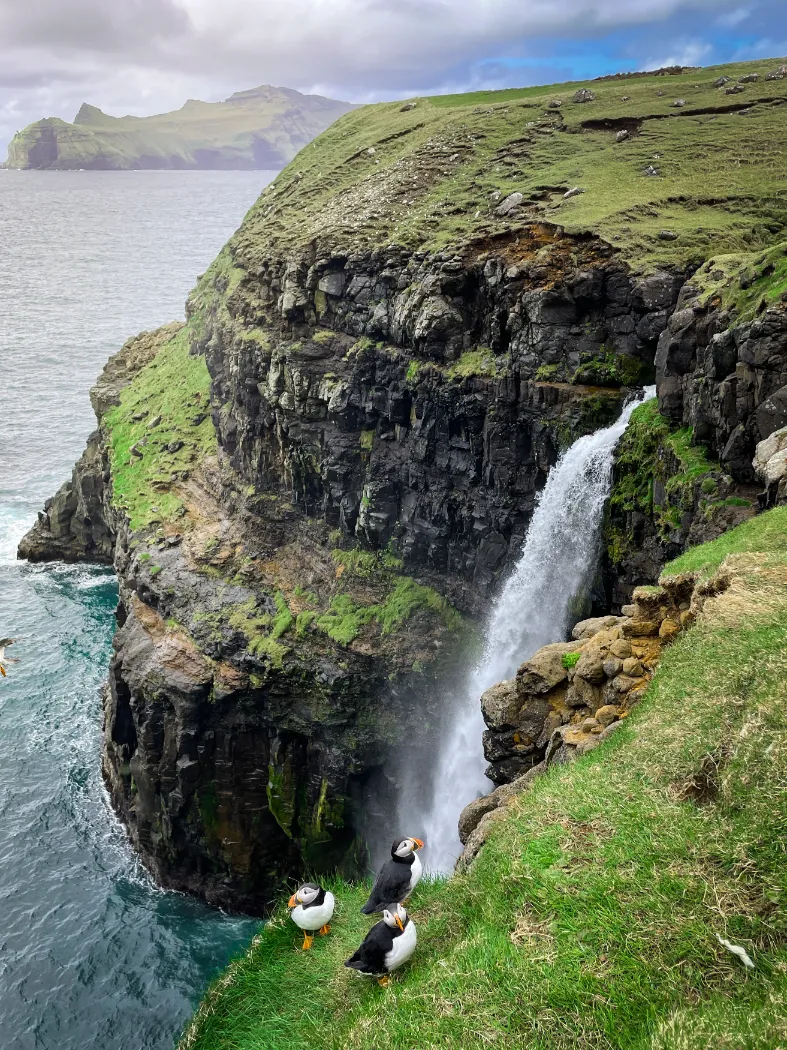
2. Múlafossur Waterfall: When Fresh Water Meets the Swell
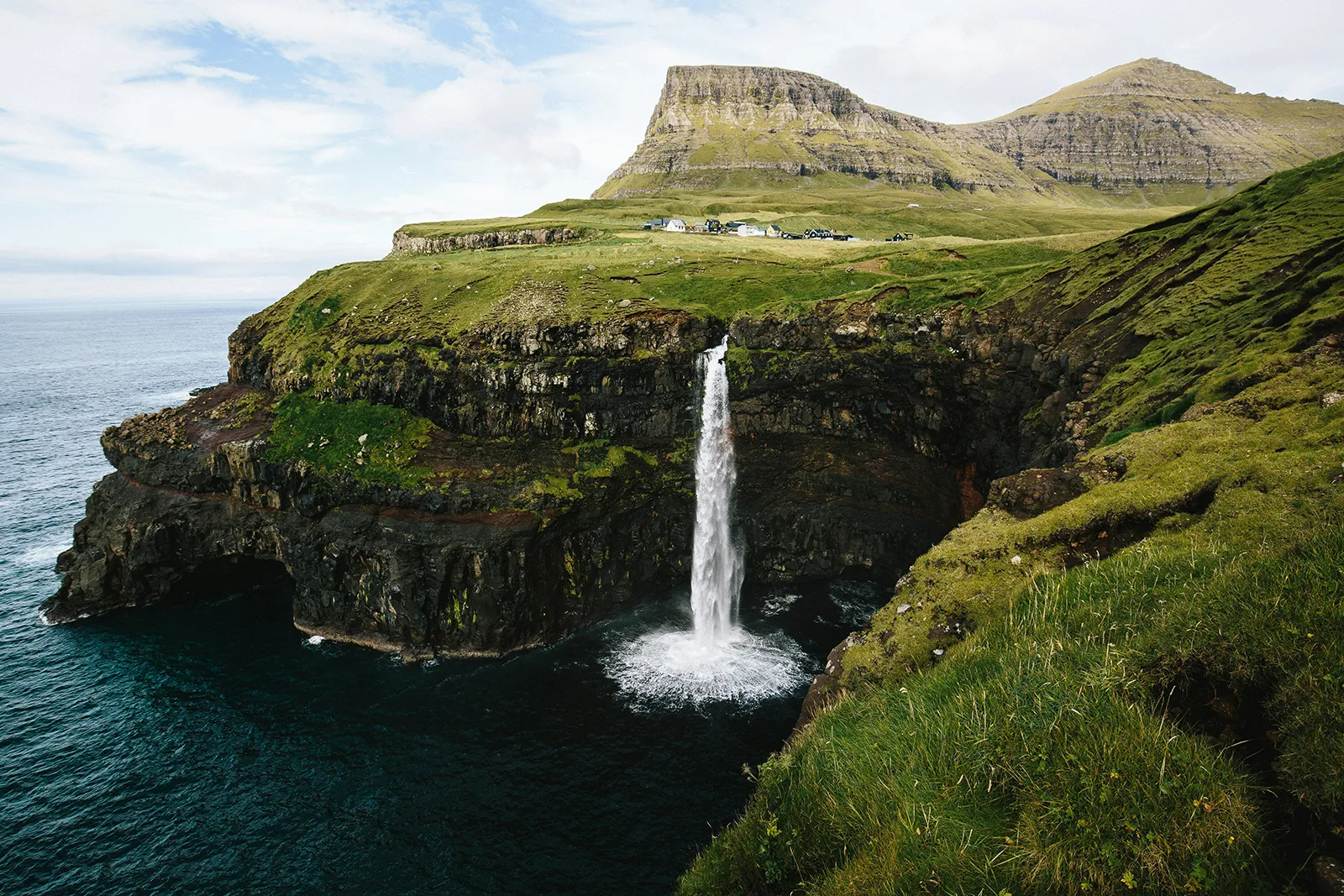
There are photos you look at and refuse to believe are real. Múlafossur is one of those shots, only it’s standing right in front of you. A waterfall plunging from the edge of a sheer green cliff straight into the Atlantic Ocean. Thirty metres of freefall, water crashing into water.
Yet the photos miss the sound. The roar of the torrent, the gale-force wind throwing spray dozens of metres wide, the cries of the seabirds. And they miss the moisture: the air around the falls is so thick with spray you practically breathe it in as liquid.
The most powerful moments happen when the fog hangs low. The top of the cliff disappears into a white void, and the waterfall seems to pour straight from the sky. You’re only five minutes from the car park, but you feel like you’ve reached the edge of the earth. Raw rock, plunging water, and the ocean swallowing it whole—three elements, simple and brutal.
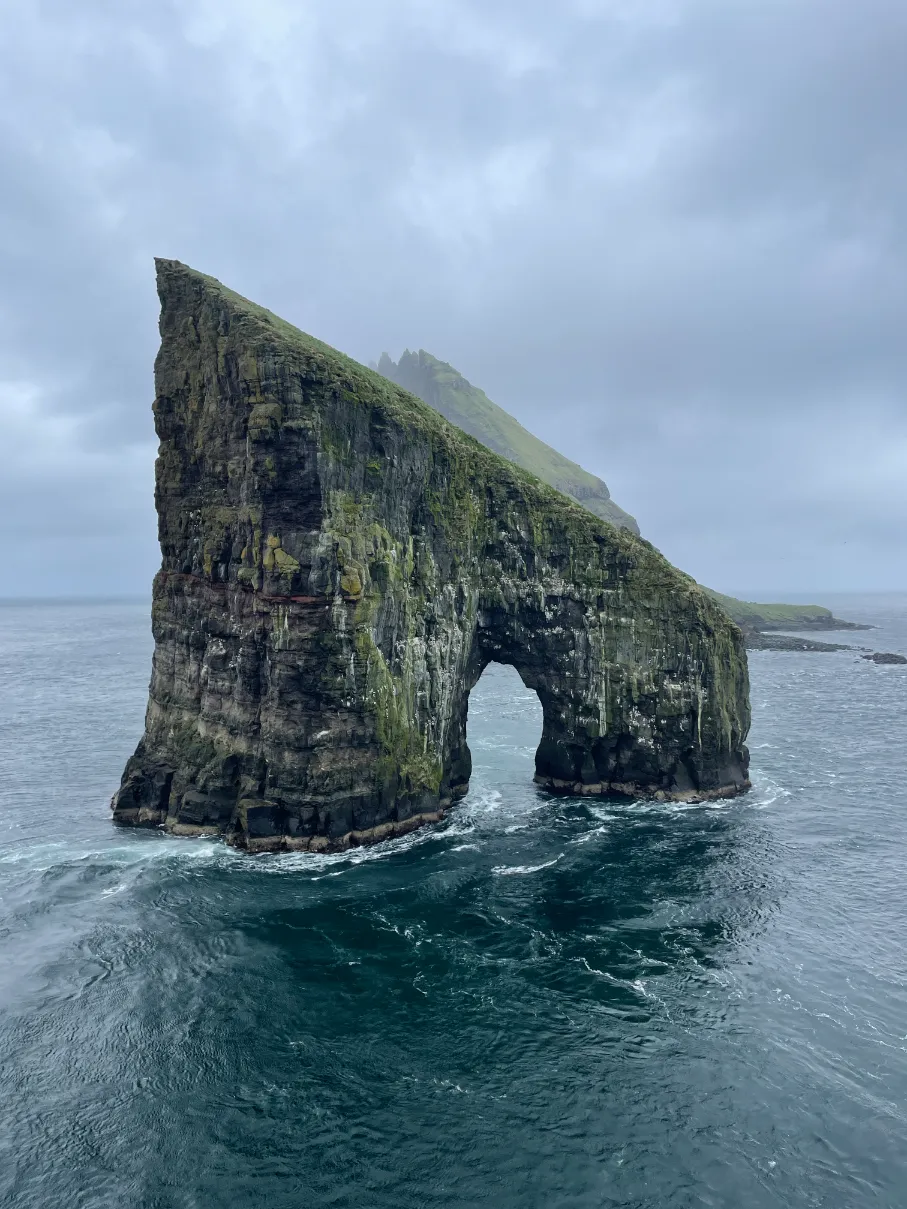
3. The Trek to Drangarnir: Five Hours of Wild Scale
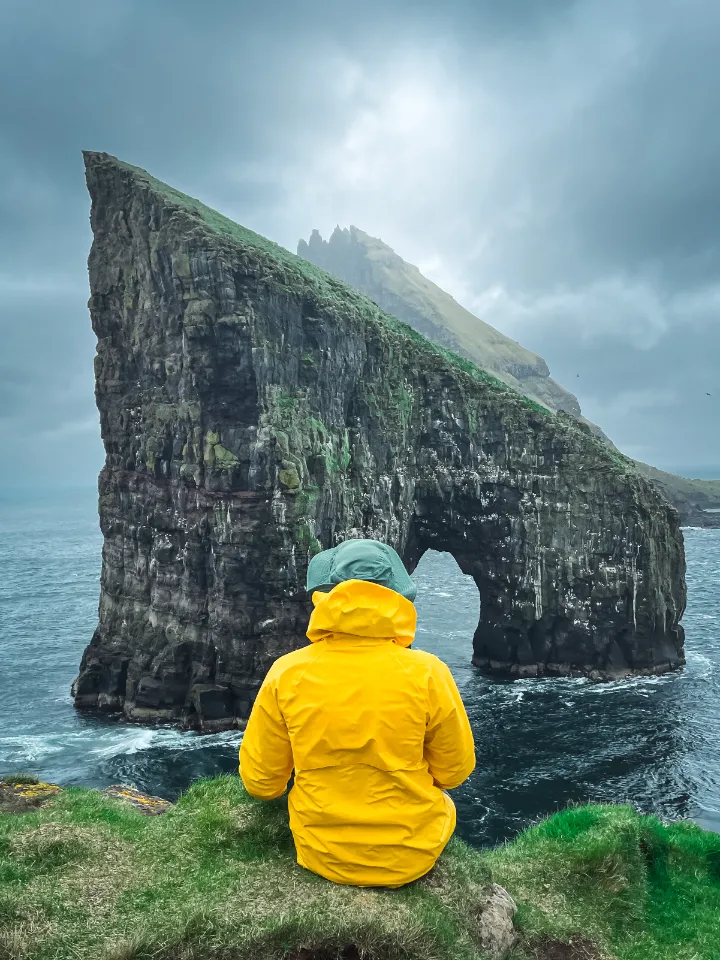
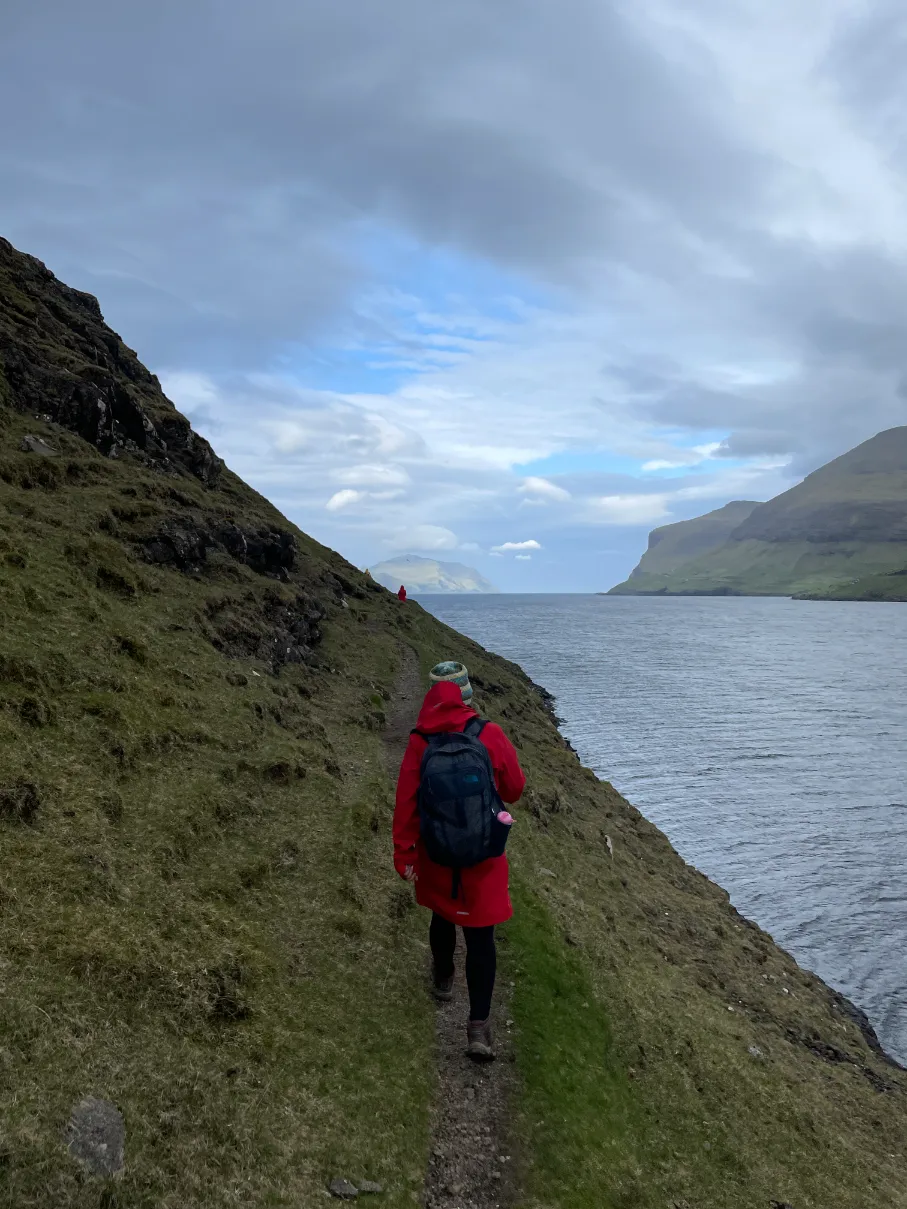
The hike kicks off from the village of Sørvágur and takes about five hours. It’s no walk in the park. No marked trail, steep slopes, thick mud, wet scree, and a headwind that hits you like a wall. But every single step is a step towards something you need to witness.
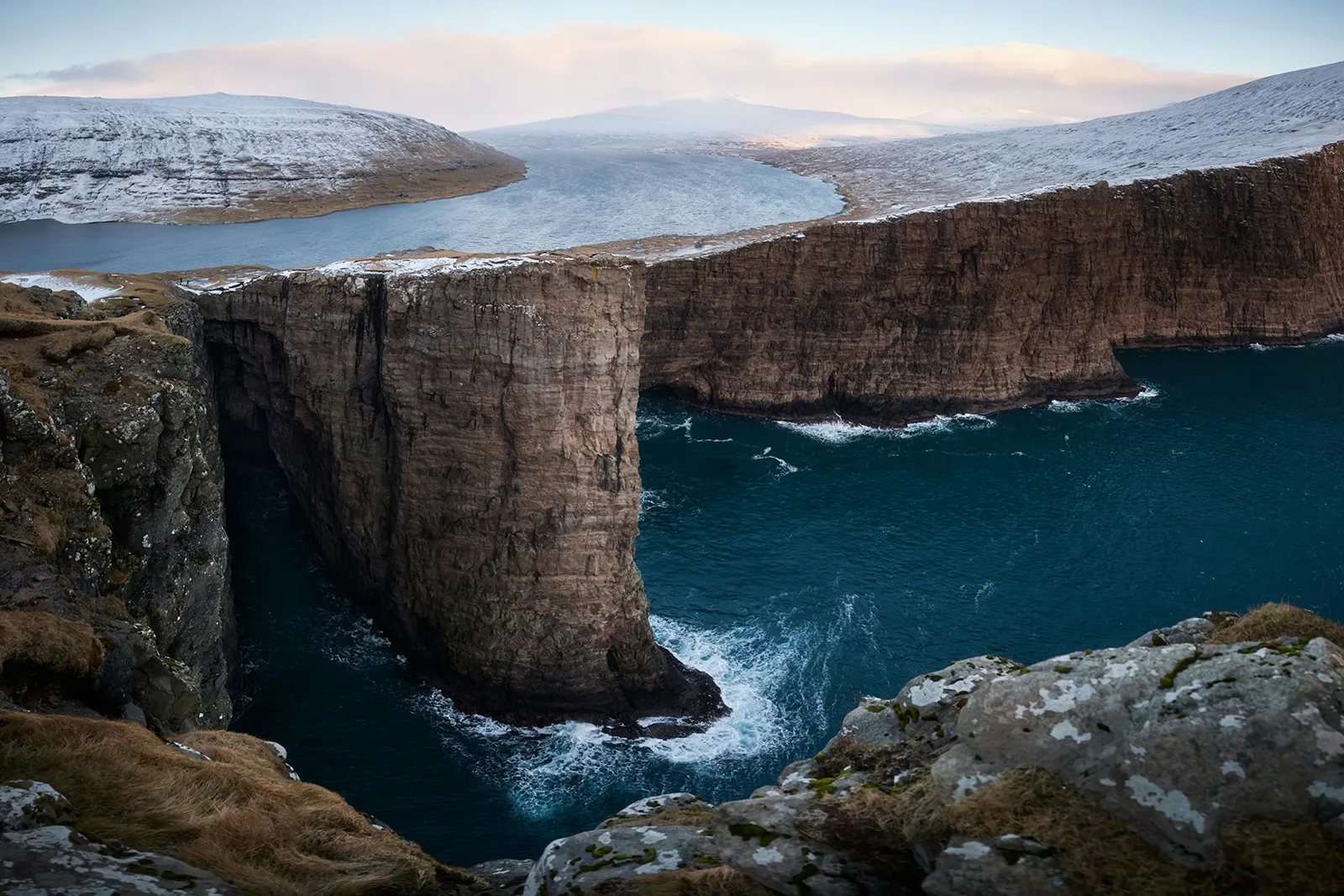
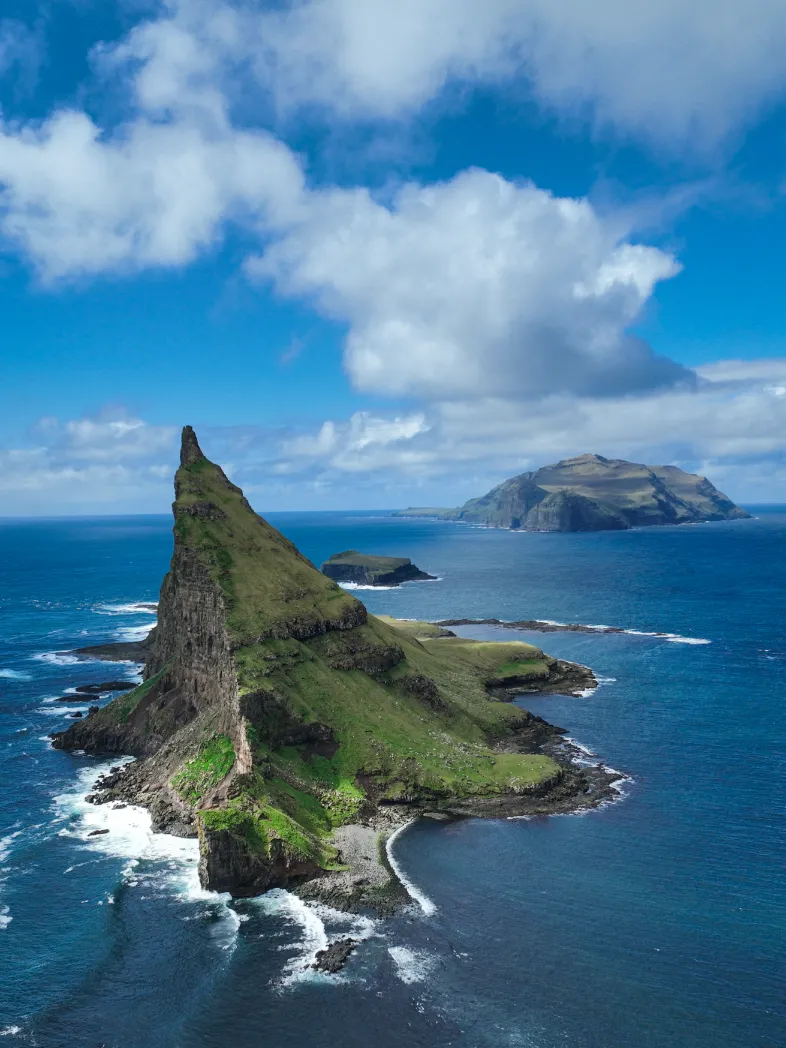
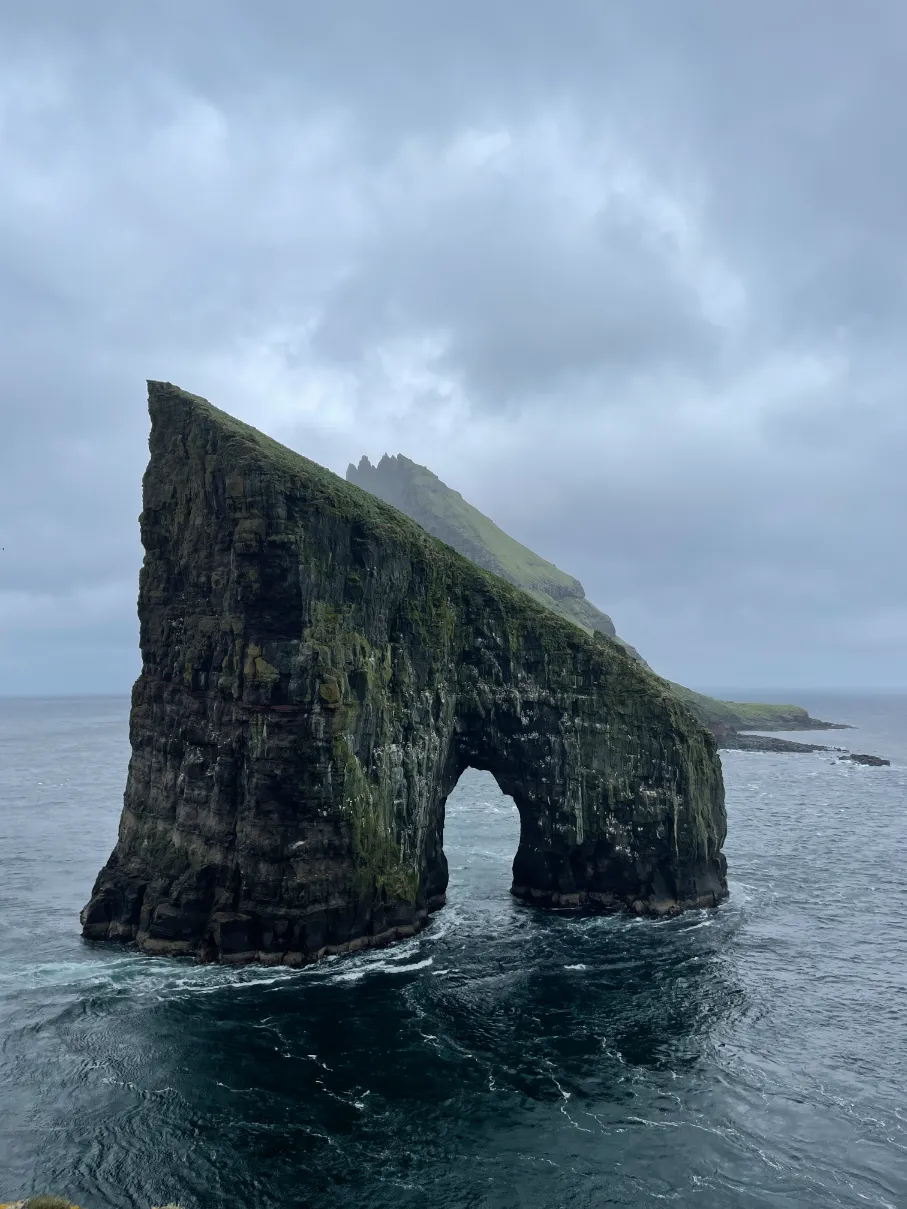
Drangarnir are two massive sea stacks standing between Vágar island and the islet of Tindhólmur. Stóri Drangur and Lítli Drangur form a colossal natural arch, with waves battering their base and birds circling in spirals above. When you stand on the cliff edge and see the arch for the first time, you realise something hard to put into words: the scale of nature here isn't visual. It's physical. You feel it in your gut.
The trek back is lighter. Not because the ground has softened, but because of what you’ve just seen. You walk in silence, wearing a broad grin, listening to the wind whistle through the crags. Exhausted, soaked, completely alive.
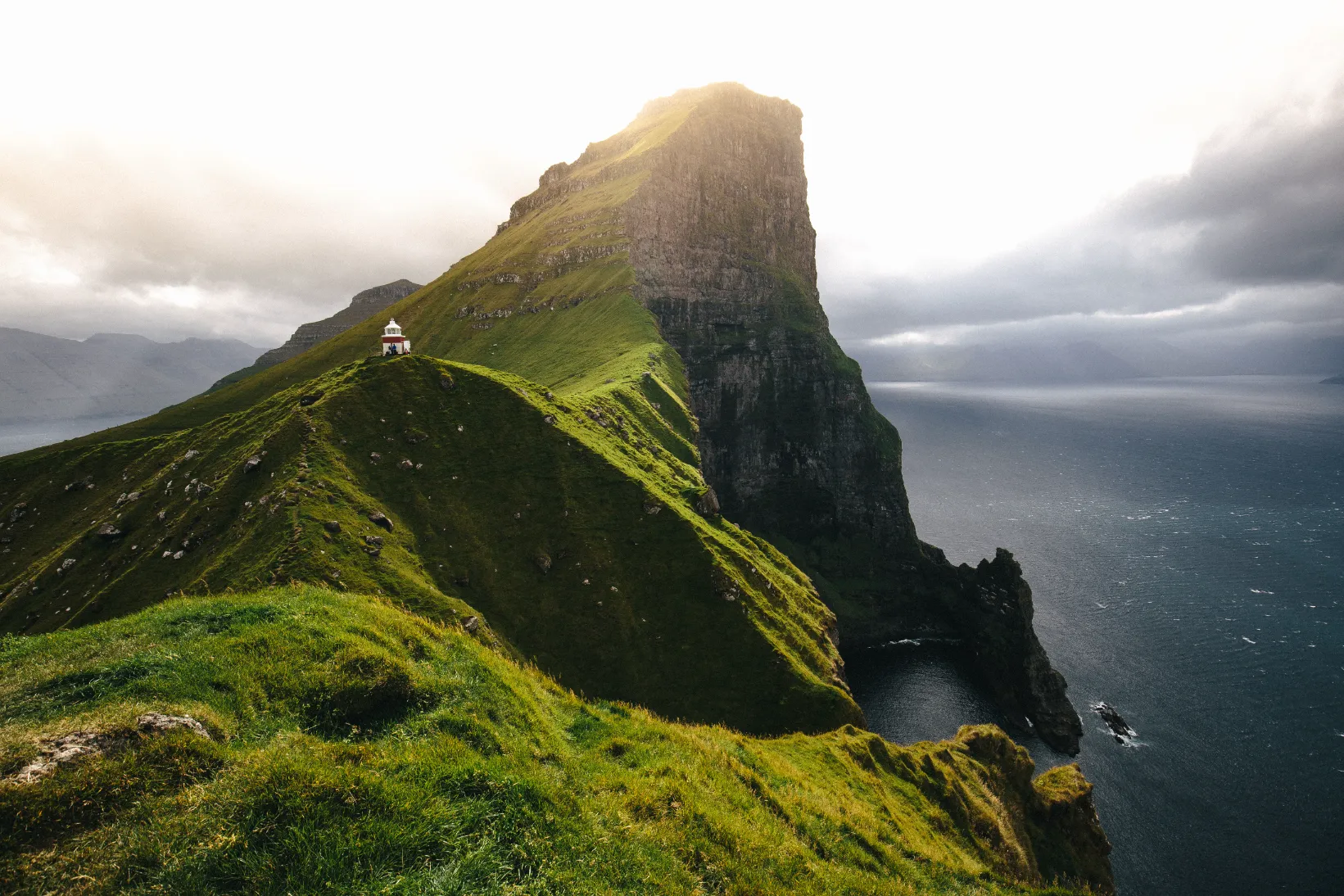
4. Kallur Lighthouse: Teetering on the Edge
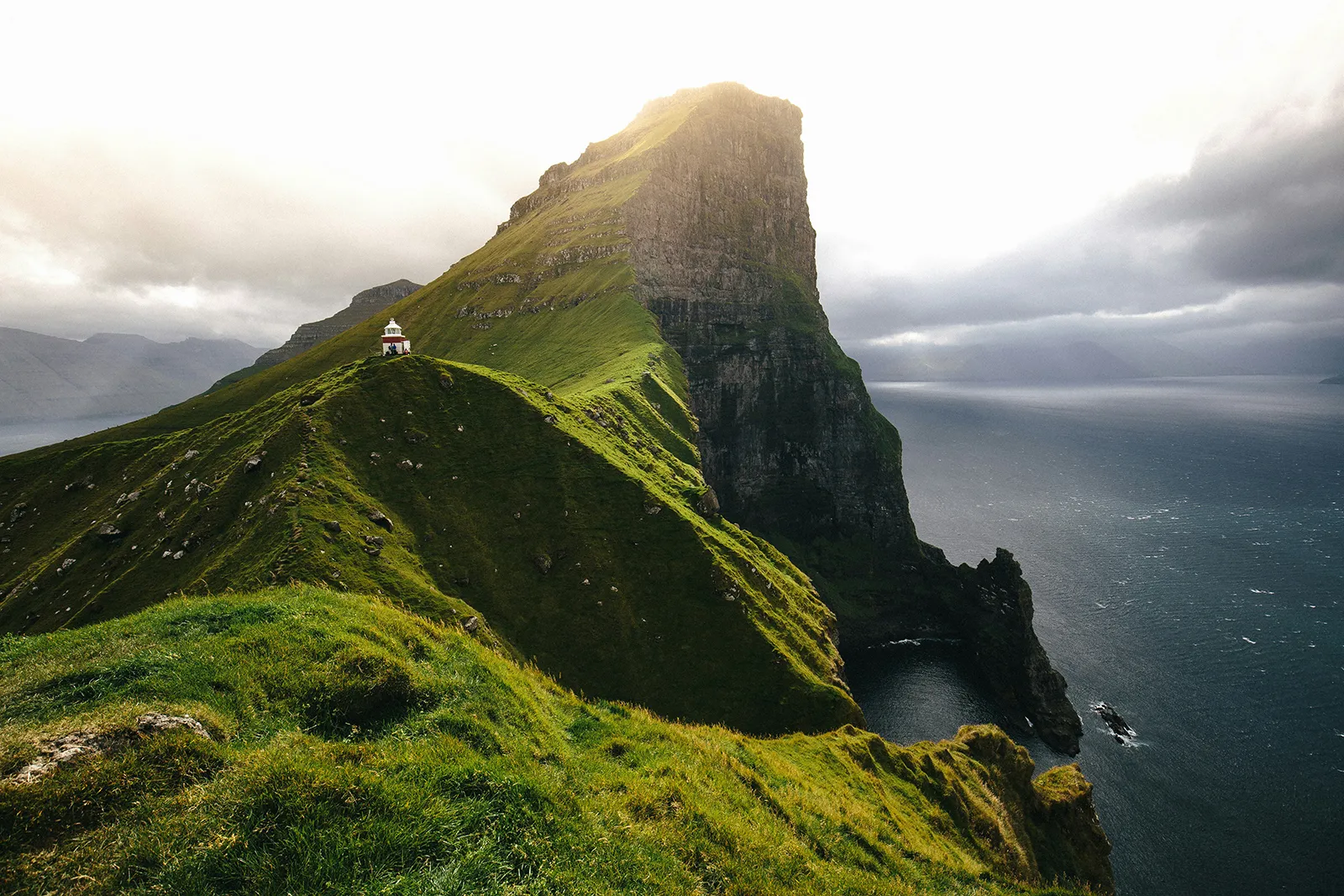
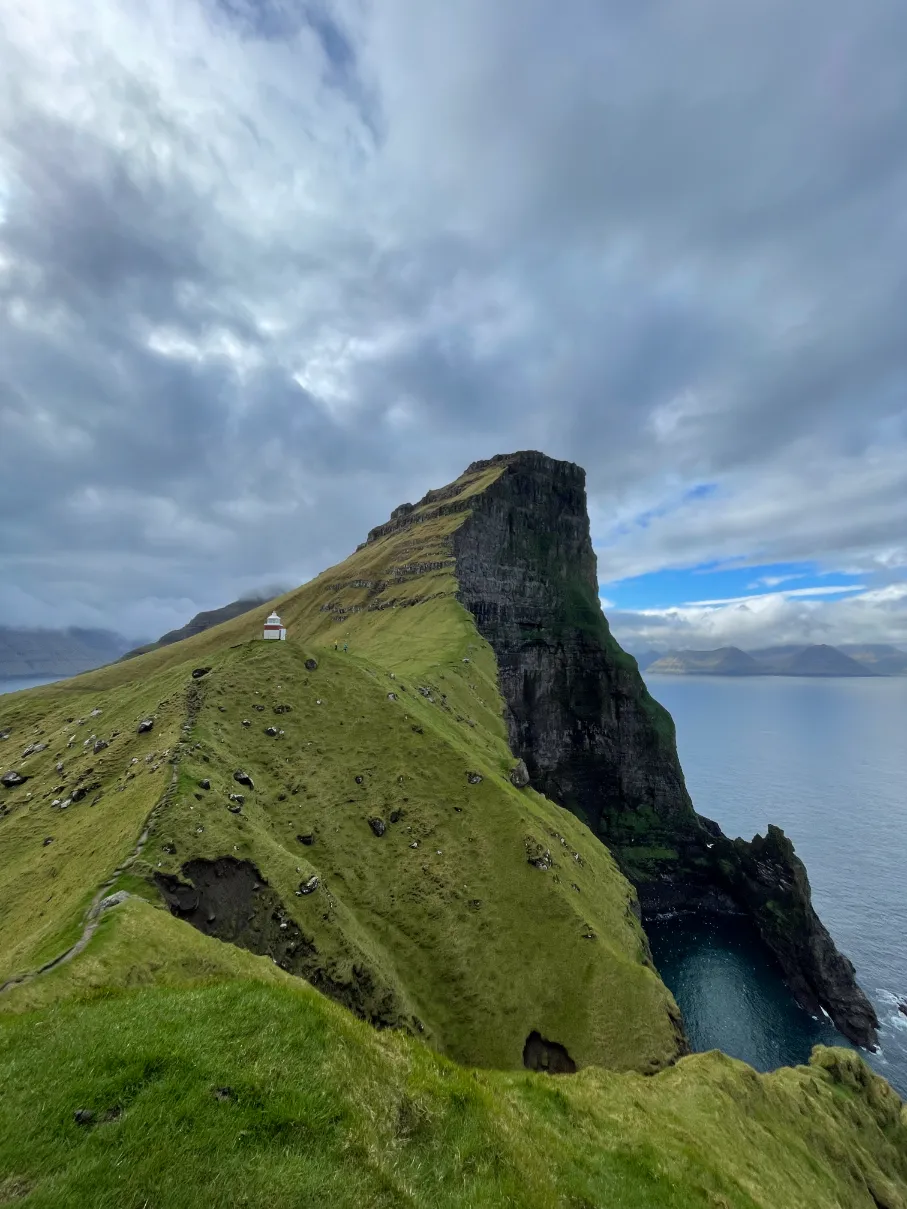
Kalsoy Island is reached by a 20-minute ferry from Klaksvík. From there, you drive to the northernmost tip and set off on foot. The hike to Kallur Lighthouse takes around 40 minutes along a razor-sharp ridge with the ocean on both sides.
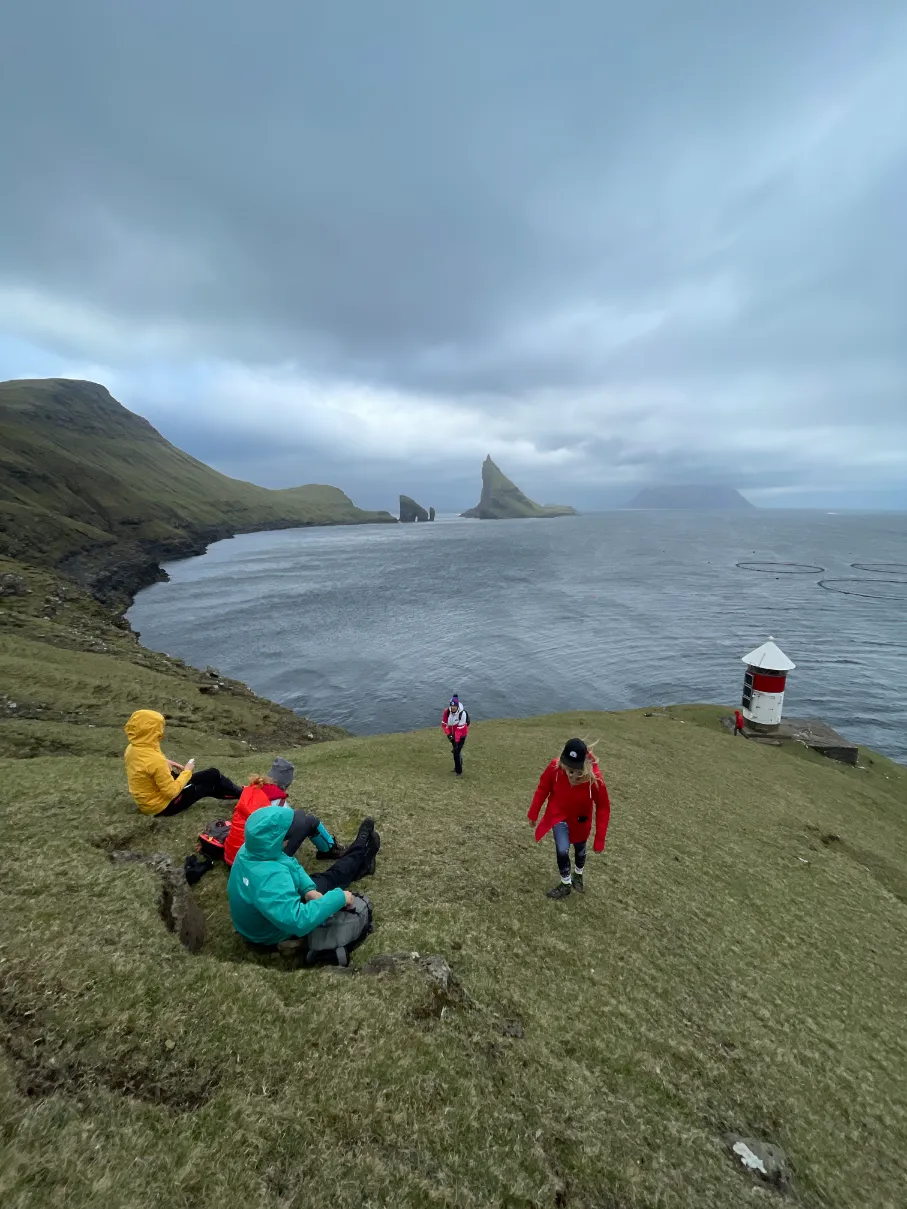
The lighthouse itself is small, white, and modest. But its location is anything but. It sits on a narrow sliver of rock with vertical drops on either side, while the ocean crashes 200 metres below. The wind is so fierce you’ll find yourself crouching near the edge—not out of fear, but sheer instinct.
It’s no wonder they filmed James Bond’s final moments in "No Time to Die" right here. As you stand on the edge, you see why. Not because it’s beautiful (though it is spectacular), but because it’s purely cinematic. Every line, every texture, every shadow is in its perfect place. Nature directed this scene thousands of years before any camera arrived on set.
5. A Hot Tub with a View: Stripping Back to Basics
This last experience isn't extreme. It’s not dramatic, and it isn't meant for Instagram. It’s an outdoor hot tub overlooking rolling green hills, with mist snaking between the peaks and air so cold that steam rises from the water like smoke.
After days of trekking, catching ferries, battling wind and rain, your body craves simplicity. Warm water. Silence. No sights to tick off, no peaks to conquer, nothing to photograph. You just sit there, watching the fog roll in, and for the first time in days, your mind stops planning the next waypoint.
This is the moment the islands stop being a destination and become a feeling. Hot water up to your chin, biting wind on your face, endless green all around. A simple contrast: hot and cold, movement and stillness, days of intensity followed by an afternoon of pure stillness.
Five experiences. Five different ways the Faroe Islands get under your skin and stay there. Not in the photos (though you’ll take hundreds). Not in the stories (though they’ll be great). But in the sensations. The cold, the damp, the wind, the silence, the warmth. The Faröes don't invite you to look at them. They invite you to feel them. And when you return home, that feeling remains—like a phantom limbs of a wild place that isn't yours, but is now a part of who you are.
Author: Martin Bonov
Other articles about Faroe Islands