What will you do with Panic Frame in the Faroe Islands?
You don't know which ferry to catch. You don't know if Mykines will even be accessible tomorrow. You don't know where to park for the trek to Drangarnir, or how long it will take you. In the Faroe Islands, unpredictability is the law of the land, and logistics are a puzzle that changes by the day. With Panic Frame, the puzzle is solved. You just hike, explore, and capture the moment.
The Faroe Islands are not a demanding destination when it comes to terrain or physical exertion. The real challenge lies in the logistics. Ferries that depend on the whims of the weather. Roads that are narrow, winding, and suddenly swallowed by fog. Hikes where you need to know exactly where they start and how long they will take. Weather changes that can scrap plans in a matter of minutes.
With Panic Frame, you travel in a small group with a guide who knows the islands inside out. The route is set, backup plans are ready, and ferries are booked. This doesn't mean you lack freedom. It means you have the right kind of freedom: instead of stressing over logistics, you only have to worry about which lens to put on.
Day 1: Tórshavn, the first encounter with the wind
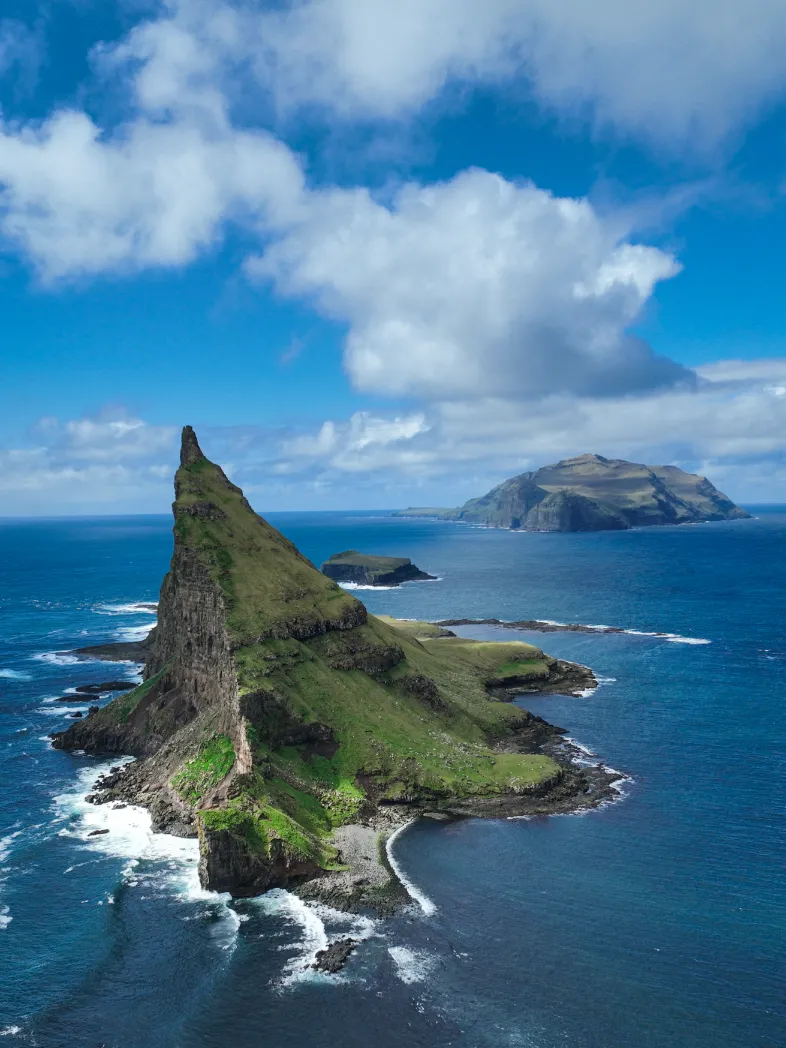
You land at Vágar airport. Stepping outside, the wind hits your face, thick with the scent of salt and wet grass. The transfer to Tórshavn is your first introduction to the landscape: sub-sea tunnels (complete with roundabouts inside, yes, underwater), green slopes, sheep everywhere, and clouds hanging so low you feel you could touch them.
The first day is for acclimatisation. Settling in, a stroll through Tórshavn, and our first dinner together. The group gets to know each other. The guide shares what lies ahead. You look out of the window and wonder how so much green can exist in one place.
Day 2: Múlafossur and Mykines (ocean permitting)
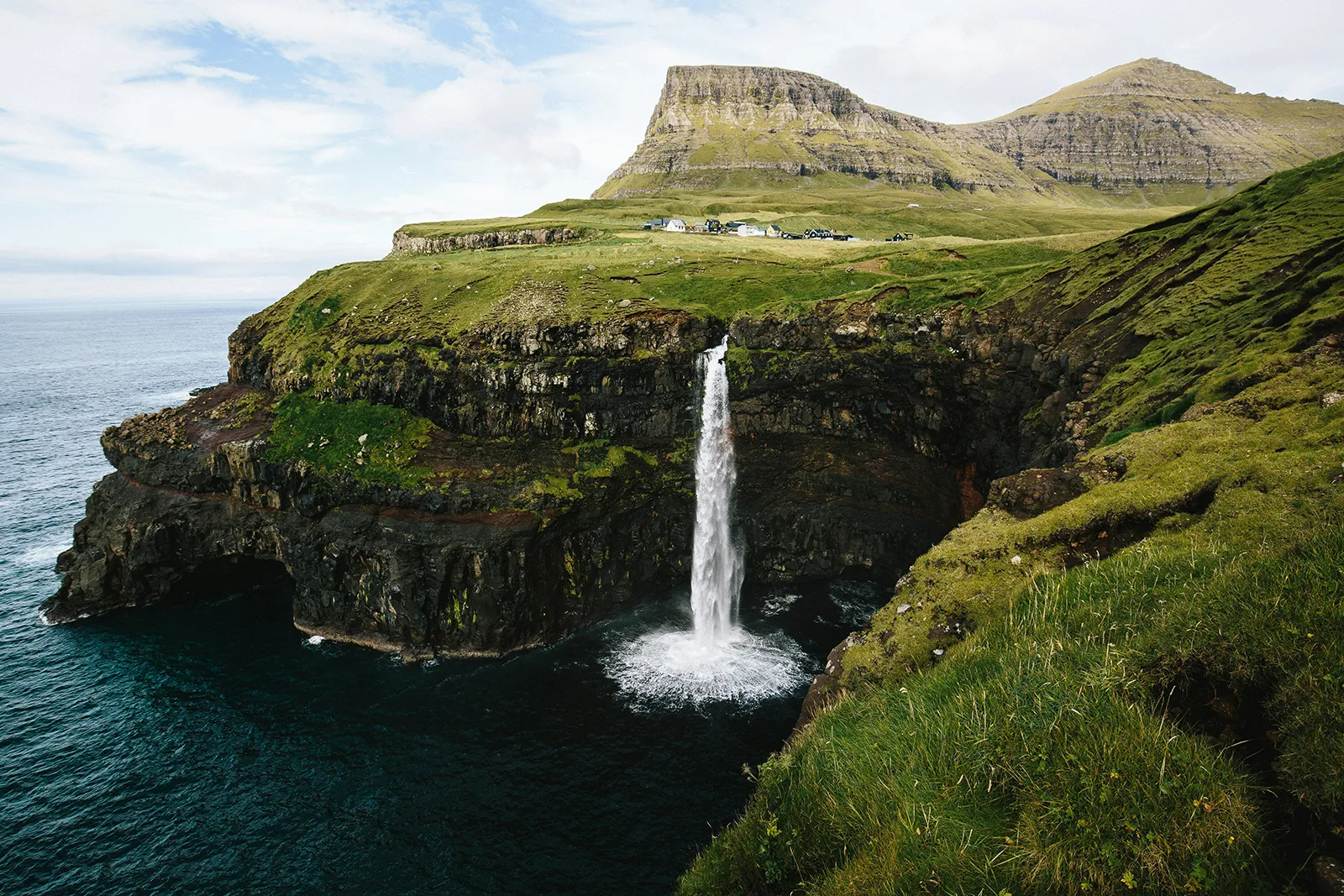
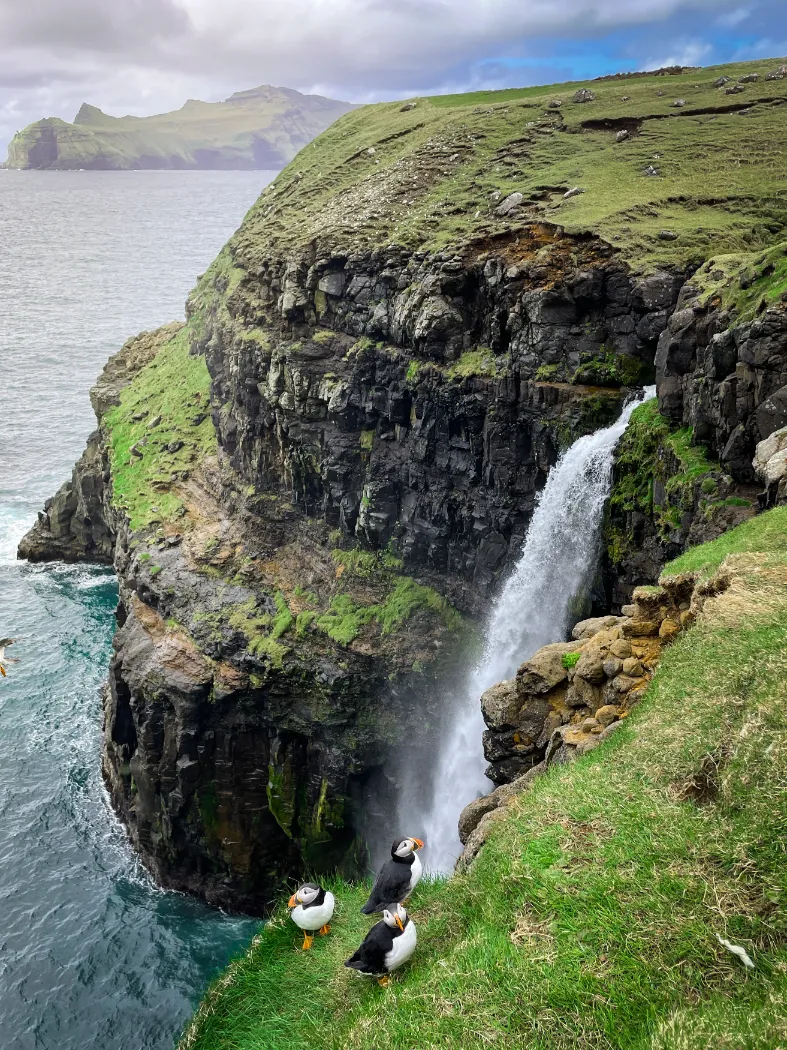
Our first stop is Vágar island. Múlafossur waterfall, plunging 30 metres straight into the Atlantic Ocean, is every bit as surreal as it looks in photos. Your guide knows exactly when the light is perfect and where to stand for the ultimate shot.
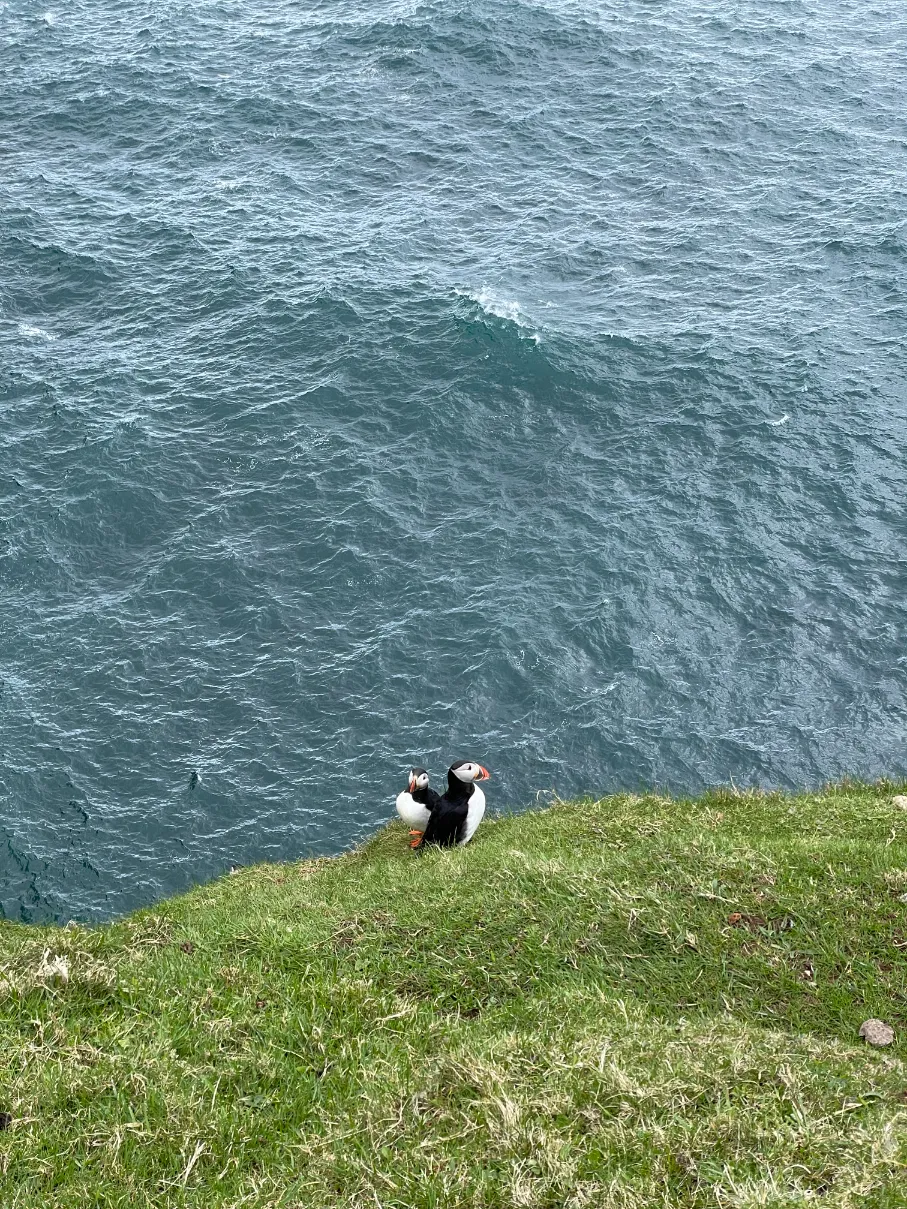
After Múlafossur, if the sea is calm, we take the ferry to Mykines. Thousands of puffins nesting on the cliffs, a hike along the island’s green ridge, and ocean stretching out on both sides. If the ferry gets cancelled (which happens regularly), your guide has a backup plan—another spot on Vágar, a different corner of the islands that you won't find in any guidebooks.
This is the key difference. On your own, a cancelled ferry means a lost half-day. With us, the day simply takes a different, unexpected turn.
Day 4-5: Saksun, Kalsoy, and the Kallur Lighthouse
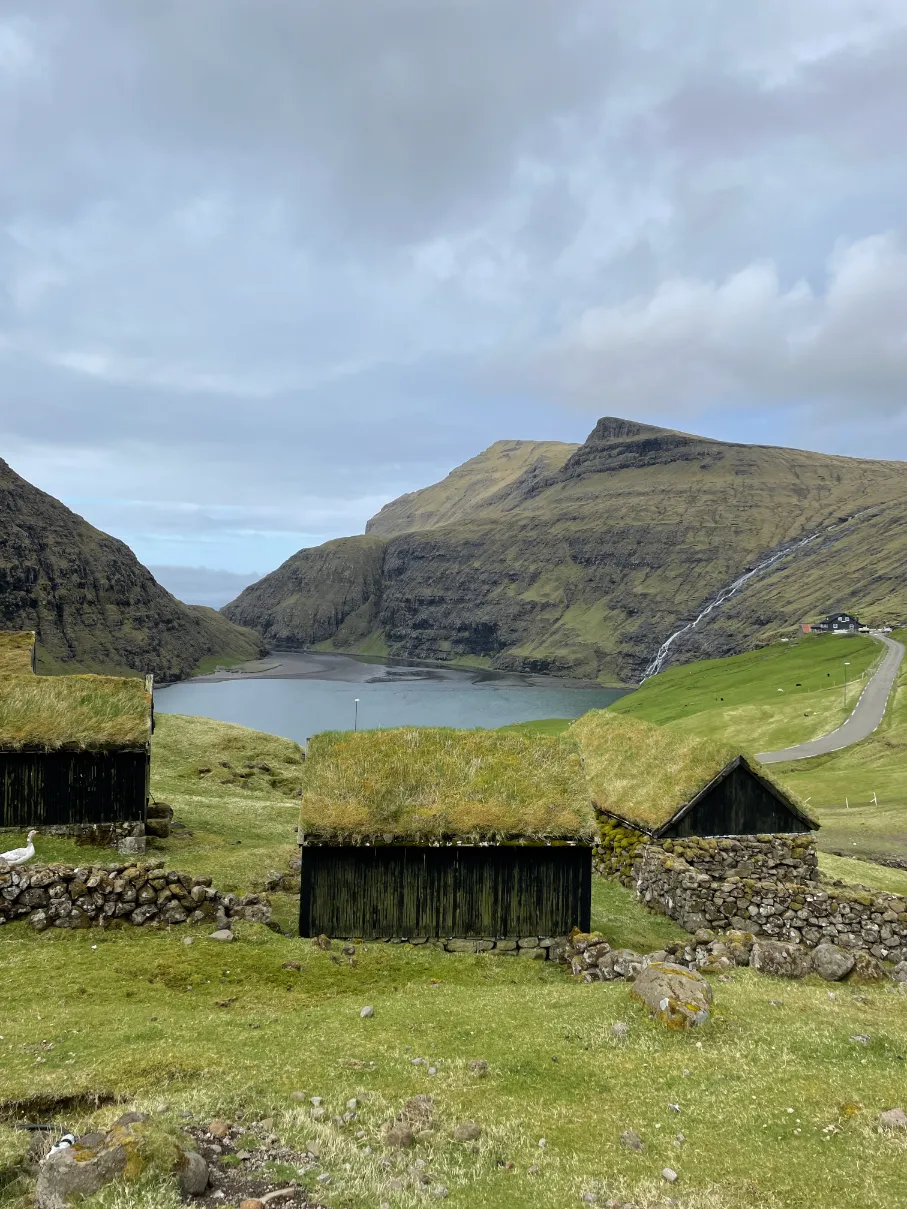
Saksun is a village that feels like a film set. Turf-roofed houses, a lagoon filled by the tide, and waterfalls tumbling down steep slopes. The guide knows when the tide is low (essential for beach access) and where to find the best vantage point.
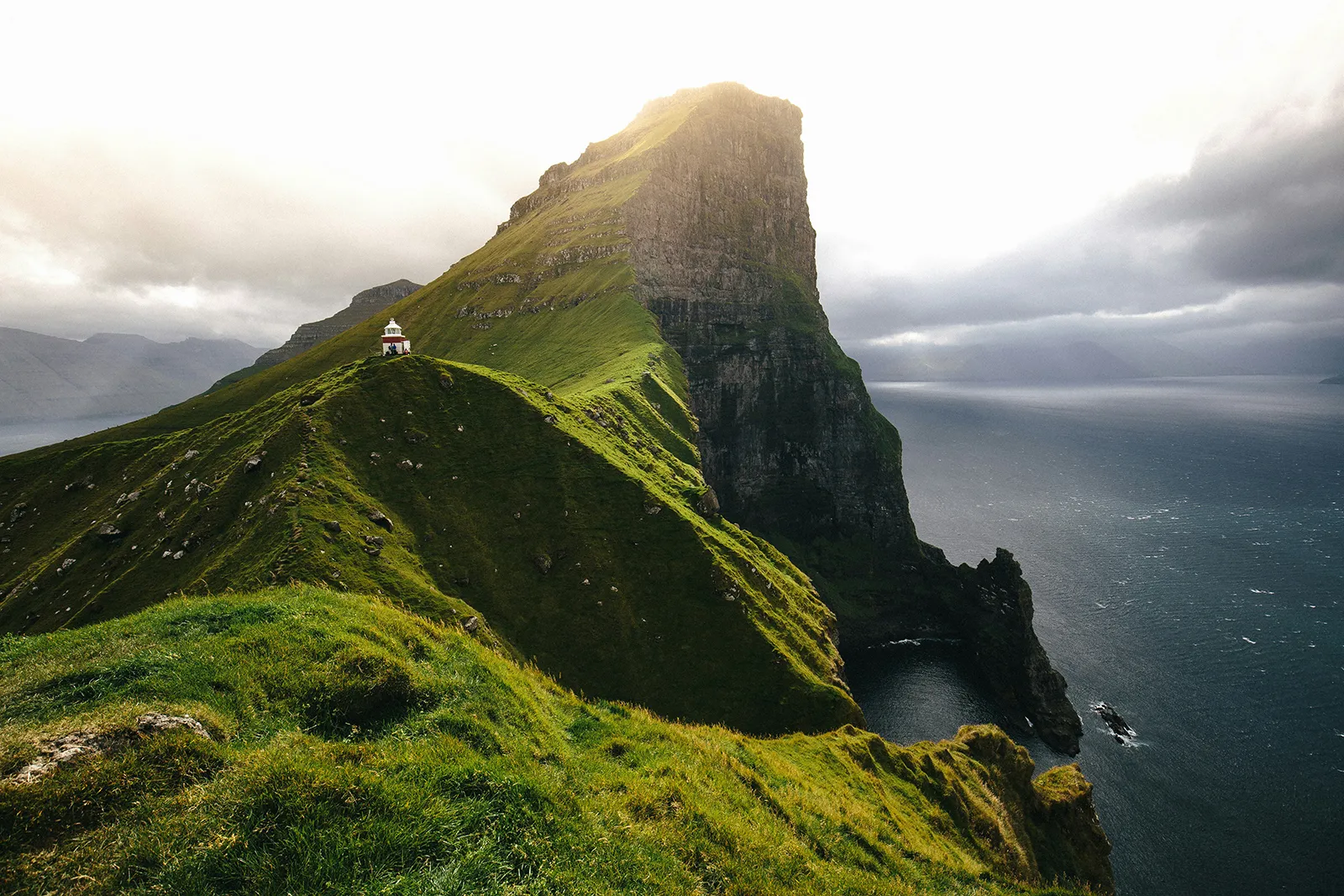
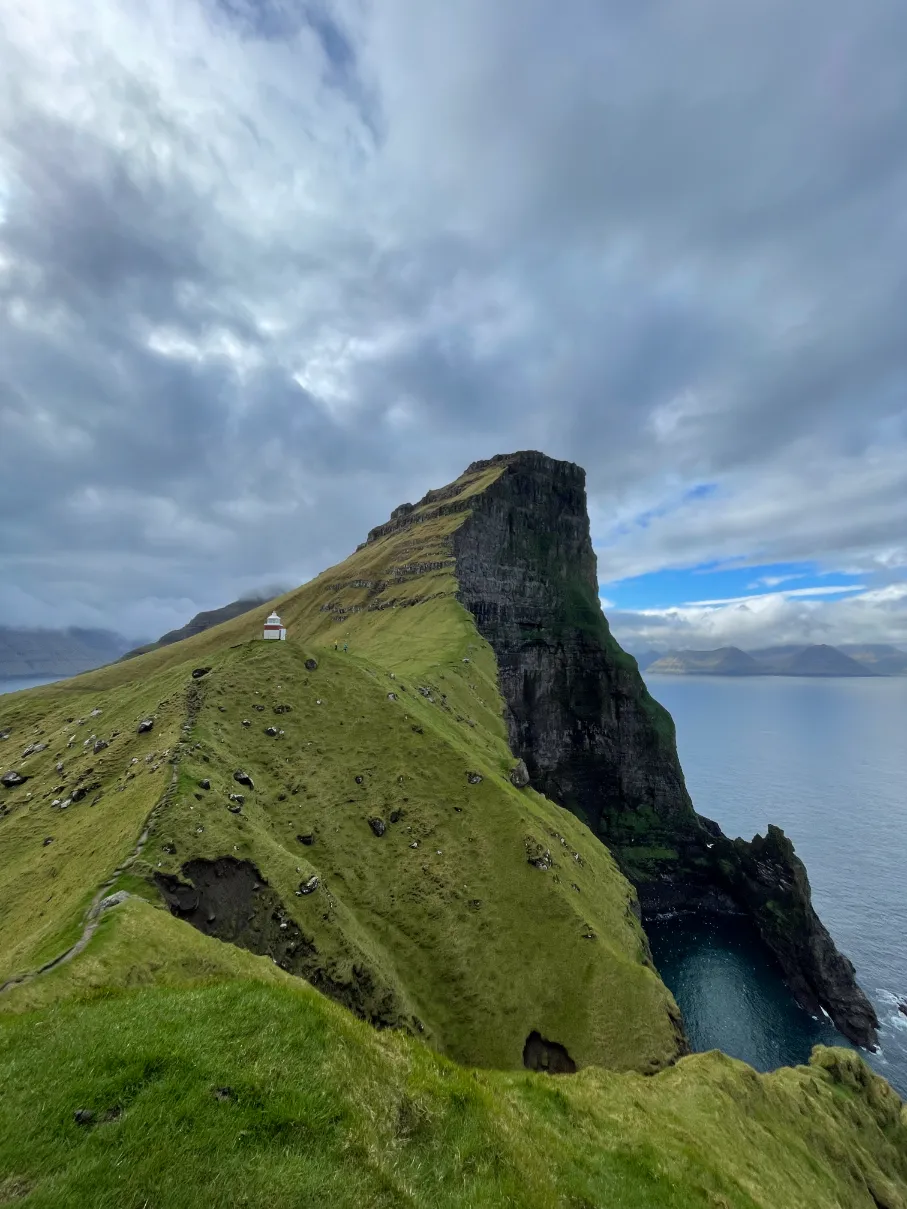
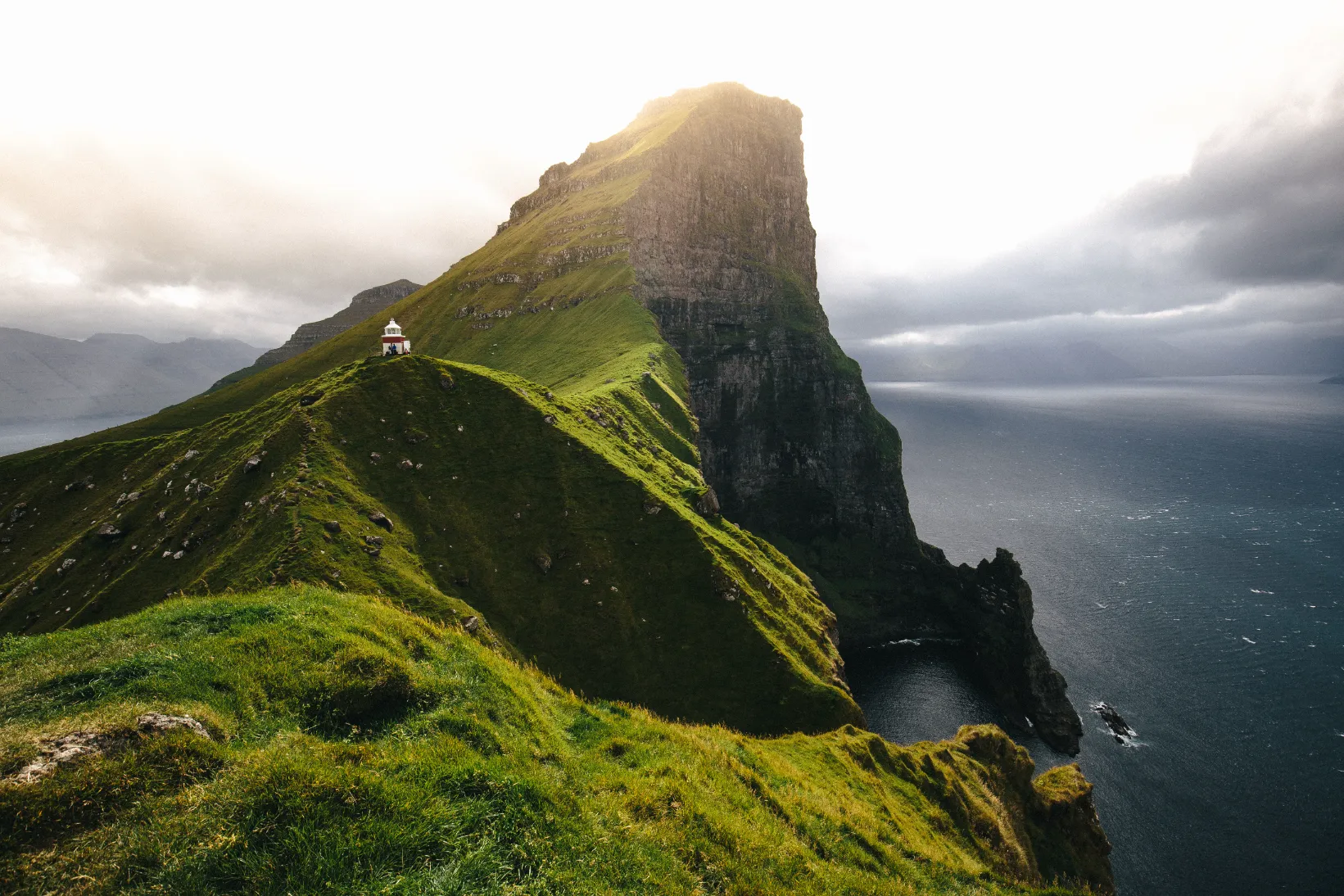
Kalsoy Island is reached by a 20-minute ferry ride from Klaksvík. Then, we drive to the northern tip of the island and hike to the Kallur lighthouse. It's about a 40-minute walk along the ridge, flanked by the ocean on both sides. The wind is constant here, sometimes so fierce you have to walk bent over. But the view from the lighthouse is one of those moments that makes the journey worthwhile.
This is the location where a key scene from the James Bond film 'No Time to Die' was shot. Standing on the edge, looking at the cliffs, the ocean, and the lighthouse, you instantly see why.
Day 6: Drangarnir, the ultimate hike of the journey
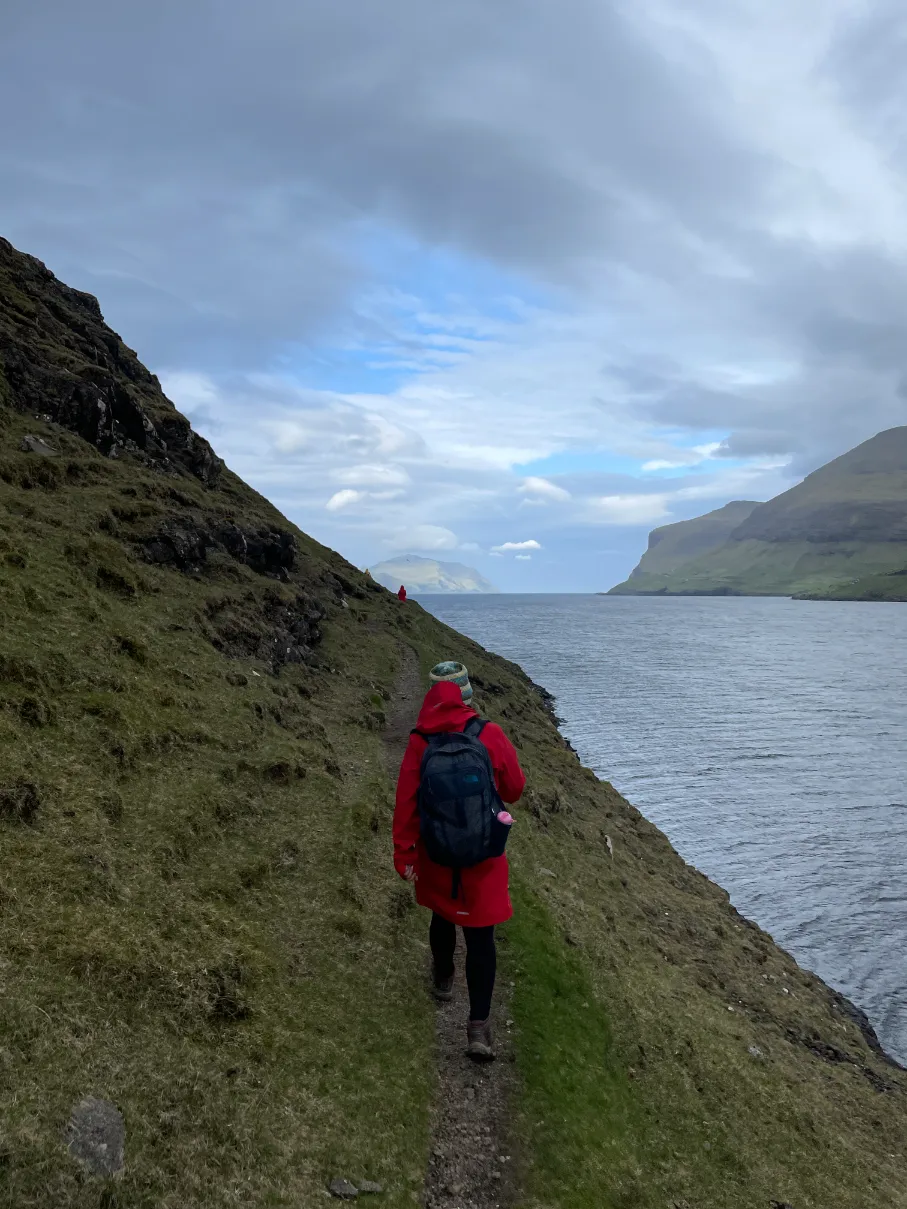
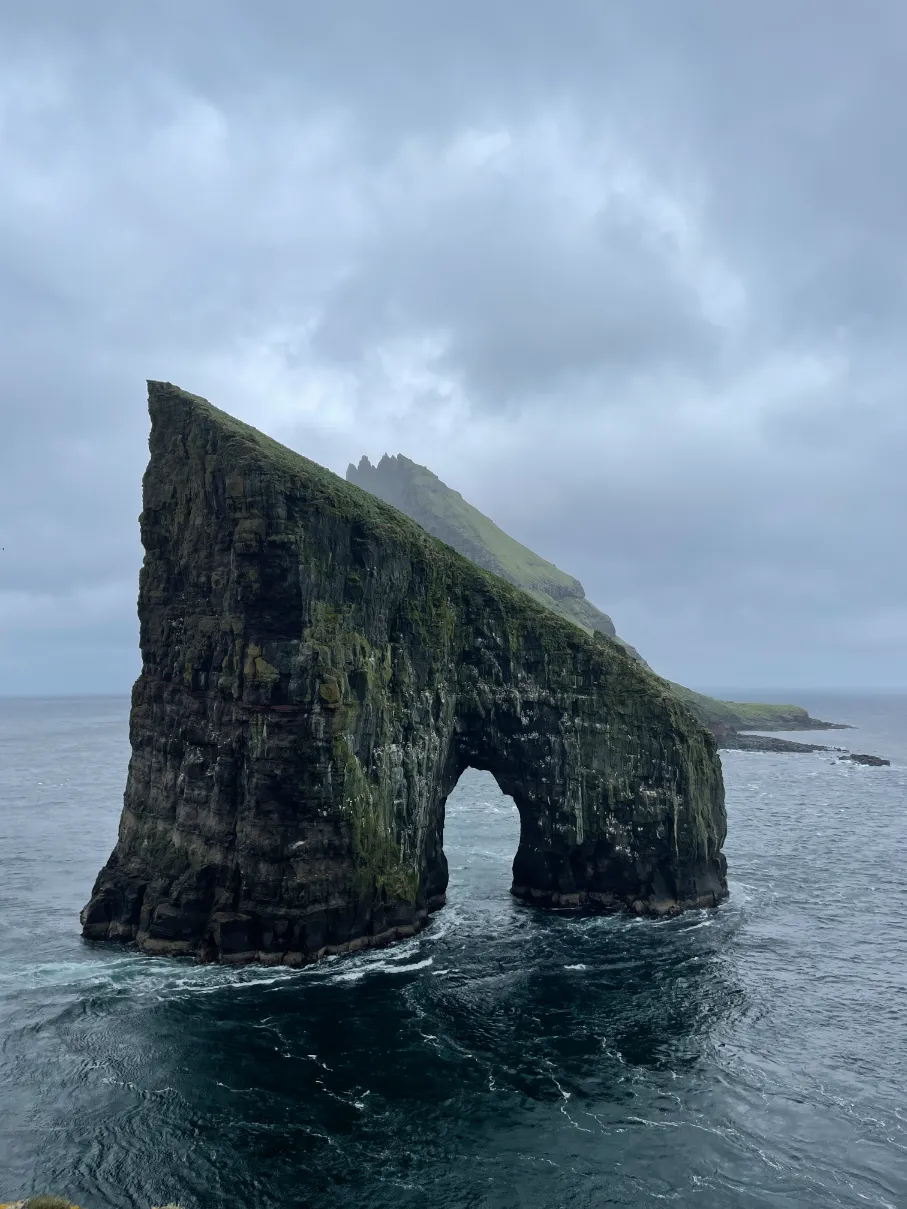
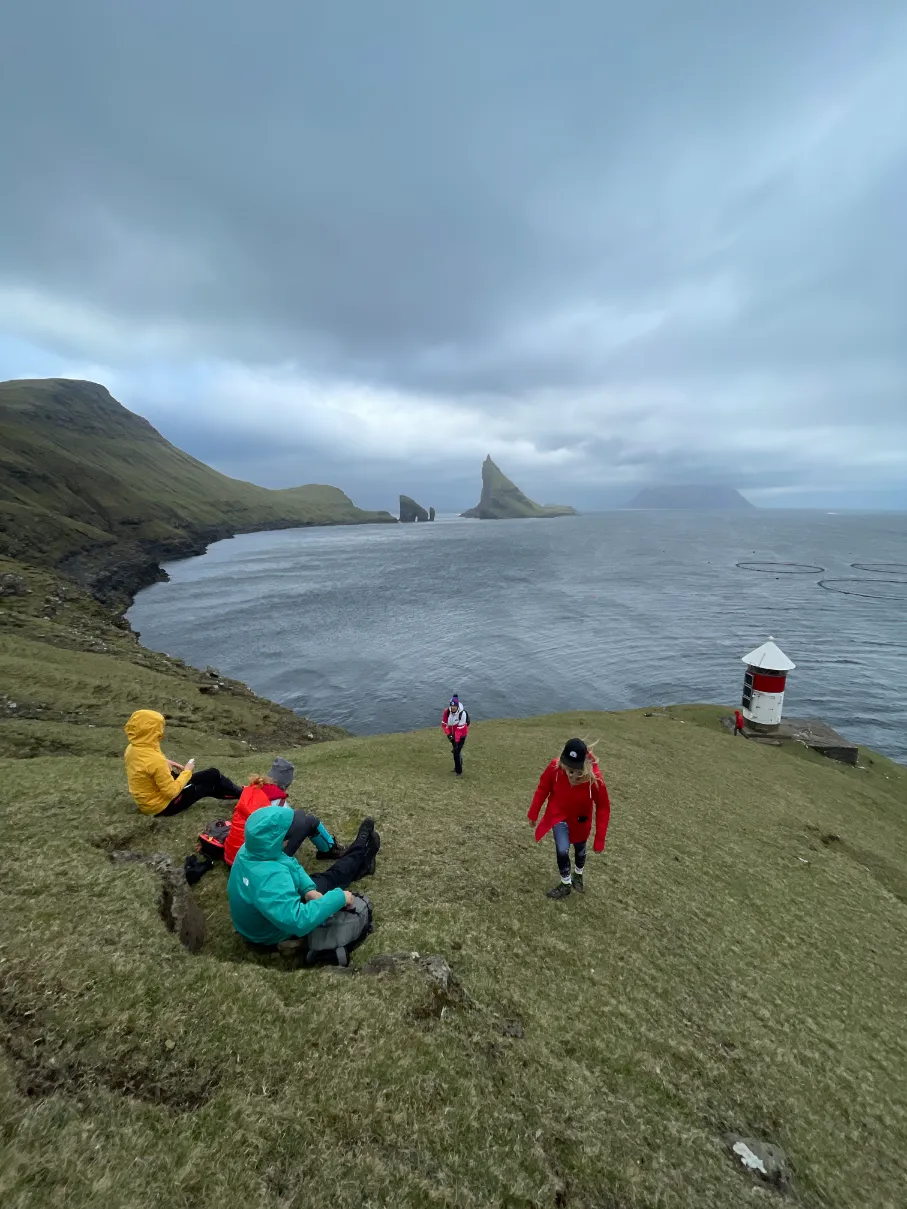
The five-hour hike to Drangarnir is the crown jewel of our trip. You set off from the village of Sørvágur with the group and your guide. The terrain has no marked path in places—expect steep slopes, mud, rocks, and raw wind. Your guide sets the pace, monitors the weather, and knows exactly when to rest and when to push on.
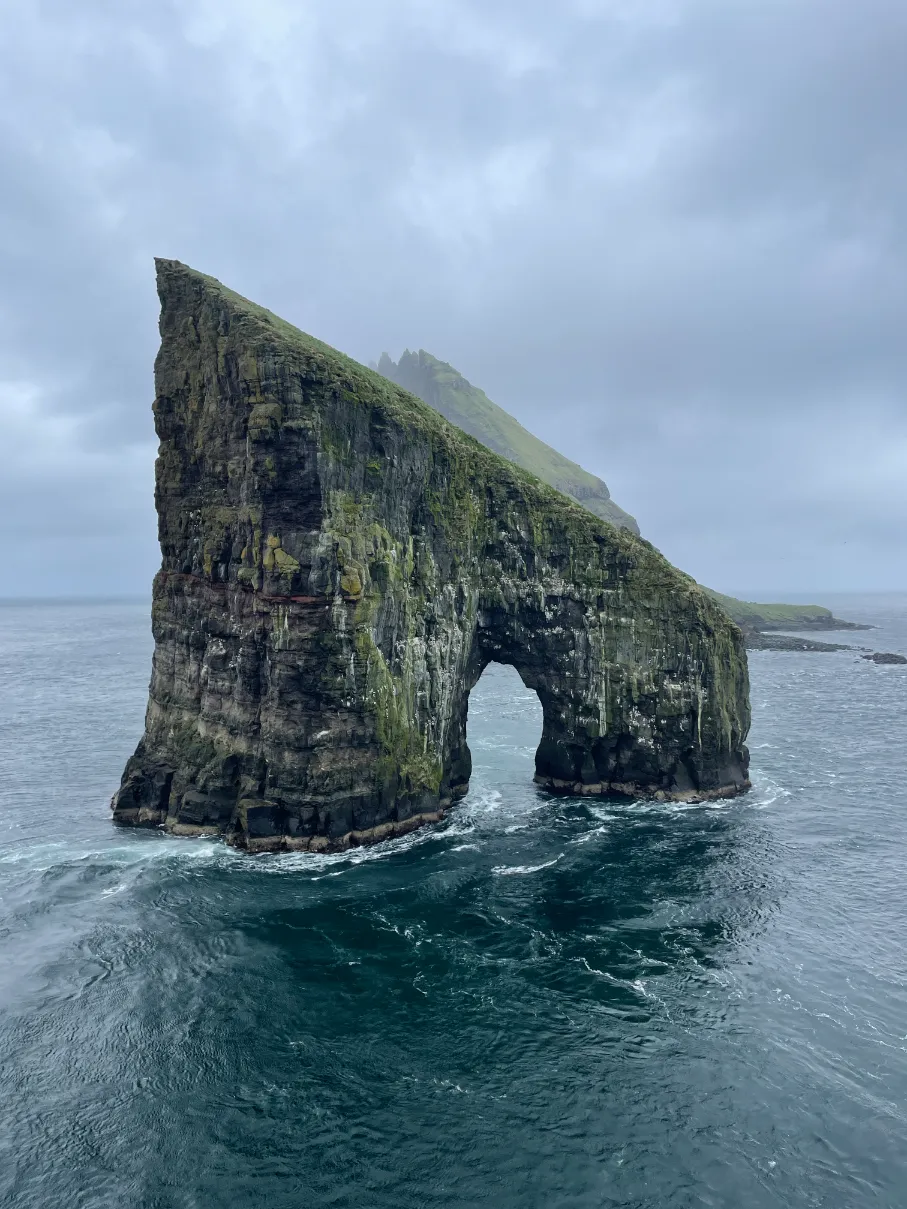
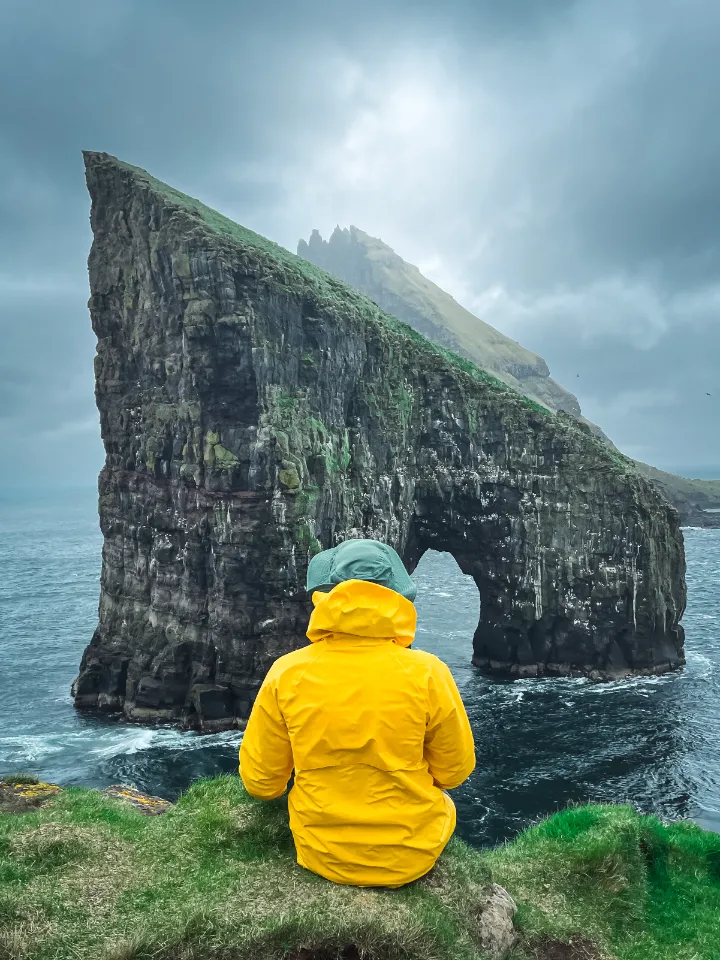
Drangarnir refers to two sea stacks that form a spectacular natural arch. Waves crash violently against them, seabirds swirl above, and the sheer scale is something no photo can ever fully capture. You stand on the cliff edge—wet, tired, happy—staring at something nature has spent thousands of years building.
The walk back is slower. The group goes quiet. Not just from fatigue (though that is real enough), but because some experiences simply don't need immediate words.
Day 7-8: unwind and farewell
The final days are slower. An outdoor hot tub, with views of the green hills and the fog rolling between them. Hot water, cold air. The simple comfort your body needs after days of hiking and high emotions.
Free time to explore Tórshavn. Walk along the harbour, grab a coffee, or find a cosy restaurant for dinner. The group is no longer a bunch of strangers. The shared days, the wind, the rain, and the quiet moments on the cliff edges have created a bond that doesn't happen on an ordinary holiday.
On the final morning, we transfer to the airport. The islands fade behind you, green, misty, and silent. But the memories stay with you.
What is included and what to expect
This is an 8-day trip. A small group, a guide, and accommodation in a house (not a hotel, but a real home with a kitchen and a hot tub). All transfers, ferries, and local transport are fully organised. The itinerary is flexible, because a rigid plan makes no sense in the Faroes.
The physical demand is moderate. The hike to Drangarnir is the longest (around 5 hours), while the others take 1-2 hours. No specialist training is required, but a decent level of basic fitness helps. Proper hiking boots with ankle support are essential.
What's not included: flights (from Sofia or Copenhagen), personal gear (though we'll send you a precise packing list), and food (we cook together at the house or eat out, both work perfectly). Your guide knows the islands, knows the weather, and knows when you need to stop walking and just take it all in.
The Faroe Islands are not a destination you simply 'do' in 8 days. They are a place that gets under your skin. The wind, the mist, the green, and the silence seep in slowly and stay with you. With Panic Frame, you don't travel like a tourist. You travel as someone who has come to experience something raw and real. And the islands, in turn, show you exactly that.
Author: Martin Bonov
Other articles about Faroe Islands