Faroe Islands: What to Know Before You Go
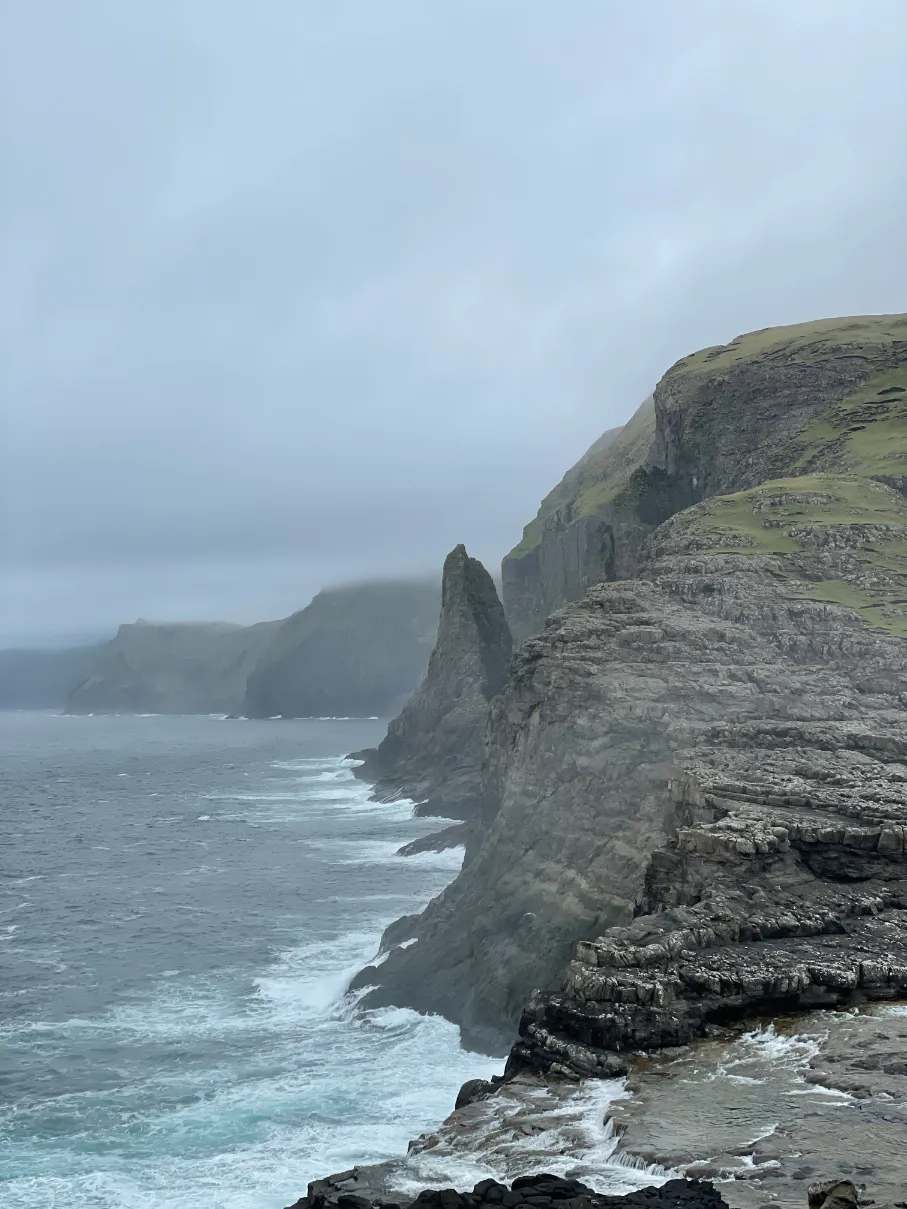
You step off the plane and the wind hits you right in the chest. Not metaphorically. Literally. The air is salty, damp, and cold in a way that isn't unpleasant, just different. Everything around you is green, but not like a forest. It's green like a blanket thrown over cliffs that vanish into the clouds. Tórshavn, the capital, has 22,000 residents and not a single traffic light. The Faroe Islands aren't a destination for 'top ten' bucket lists. They are a place you either feel in your bones, or miss entirely.
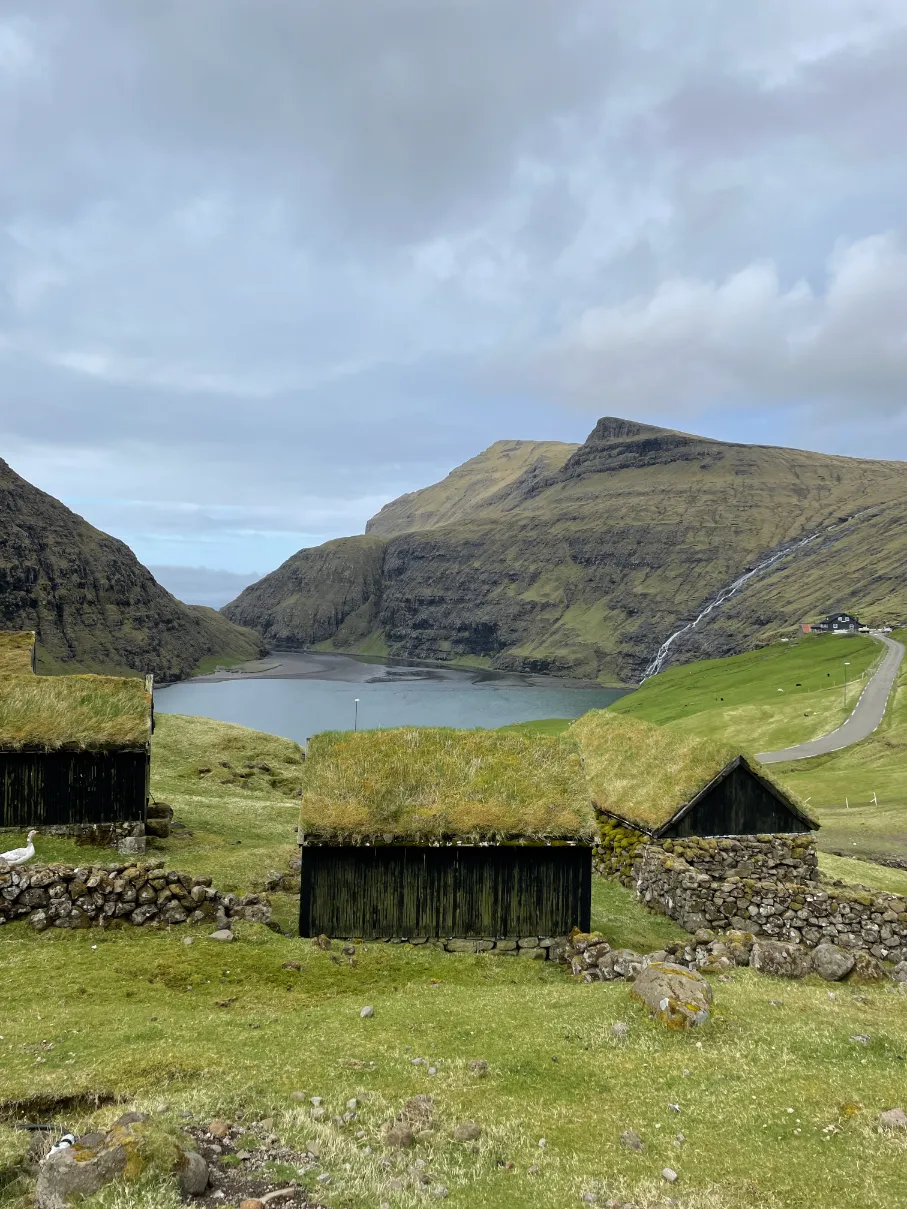
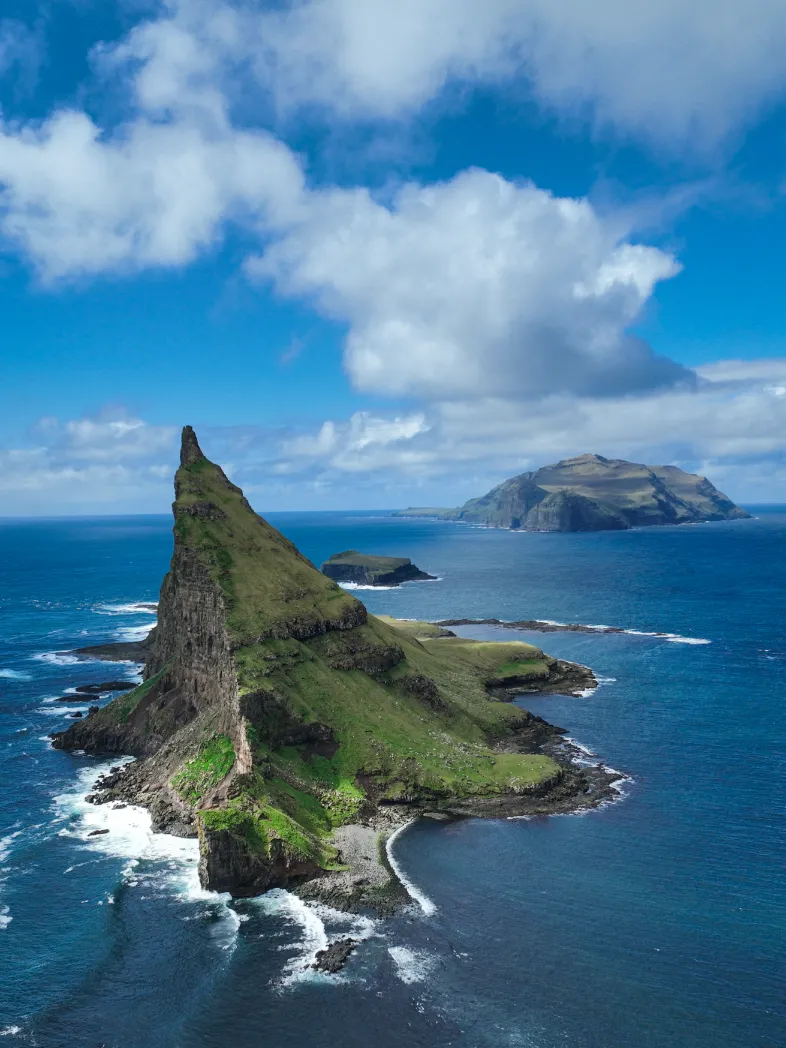
18 islands in the North Atlantic, between Iceland and Norway. A self-governing Danish territory, with its own language and 54,000 locals sharing their home with 80,000 sheep. There are no trees here. No crowds. Not a single McDonald's. Instead, you will find subsea tunnels (including an underwater roundabout), ferries that link the jagged islands, and tiny villages of 15 turf-roofed houses.
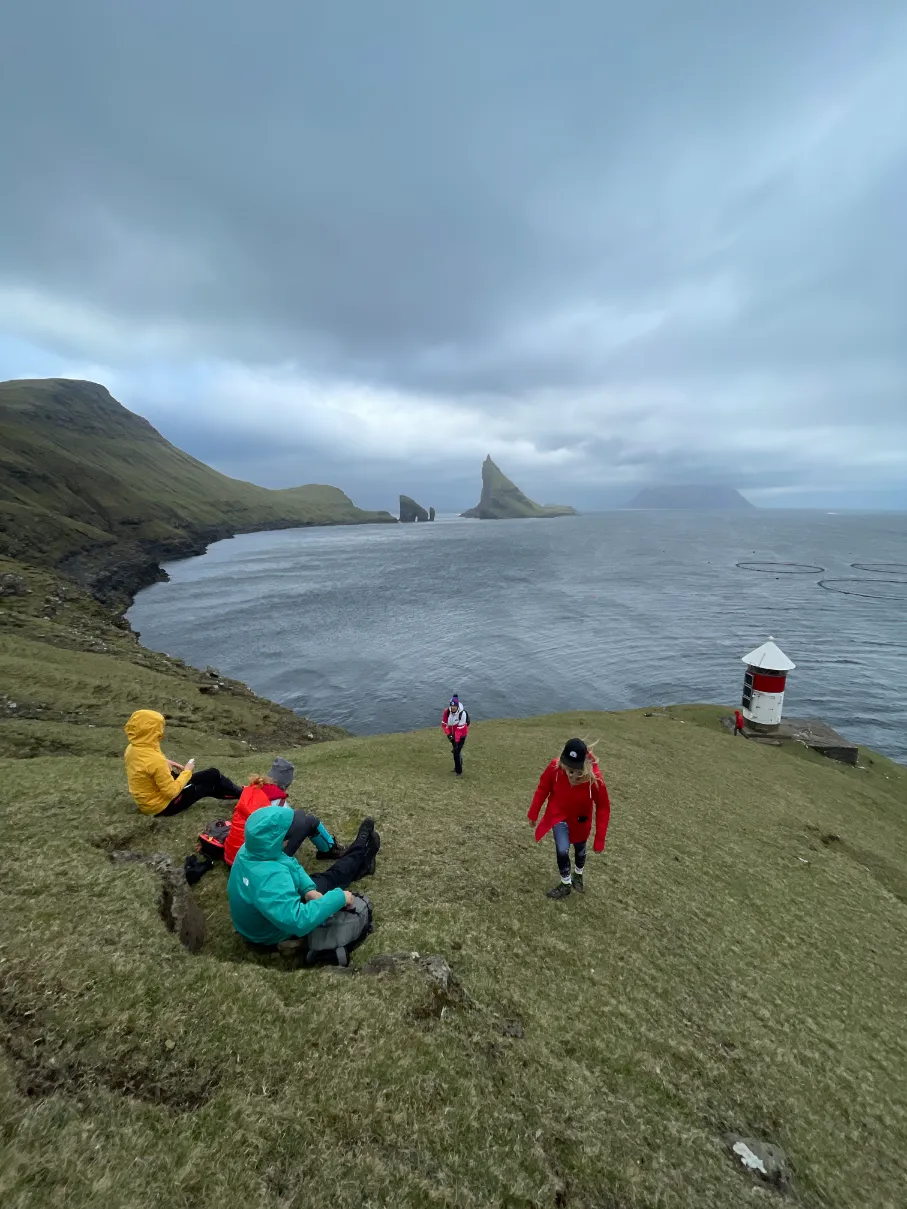
The journey with Panic Frame lasts 8 days. Our route takes us through Vágar, Streymoy, Kalsoy and back, moving by foot, ferry, and tunnel. Our days start early, chasing light that shifts every 20 minutes, and end with wind and silence in equal measure.
Getting there and what awaits
Direct flights to Vágar airport depart from Copenhagen, Edinburgh, and Reykjavik. The flight from Copenhagen takes about 2 hours. The airport is small, functional, and framed by raw green and thick fog. Flights are often delayed, because the wind decides when it's safe to land.
The road from the airport to Tórshavn takes you through a subsea tunnel. Yes, beneath the ocean floor. The first time feels surreal. You drive down, circle an underwater roundabout (the only one in the world), and emerge on another island altogether. It's like shifting dimensions without even noticing.
Tórshavn is quiet, compact, and alive with colourful wooden houses and a harbour where fishing boats outnumber yachts. In the centre, you’ll find cosy cafes, a small museum, and the Tinganes district, where grass grows on roofs and the streets are paved with stone. It’s a capital that feels like a village, and that is its true charm.
8 days of raw exploration
The itinerary is structured yet flexible, because the Faroe Islands don't care about schedules. Fog can swallow a hiking trail for hours. The ferry might be delayed. The wind might decide that today is simply not the day for Mykines.
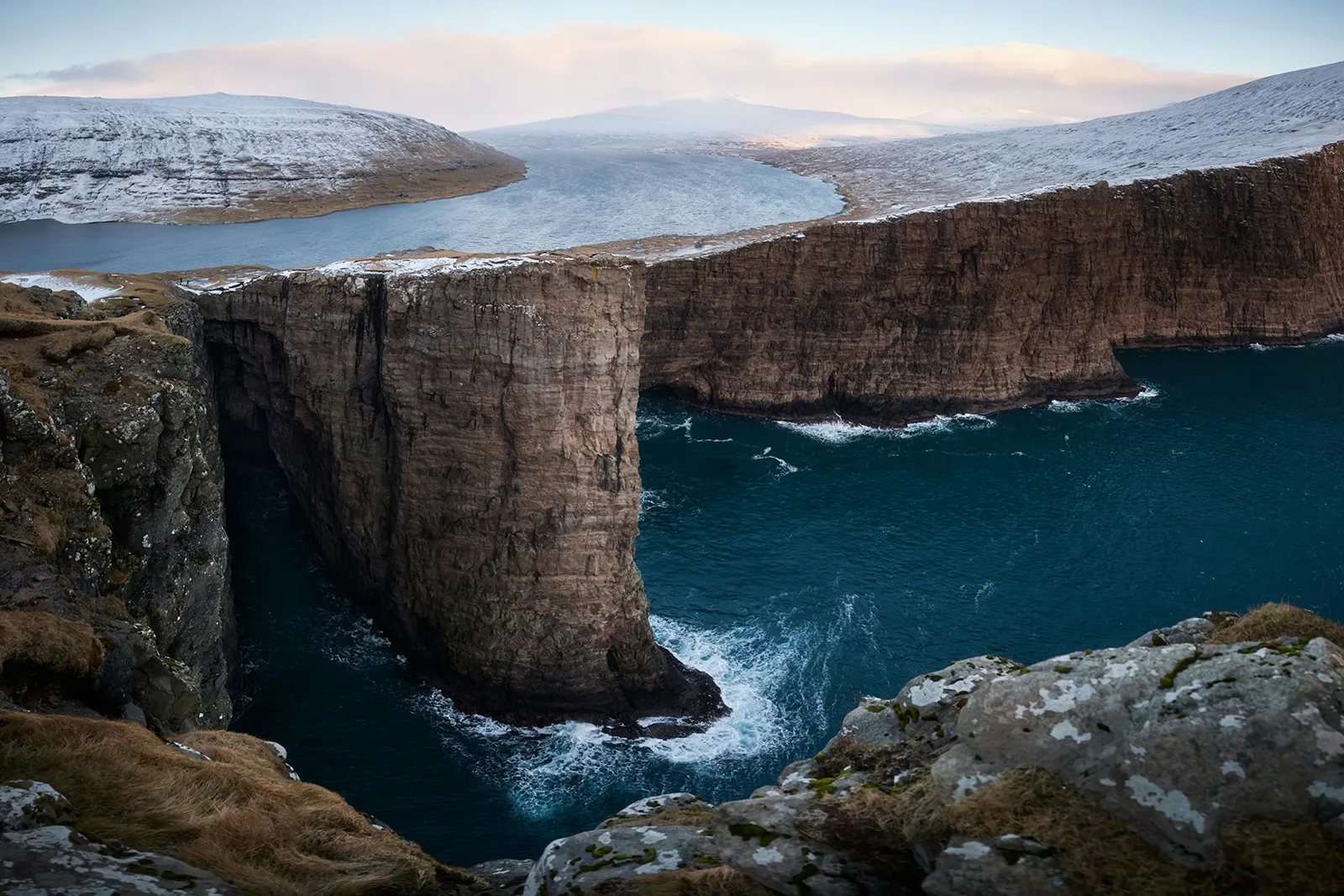
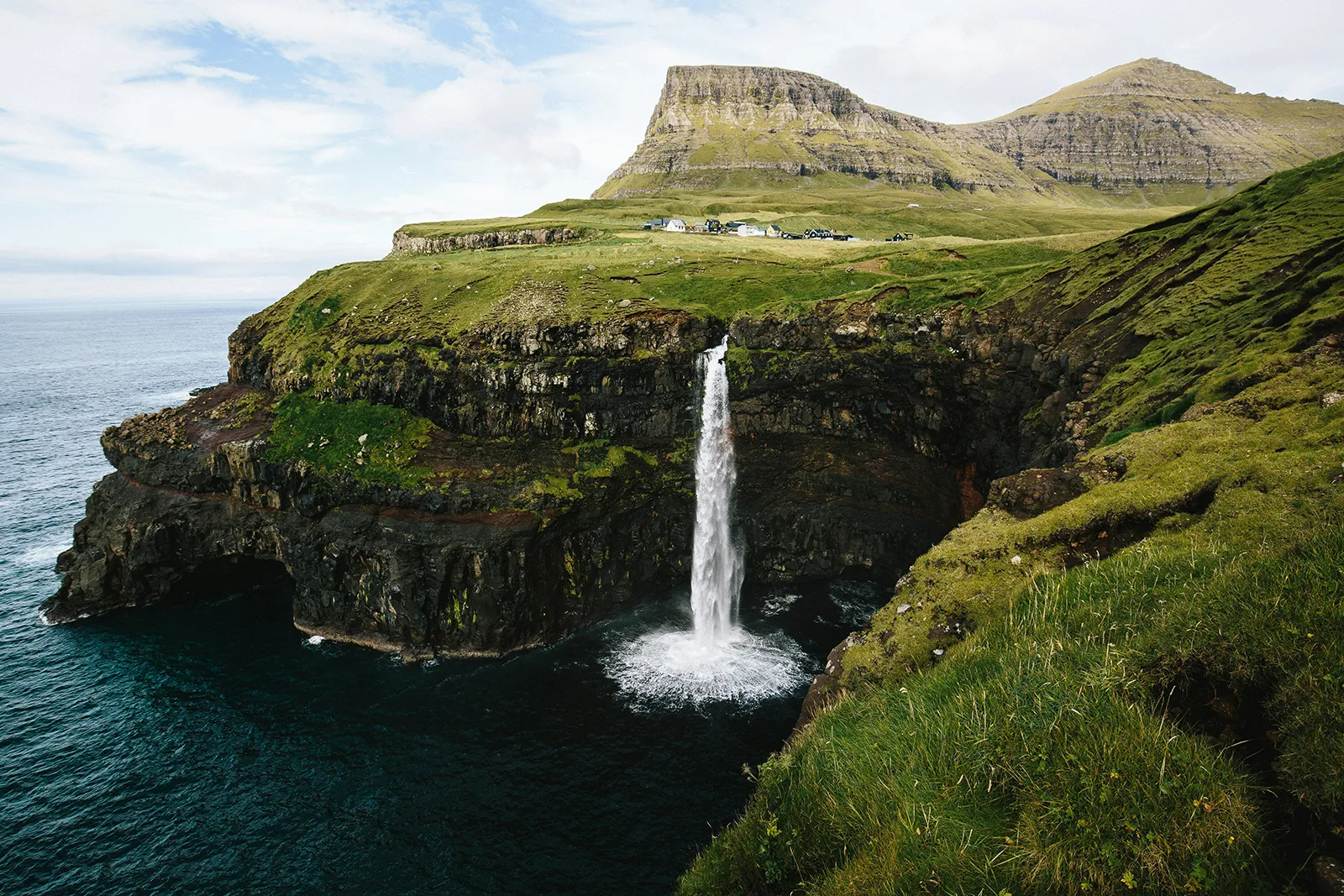
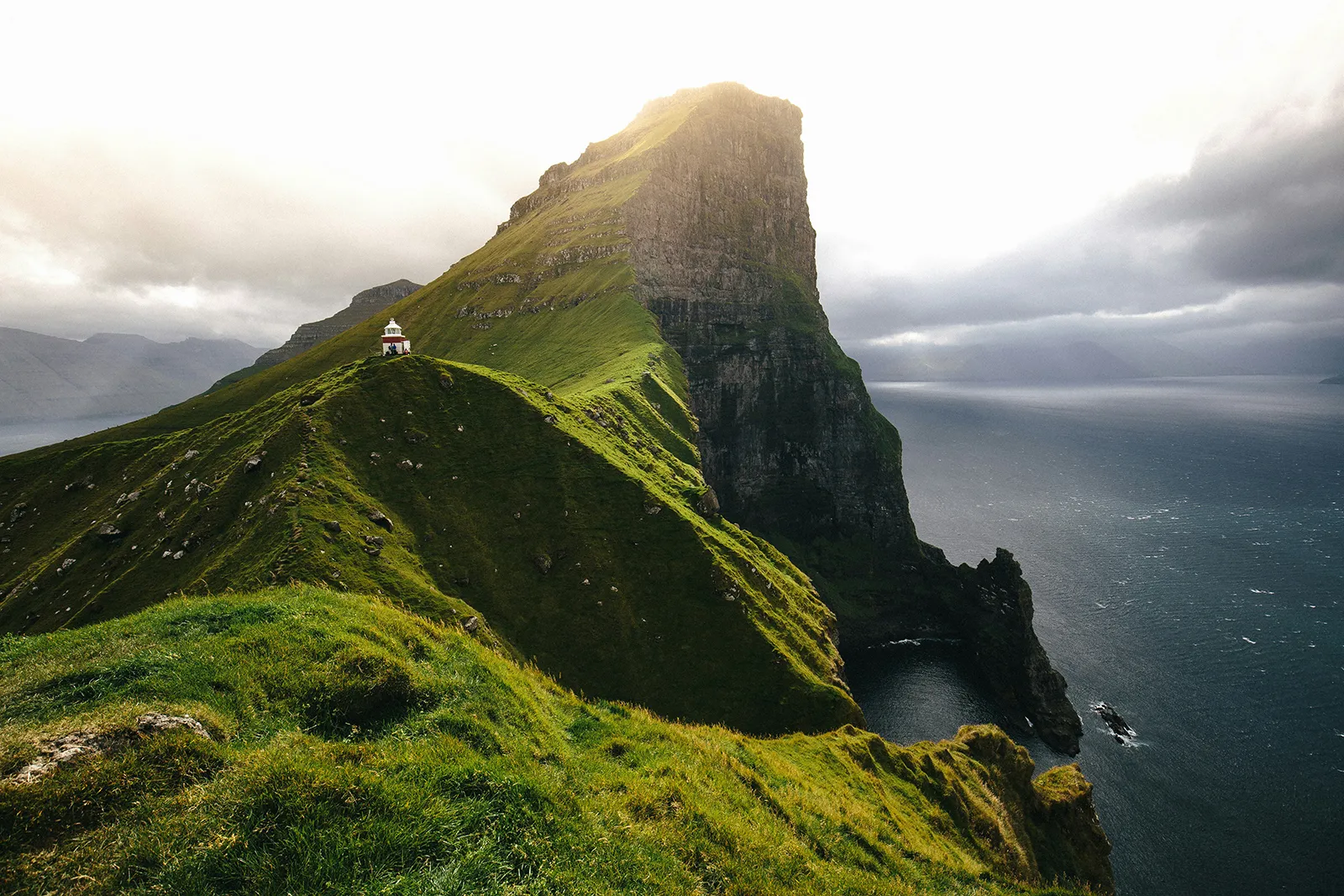
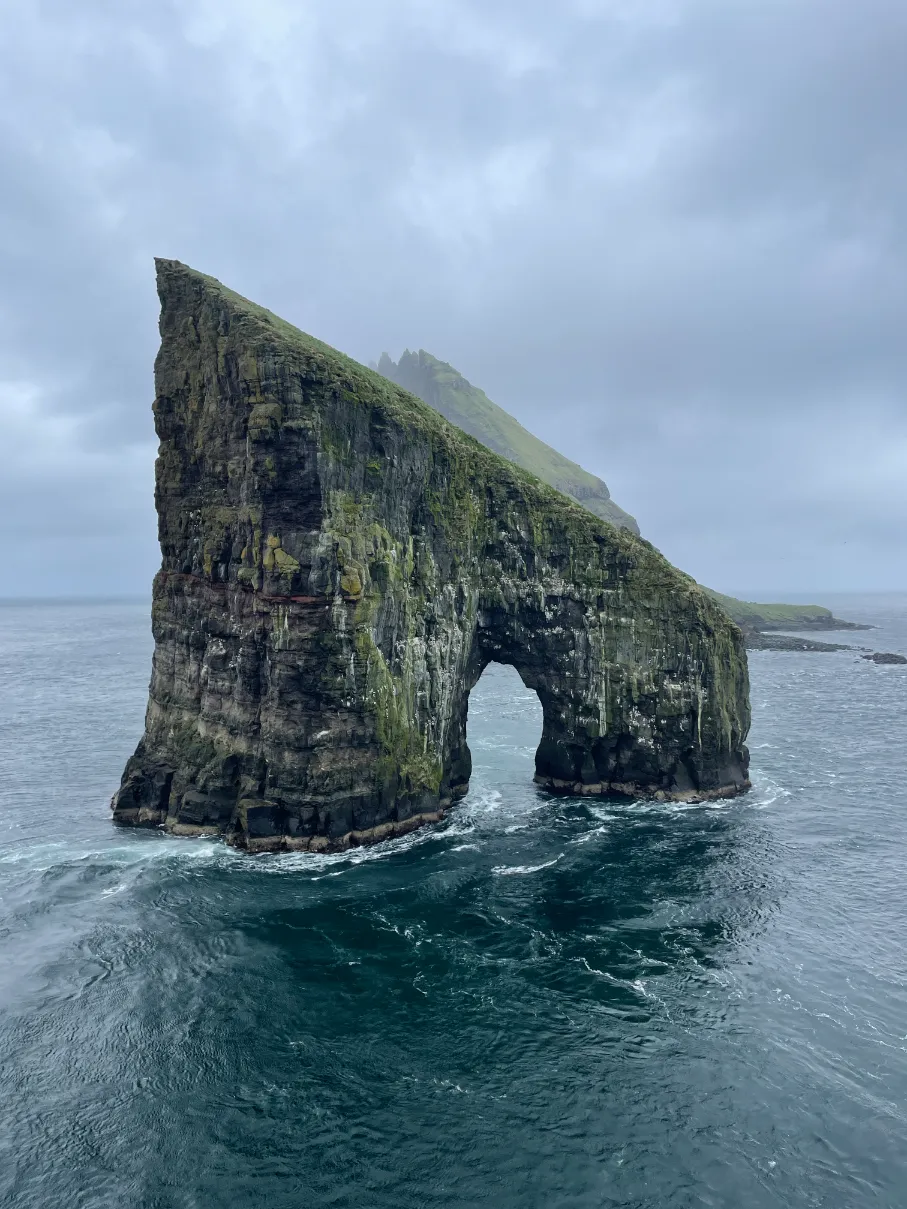
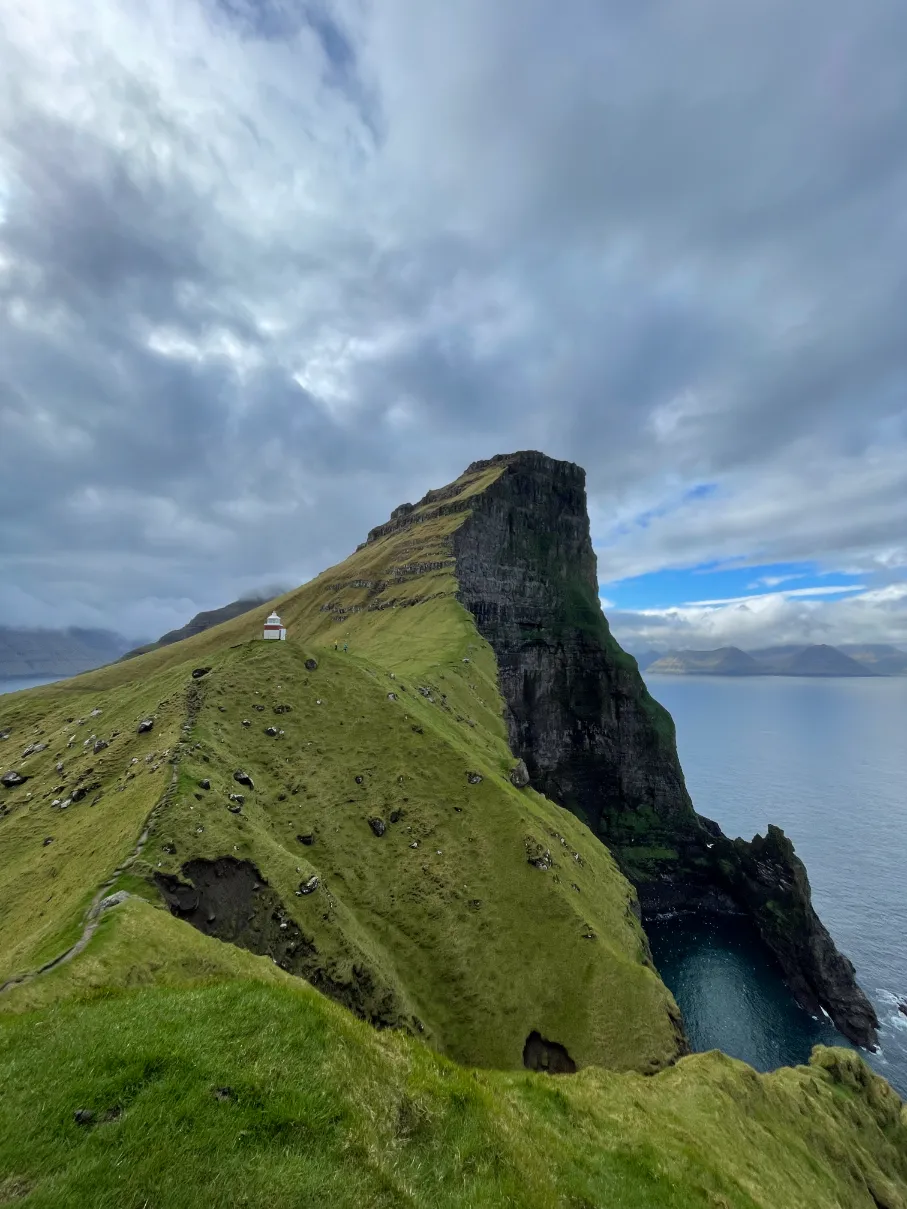
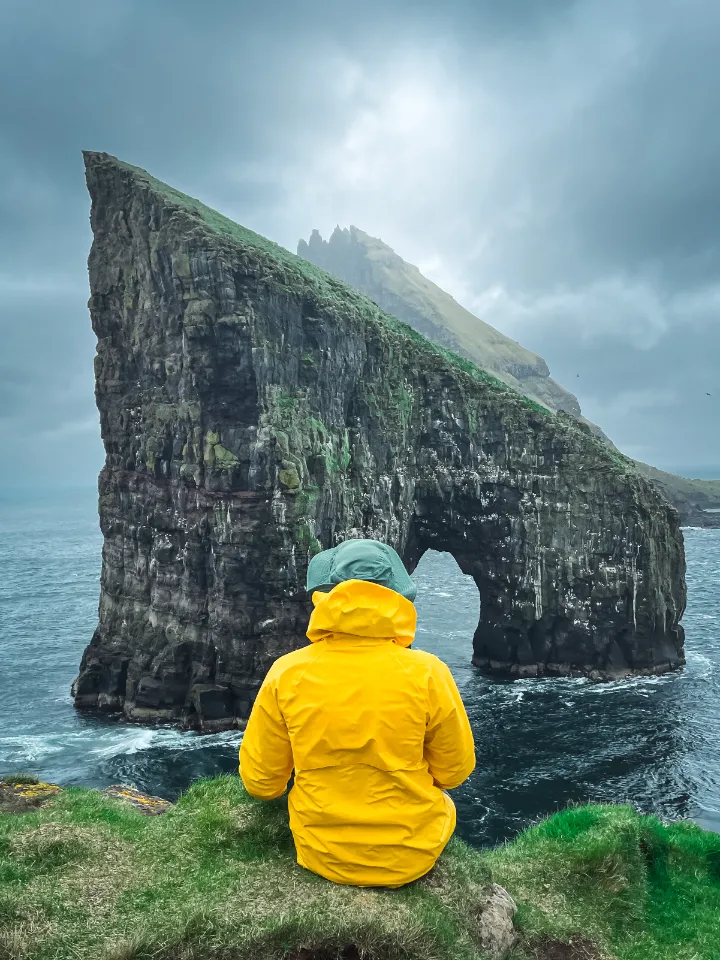
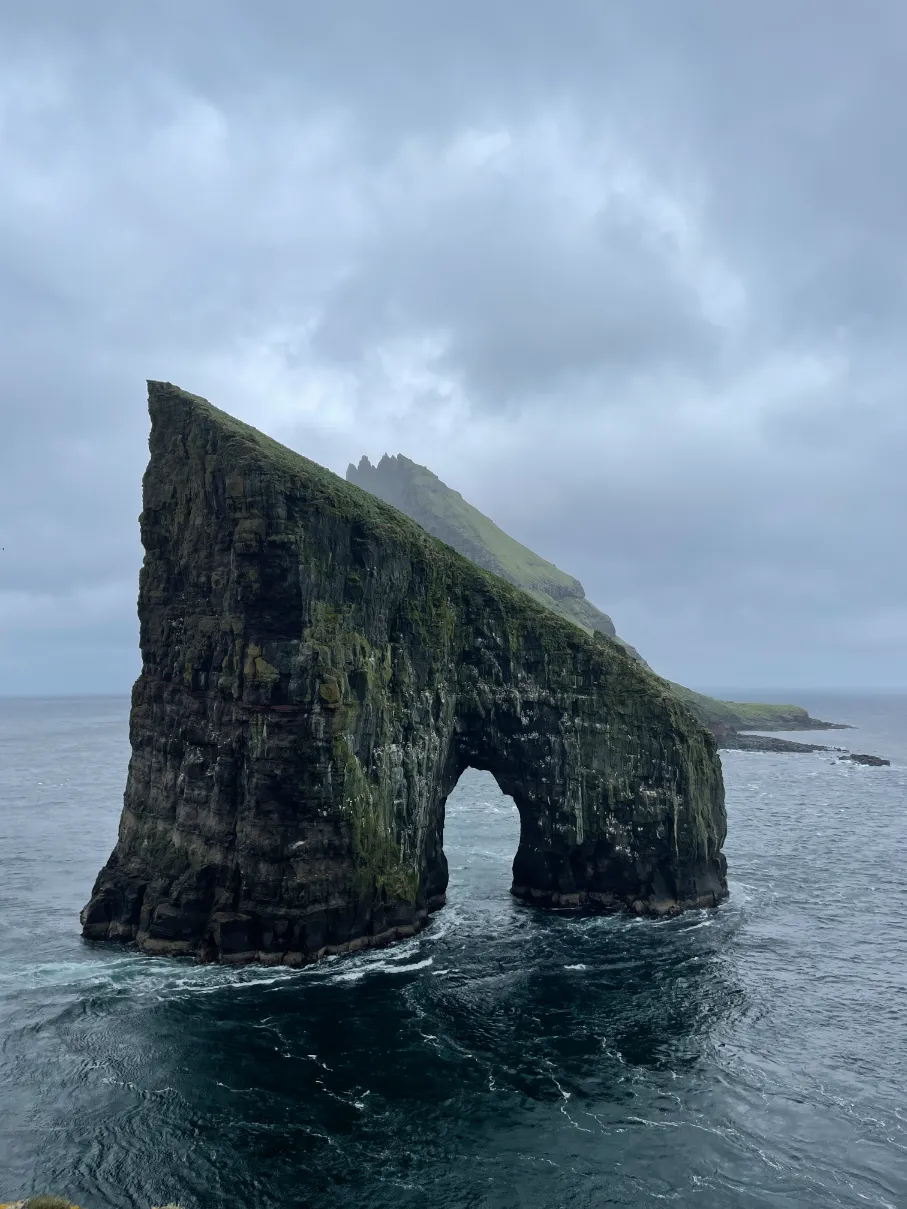
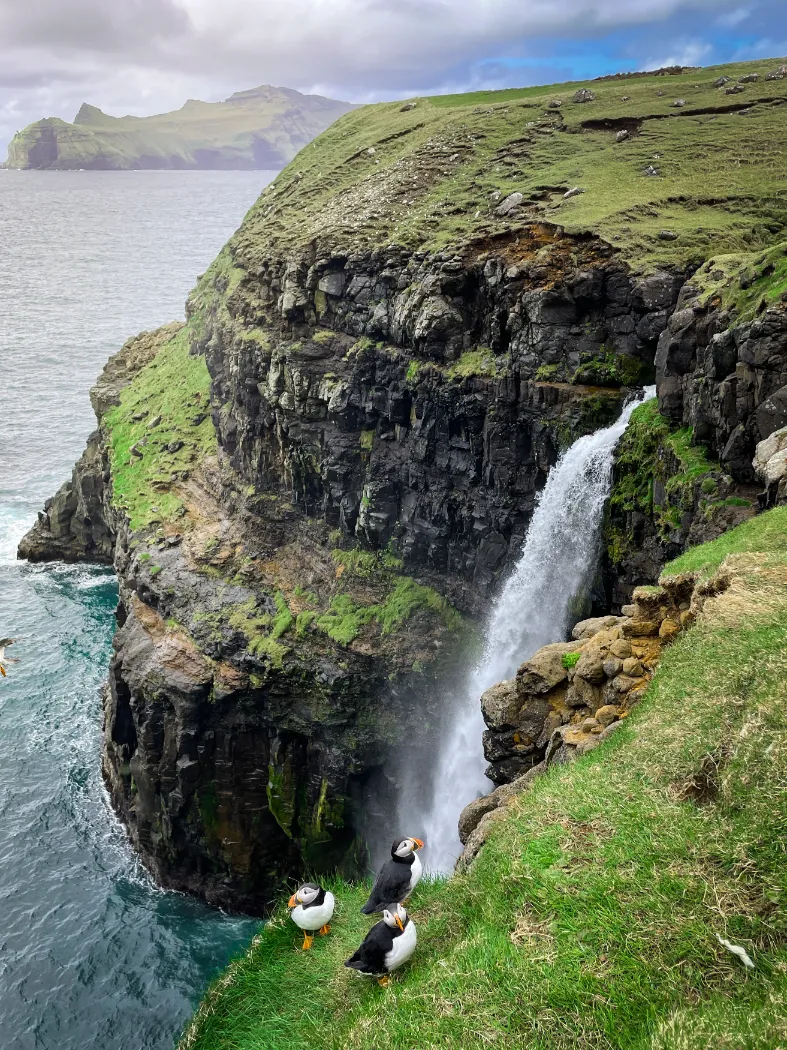
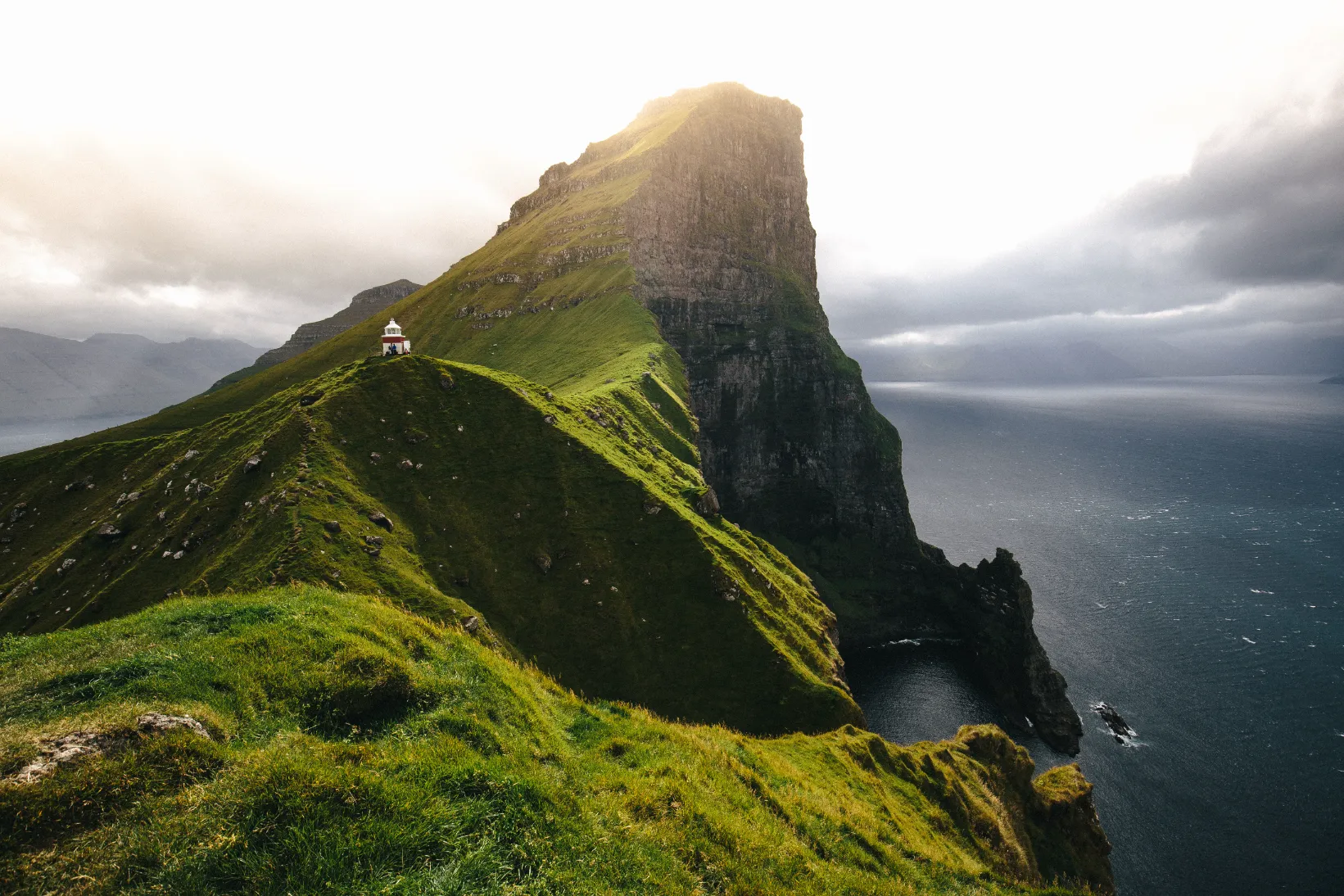
The highlights: the Múlafossur waterfall on Vágar, plunging 30 metres straight into the ocean. Lake Sørvágsvatn, which looks like it's hovering high above the sea. The village of Saksun, with its tidal lagoon that breathes in and out. Kalsoy island and the Kallur lighthouse, where the cliffs are so dramatically cinematic they featured in James Bond. Or the Drangarnir sea stacks, reached via a challenging 5-hour trek.
Between these landmarks lie countless nameless moments: a lone sheep on the road, a low cloud spilling into a valley, or a beam of light piercing through for 30 seconds before vanishing. In the Faroes, photography is a matter of reflex, not planning.
The weather: the one things you can't control
If you are waiting for a sunny day, you will be waiting a long time. The Faroe Islands see over 300 days of rain or fog a year. Temperatures rarely dip below 3°C or rise above 11°C. The wind is your constant companion, gusting up to 80 km/h, and sometimes blowing hard enough to turn a simple walk into a balancing act.
But that is exactly what makes the light here so magical. The clouds filter the sun, painting the landscape in shades of grey, green, and blue that you won't find anywhere else. When a ray of light breaks through, the hills light up like a stage. Then, the fog rolls back in. The rhythm is slow, unpredictable, and entirely hypnotic.
Pack layers. A waterproof shell, windproof trousers, and warm base layers. Not because it's extreme, but because the weather forecast here is more of a suggestion than a promise.
Food, community, and the island pace
Faroese cuisine is born from survival. Think fermented mutton (skerpikjøt), dried fish, and sometimes whale meat (a complex, deeply local subject). In recent years, Tórshavn has developed an unexpectedly vibrant culinary scene, once spearheaded by the Michelin-starred KOKS.
Most days, however, food is simple, warm, and honest. Fresh fish, lamb, and hearty bread. Coffee is everywhere, and it is excellent. The local beer is dark and rich.
Here, people live with nature, not against it. In a village of 30, everyone knows everyone, sheep roam free, and the rooftops grow. Things move slowly, not out of laziness, but out of respect. In a place where the ocean and the wind dictate the rules, there is no point in rushing.
The currency is the Danish krone, but cards are accepted everywhere. Faroese (close to Icelandic) is the language, but everyone speaks Danish and fluent English. Wi-Fi works seamlessly, and mobile coverage is rock solid. The infrastructure is thoroughly modern, even if the islands feel like they belong to another century.
Is this adventure for you?
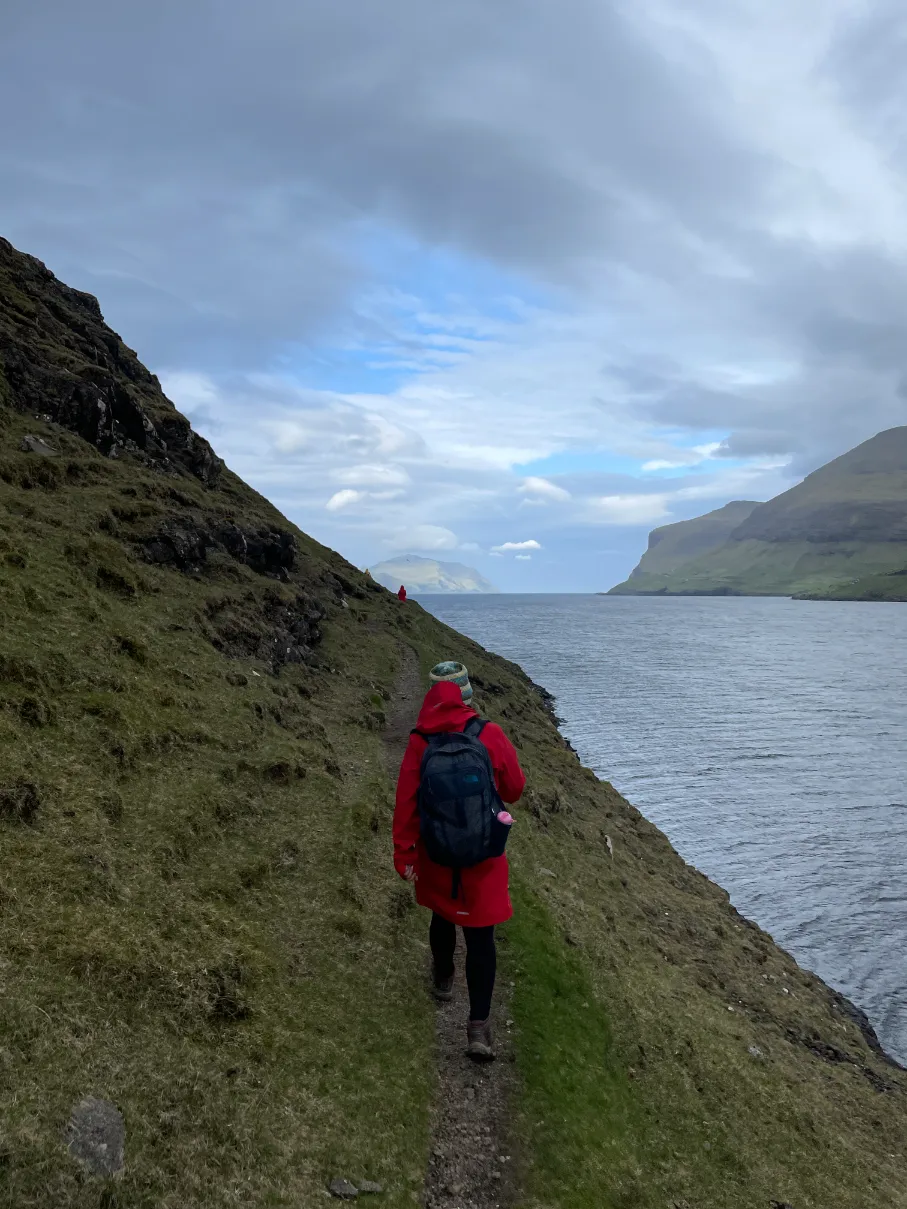
If you love hiking but are tired of manicured trails and crowded car parks, here you will walk on open grass, guided only by the stones laid down by those before you.
If you are a photographer, you will sleep with your camera, because the light shifts every 15 minutes and no two frames are ever the same.
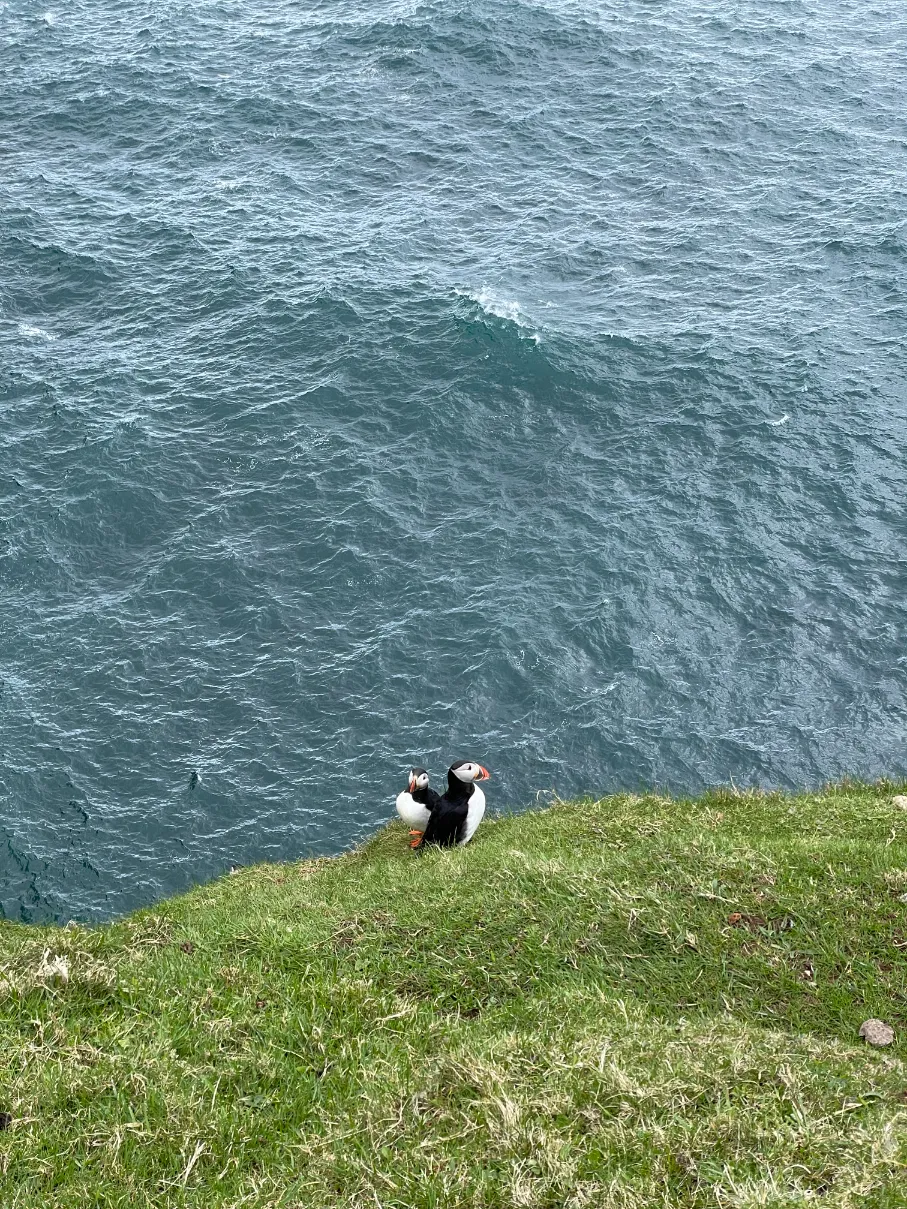
If endless silence recharges your soul rather than scares you, you will find it here in its purest form, broken only by the wind and the crying of seabirds.
If you are looking for mass tourism, resort weather, and nightlife, the Faroes are not for you. And there is nothing wrong with that. But if you want to stand on the edge of a cliff, with the ocean roaring 754 metres below and a wind that holds you upright, then you belong here.
8 days. 18 islands. A journey rewritten daily by the weather. The Faroe Islands do not promise comfort. They promise something much harder to find: a true sense of scale.
Picture yourself in the hot tub on the final day. The wind is howling. The clouds are so low you could almost touch them. Behind you are the emerald hills. Ahead of you, the open ocean. A warm drink in your hand, and quiet in your mind. Not because you've run out of thoughts, but because the Faroe Islands have given you back what the city steals: space. A place where the sheer scale of the wild shrinks you just enough to put everything back in perspective.
Author: Martin Bonov
Other articles about Faroe Islands