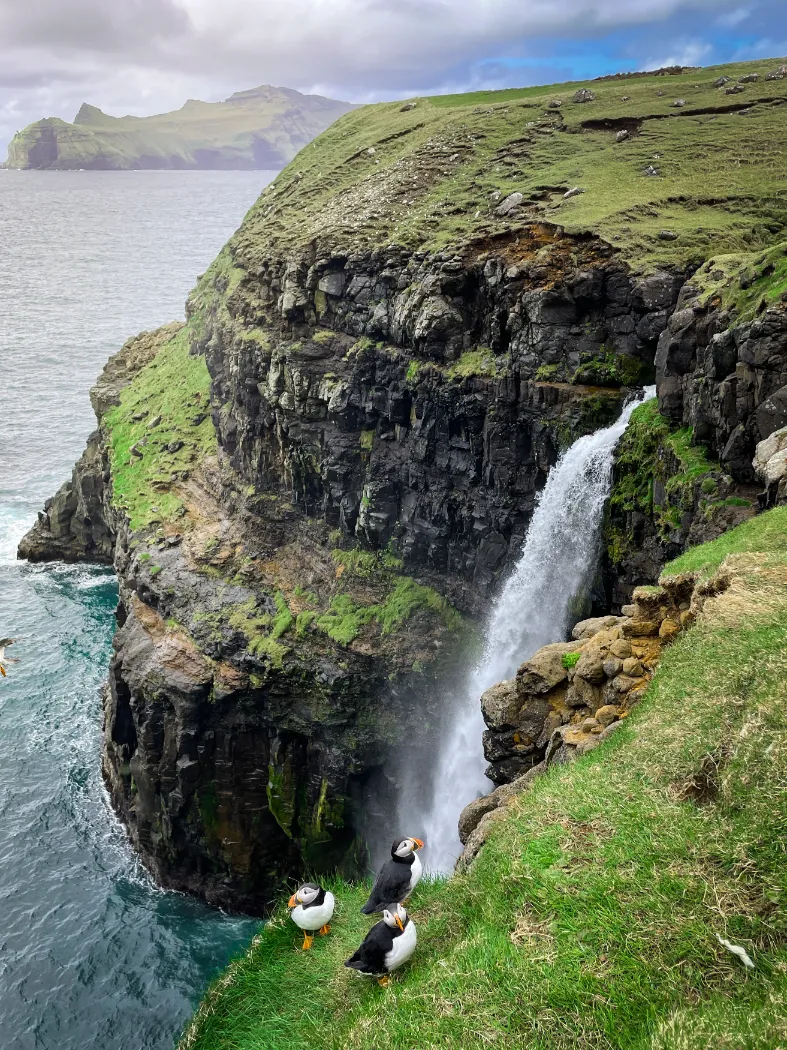
The Faroe Islands: A Complete Adventure Guide
You open your suitcase. Throw in a t-shirt, shorts, sunglasses. Then you check the forecast for the Faroe Islands: 8 degrees, 50 km/h winds, rain, fog, a fleeting moment of sunshine, then more rain. You close the suitcase. And you start all over again.
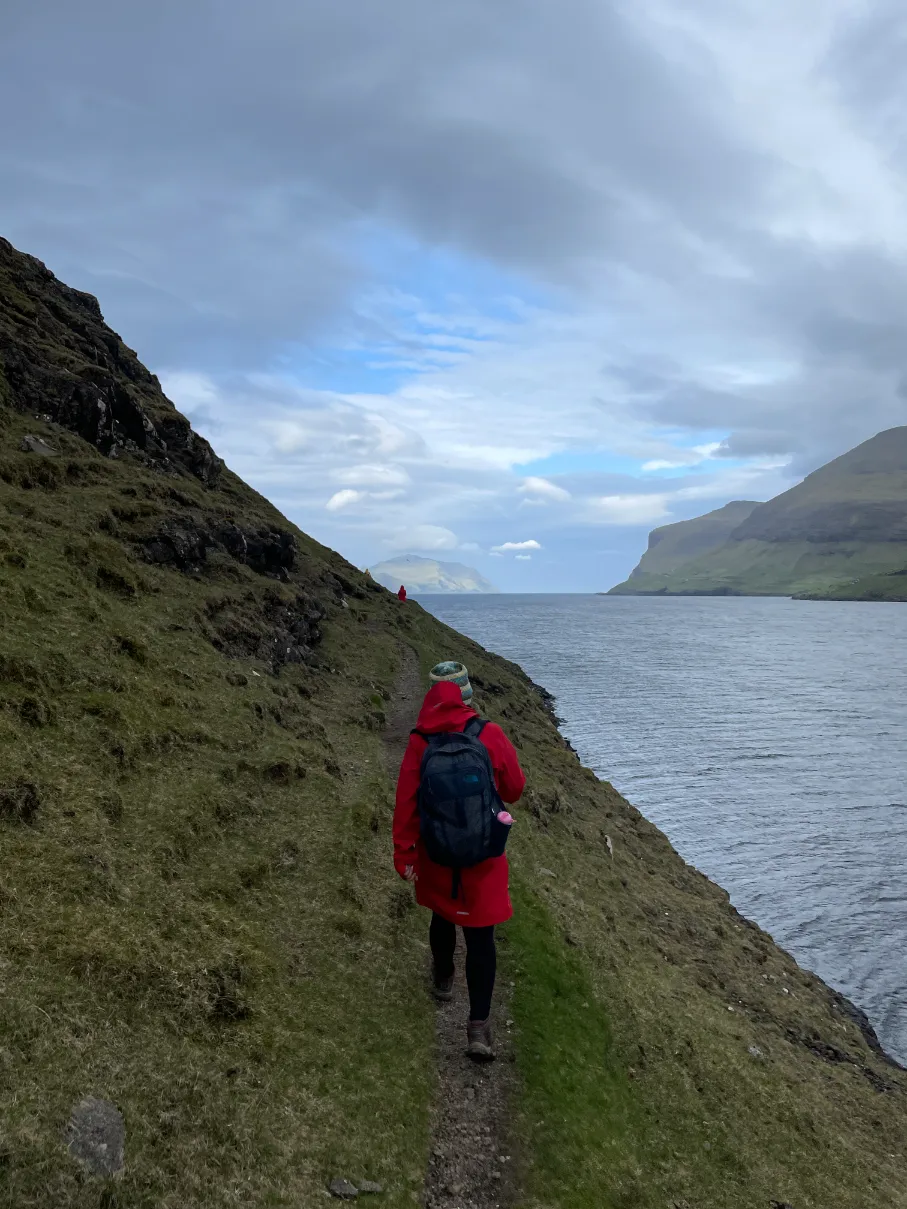
The Faroe Islands sit at 62 degrees north, right in the heart of the North Atlantic. The climate is subpolar oceanic, which in reality means: wet, windy, cool and utterly unpredictable. Summer temperatures (June to August) hover between 8 and 14 degrees. Winters rarely dip below freezing, but the relentless wind and moisture make a 5-degree day feel like minus 5.
Prepping for the Faroes is not complex, but it is highly specific. You are not packing for a resort, nor for an Arctic expedition. You are packing for a place where four seasons can roll through in a single afternoon and where "waterproof" isn't a feature—it’s your lifeline.
Getting there: Flights and logistics
The Faroe Islands have just one airport: Vágar Airport (FAE). The main carrier is Atlantic Airways, with daily flights from Copenhagen (around 2 hours). SAS also operates seasonal routes. From Bulgaria, the most seamless connection is Sofia - Copenhagen - Vágar, with a single layover.
The Faroe Islands are a self-governing territory within the Kingdom of Denmark, meaning they are not part of the EU or the Schengen Zone. However, Bulgarian citizens do not need a visa for stays of up to 90 days. A valid passport or ID card is all you need.
The currency is the Danish Krone (DKK). Cards are accepted everywhere, even in the smallest hamlets. Cash is virtually obsolete, though it never hurts to carry a tiny amount just in case.
Getting from the airport to the capital, Tórshavn, takes about 45 minutes by car. The road takes you through an undersea tunnel (yes, beneath the ocean floor) featuring its own built-in roundabout and art installation. Welcome to the Faroes.
The gear: Layering is everything
The rule of thumb here is simple and applies across the entire North Atlantic: three layers.
Base layer (next to skin): Merino wool. Absolutely no cotton, and skip synthetics for your base. Merino regulates your body temperature, wicks away sweat, and stays odour-free even after three days of trekking. A long-sleeve merino top and thermal bottoms are investments you won't regret.
Mid layer (insulation): Fleece or a lightweight down gilet. Something that traps warmth without adding bulk. It rarely gets bone-chillingly cold in the Faroes, so a heavy expedition puffer is overkill. But it’s always breezy enough to need that solid barrier between your base and your shell.
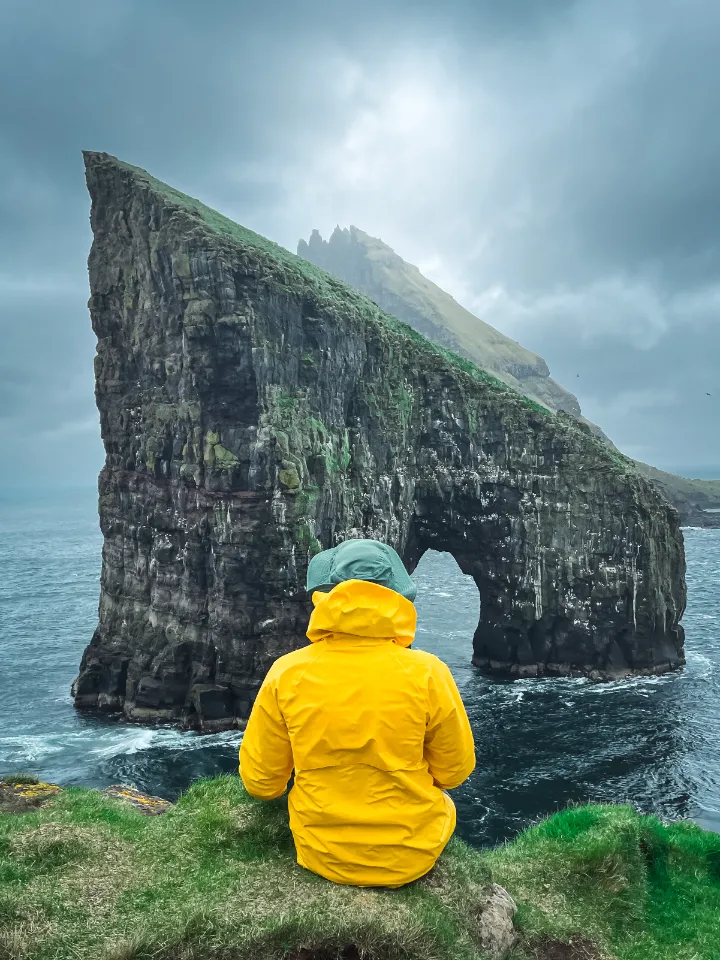
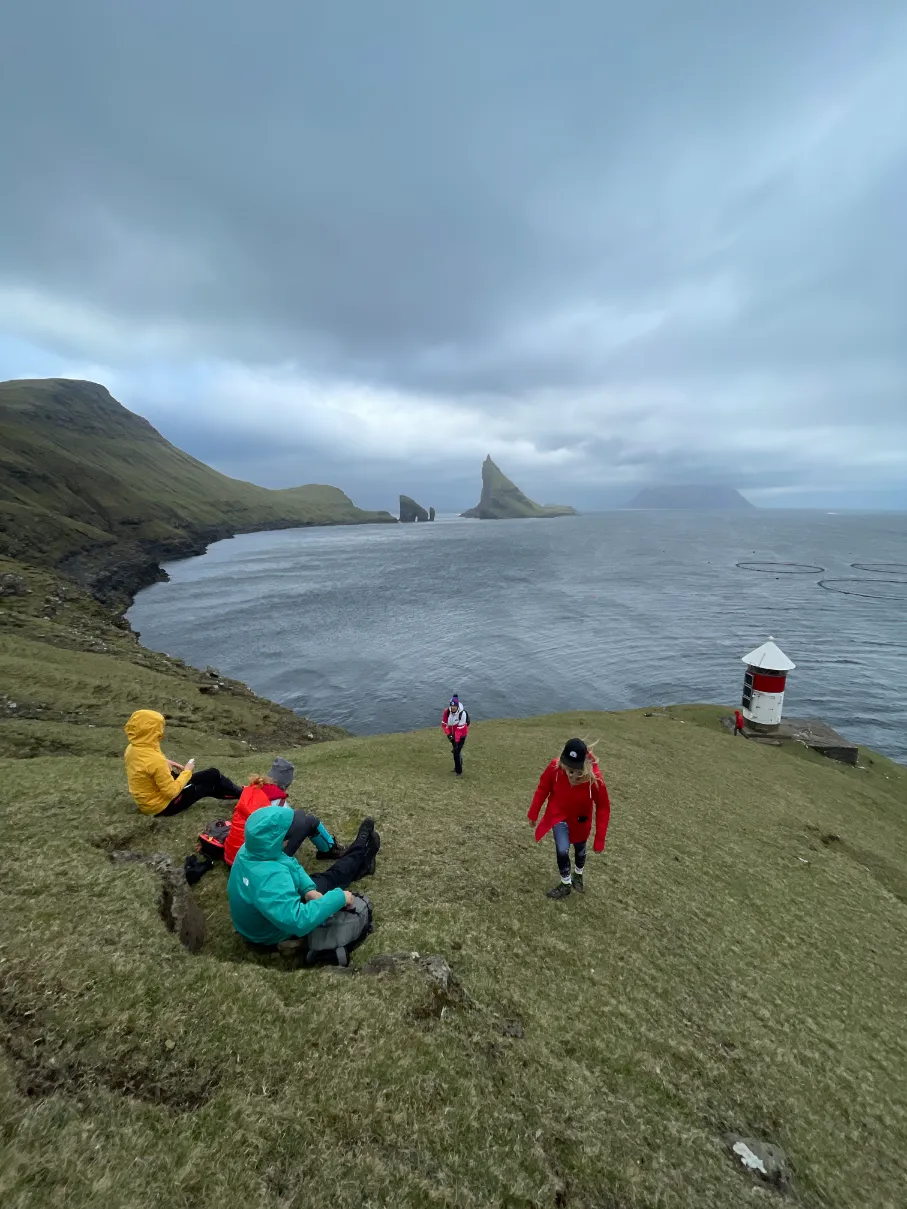
Outer layer (protection): A proper waterproof jacket with a hood. Not "water-resistant". Waterproof. Gore-Tex or similar. The rain here flies sideways, the wind will force moisture through any weak seam, and the mist is often so dense you'll get soaked without a single raindrop falling. Make sure your jacket has an adjustable hood that seals around your face and high-quality taped zips.
Waterproof trousers: Non-negotiable. Don't leave these behind. Pull them on in the morning and don't take them off until the day is done.
Footwear: Sturdy hiking boots with solid ankle support and a waterproof membrane. You will be walking through wet grass, thick mud, slick rocks, and sheep droppings (literally everywhere). Trainers won't cut it. Sandals are useless. Bring worn-in, reliable boots that have already proven themselves on the trail.
Gear and essentials
A daypack (25-35 litres) for your hikes, either fully waterproof or fitted with a rain cover. Inside, keep: a water bottle, trail snacks, a spare base layer, lens wipes (if you carry a camera), and sunscreen (yes, even through the clouds).
Camera gear: If you are serious about photography, pack a tripod (lightweight but sturdy—the wind is no joke), 2-3 lenses, and a weather shield for your camera body. Phone shooters should at least bring a protective waterproof case. Carry spare batteries, as the cold and damp drain them fast.
Gloves: Lightweight liner gloves with touchscreen-compatible fingertips. Even in mid-summer, your hands will freeze in the wind, especially on exposed ridges and cliffs.
Beanie or Buff: Essential for the wind. A neck gaiter that you can pull up over your ears is a game-changer. Sunglasses: Yes, pack them. When the sun does break through, the glare off the water and the vibrant green hills is blinding.
First aid: Basic medication, blister plasters (crucial for damp-ground hiking), sunscreen, and lip balm. You’ll find pharmacies in Tórshavn and larger villages, but there is nothing out on the trails.
The weather: Embrace it, don't plan around it
A weather forecast in the Faroes is reliable for about three hours max. Anything beyond that is pure guesswork. You might wake up in heavy fog, hike under sunshine at noon, get poured on at 3:00 PM, see the sun again at 5:00 PM, and end the day in a storm. Or all at once.
The best app for tracking local weather is yr.no (the Norwegian Meteorological Institute). Check it hourly, but don't hold your breath when things change. They will.
Temperatures: June-August ranges from 8-14°C, September drops to 6-10°C, and winter hovers around 2-6°C. But the numbers don't tell the whole story. A 10-degree day with a 40 km/h wind and 95% humidity feels closer to 2°C. Always dress for colder weather than the forecast suggests.
The ultimate tip: Accept that you are going to get damp. Not necessarily from rain, but from the air itself. The moisture is so persistent that after two days, you stop noticing it. As long as your layers are right, damp doesn't mean cold. It just means you're in the Faroe Islands.
On the ground: Driving, language, food
Driving: You'll drive on the right side of the road. Routes are narrow, winding, and often single-track with designated passing bays. Speed limits rarely exceed 80 km/h. The tunnels are long—some submerged—and come with their own set of rules, like single-lane priority zones. Renting a car is practically essential unless you are on a pre-booked guided tour.
Language: Faroese (closely related to Old Norse). Danish is the second official language, and English is widely spoken. You won't face any communication barriers here.
Food: Faroese cuisine is built around fish, mutton, potatoes, and fermented flavours. Fermented lamb (skúrvur) and air-dried fish (ræst fiskur) are traditional staples well worth trying. The dining scene in Tórshavn is surprisingly world-class. If you prefer to self-cater, local supermarkets (Miklagarður, Bónus) are fully stocked.
Alcohol: Only sold in state-run Rúsdrekkasøla Landsins stores. Prices are high, keeping in line with Scandinavian standards. If you want beer or wine for your trip, pick it up duty-free at the airport.
Tipping: Not expected, but always appreciated for great service.
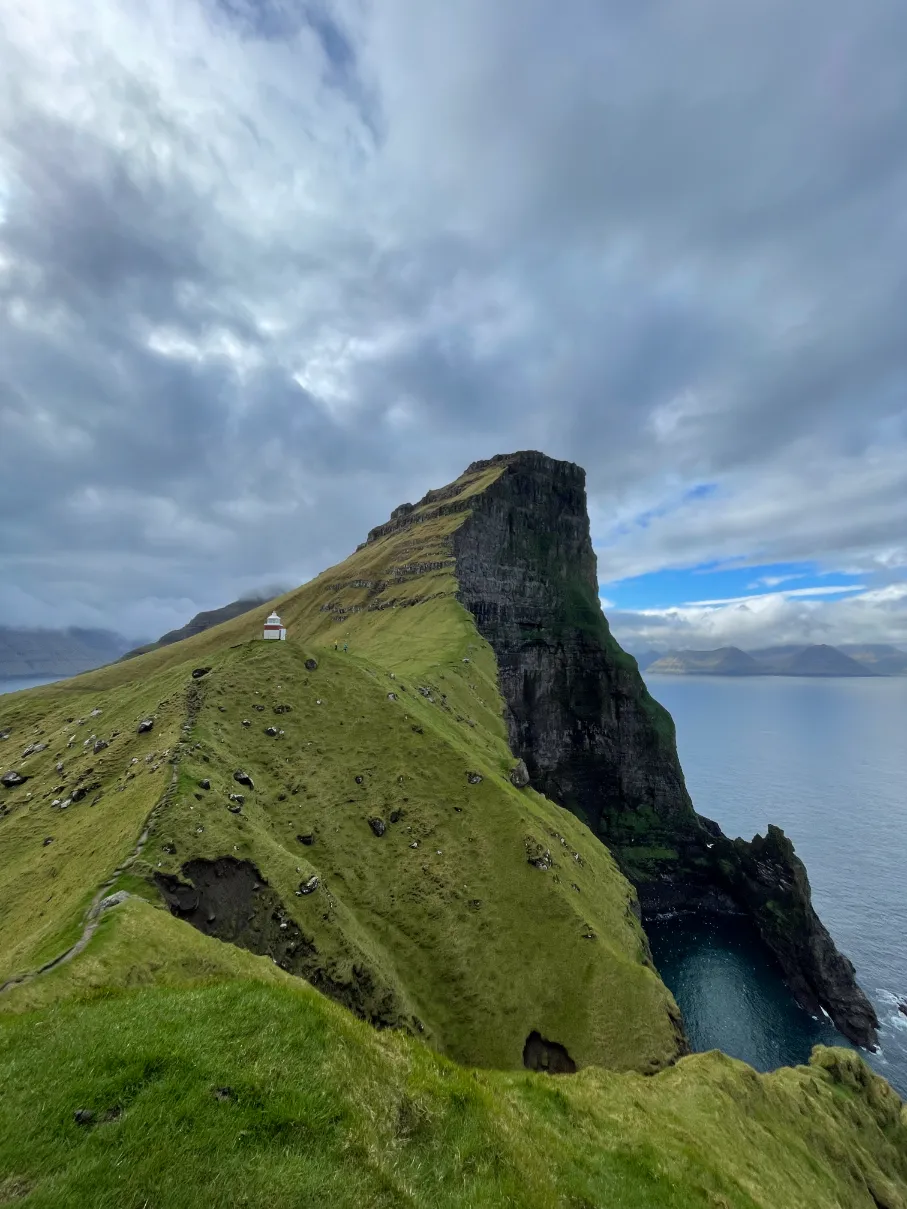
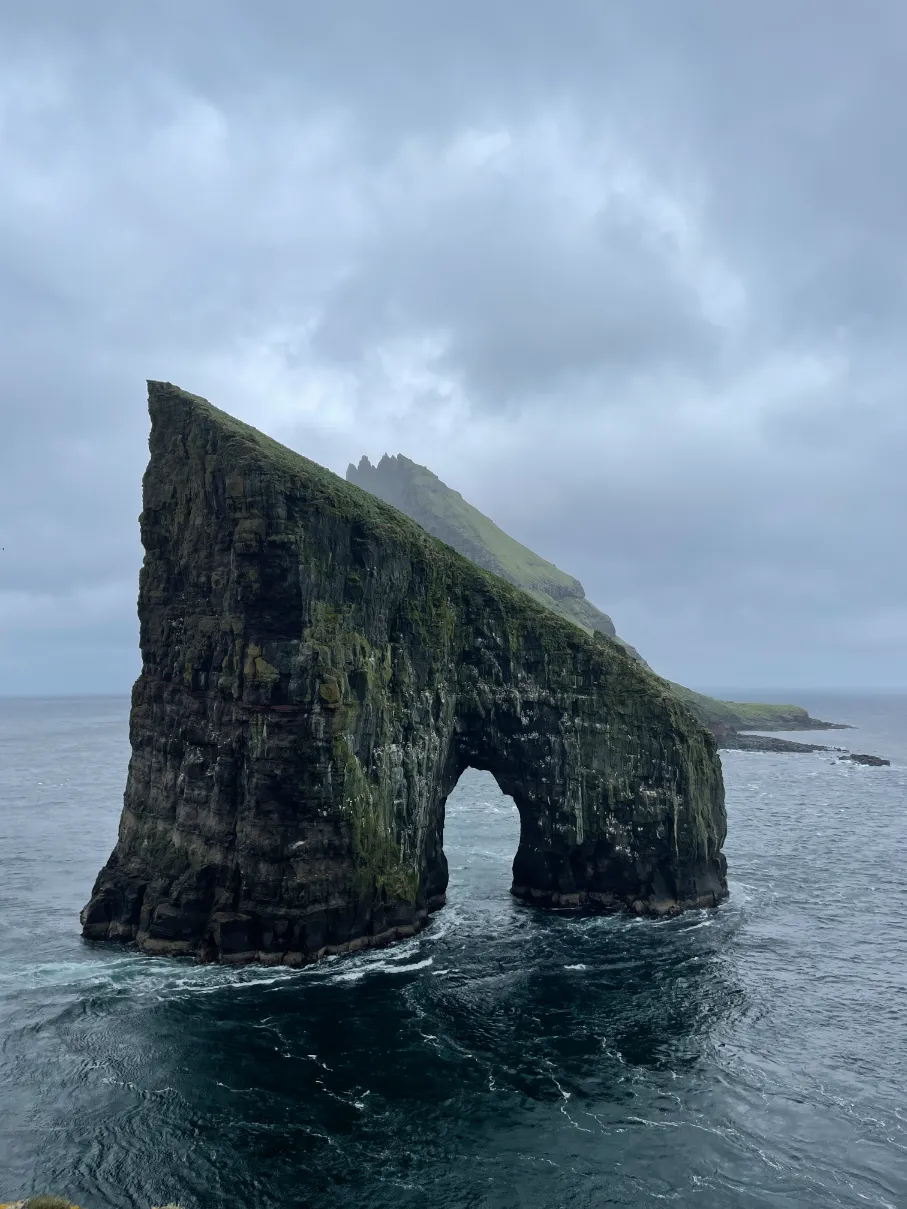
Connectivity: Wi-Fi is readily available. Mobile coverage spans most inhabited islands, but expect the signal to drop or disappear completely on remote treks like Drangarnir or Kallur.
Physical prep: What to expect on the trail
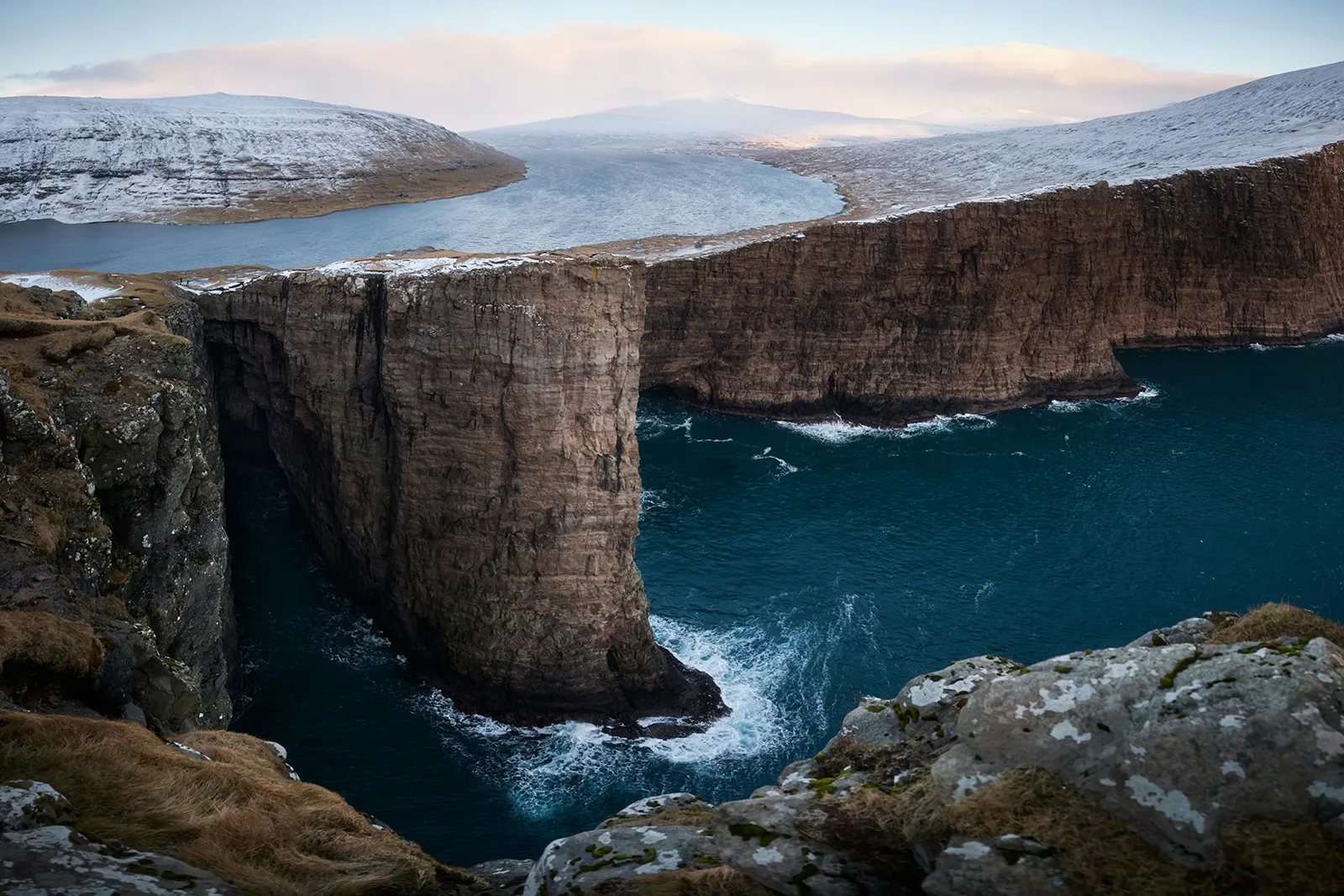
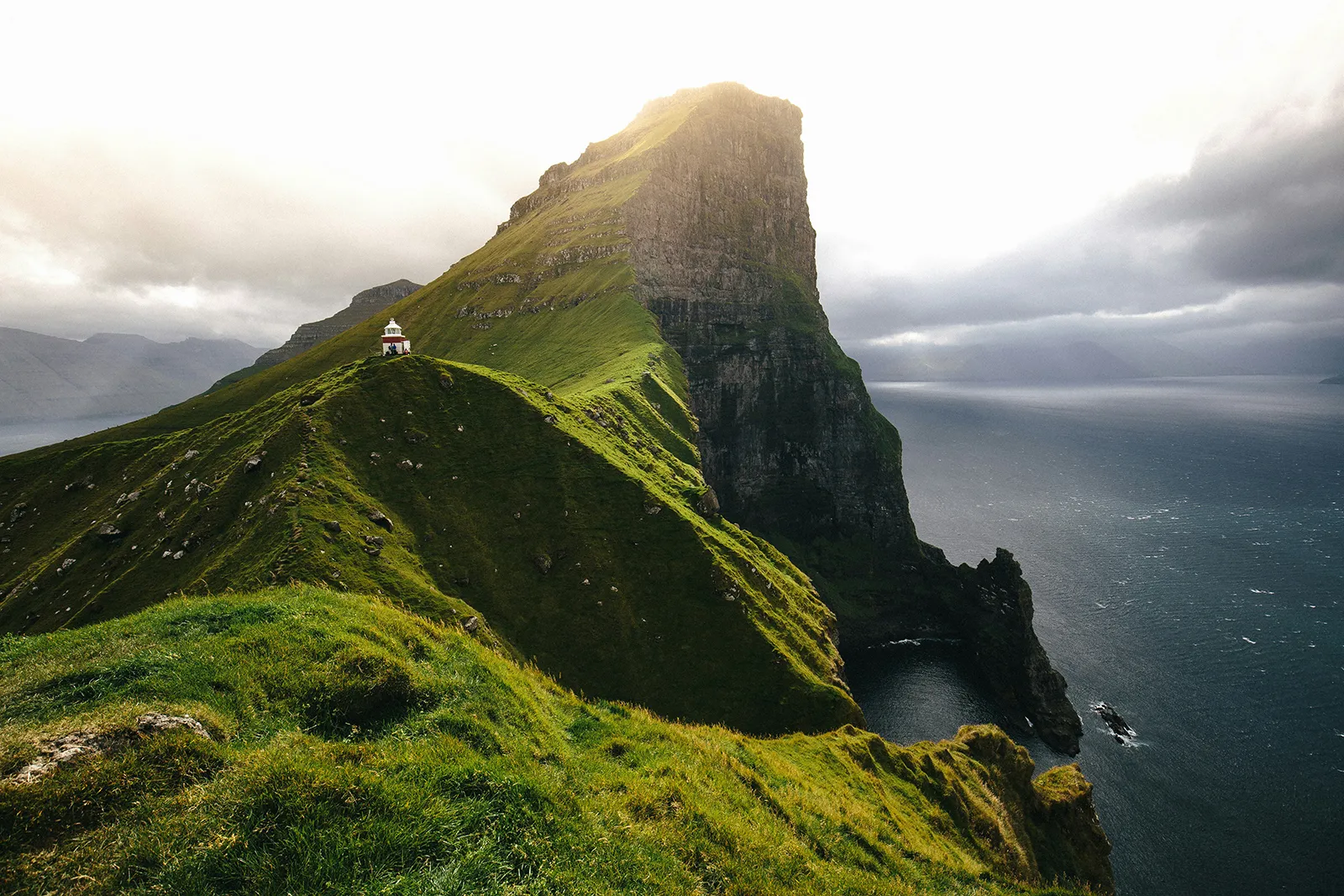
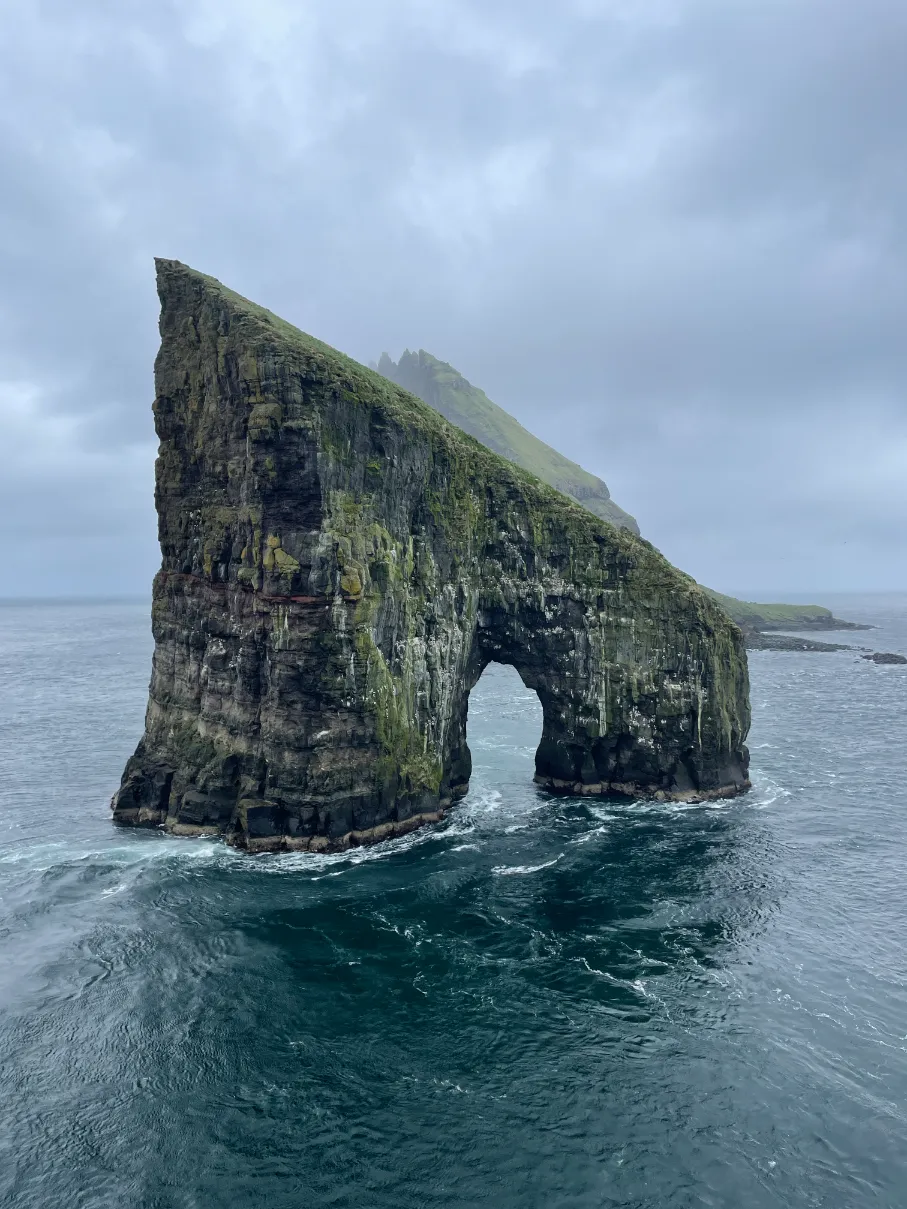
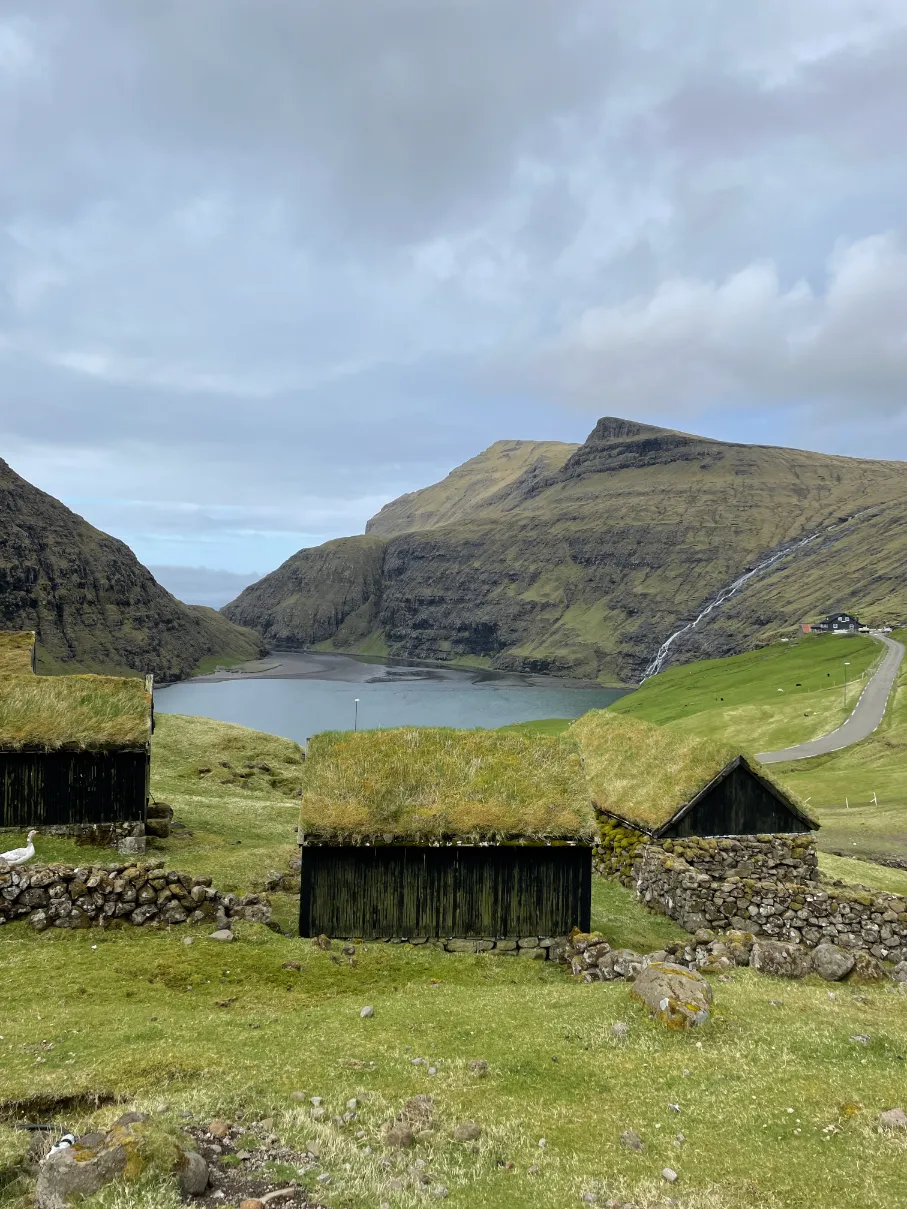
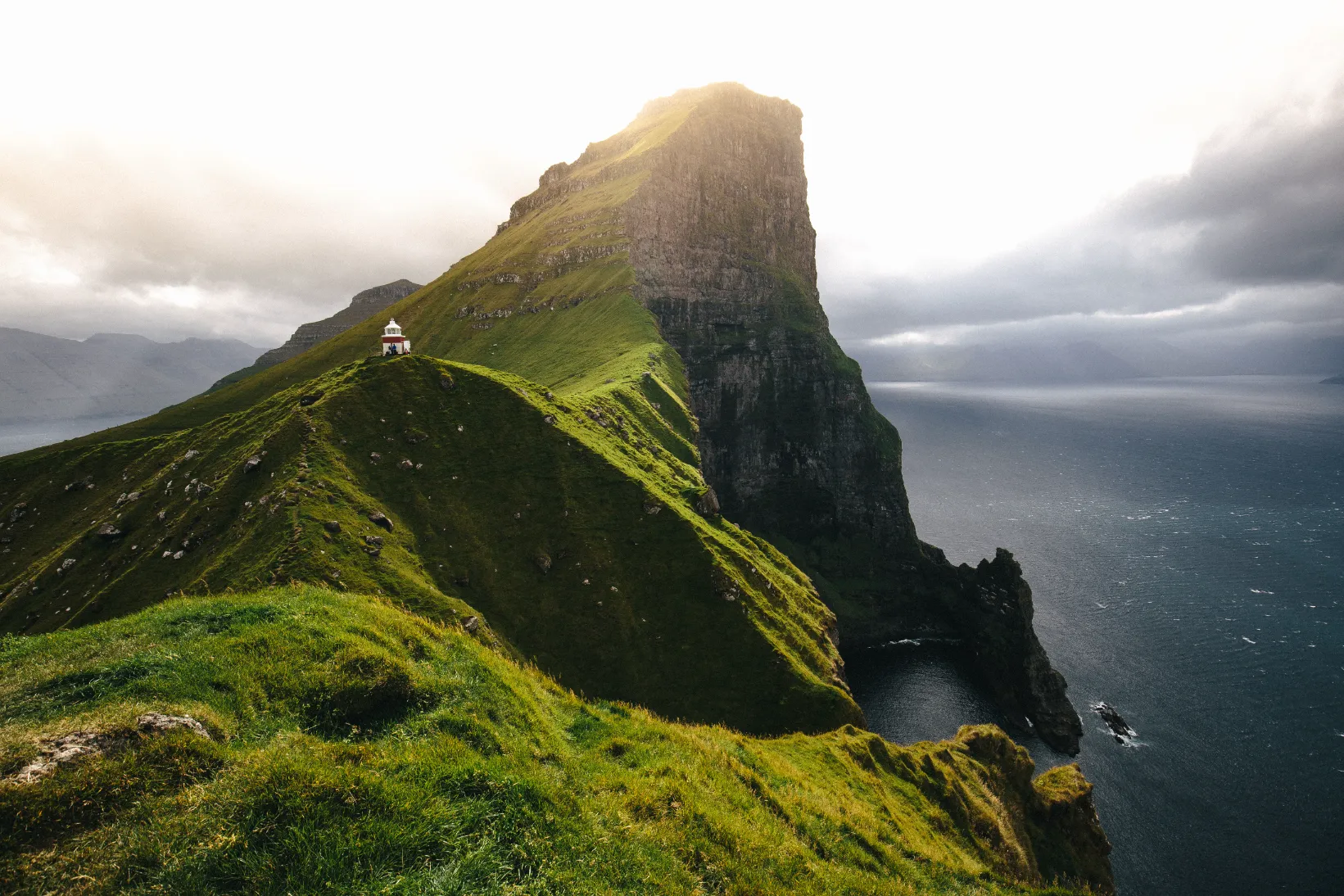
You don’t need to be an elite athlete to hike the Faroes. The most demanding trek (Drangarnir) takes about 5 hours round trip and is moderately challenging. Popular spots like Kallur, Sørvágsvatn, and Saksun are shorter 1-to-2-hour walks over relatively straightforward terrain.
But the ground is wet. Always. You’ll be navigating soggy grass, mud, and slick, moss-covered rocks. Ankle support is key. Trekking poles are a great help, though not strictly mandatory.
If you hike occasionally (covering 5-6 km a couple of times a week), you’ll be fine. If not, start conditioning your legs at least a month before you arrive. It’s not about the distance—it's about the uneven terrain and the headwind adding resistance to every single stride.
Altitude sickness isn’t a factor here. The highest peak in the Faroes is Slættaratindur at 880 metres, and your runs and hikes will rarely climb past 400 metres.
Above all: listen to your body. If you're tired, call it. If you're cold, pull on another layer. There is no room for ego in the Faroes—only for comfort and safety.
Time to pack. Merino tee, fleece, Gore-Tex shell. Waterproof trousers. Broken-in boots. Camera in its dry bag. Lens wipes. Passport. You are ready. Not for a lounging holiday, not for a museum hop, not for shopping. You are ready for a wild corner of the earth where the wind rules, the rain flies horizontally, and the hills are green beyond belief. The Faroes don't ask for extreme training. They just demand the right gear—and a willingness to get a little wet, wind-whipped, and incredibly inspired.
Author: Martin Bonov
Other articles about Faroe Islands