Faroe Islands Weather: Seasons, Temperatures, and What to Expect
The morning brings sunshine. By noon, thick fog. The afternoon, rain. By evening, the sun is back, but at a different angle, piercing through clouds that race so fast your eyes can barely keep up. Then the wind hits, stopping you dead in your tracks. Then silence. Then rain again. All of this in just eight hours. On the Faroe Islands, the weather isn't just something you adapt to. It is a co-author of your adventure.
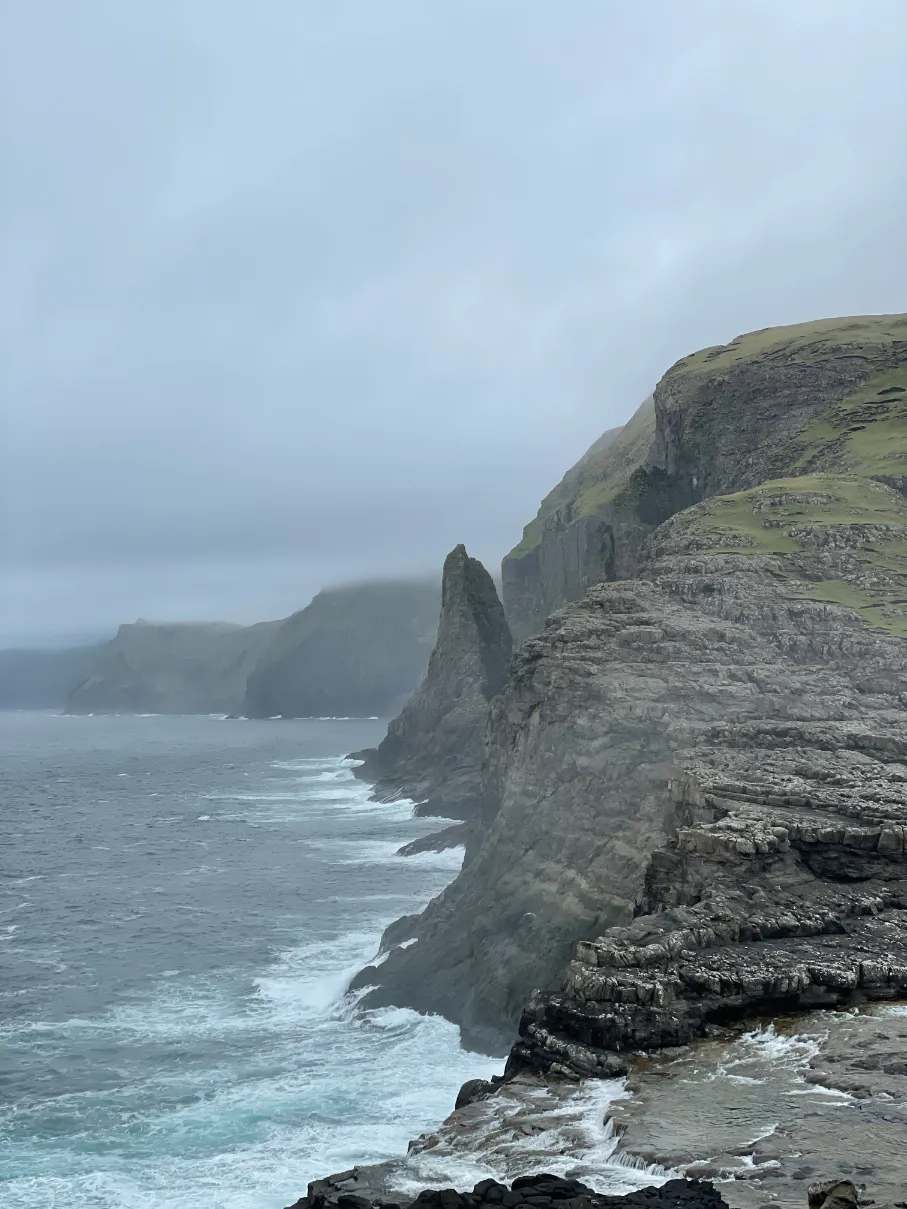
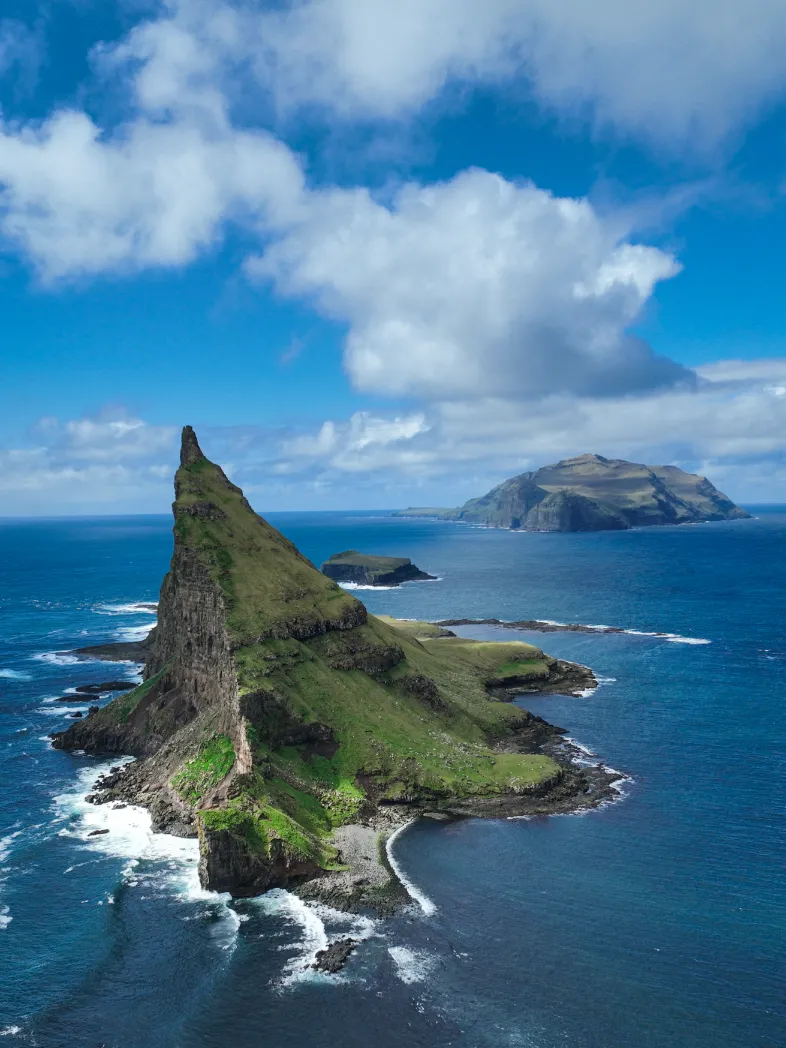
The Faroe Islands sit at 62 degrees north, right in the heart of the North Atlantic between Iceland and Norway. The ocean is everywhere, bringing the tides, the damp, and the wind. It's a marine subarctic climate, which essentially means one thing: mild, wet, and utterly wild. Winters are surprisingly gentle (rarely dipping below freezing), and summers are crisp (seldom breaking past 13°C). But within those modest numbers lies a meteorological chaos that is as breathtaking as it is unpredictable.
The Faroe weather forecast is less of a prediction and more of a polite guess. The locals have a saying: "If you don't like the weather, wait 15 minutes." It features no exaggeration whatsoever.
Summer (June, July, August): Endless Light
Summer is the prime time to explore, and the reason is simple: light. Come June, the sun dips below the horizon around midnight only to rise again two hours later. It never truly gets dark. The twilight is a soft, endless lavender-grey. You can go trekking at 11pm and take photos as clear as if it were mid-afternoon.
Temperatures hover between 9°C and 13°C. It's never warm, but it's not bone-chilling either. Rain sweeps in and out, often gone in minutes. Fog will wrap around the peaks, then suddenly lift to unveil a dramatic landscape that was completely hidden a heartbeat ago.
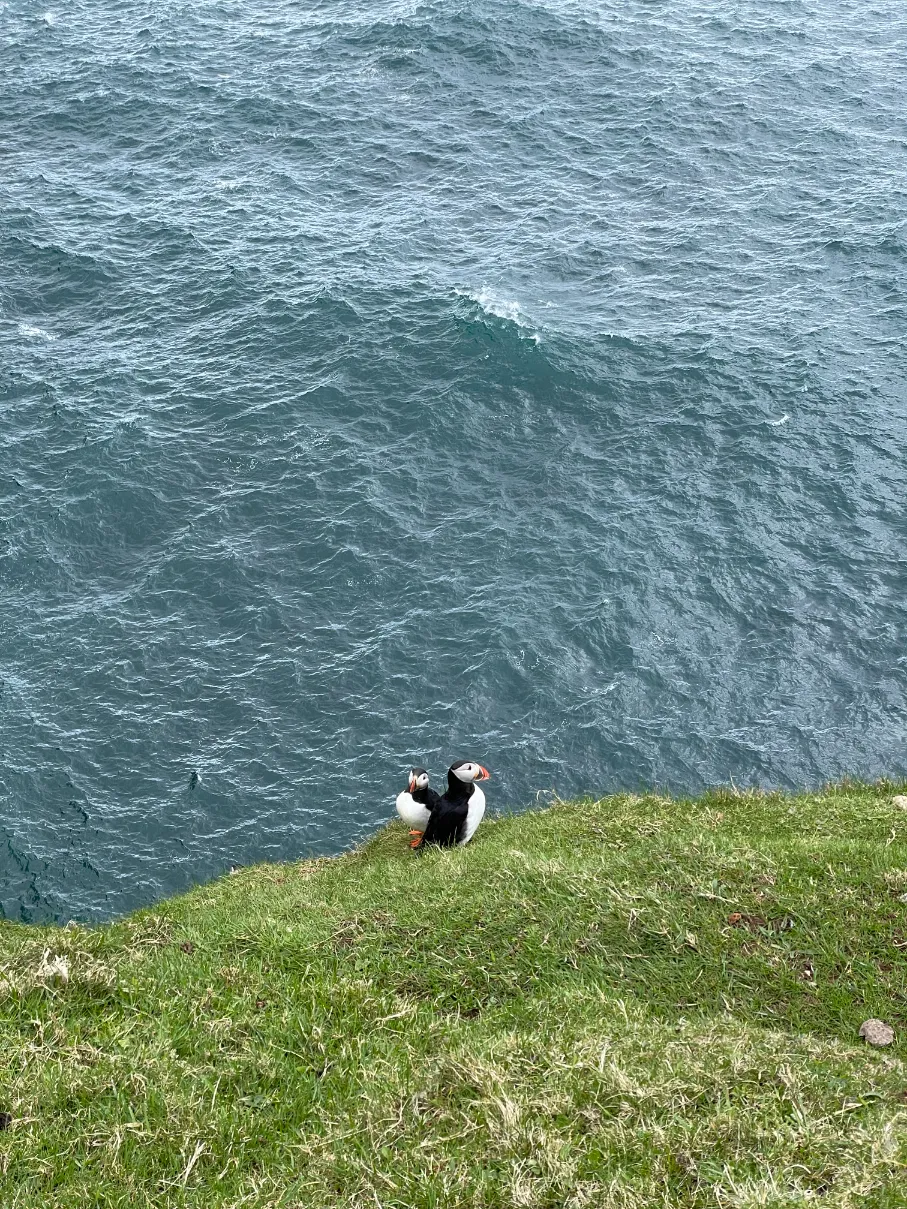
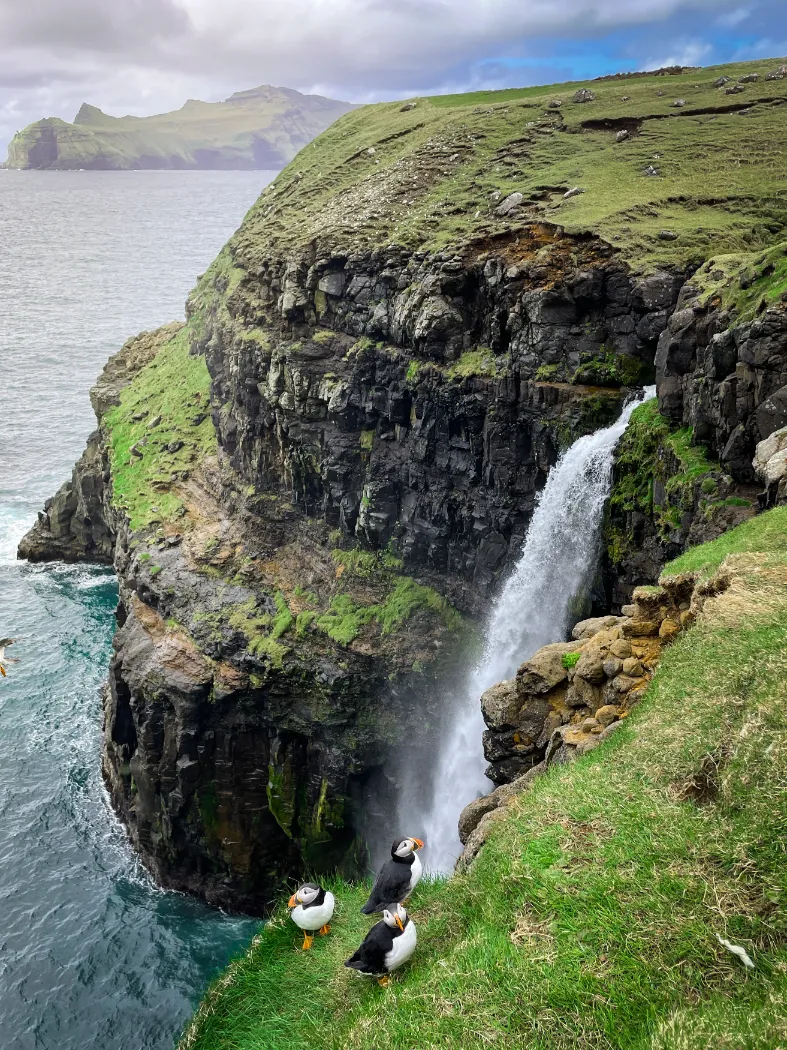
This is the season of the puffins. From April to August, they nest on Mykines and along the sheer cliffs of the other islands. The grass is at its greenest, the waterfalls roar with life, and the endless daylight means you can hike whenever the mood strikes. The only catch: summer is the busiest season (by Faroese standards, meaning you might see a hundred people at the absolute hotspots).
Spring (April, May): The Awakening
Spring in the Faroes doesn't do typical spring. There are no blossoming trees—mostly because there are no trees. There is no warmth. But something shifts: the days stretch out, the grass begins to blush green, and the first puffins return home from the ocean.
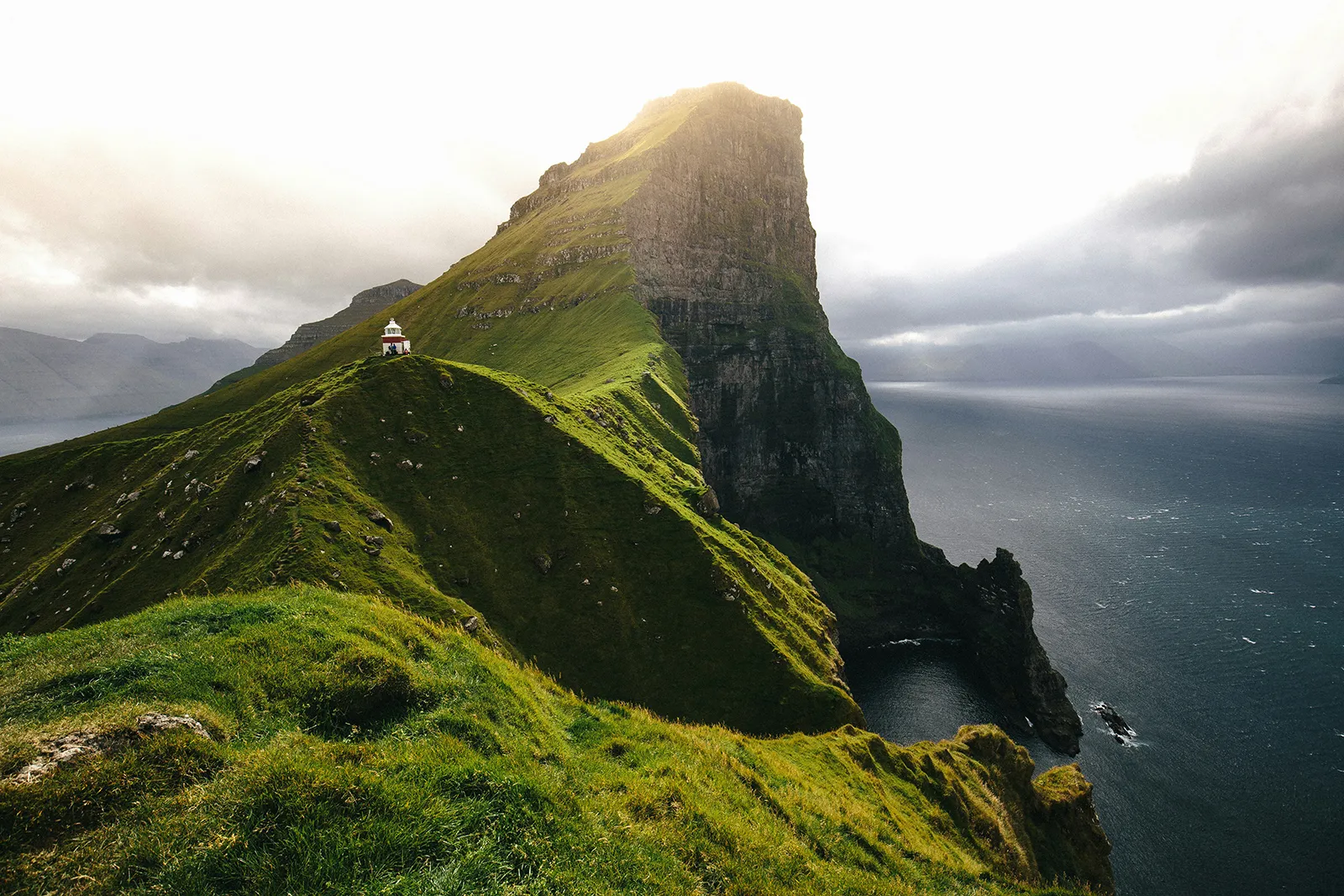
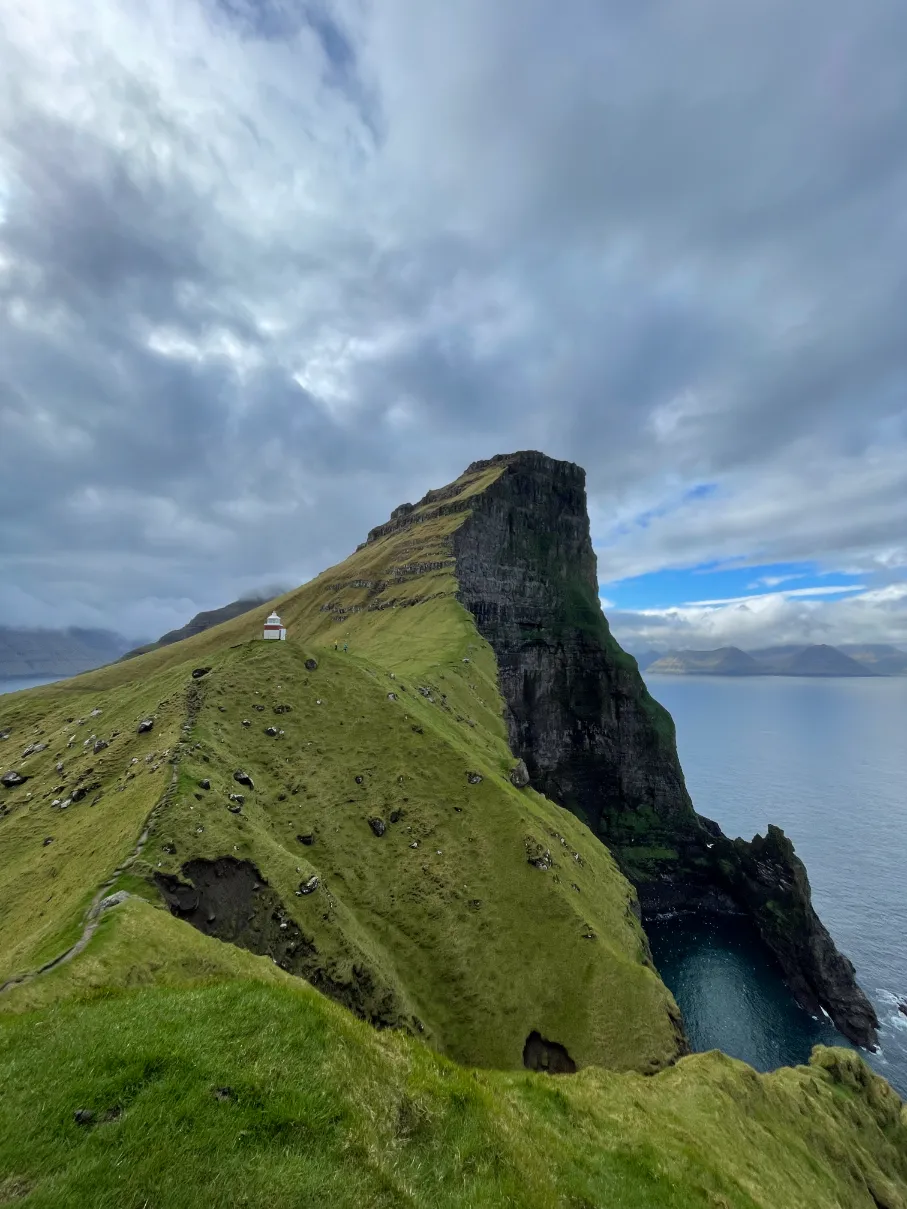
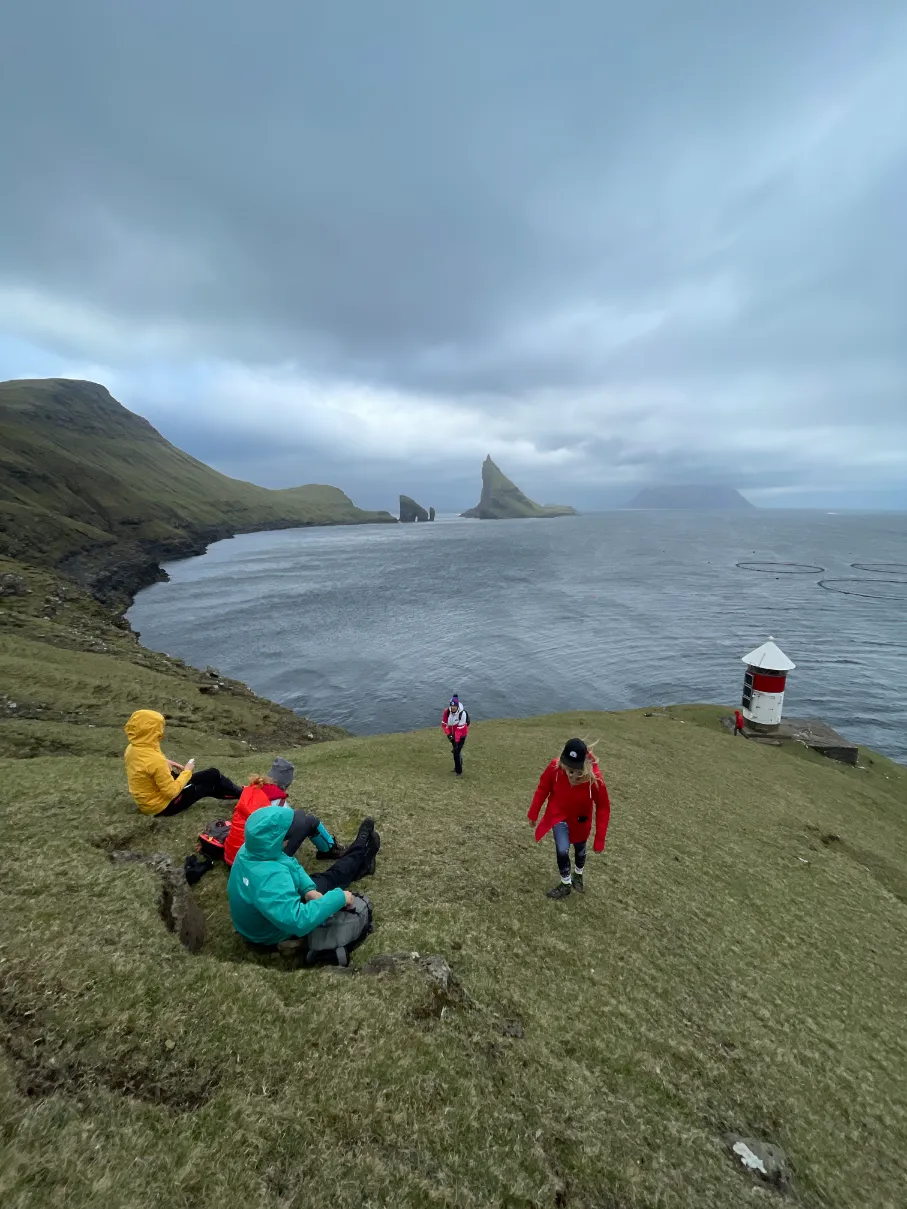
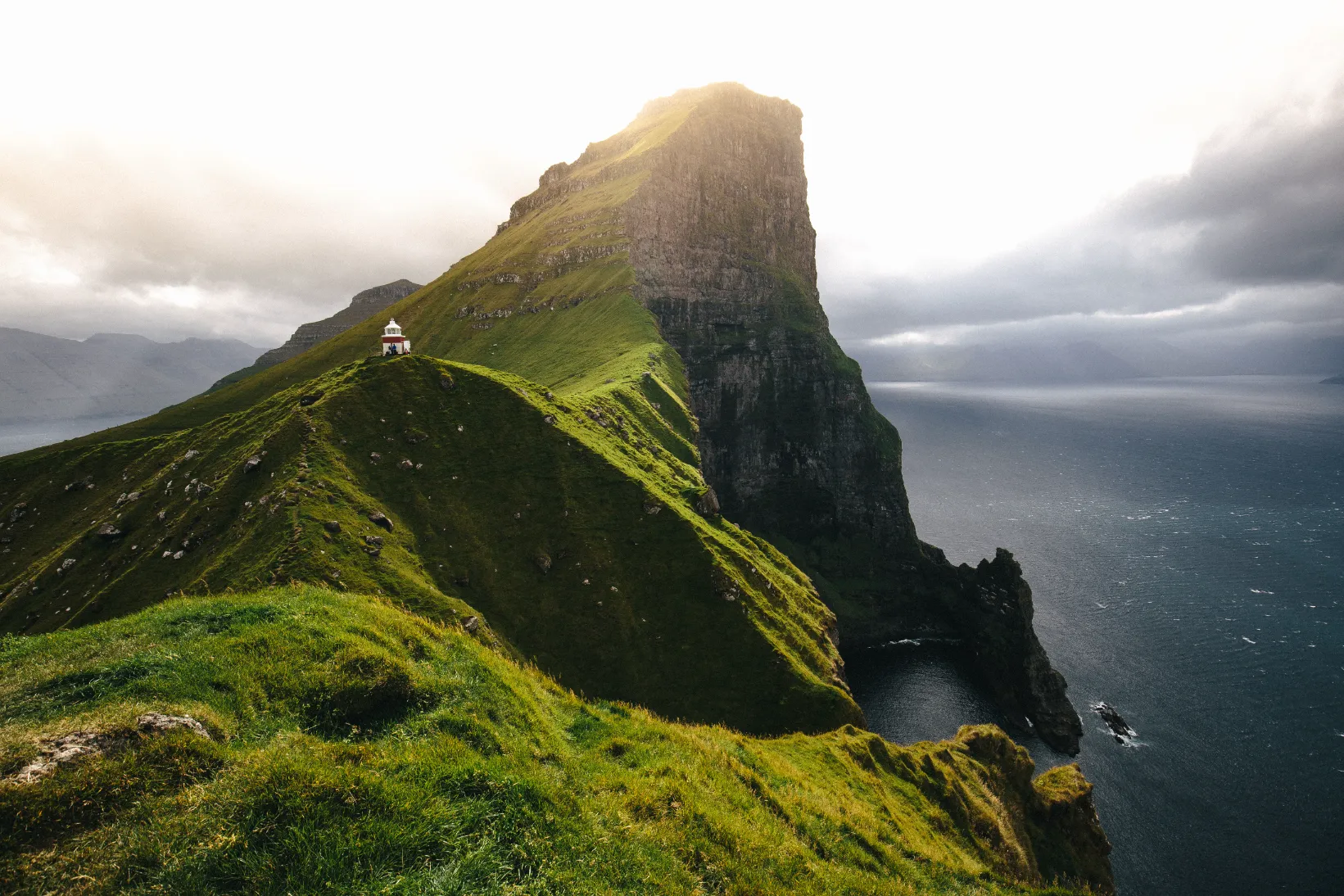
April is wet and windy, with temperatures around 4–7°C. May is gentler, but still wildly unpredictable. The real beauty of spring is the solitude—there are barely any travellers. Places that draw crowds in July are completely deserted. You can hike to the Kallur lighthouse and have the entire cliffside to yourself. Absolutely alone.
Spring is also lambing season. Tiny lambs are born in April and May, dotting the dramatic slopes with white specks bouncing around their mothers. It’s an unexpectedly tender sight in a landscape so raw and untamed.
Autumn (September, October): Dramatic Skies
Autumn is a photographer's dream. The days shrink fast, the sun hangs low, and the clouds become heavier and faster. The result is light that shifts by the minute—beams of sun piercing through dark storm clouds, illuminating a single emerald hillside while everything else is cast in shadow. Ten seconds, and then it's gone.
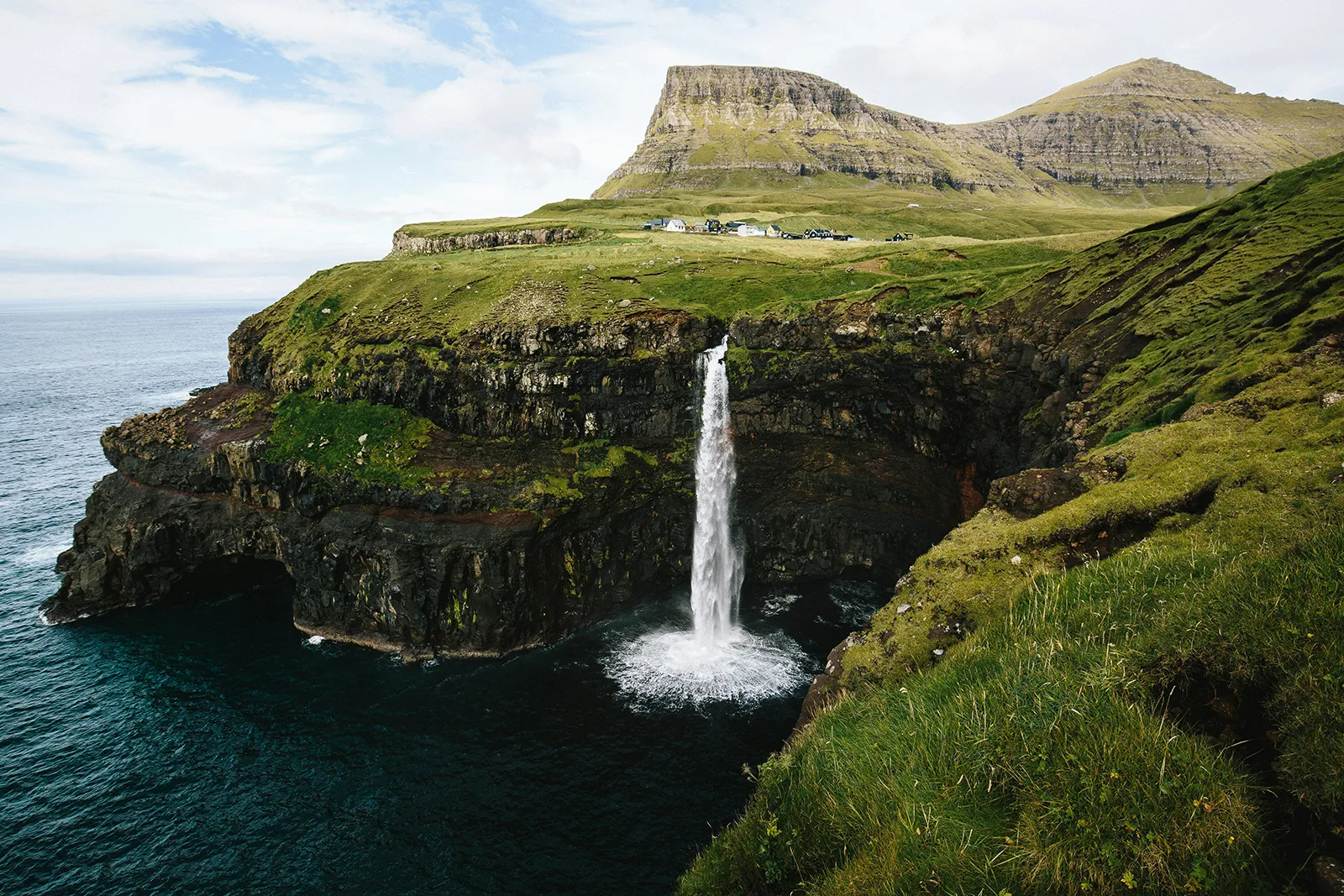
Temperatures sit between 5°C and 9°C, and the rain gets more persistent. The wind starts to howl. Yet, this raw weather creates the most striking scenes. Under an autumn gale, the Múlafossur waterfall doesn't fall—it flies upwards into the air. Fog rolls into the valleys, turning them into lakes of milky white. The sea cliffs appear darker, older, and more imposing.
The puffins are gone by now and the bird cliffs have fallen quiet. But the seals are active, and the sheep are gathered for the autumn roundup (réttir), a traditional event where entire villages head up the mountains to herd the sheep back down. If you're there on the right day, you'll witness a festival of people, working dogs, and organised chaos on the green hills.
Winter (November to March): Dark and Stormy
Winter in the Faroes isn't for the faint-hearted. The days are short (around 5 to 6 hours of dim twilight in December), storms are frequent, and ferries and internal flights are regularly grounded. Temperatures rarely drop below zero, thanks to the Gulf Stream warming the waters, but the wind can make a 3°C day feel like minus 10.
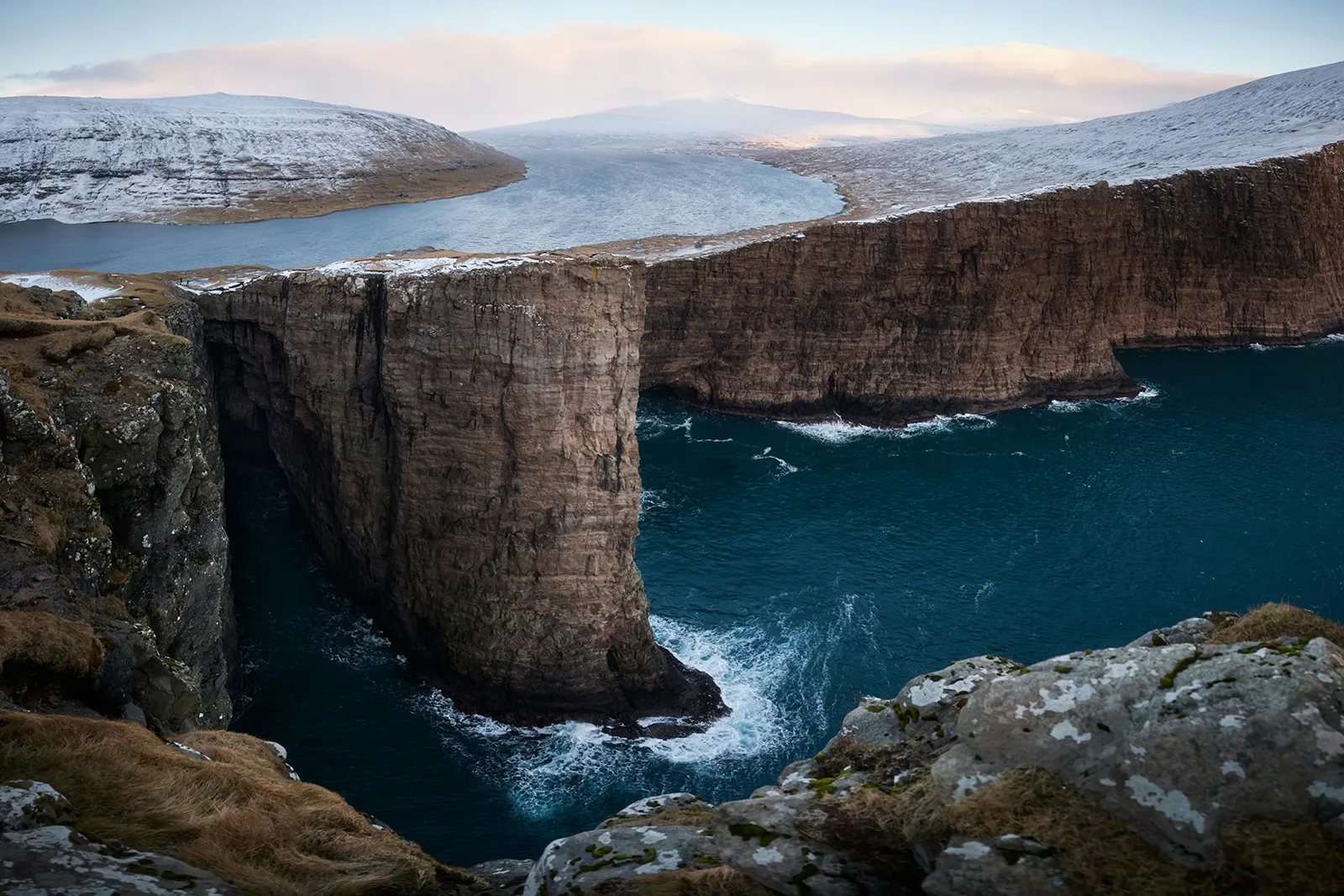
But winter has a quiet magic. Snow dusts the peaks—not always, and not everywhere—creating a striking contrast of white against deep green, meeting the dark grey of the sea. The brief daylight is rich, golden, and low on the horizon. Tiny villages glow with warm windows in the dark. Tórshavn feels incredibly cosy, with bustling cafes and empty streets.
Winter is also your chance to catch the Northern Lights. They aren't as common here as in Norway or Iceland, but when the sky is clear and solar activity picks up, green ribbons dance over the sea cliffs. In the Faroes, the Aurora is a beautiful bonus, not a promise.
The Wind: Your Constant Companion
If you had to choose one word for Faroese weather, it’s "wind". Not rain, not fog, not cold. Wind. It blows almost constantly, usually from the west or southwest, at a steady 30–40 km/h, with gales that can easily reach 80 or 100 km/h.
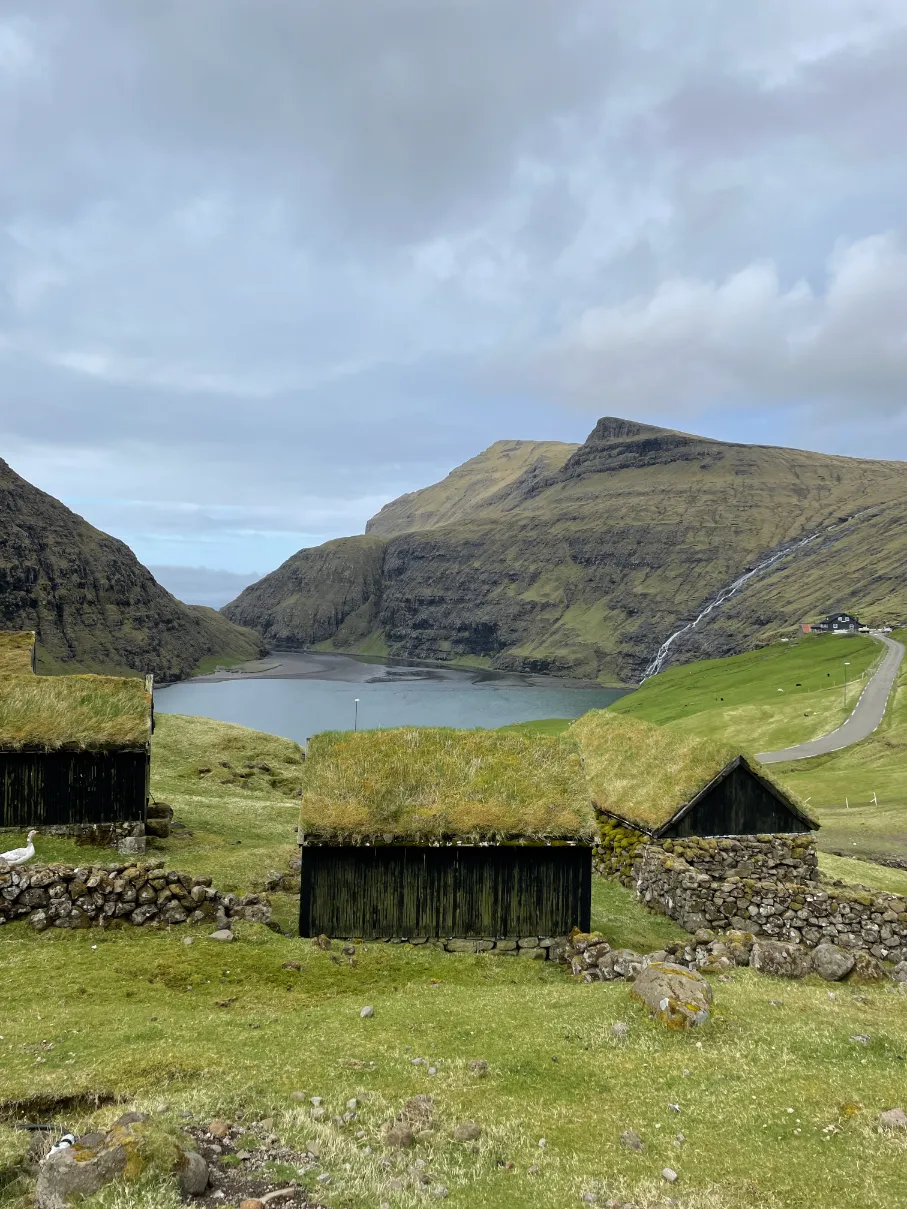
The wind shapes everything here. The grass grows at an angle. Sheep huddle on the sheltered side of giant boulders. The houses are low, built with heavy turf roofs. Waterfalls are blown vertically into the sky. On a ridge hike, the wind can halt you in your tracks, push you back, or snatch your hat and fling it straight into the Atlantic.
Yet, the wind brings something hard to describe: an intense feeling of being alive. Standing on a cliff edge with the gale biting your face, you don't feel uncomfortable—you feel electrified. The air is so exceptionally clean, so thick with ocean salt and oxygen, that you breathe deeper. Your senses sharpen. The colours look brighter. The sounds, crisper.
The wind is also the reason nothing grows tall here. The grass is short, hugging the earth. Shrubs are twisted. The only "trees" are in a small garden in Tórshavn, guarded by high stone walls. Outside of that, nothing stands taller than a sheep.
What to Pack and Wear
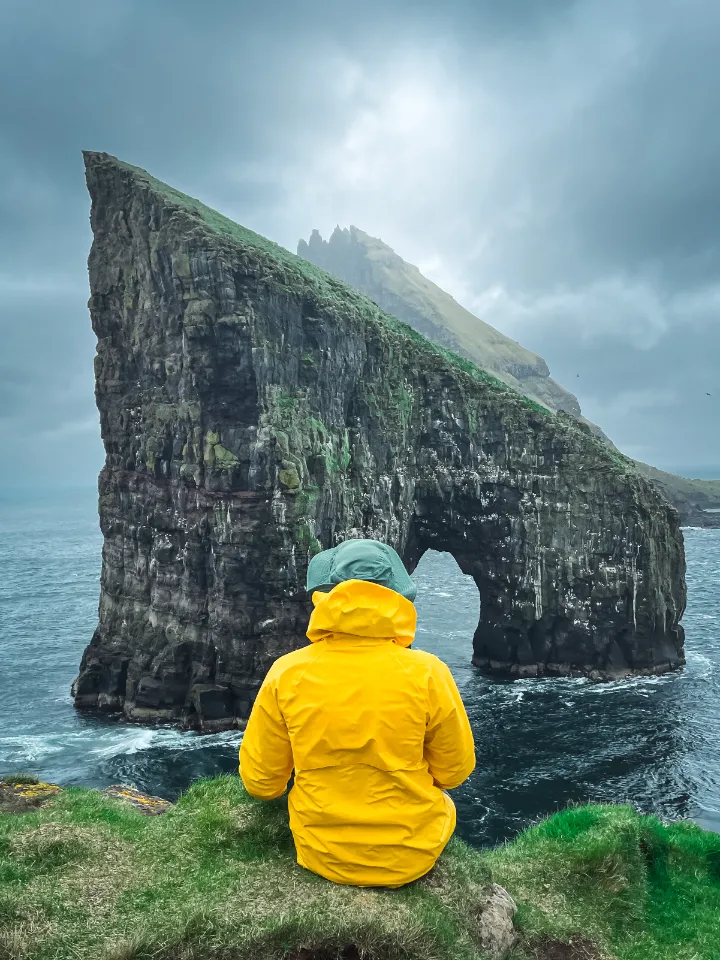
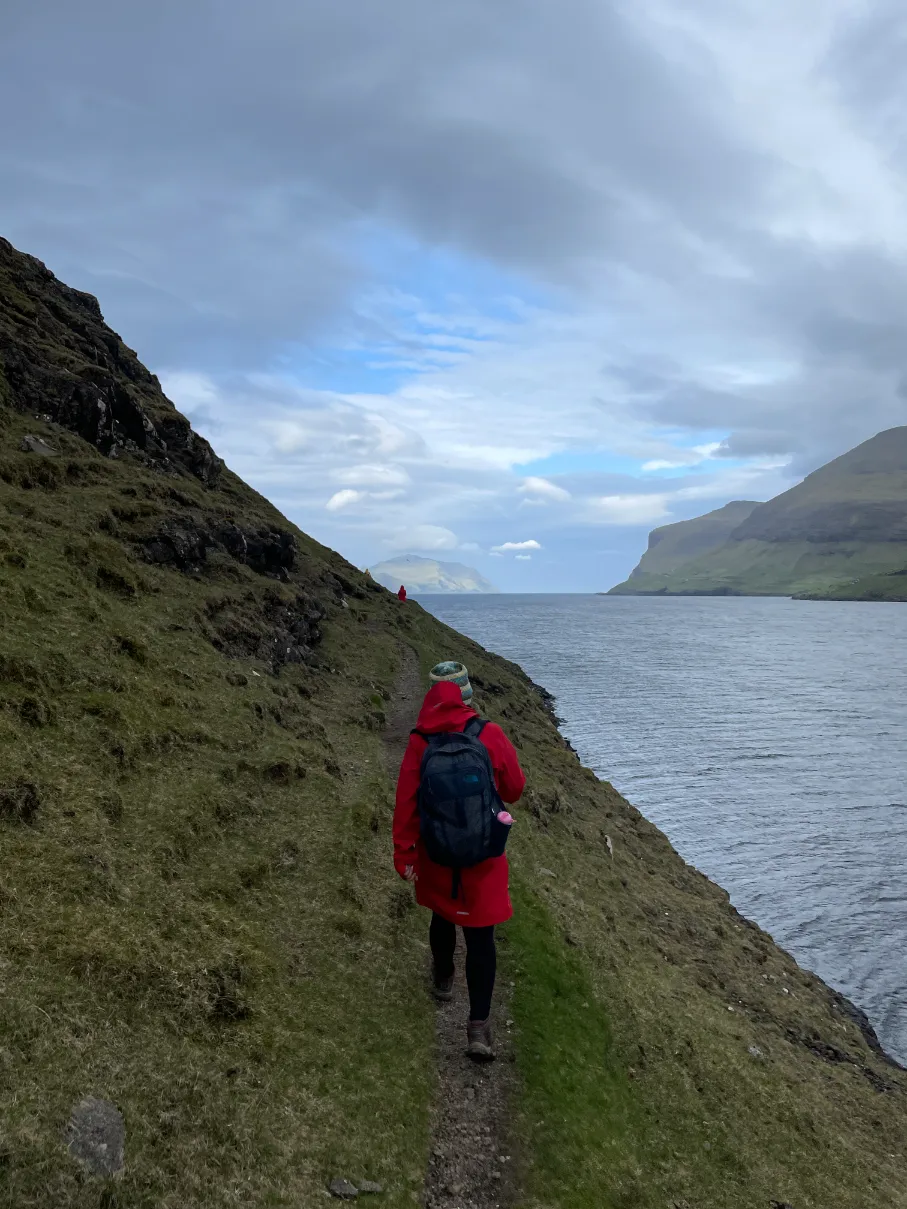
The rule is simple: layers. Lots of them. Start with a merino base layer, add a warm mid-layer (fleece or down), and top it with a windproof and waterproof shell. Your trousers must be waterproof or at least quick-drying. Leave the jeans behind.
Sturdy hiking boots with great grip and waterproofing are essential. The ground is almost always wet, the grass is slick, and the rocks are even slicker. Ankle-high trekking boots are the bare minimum.
Pack a warm hat, gloves, and a buff, even in the middle of summer. Not because it’s freezing (9–13°C is mild), but because the wind will strip the heat from your hands and head in seconds. Don't forget sunscreen on bright days; the UV radiation is stronger than you’d expect at this latitude.
For photographers: pack waterproofing for your gear. The rain comes out of nowhere and travels horizontally. Lens filters are a lifesaver. Keep spare batteries close to your body, as the cold drains them fast. Most importantly: bring patience. The Faroese light doesn't work on a schedule, but when it breaks through, it is so spectular that it makes every hour of waiting worth it.
Picture sitting in a cabin at the end of the day. Your gear is drying, your hair is wild, and your face is flushed red from the wind. Outside, it rained three times, cleared up twice, fog rolled in and out, and the wind didn't stop for a single second. And yet, you don’t want to be inside. Because in the Faroe Islands, there is no such thing as "bad" weather. There is only intense, quiet, stormy, gentle weather—all in the span of a single afternoon. The wild climate here isn't an obstacle. It is the very reason you came.
Author: Martin Bonov
Other articles about Faroe Islands