Landscapes of the Faroe Islands: land, light and scale
The first thing you realise about the Faroe Islands is that the landscape isn't just a backdrop. It's a character in its own right. The cliffs speak, the fog directs, and the light decides what you get to see and when. You are a spectator in a theatre that has run without intermission for millennia. Entry is free, but there is one condition: you must be patient.
18 islands, not a single tree. It sounds like a deprivation, but it’s exactly the opposite. Without trees, your gaze travels without obstacle from the hilltop straight to the ocean line. Every valley, every slope, every cliff face is visible, uncovered, exposed. The Faroese landscape is honest in a way that few places on earth are.
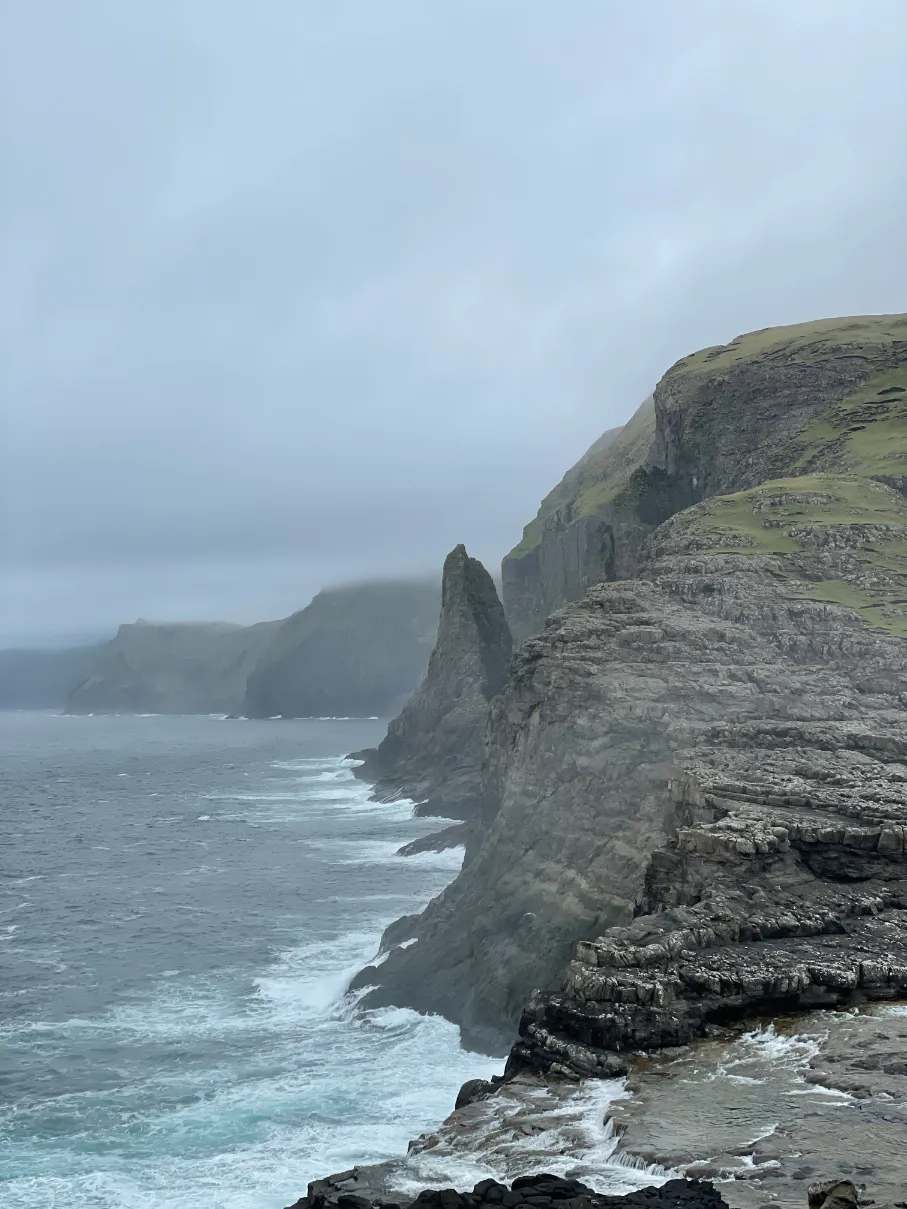
The geology is basaltic, layer upon layer of volcanic rock laid down 50-60 million years ago. Time, water and wind have sculpted it into sheer cliffs, narrow fjords and rounded, grass-covered hills. No sharp peaks. No dramatic jagged edges. Instead, soft contours that look as if they were sketched with a soft pencil. And then, suddenly, a 754-metre vertical cliff plunging straight into the ocean.
Múlafossur: the waterfall that tumbles into the ocean
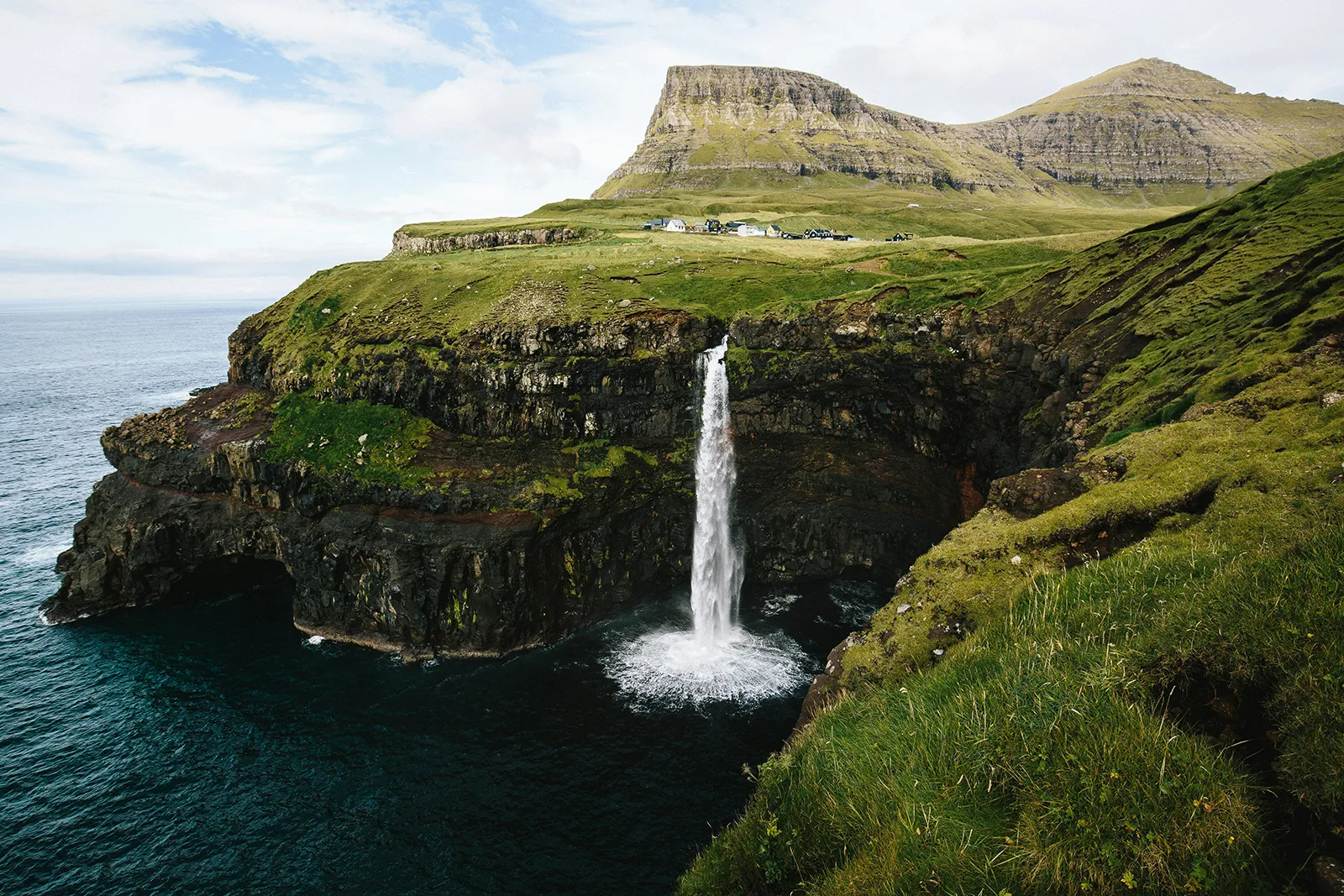
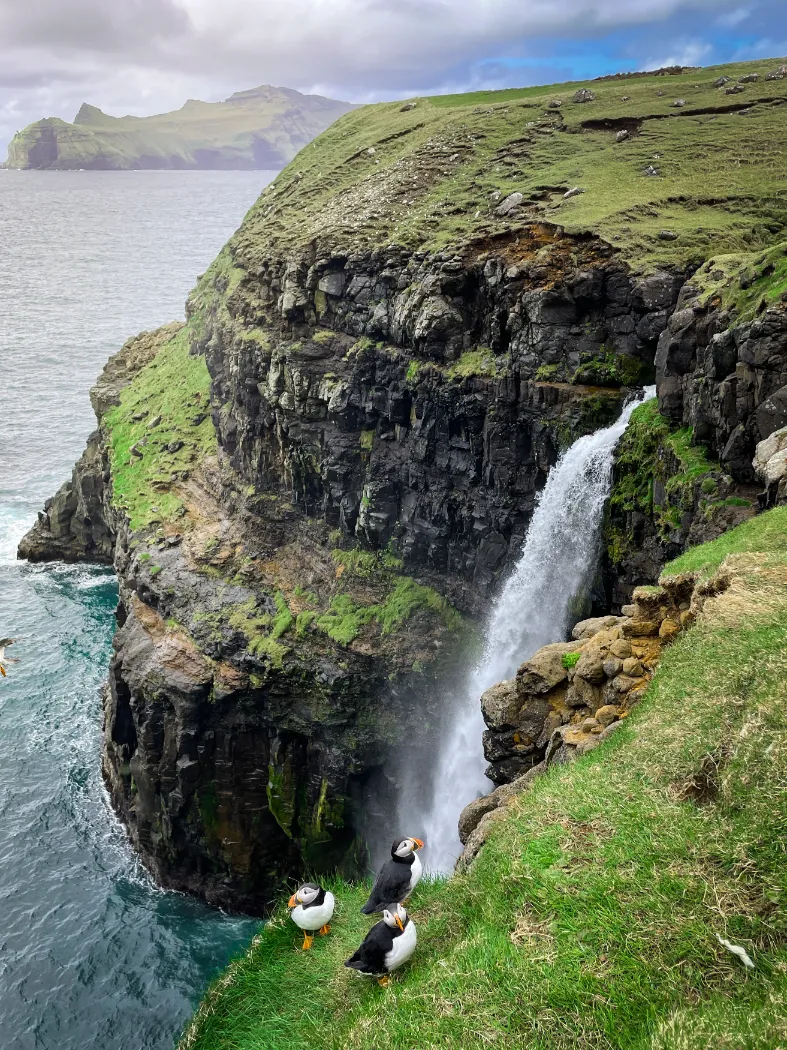
On the island of Vágar, next to the village of Gásadalur, the Múlafossur waterfall plunges from the cliff edge directly into the Atlantic Ocean. Thirty metres of free fall, then the water meets the sea and vanishes. When the wind is strong (and it almost always is), the water doesn’t fall. It flies. It sprays upwards, sideways, sometimes back onto the cliff from which it flowed.
The spot is a 5-minute walk from the car park. No barriers, no tickets, no crowds. You stand in the grass, on the edge, watching water meet wind meet ocean. The sound is a thunder, not of the waterfall itself (which is small), but of the ocean below crashing against the rocks.
Gásadalur is a village of 18 people. Until 2004, the only way to reach it was on foot, over a mountain pass. Then they built a tunnel. Now you arrive by car, but the sense of isolation is exactly the same. The waterfall is not an attraction. It’s just something that happens here, every day, for thousands of years, whether anyone is watching or not.
Sørvágsvatn: the lake that tricks the eyes
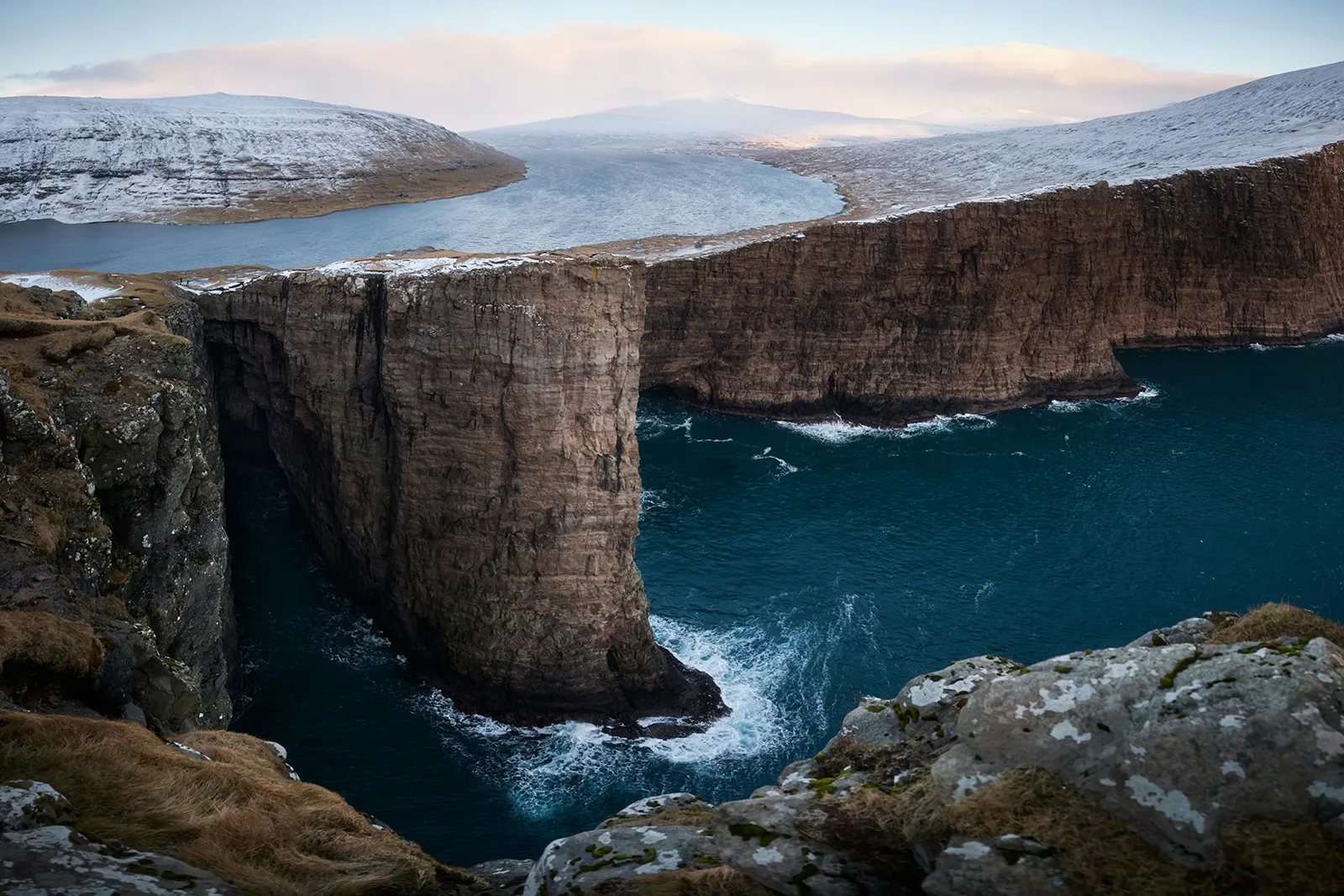
On the same island of Vágar, miles from Múlafossur, lies lake Sørvágsvatn (or Leitisvatn, depending on who you ask—the two villages on either side can't agree on the name). From above, at the right angle, the lake looks as if it's sitting 100 metres above the ocean. As if it's hanging. A platform of water with an abyss right beyond it.
The optical illusion is all down to perspective. The lake is actually 30 metres above sea level, but the cliff from which it drains into the ocean is so steep that from a certain angle, it looks as though the water is floating in the sky. The hike to the viewpoint takes about an hour and a half, over wet grass and rocks. Easy enough, if you don't mind the wind.
When you arrive, you aren't sure what you're looking at. The lake is calm, dark, smooth. Below it, the ocean roars. Between the two, a thin strip of grass-covered rock. The contrast between the silence of the lake and the fury of the ocean is so sharp that you just stand there, processing. Your brain tells you something is wrong. Your eyes tell you it’s exactly as it is.
Saksun: the lagoon that breathes
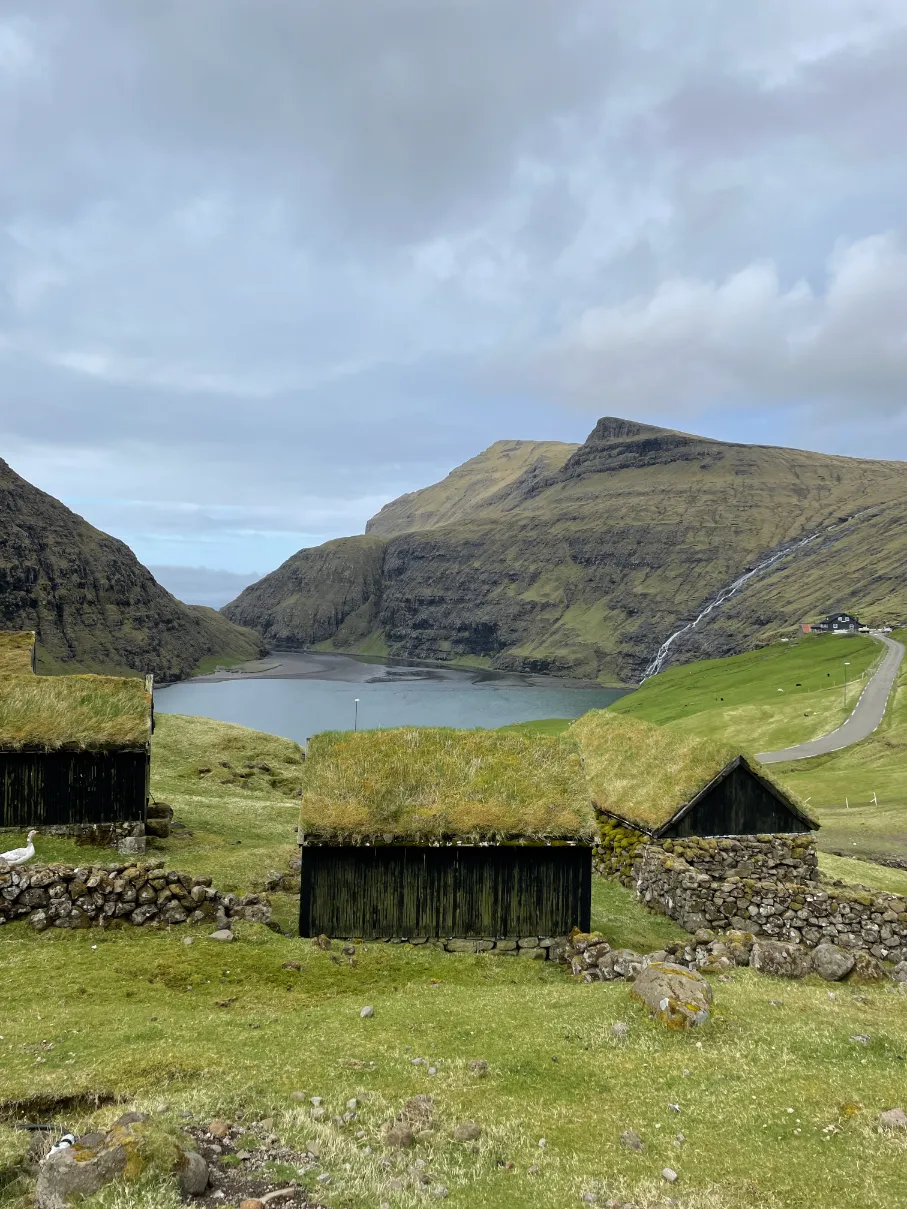
The village of Saksun is an hour's drive from Tórshavn, nestled in a valley on Streymoy island, surrounded by steep green slopes. The hamlet is tiny: just a few turf-roofed houses, a church, a museum. But the real reason you come is the lagoon.
Twice a day, the ocean enters the lagoon through a narrow gorge in the cliffs. The water rises, covering the sand, reaching the grass. Then it retreats, leaving wet black sand that glistens. The lagoon breathes: inhaling with the high tide, exhaling with the low tide. The rhythm is as predictable as it is ancient.
In the past, the lagoon was a harbour. A storm blocked it with sand, turning it from functional to decorative. But "decorative" is the wrong word. Saksun isn't beautiful in the way postcards are beautiful. Saksun is beautiful in the way things are when they aren't trying to be beautiful. The houses, the roofs, the water, the mist. Everything is in its place, effortless, without a plan.
Kalsoy and the Kallur lighthouse: the edge of the world
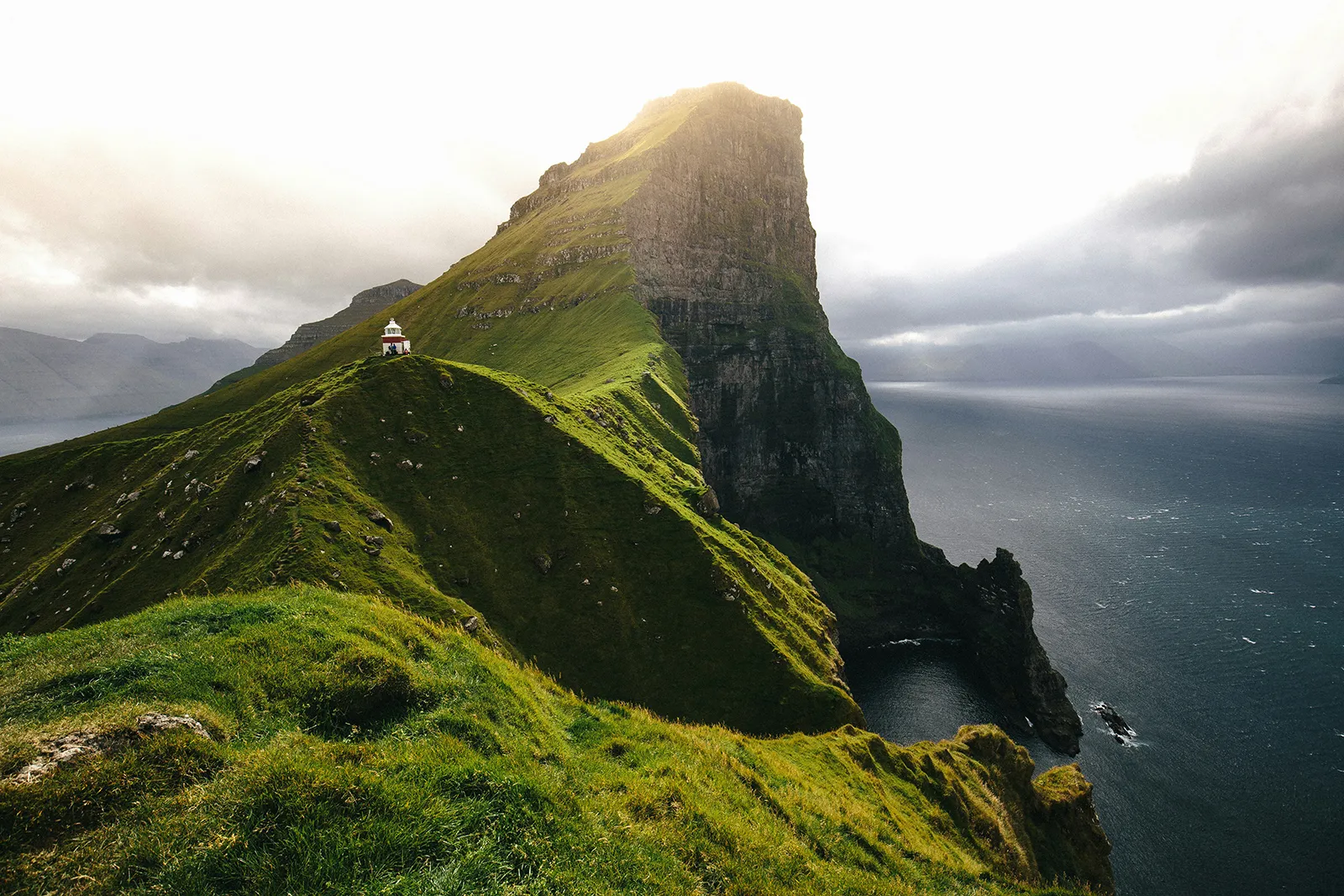
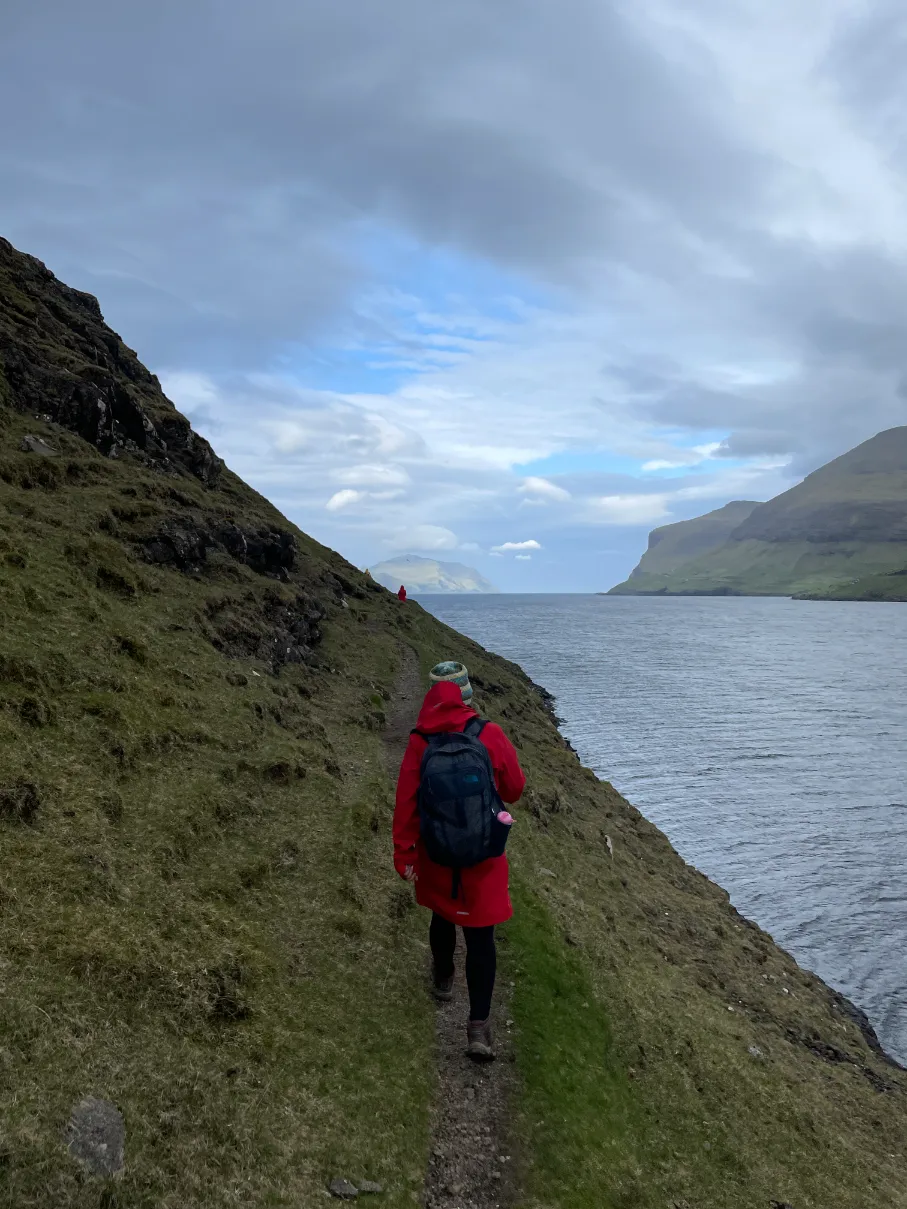
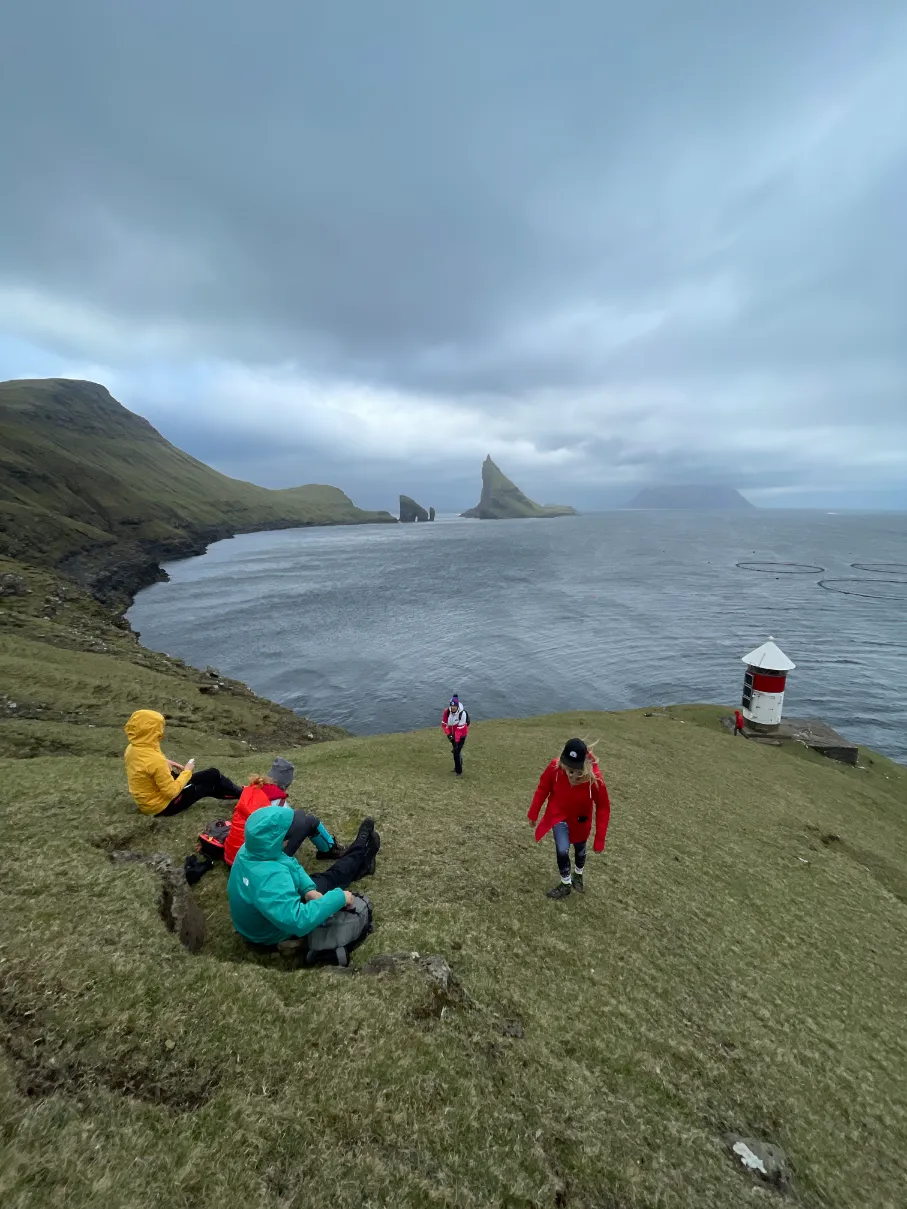
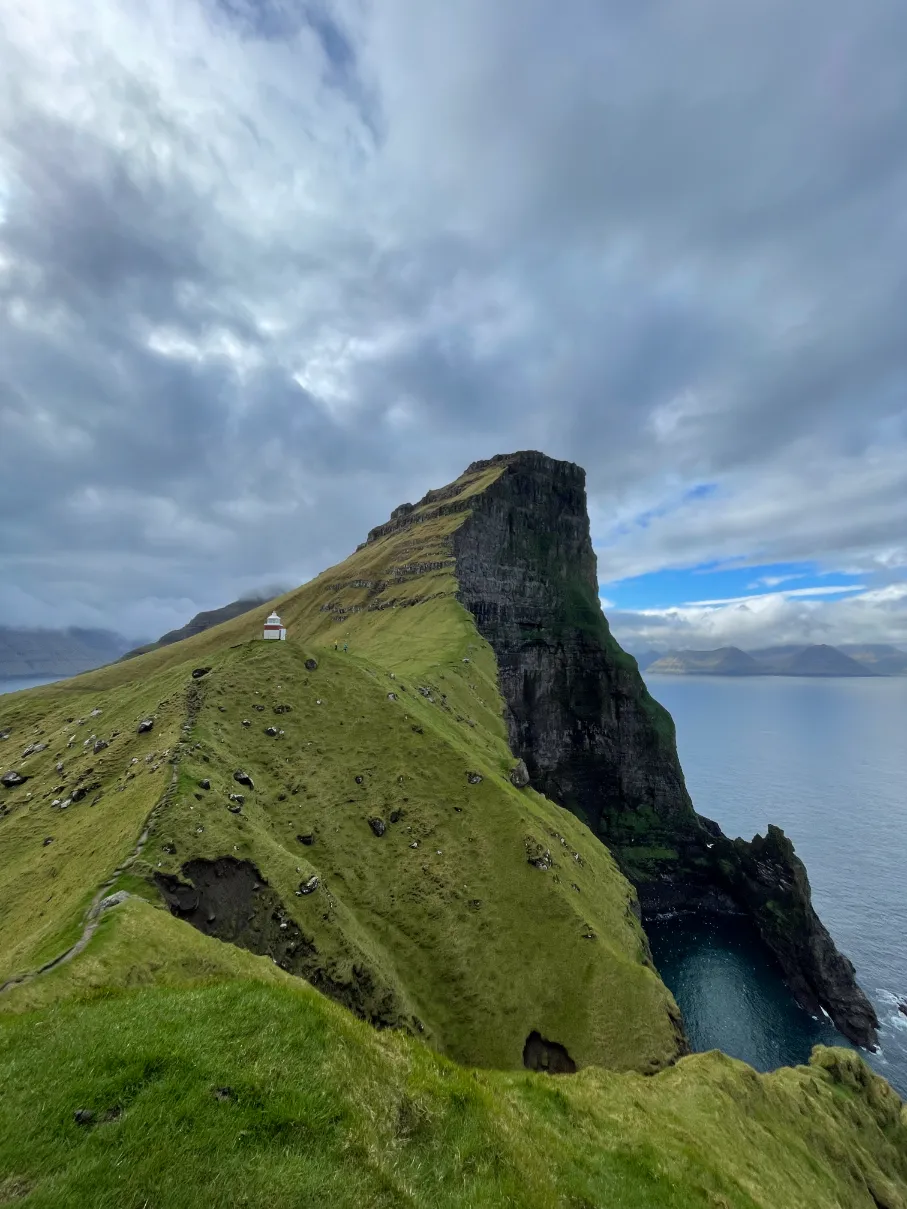
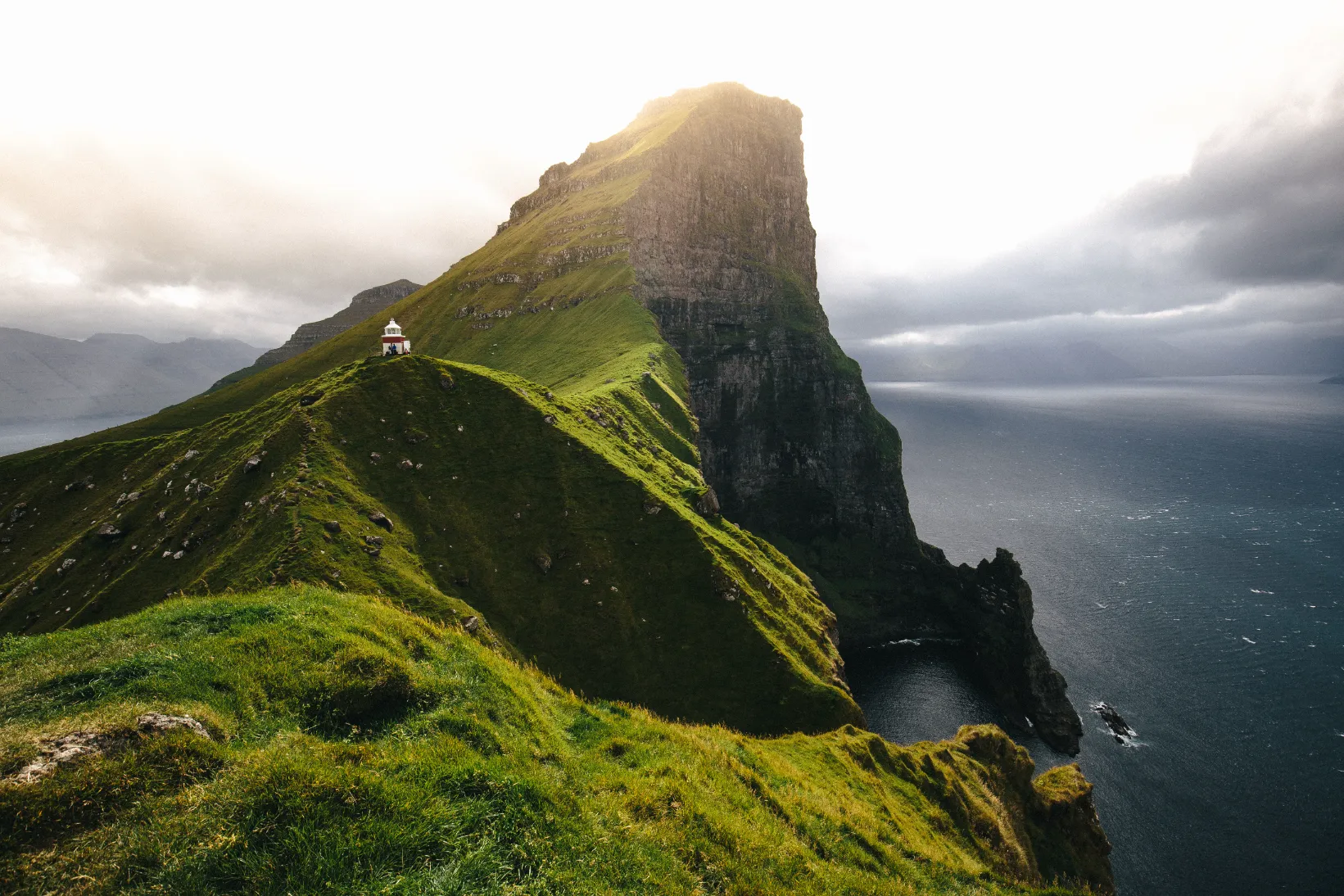
You reach the island of Kalsoy by ferry from Klaksvík. Twenty minutes on the water, then a short drive along a narrow road to the trailhead. The hike to the Kallur lighthouse takes about an hour along a grassy ridge that grows narrower and narrower, until there is nothing but ocean on both sides.
The lighthouse is small, white, defunct. But that’s not why you come. You come for the view. To the north, the cliffs drop sheer. To the south, the grassy ridge curves back toward the island. To the west, ocean to the horizon. To the east, more islands shrouded in clouds. Stand on the edge and you feel like you've reached the end of something. Not of the earth. Of the known.
The crew of 'No Time to Die' (James Bond) chose this exact location. Not because it’s "pretty" in a conventional way. But because it has a drama that doesn't need special effects. Nature had already done the work.
Drangarnir: rock arches and 5 hours of silence
The hike to Drangarnir begins in the village of Sørvágur and takes about 5 hours return. It's a moderate hike, but the trail is wet, the wind is constant, and navigation relies on stone cairns and common sense.
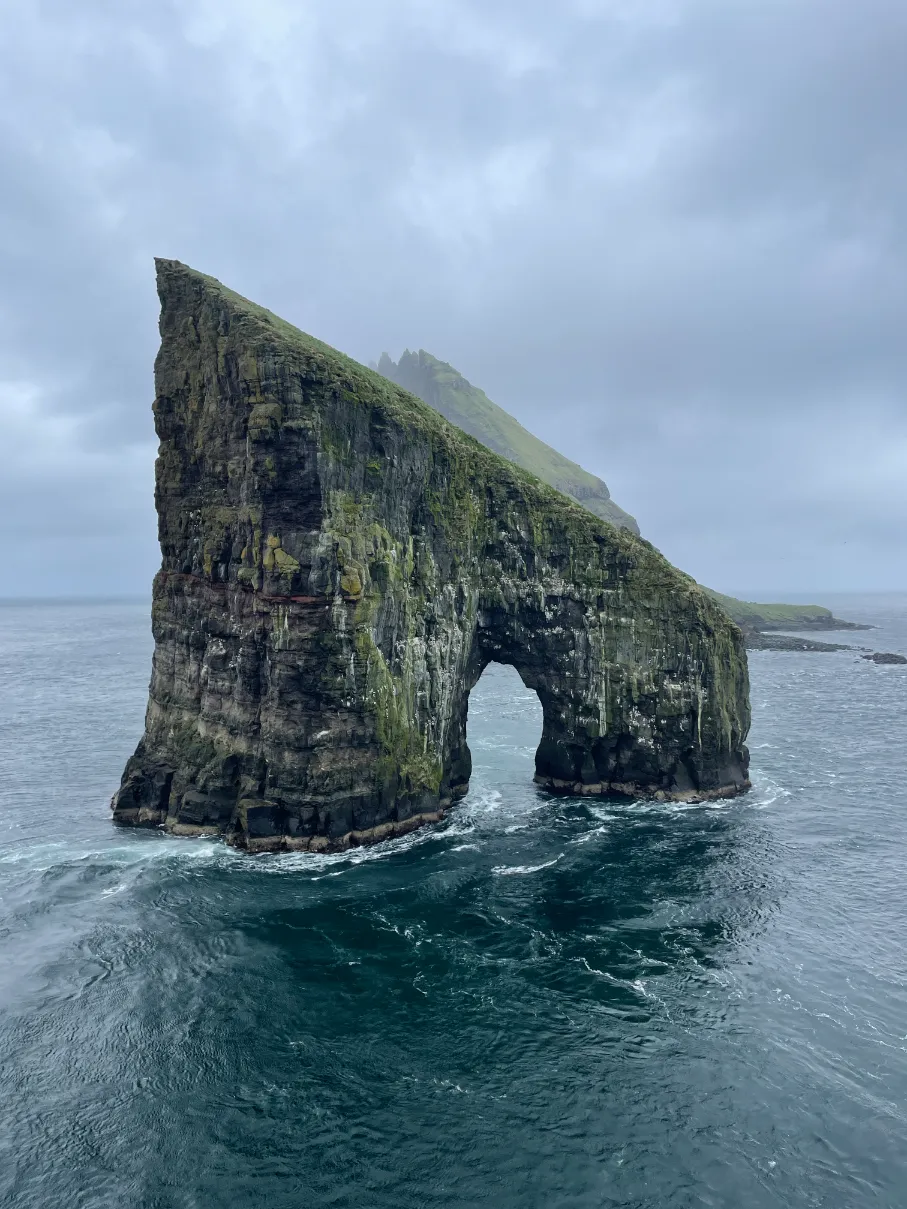
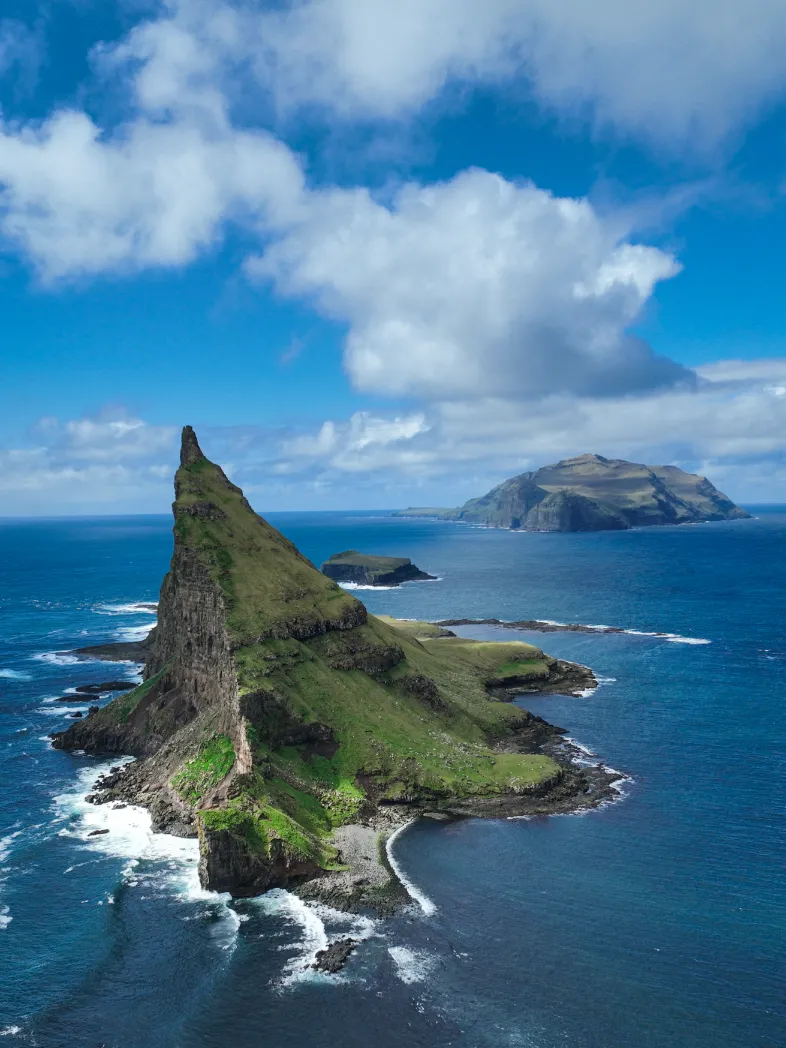
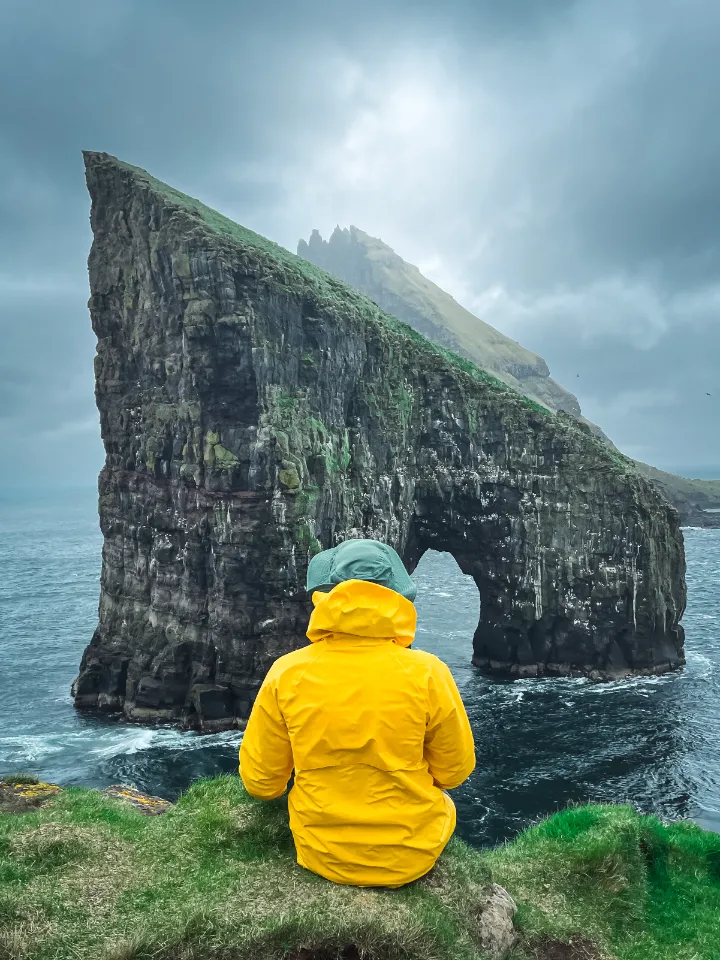
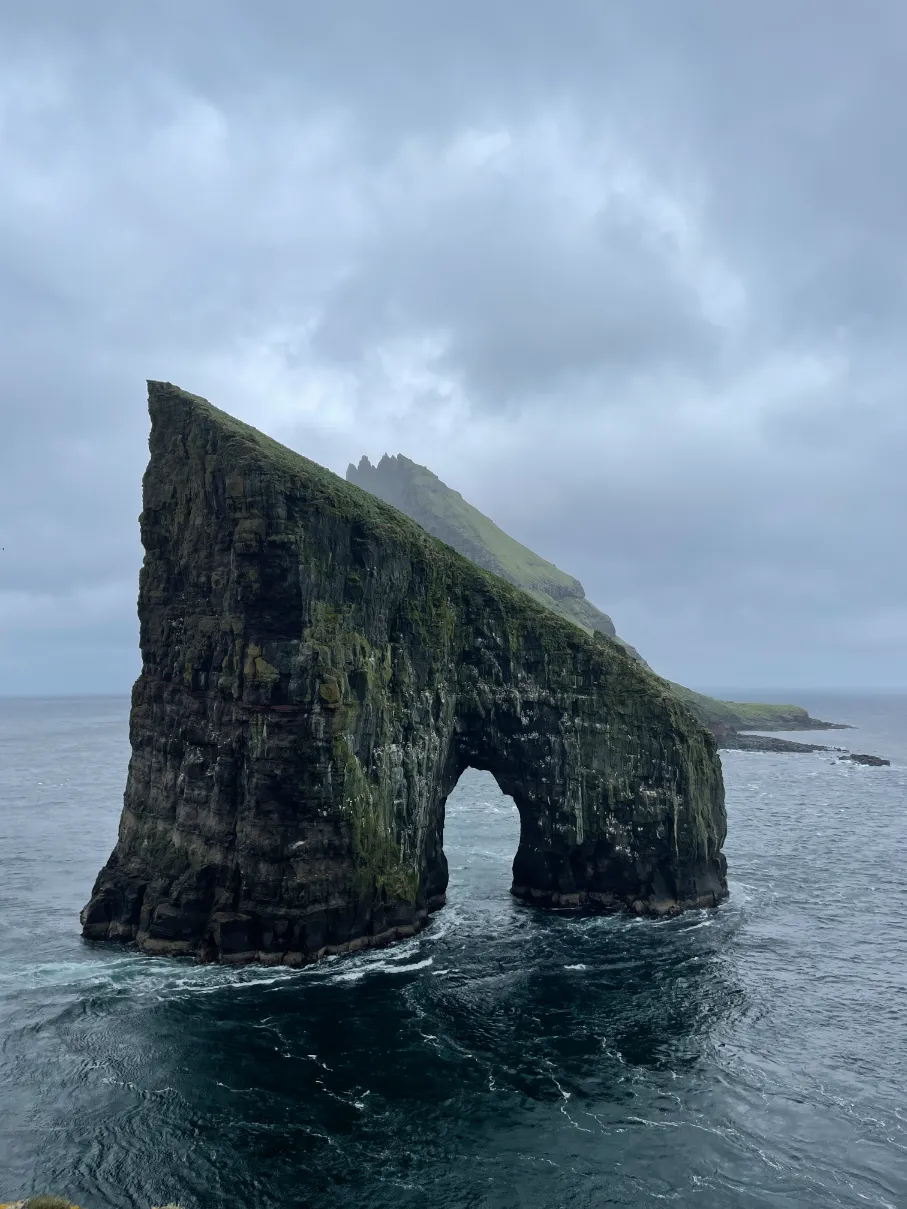
Drangarnir are two sea stacks sculpted by waves that ate away the soft rock and left the hard basalt behind. Stóri Drangur and Lítli Drangur stand between Vágar and the islet of Tindhólmur, connected by an archway through which the sea surges. Behind them, Tindhólmur, with its five jagged peaks, looks like the spine of a submerged monster.
When you reach the viewpoint and the panorama opens up before you—the waves, the birds, the arch, the island, the mist—the sensation is physical. Not "beautiful." Not "impressive." Something deeper: the realisation that this rock stood here before humans existed, and will stand when we are gone. Five hours of walking for a minute of clarity. In the Faroe Islands, that’s a fair trade.
The landscape between landscapes
But the real soul of the Faroe Islands isn't in the individual "sights". It’s in the spaces between them. The road from Tórshavn to Saksun. The ferry to Kalsoy. The subsea tunnel. The sheep standing in the middle of the road, staring you down without moving. The cloud that drops into the valley and vanishes in 30 seconds.
This is a place where "between" is more important than "there". The journey is the landscape. Movement is the view. You don’t rush to get to the next stop, because every second on the road is different from the last. The light shifts, the mist moves, the green grows darker or brighter depending on the cloud drifting overhead.
Eight days in the Faroe Islands is not eight days in one place. It is eight days in a landscape that never stands still. One that moves, breathes, shifts its face. And one that, in the end, makes you move right along with it.
You stand on Trælanípa, the cliff overlooking Sørvágsvatn, and look down. The lake is dark. The ocean is grey. Between them, a thin line of green. The wind is so fierce you cannot hear your own voice. And right at that moment, the clouds part and a beam of light strikes the surface of the lake. Three seconds. Maybe five. Then, grey again. But those three seconds are enough. Because in the Faroe Islands, beauty isn't permanent. It’s a flash. And that is exactly why it stays with you.
Author: Martin Bonov
Other articles about Faroe Islands