Face to face: the wildlife of the Faroe Islands
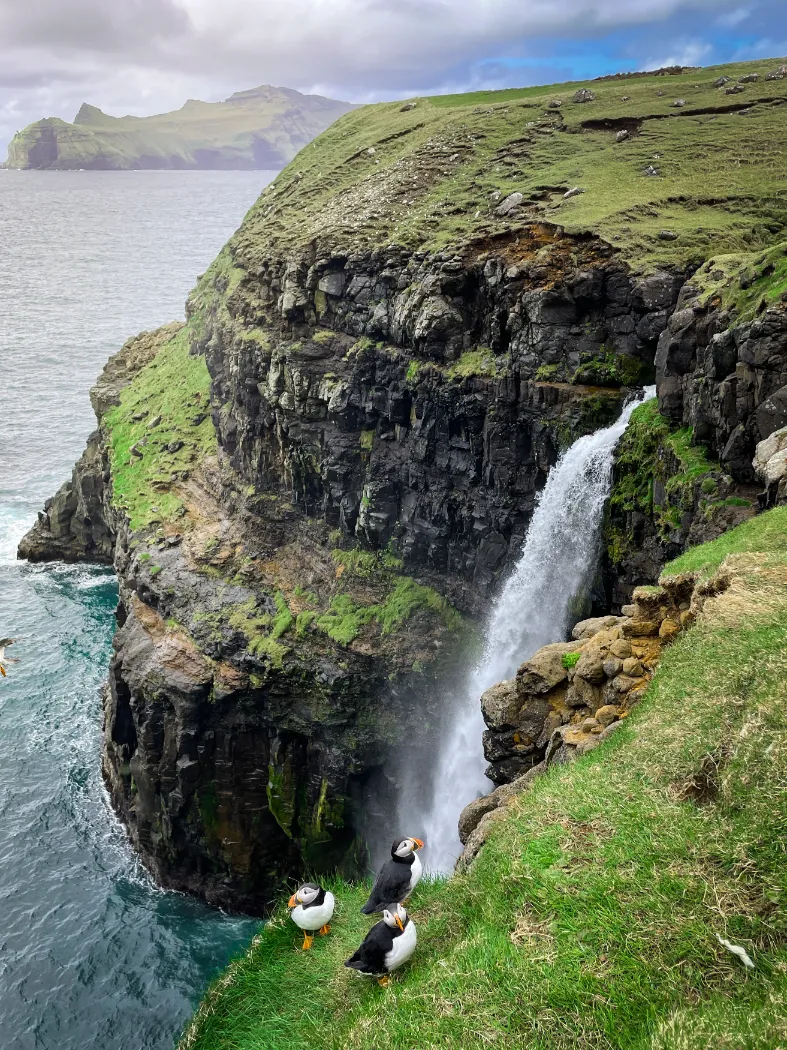
A puffin is standing just half a metre from your boot. It looks at you with one eye, then the other. Its beak is a shade of orange so bright it looks painted on. It doesn't run. It doesn't panic. It just stands there, sizing you up with a quiet dignity you wouldn't expect from a bird the size of a pigeon. In the Faroe Islands, wildlife encounters don't happen in zoos or from the safety of a tourist jeep. They happen right on the trail, in the bay, on the road. No glass between you and the wild.
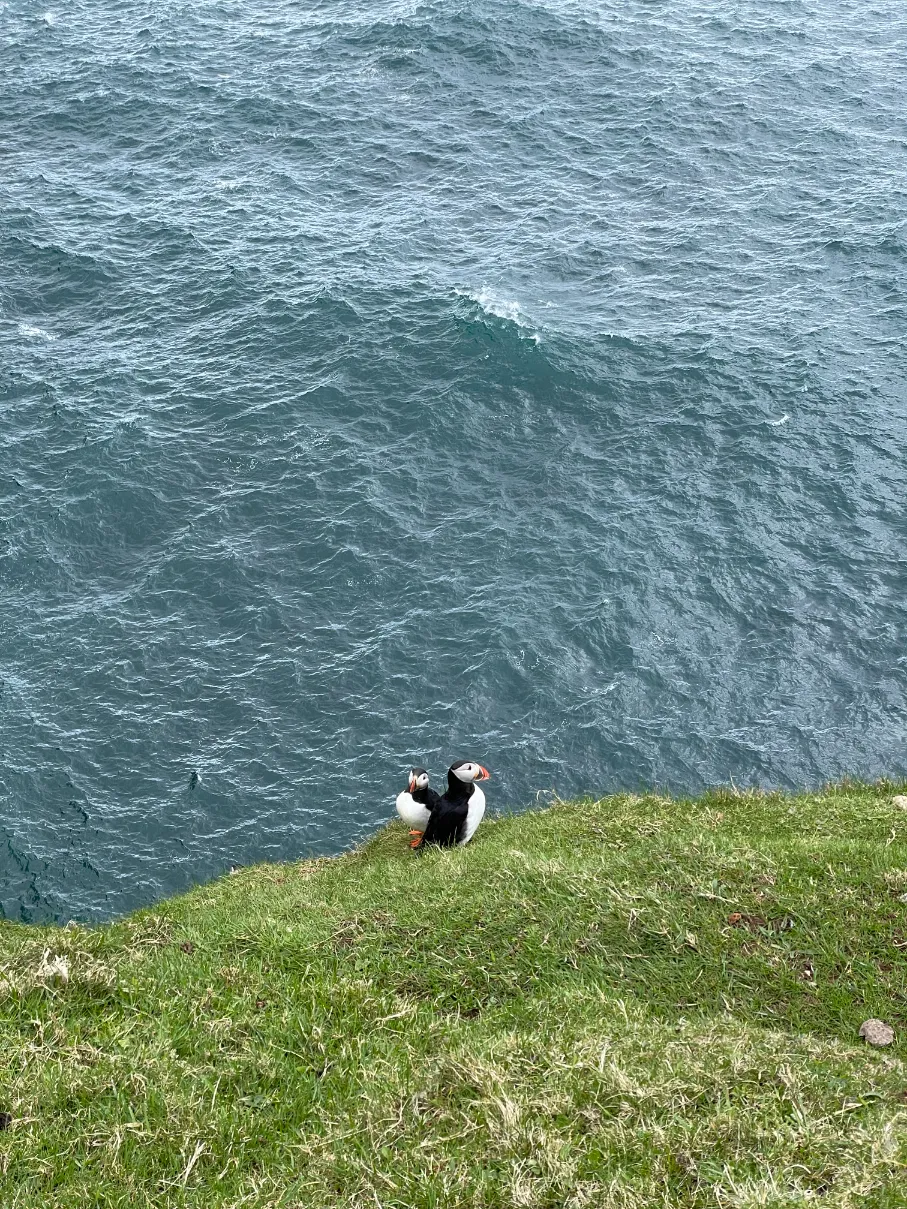
In a world where most wild animals flee from humans, the Faroe Islands are the exception. Here, the wildlife is used to a limited human presence, so limited that the animals haven't developed fear. Puffins don't hide. Seals don't dive when you approach. The sheep stare at you with an expression that says: "You are on my island."
This isn't the result of conservation programmes or tourist training. It's the result of geography. 18 islands in the middle of nowhere, with more wind than people, more ocean than land. The animals here aren't "wildlife" in the sense of something separate from daily life. They are daily life.
Mykines: the island of puffins
The ferry to Mykines leaves from Sørvágur, and the journey takes about 45 minutes. But "leaves" is a conditional word. The ferry leaves when the ocean decides. When the swells are high, which is often, the boat stays put. Mykines is a promise dependent on the weather.
When you arrive, you understand why you waited. The island is narrow, green, with grassy slopes that plunge straight into the ocean. Puffins are everywhere. On the ground, in the air, on the cliff edges. They take off, land, just stand there. They look ridiculous when they walk (their legs are far too short for their bodies), but perfect when they fly, low over the water, with rapid wing beats.
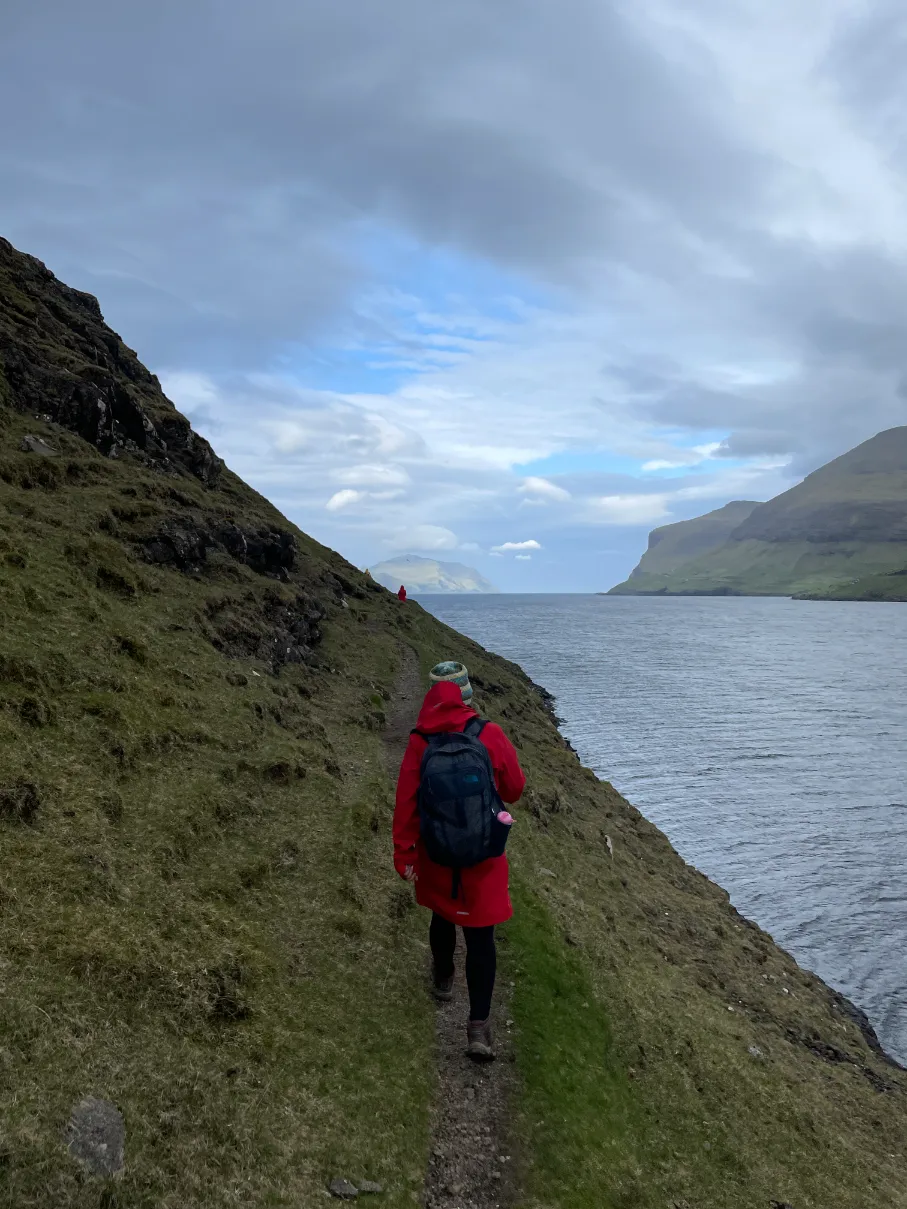
The trail to the colony runs along the ridge of the island. On both sides, ocean. Below you, hundreds of metres of sheer rock. Around you, puffins. They nest in burrows in the ground, and as you pass, they pop their heads out of their nests. They don't scream, they don't run. They just watch you. And you walk slowly, because you don't want to step on them, and because you don't want it to end.
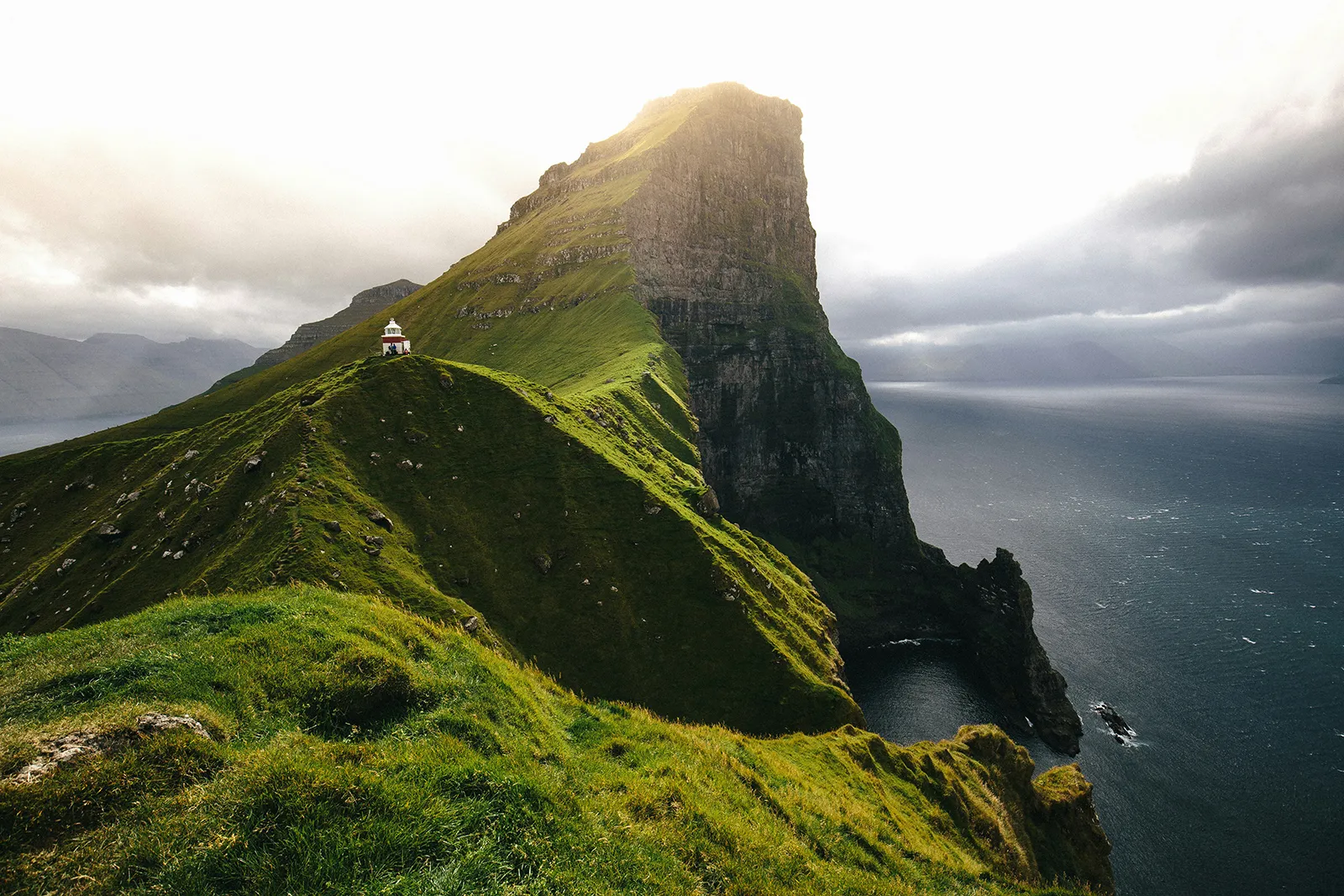
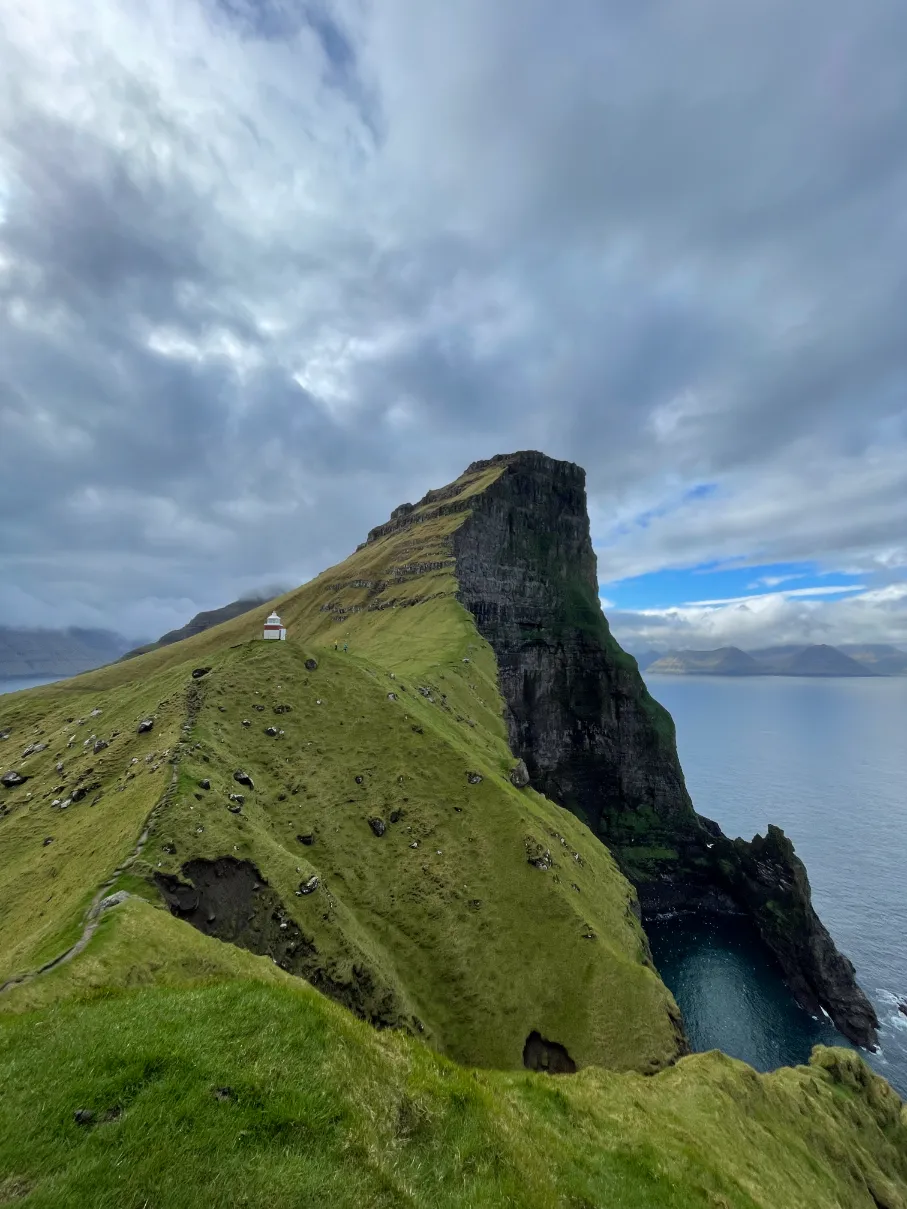
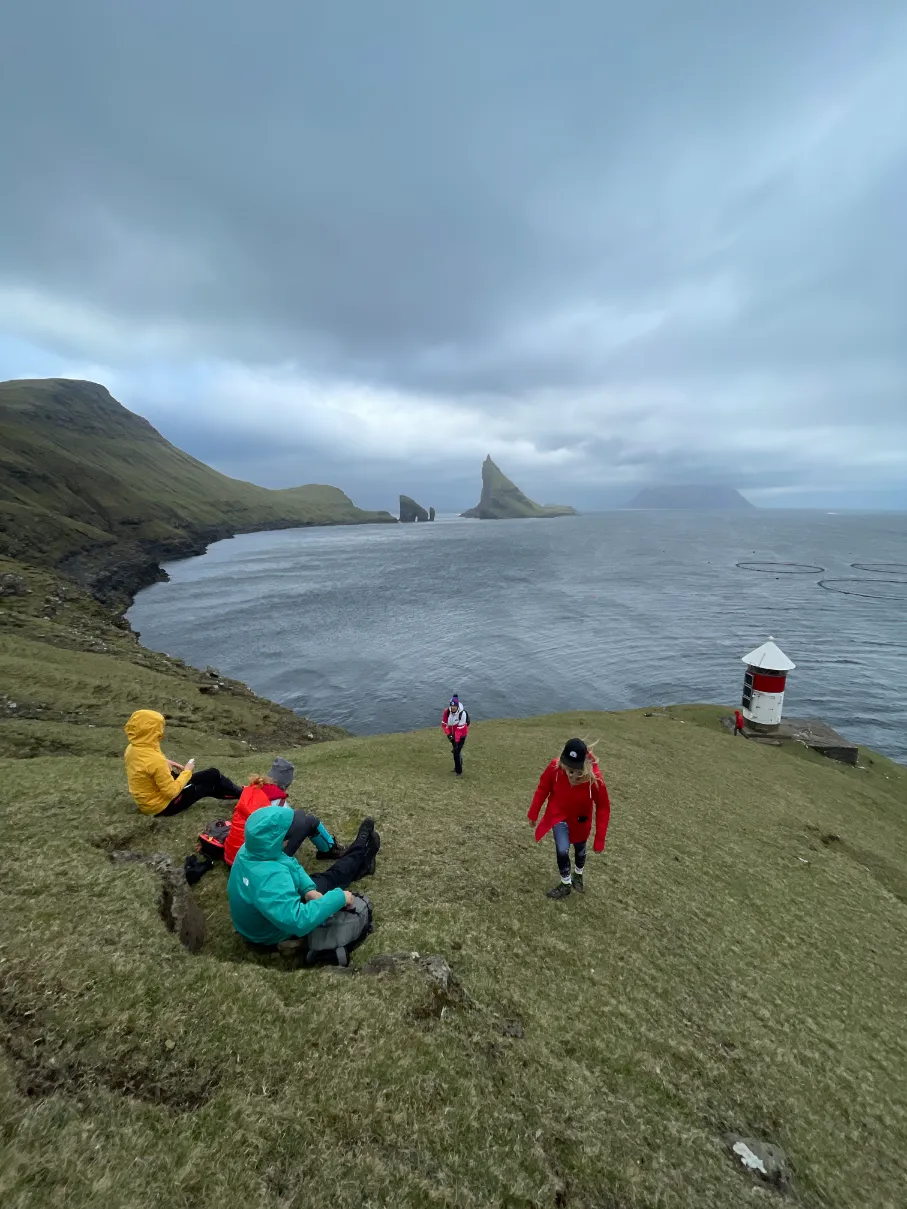
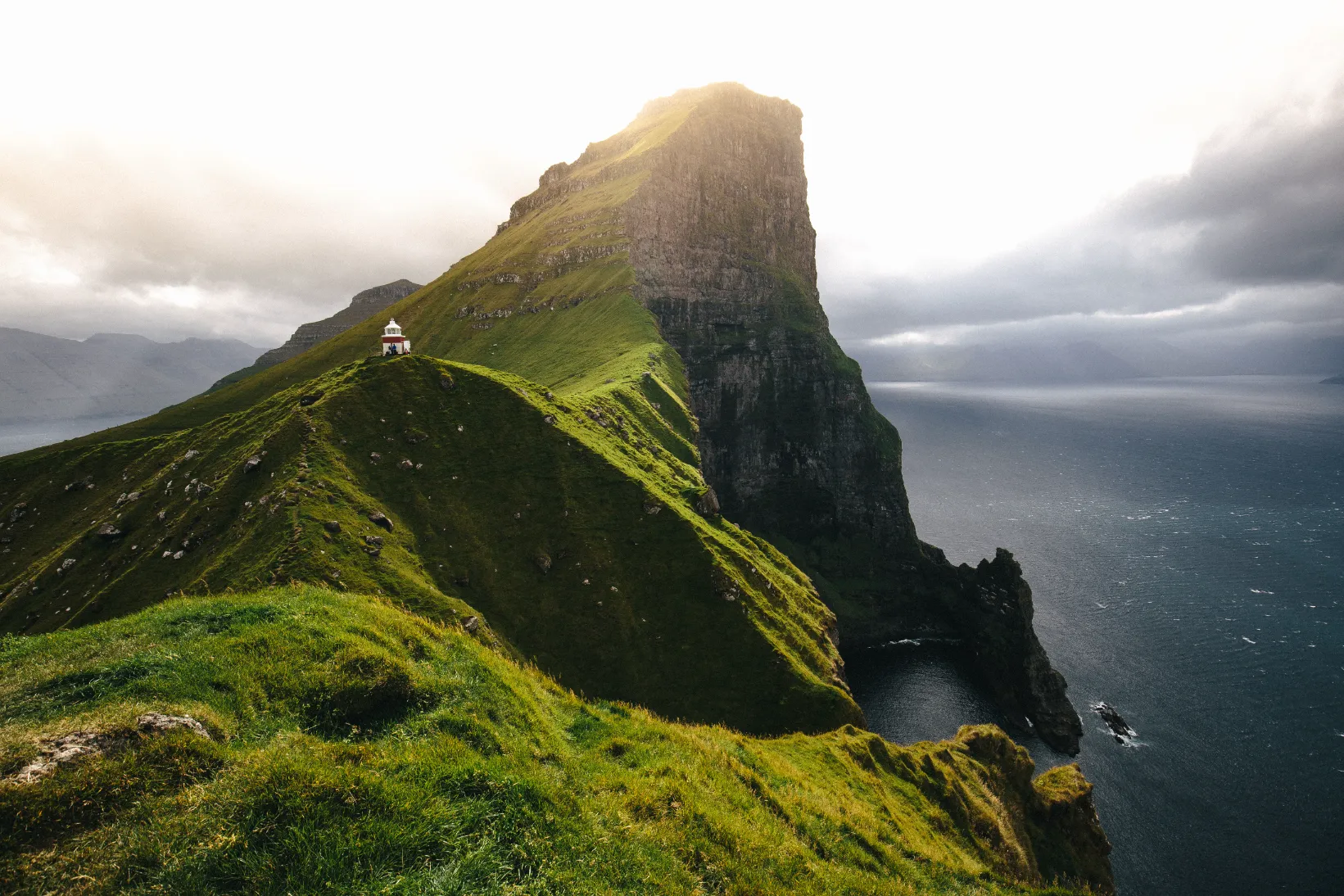
At the end of the trail, the old Mykines lighthouse is surrounded by birds. Gannets, guillemots, fulmars, all on the same slope, stacked by height like floors in a building. The puffins occupy the lowest levels, close to the ground. The sound is constant: a cackle, a flap, the wind. The smell is salty, fishy, alive.
The seal in the bay: an unscheduled encounter
There is no map for where you will see a seal. There is no guaranteed location. The seals of the Faroe Islands appear when they choose and vanish when they want to.
The most common encounters happen in the quiet bays of the northern islands. You drive along the road, pull over at a lay-by, scan the water. And then you see it: a round dark head bobbing on the surface. The seal looks at you with eyes that seem way too big for its head. It doesn't move. It doesn't dive. It just watches you, as if weighing up whether you're interesting.
Sometimes there are two or three. Sometimes just one. The encounter lasts a minute or five, then the seal dives and the water is empty again. No camera can capture the moments between dives, those seconds where you stare exactly at the spot where you think the seal will resurface. You never know where that will be. But when it pops up, ten metres further left than expected, a smile just happens.
These encounters lack drama. There is no adrenaline rush. But they have something rarer: silence and mutual curiosity. Two creatures looking at each other for no reason, with no benefit, no goal. Simply because they are there.
The sheep: an encounter you can't avoid
In the Faroe Islands, you don't need binoculars to spot sheep. You need brakes. They stand on the road. They lie on the road. They cross without looking. The sheep has right of way here, not by law, but by fact. They have been on the islands since the 9th century, brought by the Vikings, and for 1,200 years they haven't yielded an inch.
But beyond being road hazards, the sheep are the visual rhythm of the Faroes. White dots on green slopes, scattered like notes on a musical score. Sometimes they stand in places that seem physically impossible: narrow ledges, steep cliffs, terrain where even a mountain goat would think twice. They don't fall. They never fall.
In the tiny villages, sheep wander between the houses, graze in front of doorways, lie on the paths. Children walk around them. Dogs ignore them. They are as natural a part of the landscape as the rocks and the grass. In a place called the "Sheep Islands", this shouldn't surprise you. But the first time a sheep blocks your path on a mountain ridge, 500 metres above the ocean, and looks at you with that steady, indifferent gaze, you realise: you are the guest here.
The bird cliffs of Vestmanna: a vertical world
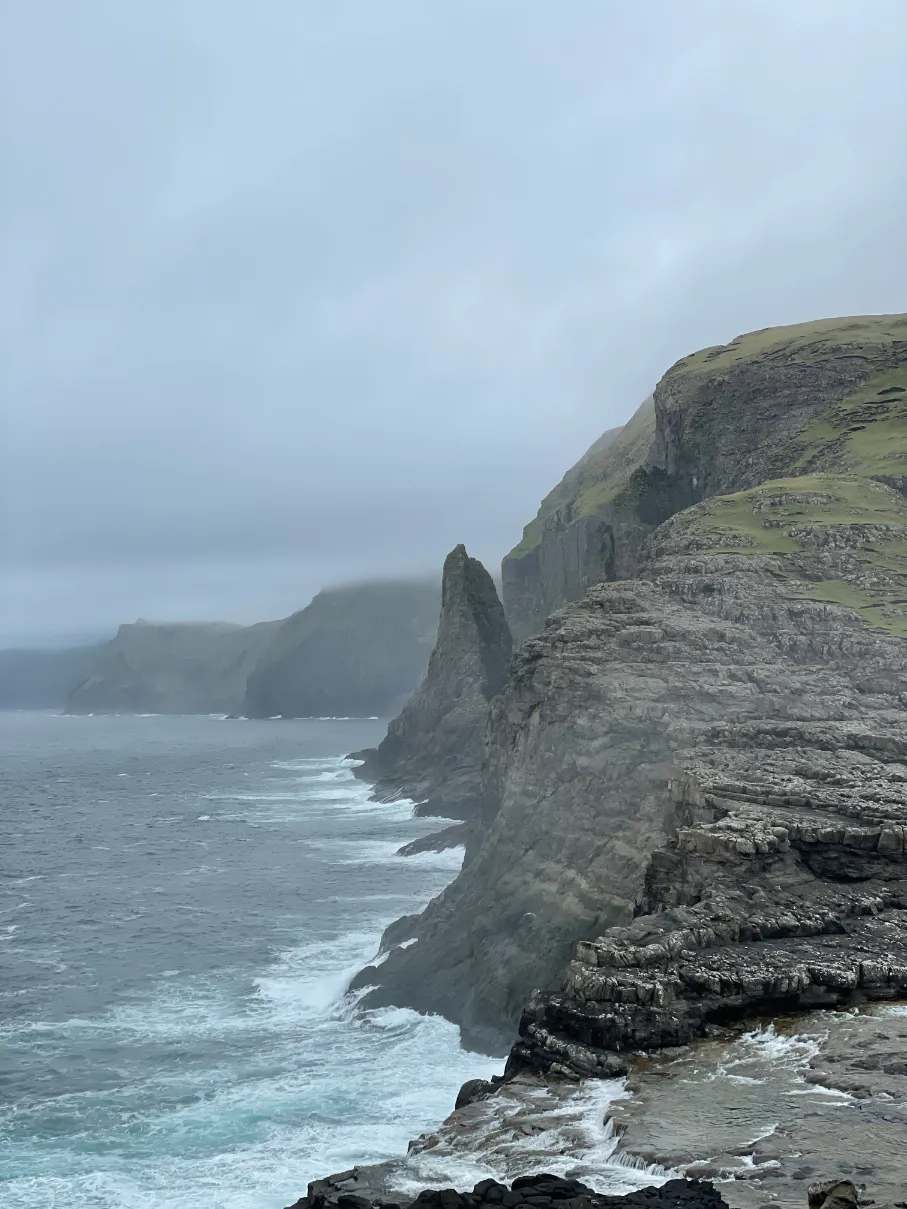
The boat sets off from Vestmanna harbour, and within 15 minutes you are under the cliffs. Not next to them. Underneath them. Hundreds of metres of sheer rock, towering straight above your head. And on every horizontal ledge, birds. Thousands of them. Tens of thousands.
The cliffs are like an apartment block where every floor hosts a different species. At the very top, the gannets. Lower down, the guillemots. Lower still, the fulmars. Each species claims its own strip, its own height, its own angle. The system has worked for millennia, without conflict, without confusion.
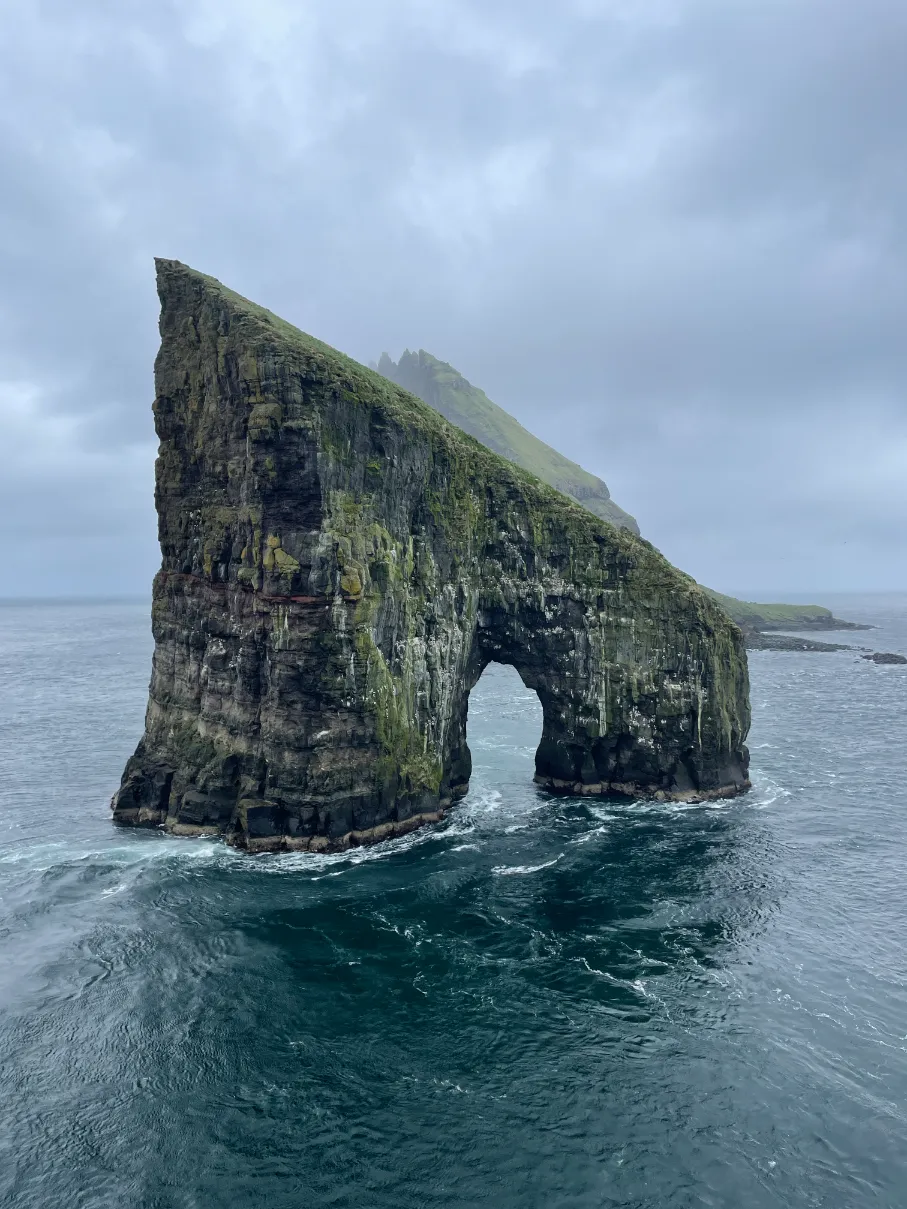
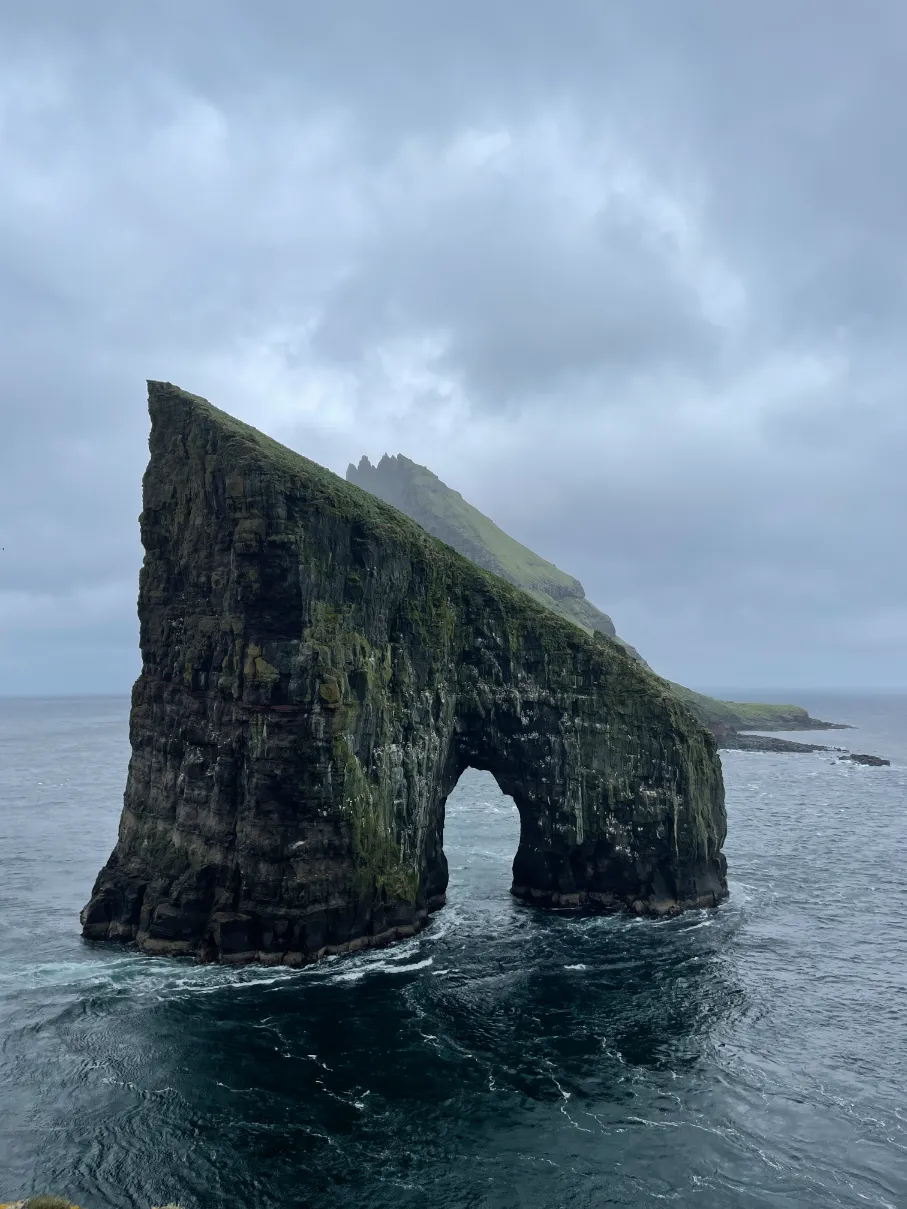
The boat slips into narrow channels between the rocks. The walls are so close you could touch them. The water is dark, deep, cold. Above, birds wheel in the sky. The sound bounces off the rock walls, amplifying until it becomes a constant white noise, like a rushing river, but alive. Sometimes a bird swoops so low you can feel the wind from its wings.
The moment that stays with you is when the boat stops inside one of the sea caves. The engine cuts out. And for five seconds, you hear nothing but the echo of the birds, the water lapping against the stone, and your own breathing. Then the captain starts the engine and you emerge back into the light. But those five seconds, in the pitch black, with the ocean beneath you and the birds above, are something your body remembers.
What to know before you go wildlife spotting
The Faroe Islands don't have national parks in the traditional sense. Access to most places is free, but with conditions. On Mykines, you must stick strictly to the marked trail (puffins nest underground and a single step off-path can crush their eggs). The boats to Vestmanna run on schedule, but get cancelled in bad weather.
The bird season runs from April to August. Outside this window, the cliffs are virtually empty. The puffins are out in the open ocean, and the nesting colonies are deserted. The seals are here year-round, though they are more active in the colder months.
You don't need fancy gear to watch the wildlife. Binoculars help, but in most places, the animals are just metres away. A camera is more useful than binoculars. Patience is more useful than a camera.
One golden rule: don't chase. Don't push closer than the animal comfortable with. If a seal dives, don't wait for it to resurface. If a puffin flies off, don't follow it. In the Faroe Islands, encounters happen on the animals' terms, not yours. And that's exactly why they feel so real.
You take the ferry back from Mykines. The wind is howling, the boat pitches, and behind you, the island dissolves into the mist. In your jacket pocket is a feather you found on the trail. You don't know which bird it came from. You don't know if it's a puffin, a gannet, or something you can't even name. But you know that two hours ago, you were lying in the grass on the edge of a cliff, with a bird watching you without fear. And that is something that doesn't happen in most places. Not because of its rarity. But because of the silence.
Author: Martin Bonov
Other articles about Faroe Islands